From overwatering to blight, yellowing tomato leaves have clear clues. Diagnose the cause fast and use these practical fixes to get your plants back to healt...
Gardening insights
Tomato Flowers but No Fruit? Here’s Why
If your tomato plant is blooming but not making tomatoes, it’s usually heat, cool spells, poor pollination, watering swings, or fertilizer imbalance. Diagnose it fast and fix it.

Elena Rosales
Elena Rosales is a certified Master Gardener and lifelong plant enthusiast who believes anyone can cultivate a green thumb. After transforming her tiny urban balcony into a thriving plant oasis, she moved to a half-acre homestead to grow her own food and flowers. Today, she shares practical, hands-on gardening advice to help the Hortello community bring more green into their lives.
Published September 28, 2026
Updated September 28, 2026
There are few garden heartbreaks quite like a tomato plant covered in cheerful yellow blossoms… and not a single tomato in sight. I’ve been there, staring at flowers like they owe me an explanation.
The good news is that flowering means your plant is mature enough to reproduce. The not so good news is that tomato flowers are picky about conditions. If the plant is stressed or the flowers are not getting properly pollinated, blossoms can drop or just sit there without forming fruit.
Let’s walk through the most common reasons tomatoes bloom but don’t set fruit, how to tell which one you’re dealing with, and exactly what to do next.
First, what fruit set means
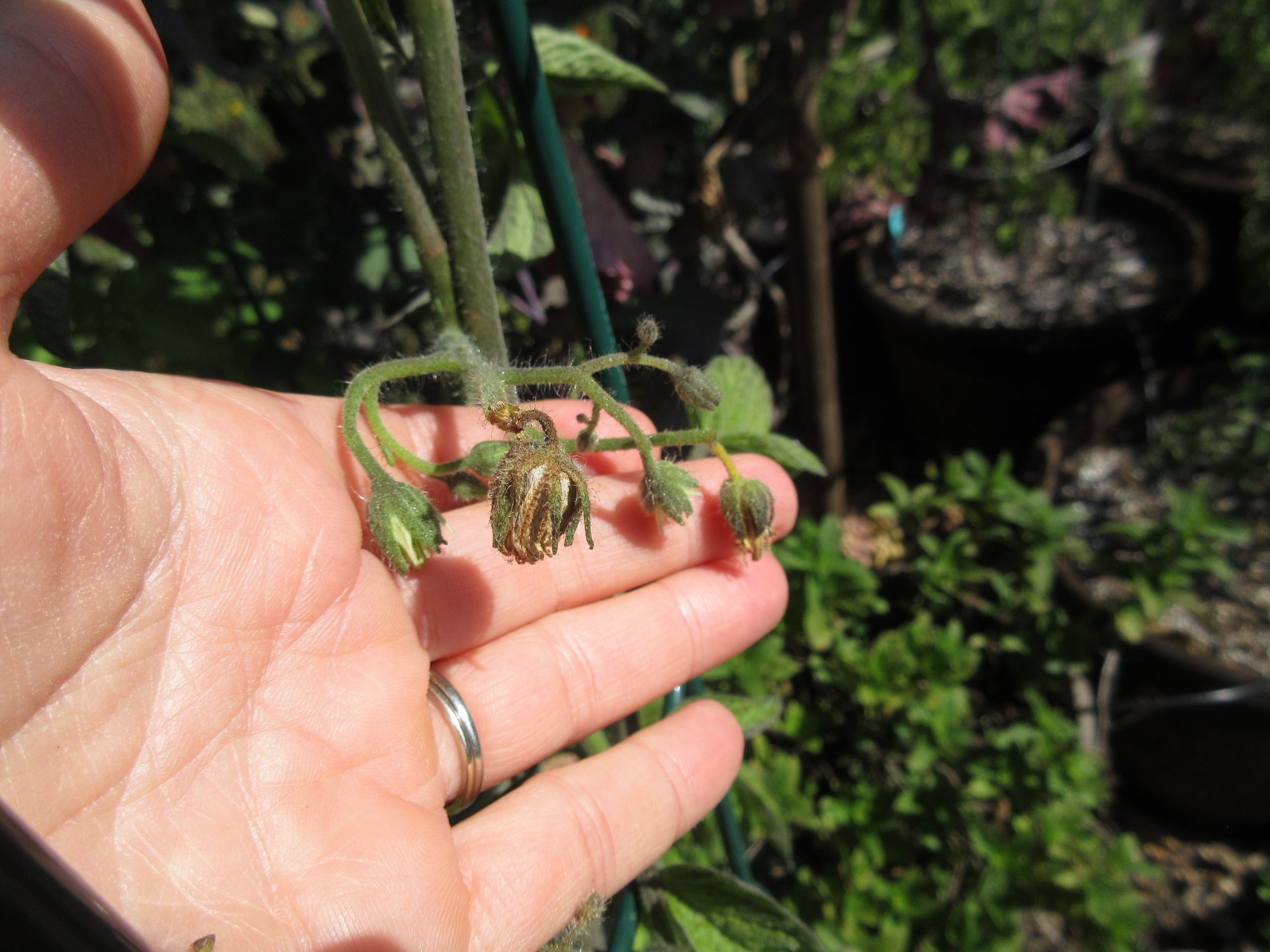
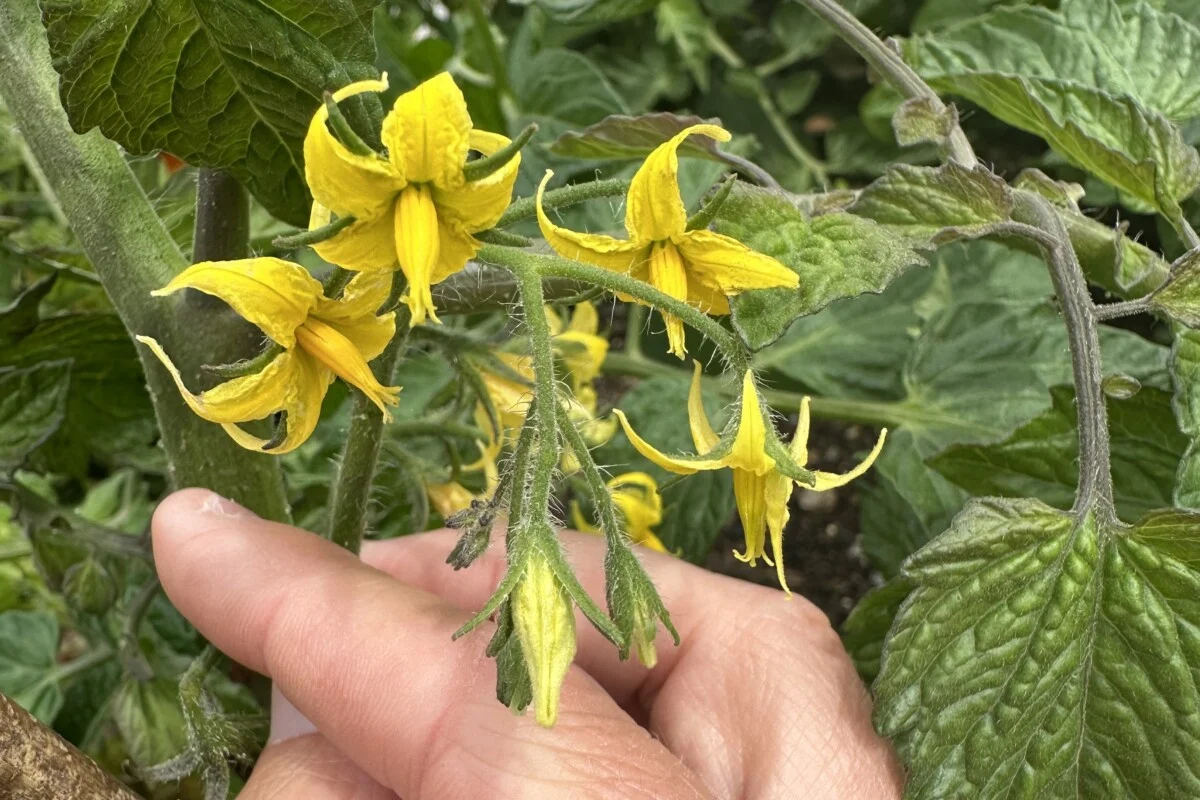
A tomato flower has to be pollinated before it can become a tomato. After successful pollination, the petals wilt and fall away, and you’ll see a tiny green nub behind the flower begin to swell. That swelling is fruit set.
If flowers are opening but you never see that little swelling, something is interrupting pollination or the plant is deciding it cannot support fruit right now.
Heat stress: the summer culprit
Tomatoes are famous for loving warmth, but there’s a sweet spot. When temperatures get too hot, pollen performance drops and flowers may abort (drop) before setting fruit.
Typical signs
- Flowers dry up and fall off within a day or two of opening
- Plant looks otherwise healthy, especially in the morning
- Problem worsens during heat waves or hot, humid nights
What’s too hot?
In many common garden varieties, fruit set often slows when daytime highs are consistently above about 90°F, and it can really stall when nights stay above about 70 to 75°F. Some cultivars tolerate heat better (and some struggle sooner), so treat these as guidelines, not an exact switch that flips for every tomato.
What to do
- Add afternoon shade: Use shade cloth (30 to 40%) or a strategically placed umbrella for container tomatoes.
- Water early: Morning watering helps plants handle heat better and reduces midday wilting.
- Mulch: 2 to 3 inches of straw, shredded leaves, or untreated grass clippings keeps roots cooler and moisture steadier.
- Be patient: When temperatures moderate, tomatoes often resume setting fruit within 7 to 14 days.
Cool weather: the sneaky delay
Heat gets the blame most often, but cool stretches can stall fruit set too. If days are staying on the cool side and nights dip chilly, pollen may not release well and flowers can sit there doing nothing.
Typical signs
- Flowers persist for a while but do not form that tiny green nub
- Plants look healthy, just slow
- Cool nights, cloudy weeks, or early/late season conditions
What to do
- Wait it out: Once weather warms, fruit set usually picks up.
- Protect at night: Use row cover or move containers to a sheltered spot on chilly nights.
- Choose early varieties next time: Short-season types set sooner in cool climates.
Pollination problems: flowers need vibration
Tomato flowers are self-fertile, meaning they can pollinate themselves. But they still need movement. In nature, wind and buzzing bees shake the flowers so pollen drops onto the flower’s stigma.
If your plant is in a sheltered patio corner, a greenhouse, or indoors under lights, the flowers may never get the vibration they need.
Typical signs
- Flowers open normally but linger, then drop without forming tiny fruit
- Few bees or other pollinators around your tomatoes
- Plants are in a protected spot with little wind
Easy fixes that work surprisingly well
- Shake the plant: Gently tap the main stem or flower clusters around midday. Aim for 10 to 15 seconds per plant, 3 to 4 times a week. Daily is fine during tough heat or high humidity.
- Use an electric toothbrush: Touch it to the flower truss for a second or two to mimic buzz pollination.
- Invite pollinators: Plant nectar flowers nearby (basil, zinnias, borage, calendula) and avoid spraying insecticides.
- Improve airflow: Space plants well and prune lightly so breezes can move through.
Watering swings: the quiet stressor
Tomatoes are dramatic about inconsistent moisture. A cycle of bone-dry soil followed by a big soak can stress the plant enough to drop blossoms or pause fruit set. Container tomatoes are especially prone to this because pots dry fast, particularly in wind and heat.
Typical signs
- Blossom drop after missed waterings
- Leaves curl or droop in the afternoon, then recover at night
- Soil alternates between very dry and soggy
What steady moisture looks like
- In-ground: Deep watering that moistens the root zone, then allowing the top inch or two to dry slightly before watering again.
- Containers: Water when the top 1 inch is dry, often daily during hot spells. Water until it runs out the drainage holes.
Practical fixes
- Mulch: Even in containers, a 1 to 2 inch mulch layer reduces evaporation.
- Use a saucer thoughtfully: A saucer can help in peak heat, but empty it after about 30 to 60 minutes so roots do not sit in water.
- Consider drip irrigation: It smooths out the feast-or-famine cycle and reduces plant stress.
Nutrient imbalance: too much nitrogen
This one is sneaky because the plant can look gorgeous. If you’ve got a tall, lush tomato with thick stems and lots of deep green leaves but very little fruit set, the issue is often excess nitrogen.
Nitrogen fuels leafy growth. Fruit production depends more on balanced nutrition, especially enough potassium (for overall vigor and fruit development). Phosphorus matters too, but it is also one of the most commonly over-applied nutrients, so avoid piling on extra phosphorus unless a soil test shows you need it.
Typical signs
- Very leafy plant with few fruits
- Flowers that drop or don’t set
- Recent applications of lawn fertilizer, fresh manure, or high-nitrogen plant food
What to do
- Stop high-nitrogen feeding: Avoid “green-up” fertilizers and anything meant for lawns.
- Switch to a tomato fertilizer: Look for something with a lower first number (N) and adequate potassium (K), such as 4-6-8 or similar. Follow label rates.
- Go easy on composted manure: A little is fine, but heavy applications can push nitrogen too high.
- Do not overcorrect: More fertilizer is not faster tomatoes. It’s just more stress.
Humidity and airflow: sticky pollen
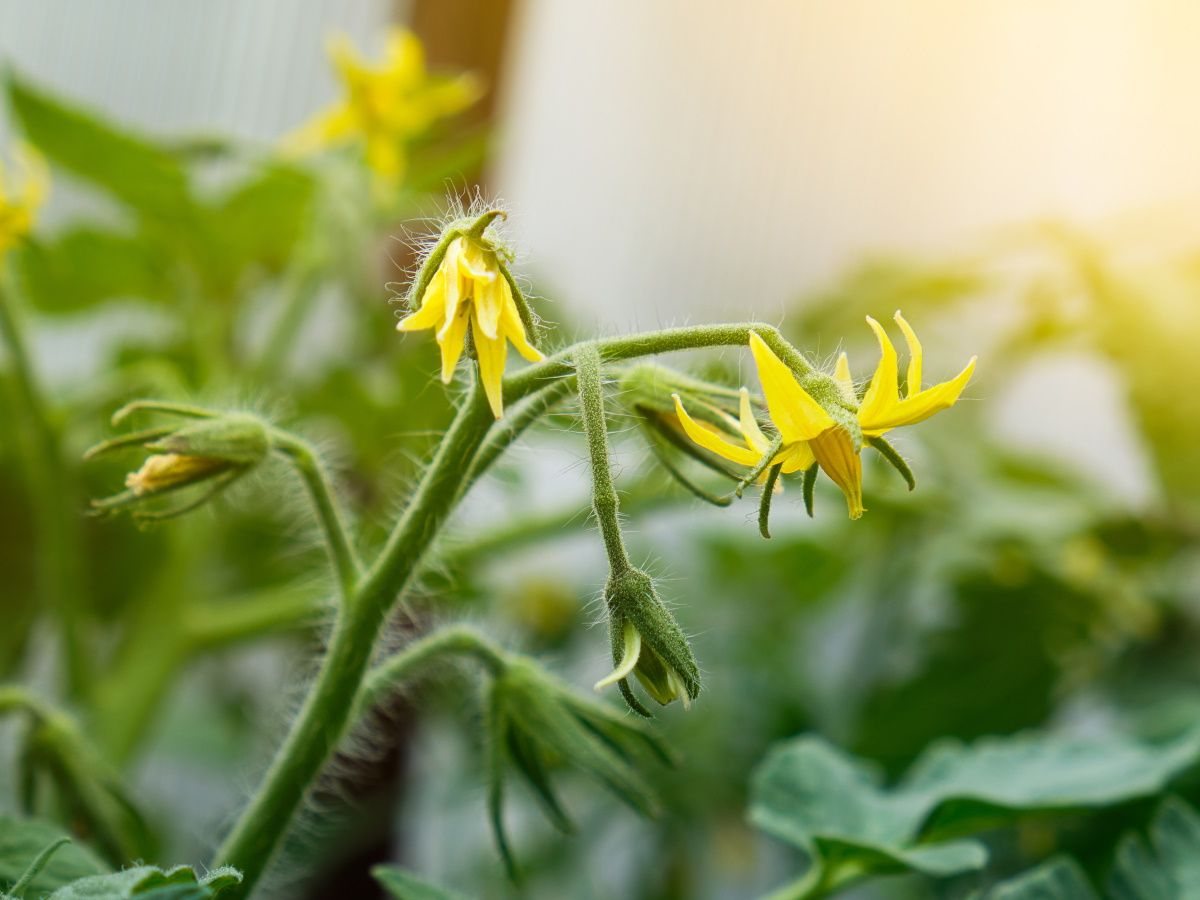
Tomato pollen behaves best in moderate humidity with decent airflow. When it’s very humid, pollen can clump and fail to move where it needs to go. Extremely dry conditions can also reduce pollen performance, especially when paired with heat or water stress. Add still air, and pollination can really slow down.
Typical signs
- Plants are crowded, dense, or in a greenhouse with limited airflow
- Lots of flowers, minimal fruit set during muggy stretches
What to do
- Prune moderately: Remove a few interior leaves for airflow, especially near flower clusters. Do not strip the plant bare.
- Space and stake: Keep foliage off the ground and reduce tangling.
- Help pollination manually: A quick shake at midday can make a noticeable difference.
Variety and timing: it may be early
If this is your first season growing tomatoes, here’s a reassuring truth: early flowers do not always become early tomatoes. Young plants may drop their first blossoms while they build roots and foliage. Some varieties also take longer to size up before they reliably set fruit.
When to worry
If you’ve had blooms for 3 to 4 weeks in decent weather and not a single fruit has set, it’s worth troubleshooting with the checklist below.
Overlooked stress: pot size and roots
If your tomato is in a container that is too small, it can stay in a constant low-grade stress mode. That often looks like steady flowering with frustratingly little fruit set.
Typical signs
- Pot dries out fast and needs frequent watering
- Plant stays smaller than expected for the variety
- Roots circling the inside of the pot or coming out drainage holes
What to do
- Use a bigger container: Many slicers do best in 10 to 15+ gallon pots. Some cherries manage with less, but bigger is usually easier.
- Refresh soil and feeding: Old potting mix can get compacted and nutrient-poor mid-season.
Herbicide drift: the curveball
If your tomato looks weird, not just unproductive, consider herbicide drift. Spray from lawns, roadside weed control, or nearby fields can cause distorted growth and flower issues even if your tomatoes were not the target.
Typical signs
- New growth is twisted, narrow, or ferny
- Leaves curl in strange, persistent ways
- Flowering slows, blossoms drop, or fruit forms poorly
What to do
- Ask questions: Check whether lawns or nearby areas were treated recently.
- Wait and observe: Mild exposure sometimes grows out. Severe distortion usually does not recover well.
- Do not compost affected plants: If you strongly suspect herbicide damage, bag and dispose to avoid contaminating compost.
Pests and disease stress
Anything that chronically stresses the plant can interfere with fruiting, including heavy pest pressure or disease. You don’t need a perfect plant to get tomatoes, but you do need a plant that isn’t constantly struggling.
Quick things to check
- Aphids or whiteflies: Look at new growth and the undersides of leaves.
- Spider mites: Fine stippling on leaves and faint webbing in hot, dry weather.
- Blight or leaf spot: Spreading brown lesions and significant leaf loss.
If pests are present, start with a strong spray of water, insecticidal soap as needed, and improving plant vigor through consistent watering and mulching. Insecticidal soap works best for soft-bodied pests, and it can burn leaves in hot sun, so apply in the evening, follow the label, and test a small section first. For diseases, remove badly infected foliage and avoid wetting leaves when you water.
Practical fix list
- Step 1: Check temperatures. If it’s very hot (or unusually cool), focus on protection and patience first.
- Step 2: Stabilize watering. Keep soil evenly moist, not soggy. Mulch immediately.
- Step 3: Assist pollination. Tap flower clusters around midday 3 to 4 times per week, or daily during heat waves or muggy stretches.
- Step 4: Adjust feeding. Stop high-nitrogen fertilizer. Use a tomato-focused fertilizer at label rates.
- Step 5: Improve airflow. Stake, space, and prune lightly so flowers can dry and move.
- Step 6: Check for pests and odd damage. Treat pests early and consider drift if growth looks distorted.
Troubleshooting checklist
Take this outside with you and answer each one honestly. Tomatoes reward honesty.
- Temps: Has it been very hot (highs near 90°F+) or very cool (cool days and chilly nights) lately?
- Water: Has the soil gone bone-dry between waterings, especially in a container?
- Mulch: Is there a 2 to 3 inch mulch layer over the root zone?
- Pollinators: Do you see bees working the flowers, or is the area very sheltered?
- Manual pollination: Have you tried gently tapping flower clusters at midday?
- Fertilizer: Did you use a high-nitrogen fertilizer (including lawn fertilizer) recently?
- Plant growth: Is it extremely leafy with thick green growth and few fruits?
- Airflow: Are plants crowded or very dense inside the canopy?
- Container size: Is the pot small, drying fast, or root-bound?
- Odd damage: Any twisted, ferny new growth that suggests herbicide drift?
- Pests: Any sticky residue, clusters of insects, stippling, or webbing?
If you check off multiple boxes, don’t try to fix everything at once. Start with the biggest stressor (often temperature or watering), then help pollination, then fine-tune fertilizer.
Quick FAQs
Should I remove tomato flowers to force fruit?
Usually no. If a plant is very young or recently transplanted, it’s normal to lose some early blossoms. But removing flowers rarely solves the underlying issue. Address temperature stress, water consistency, and pollination first.
Why are my tomato flowers falling off?
Blossom drop is most often caused by heat stress, watering swings, or poor pollination. High nitrogen can also contribute by pushing leaf growth over fruiting.
Can Epsom salt help fruit set?
Only if you truly have a magnesium deficiency, which is not the most common cause of poor fruit set. Adding Epsom salt “just because” can throw off soil balance. If you suspect a nutrient issue, start with a balanced tomato fertilizer and consistent watering, or consider a soil test for recurring problems.