A down-to-earth look at turfgrass vs. clover lawns, including mowing, watering, weeds, durability, pets, pollinators, and how to make the switch.
Gardening insights
Design a Wildlife-Friendly Garden
Turn your yard or balcony into a mini habitat for birds and pollinators with native plants, clean water, and natural shelter. Practical steps, layout tips, and a simple weekend plan.

Elena Rosales
Elena Rosales is a certified Master Gardener and lifelong plant enthusiast who believes anyone can cultivate a green thumb. After transforming her tiny urban balcony into a thriving plant oasis, she moved to a half-acre homestead to grow her own food and flowers. Today, she shares practical, hands-on gardening advice to help the Hortello community bring more green into their lives.
Published September 21, 2026
Updated September 21, 2026
If you have ever stood outside with your coffee and noticed how quiet a yard can feel, you already understand the goal of a wildlife-friendly garden. It is not about “perfect” landscaping. It is about building a place where life can eat, drink, raise babies, and rest.
When I first started gardening on my tiny balcony, I assumed I needed a big yard to get birds and pollinators. Nope. What you need is a few key ingredients, arranged with intention: native plants for food, clean water nearby, and shelter that keeps wildlife safer from weather and predators. Let’s design yours step by step.
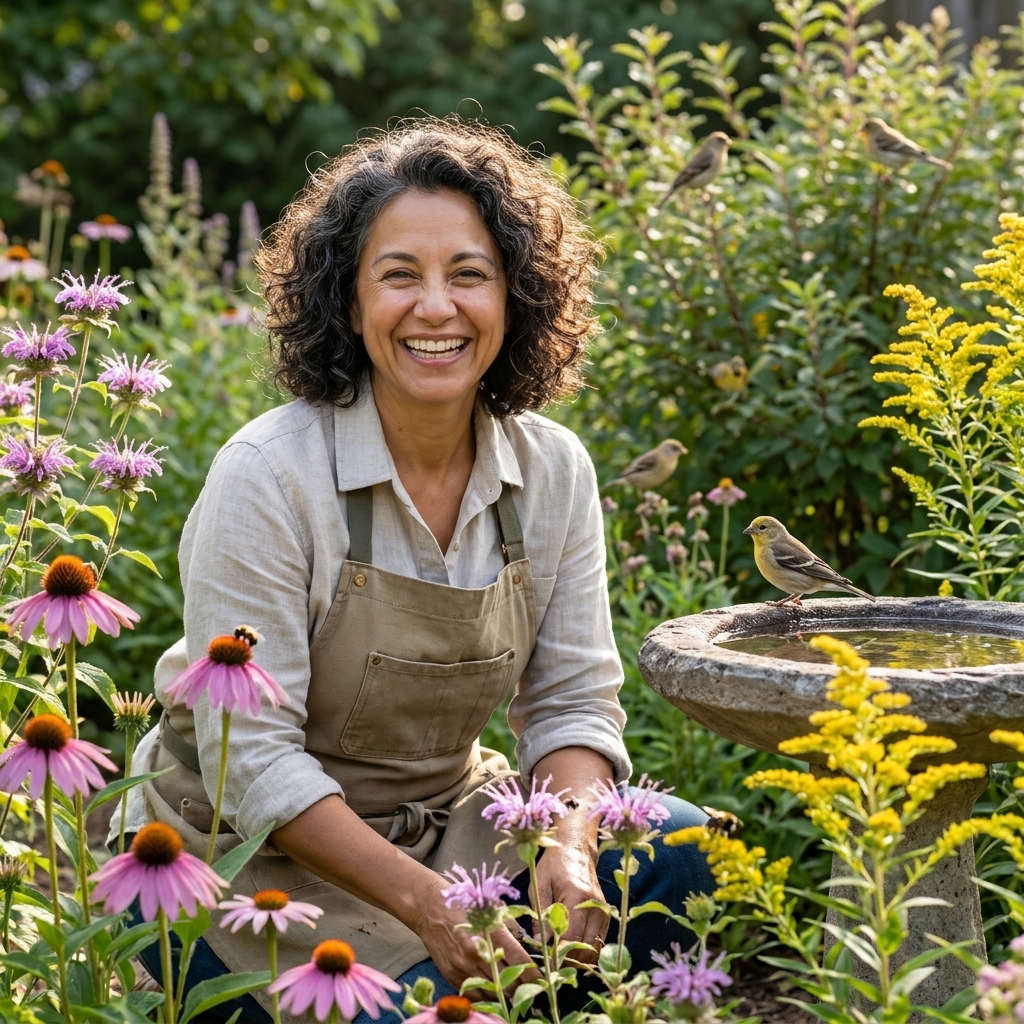
Think like wildlife
Most backyards fail wildlife not because we do not care, but because we accidentally design for humans only. A wildlife-friendly garden checks four boxes:
- Food: nectar, pollen, seeds, berries, and insects (yes, insects are bird food).
- Water: shallow, clean, and easy to access.
- Shelter: places to hide, nest, and overwinter.
- Safety: fewer toxins, fewer hazards, and a little planning around pets and windows.
Once you see your space through that lens, every choice gets easier.
Start with native plants
If you do only one thing, plant natives. Native plants support native insects, and native insects feed baby birds. Many songbirds, especially during nesting season, rely on soft-bodied insects like caterpillars to raise their young. A yard full of pretty, non-native blooms can look lively to us and still be a food desert for wildlife.
How to pick the right natives
- Pick plants native to your region, not just “native to North America.” Your local extension office or native plant society is a goldmine.
- Aim for bloom succession: early spring through fall, so pollinators do not hit a hunger gap.
- Include host plants (not just nectar plants). Host plants are where butterflies and moths lay eggs and where caterpillars feed.
A simple starter mix
This is not a universal rule, just a starting guideline that works in many home gardens. Adjust it for shade, space, HOA rules, or what you can actually find locally:
- About 60% flowering perennials (nectar and pollen)
- About 30% shrubs or small trees (berries, shelter, nesting)
- About 10% native grasses or sedges (cover, nesting material, overwintering habitat)
Shrubs and small trees are especially powerful. One good native shrub can out-serve a whole row of fussy annuals.
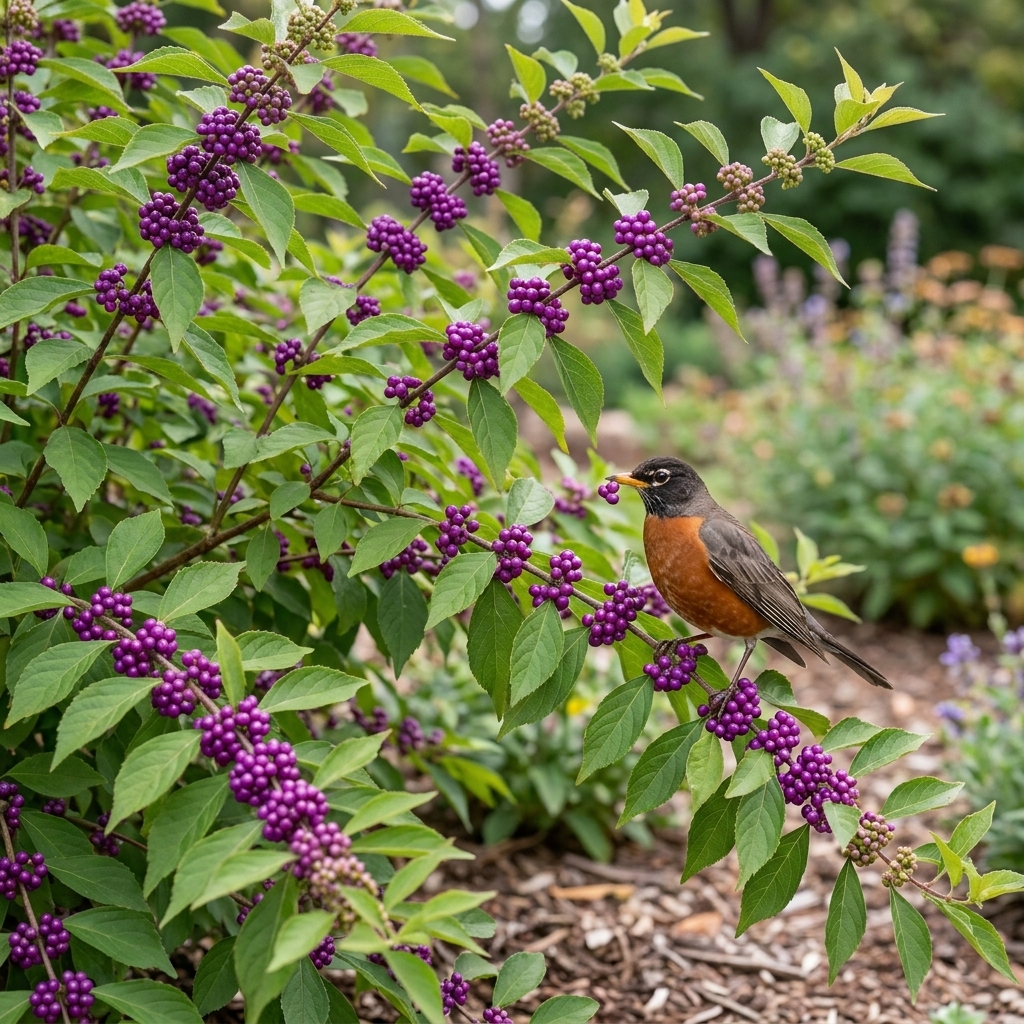
Design with layers
Wildlife loves a garden with “floors.” Think woodland edge, meadow edge, or hedgerow. In design terms, we call this layering, and it is the secret to making a space feel alive.
The five layers
- Canopy: large trees (optional for small yards)
- Understory: small trees (serviceberry, redbud in many regions)
- Shrub layer: berry and twiggy shrubs for cover
- Herbaceous layer: flowering perennials for nectar
- Ground layer: low plants, leaf litter, mulch, and logs for insects
Even on a balcony you can mimic this with a tall planter (shrub), mid-height flowers, and a groundcover spilling over the edge.
Layout tip: safe corridors
Birds and small creatures move more confidently when they can hop from one covered spot to the next. If you can, connect plantings so there is a sheltered route from shrubs to a water source to a feeding area.
Add water
Water is often the fastest way to increase wildlife visits. In hot weather, it can matter more than flowers. The trick is keeping it clean and shallow where it counts.
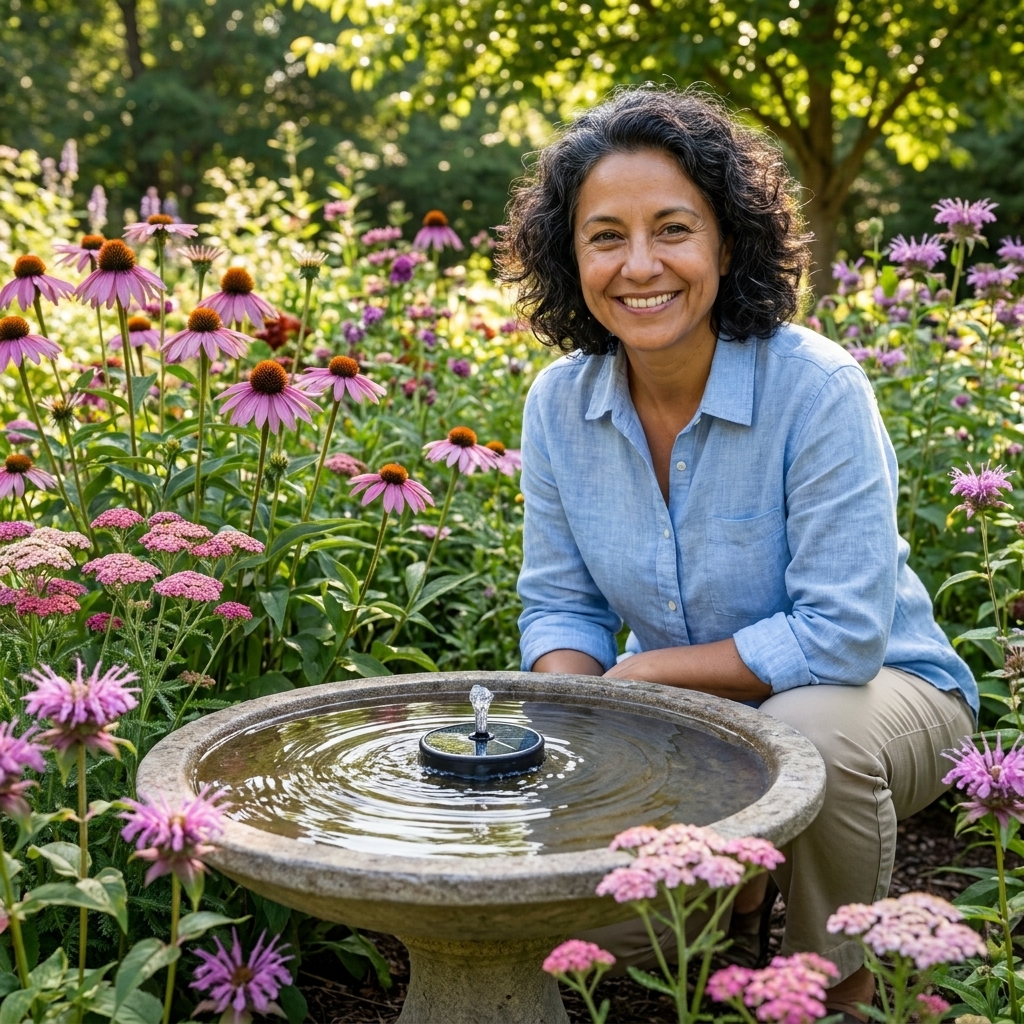
Birdbaths that get used
- Depth: aim for 1 to 2 inches where birds stand. If your basin is deeper, add stones to create a shallow edge and good footing.
- Texture: add a flat stone or a few pebbles for grip and for pollinators to land on.
- Placement: near cover, but not so close that a cat can hide right beside it. A common rule of thumb is 6 to 10 feet from dense shrubs, adjusted for your yard and predator pressure.
- Movement: birds notice the sound and sparkle of water. A small solar bubbler or dripper can be magical.
Keep it safe (and not a mosquito factory)
- Refresh water every 1 to 3 days, and daily in hot weather or heavy use.
- Scrub weekly with a stiff brush. For disinfection, some extension services recommend a very dilute bleach solution followed by a thorough rinse and air-dry. Vinegar is better for mineral buildup than sanitizing.
- For tiny spaces: a shallow dish with stones works, as long as you refresh it often.
Build natural shelter
When birds and pollinators look for shelter, they are thinking about three things: weather, predators, and a place to raise young. You can offer that without turning your yard into a theme park.
Easy shelter wins
- Dense shrubs: provide instant hiding spots and nesting structure.
- Evergreens (if suitable in your region): winter cover is huge for birds.
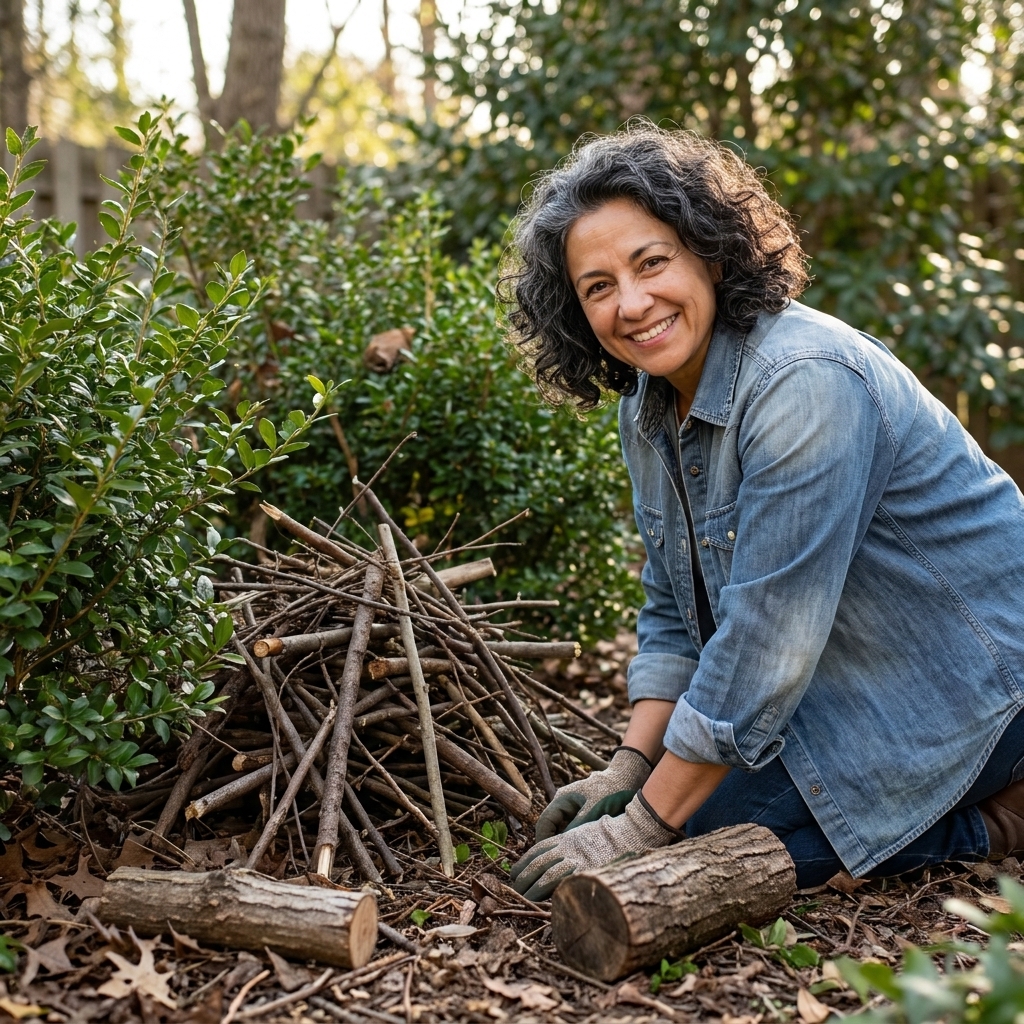
- Leave some leaf litter: many butterflies and beneficial insects overwinter in leaves and stems.
- Brush piles and logs: a tucked-away pile of sticks becomes habitat, not “mess.” Just skip any invasive plant debris and do not use thorny canes where people walk barefoot.
About nesting boxes and bee hotels
I love a good nesting box, but only when it is placed and maintained correctly. Otherwise it becomes a predator snack bar or a parasite problem.
- Bird houses: match the box to the species, place at the right height, and clean annually.
- Bee houses: many commercial “bee hotels” are more decoration than habitat, and can concentrate disease and predators if they are not maintained. Use removable or paper-lined tubes so you can replace them, keep them dry, and put them in morning sun. Holes should be smooth, closed at the back, and sized for native cavity-nesting bees (not one random mega-block of drilled holes). If you cannot maintain it, focus on native plants plus a small patch of bare soil for ground-nesting bees instead.
Feed pollinators all season
Pollinator gardens get overwhelming when we try to plant everything at once. Instead, aim for a steady buffet from spring through fall.
A seasonal plan
- Early season: spring-blooming natives and flowering shrubs to support emerging bees.
- Midseason: a core of long-blooming perennials in clumps (pollinators find big patches faster than single plants).
- Late season: fall bloomers for migrating butterflies and bees stocking up for winter.
Plant in groups of 3 to 7 of the same plant when you can. It reads beautifully in a landscape and functions better for pollinators.
Welcome birds
Feeders are fun, but the most sustainable bird garden is one that produces its own food. Think berries, seeds, and the insects that live on native plants.
Design choices birds appreciate
- Seed heads: leave some flowers standing in fall and winter. Goldfinches will thank you.
- Berrying shrubs: add at least one if you have room.
- Insect habitat: tolerate a little leaf damage. (My garden motto: “Not perfect, but alive.”)
If you use feeders
- Clean regularly to reduce disease spread.
- Place thoughtfully to reduce window strikes. The most reliable fixes are exterior screens, or closely spaced markers on glass (think 2 to 4 inches apart). Feeder placement can help too: very close to a window (within about 3 feet) or far away (30 feet or more) is often safer than the in-between zone.
- Keep cats indoors or use a catio. This is one of the biggest ways we can protect backyard birds.
Go organic-ish
I am an organic gardener because I want a garden that holds together as an ecosystem. Many pesticides, even some labeled “easy” or “home and garden,” can harm bees, butterflies, and the insects birds rely on.
Wildlife-friendly pest strategies
- Healthy soil first: compost, mulching, and avoiding overfertilizing reduce pest pressure.
- Hand-pick when possible: it is not glamorous, but it is effective.
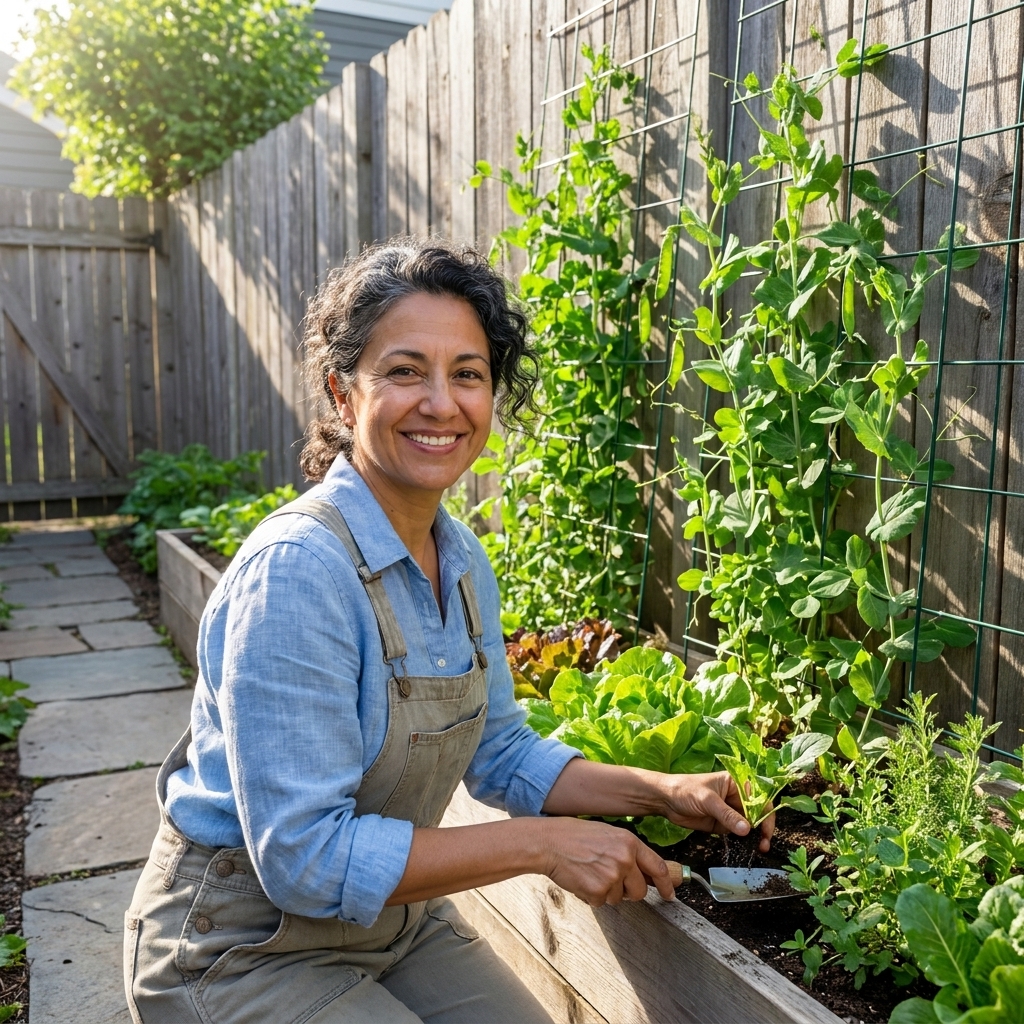
- Target the problem: use physical barriers like row cover for veggies, and spot-treat only when truly necessary.
- Accept a little damage: caterpillars are supposed to eat leaves. That is the point.
I learned this the hard way during the Great Zucchini Invasion of 2019. I tried to “fix” everything at once, and the garden spiraled. What worked the next time was slower: healthier soil, row cover early, and letting beneficial insects catch up before I panicked.
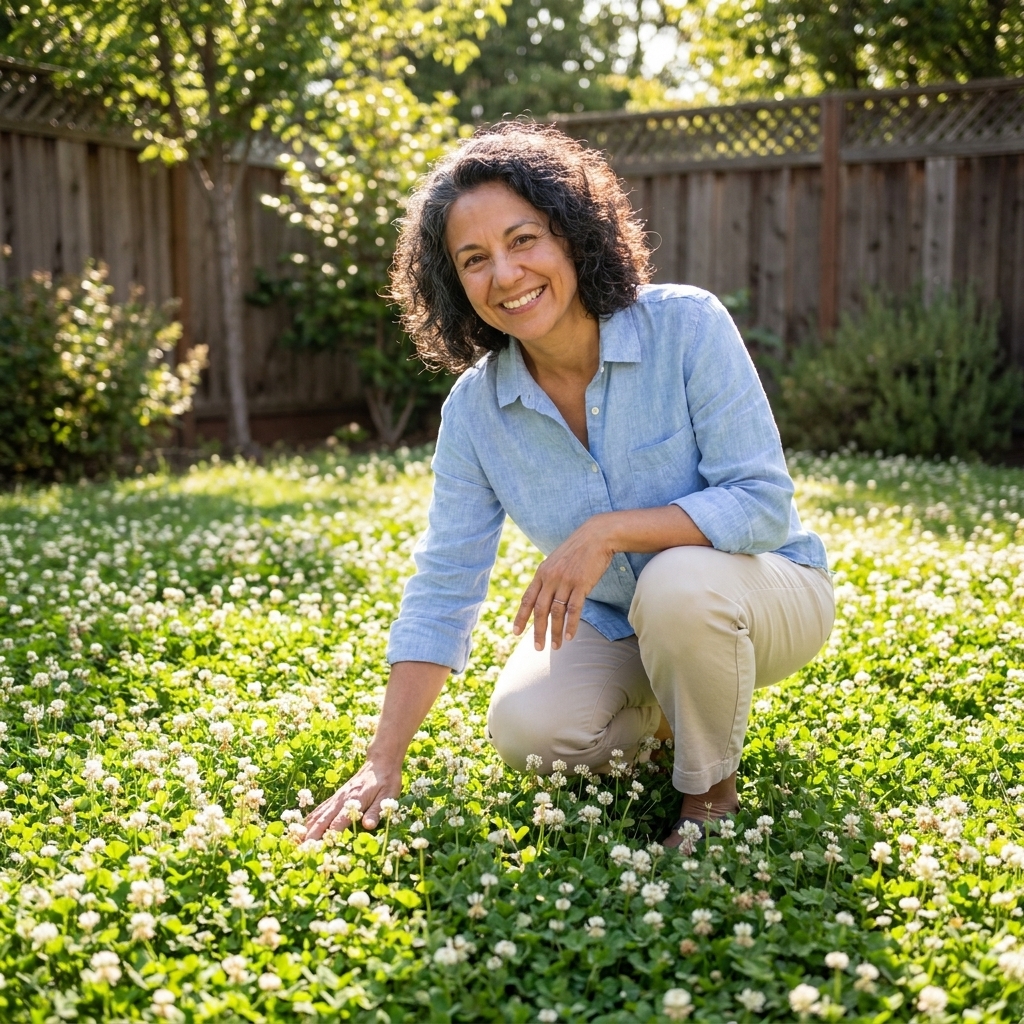
Cut a patch of lawn
If you are starting with turf, you do not need to rip up the whole yard. Converting one patch is enough to get momentum, and it is friendlier to your budget and your schedule.
Two easy ways to start small
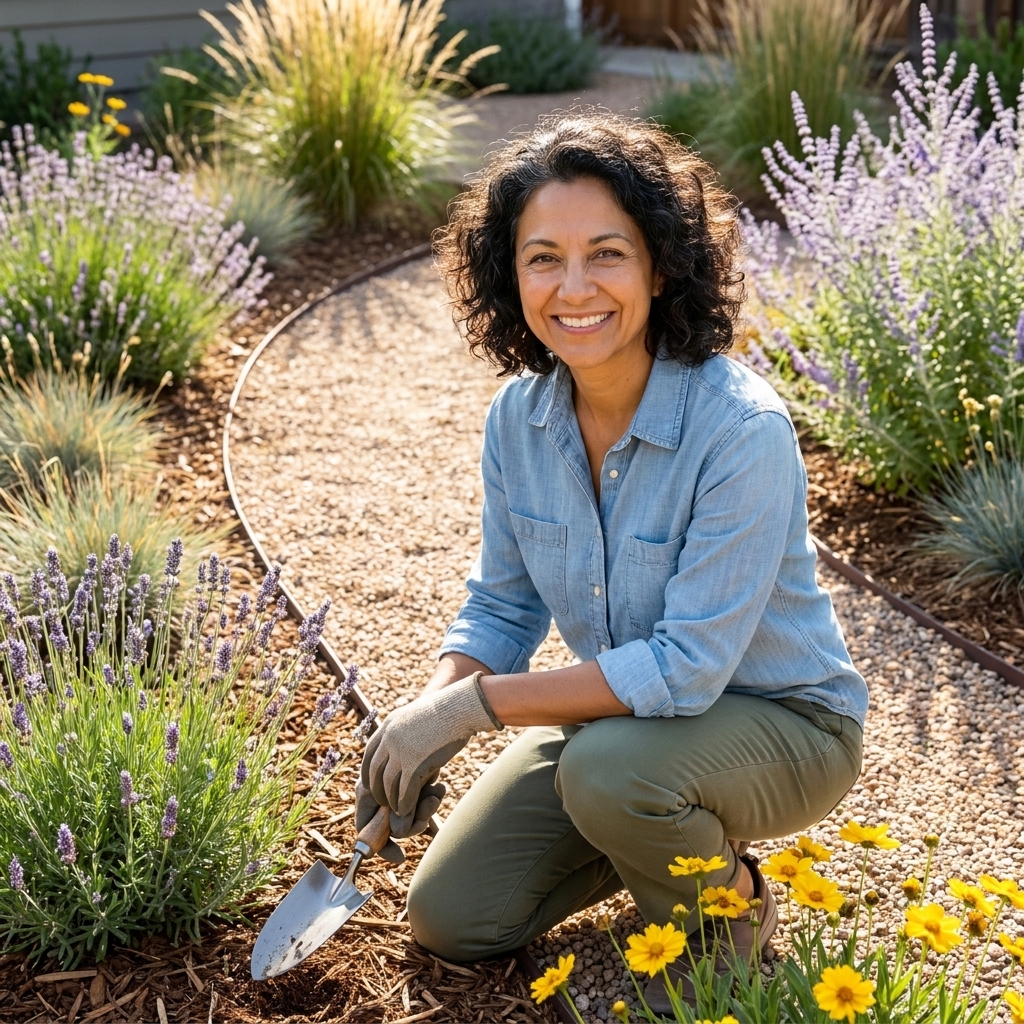
- Sheet mulching: mow low, cover grass with plain cardboard (no glossy ink), water it, then top with compost and mulch. Plant when the layer breaks down, or cut holes and plant right away if your site allows.
- Bed by bed: carve out a 4 by 6 foot area, plant one shrub plus a clump of perennials, then expand next season.
A little wild corner beats an entire lawn that does nothing but ask for water.
Small spaces count
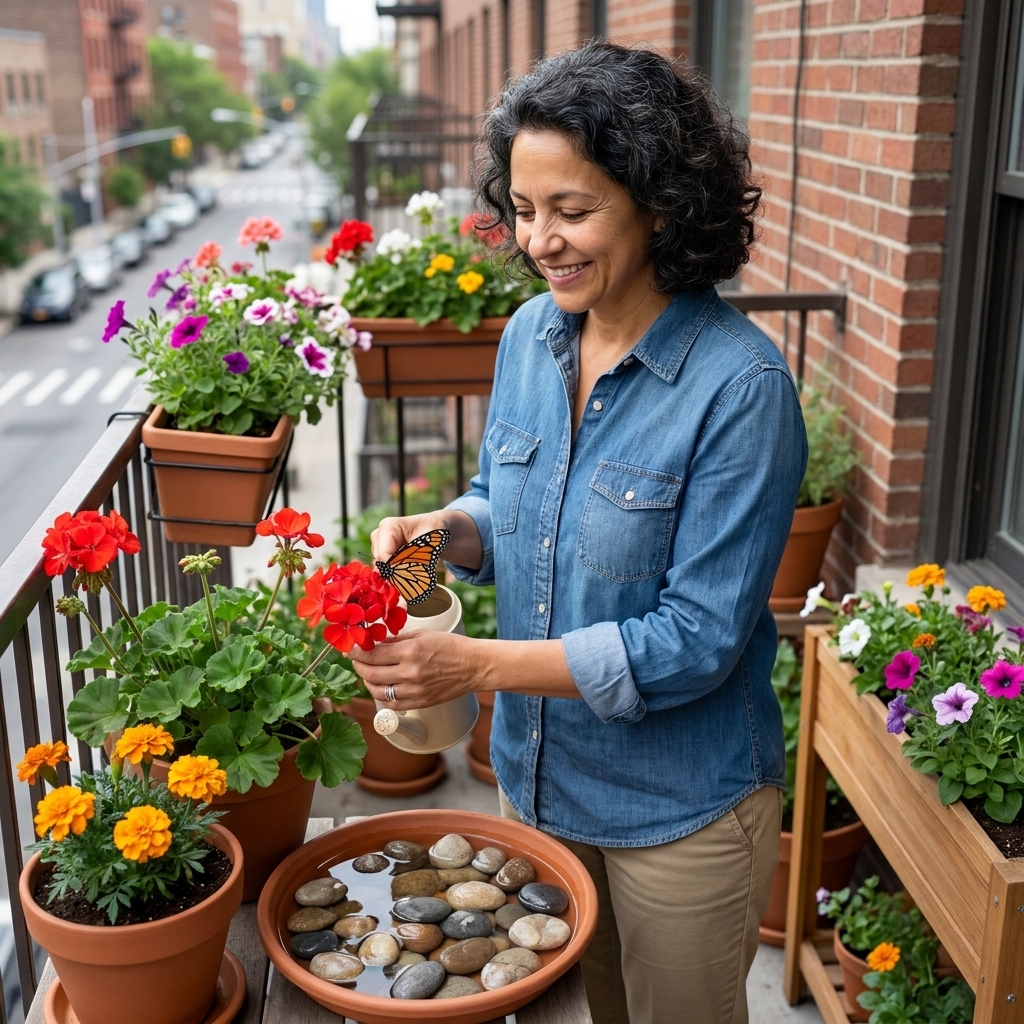
If you garden in containers, you can still build a surprisingly busy habitat.
- Use a large pot for a native shrub as your anchor.
- Add two or three nectar plants in medium pots, repeated if possible.
- Include a shallow water dish with pebbles, refreshed often.
- Let one planter go “a little wild” with native grasses or a groundcover that can spill over.
Avoid pesticides whenever possible, and choose patience always. Pollinators may take a few weeks to “discover” you, but once they do, it is like flipping a switch.
Mind your region
Wildlife gardening is wildly local. The best “top 10 native plants” list is the one for your zip code. Use this article as a framework, then plug in regional plant picks from your extension office, local native nurseries, and native plant societies. If something is labeled native but your local insects ignore it, trust what you observe.
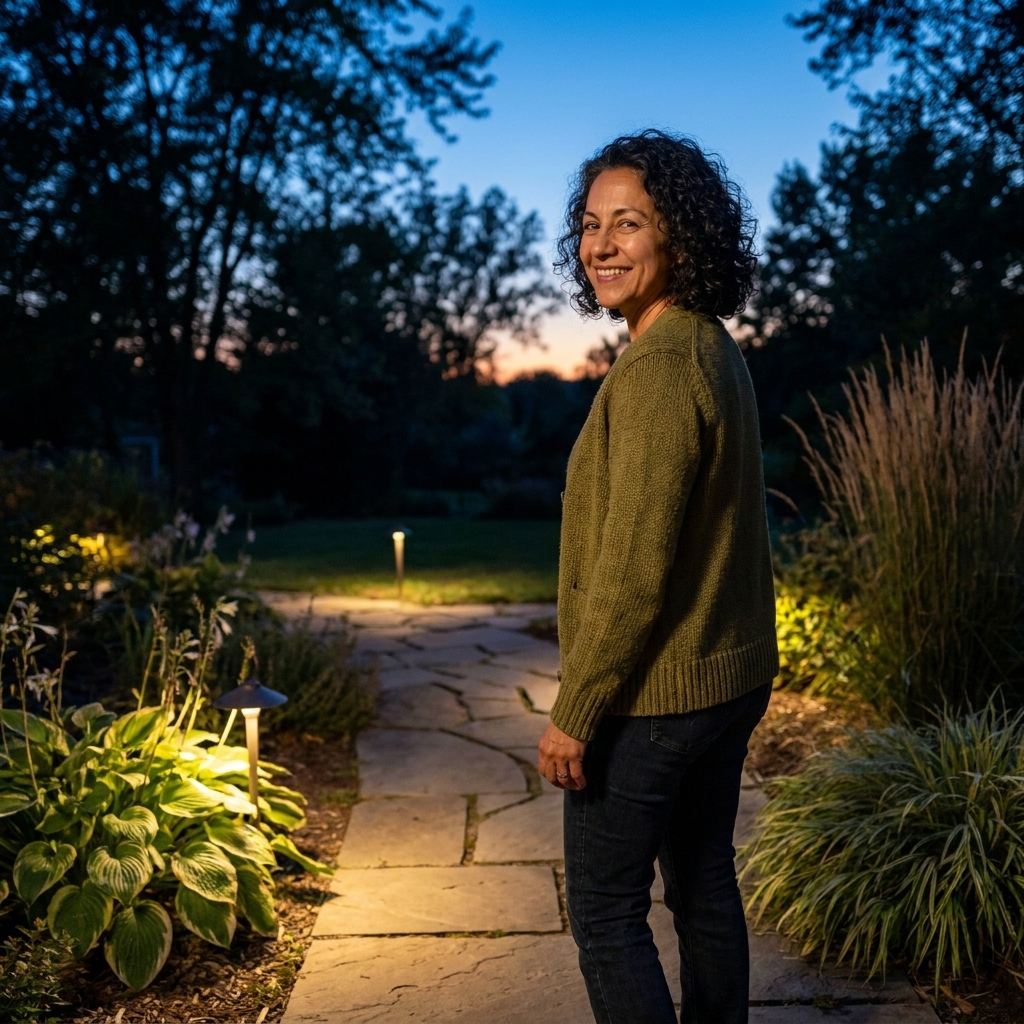
One more quiet win: reduce harsh night lighting. Motion-sensor warm lights and darker corners help nocturnal insects, which helps everything up the food chain.
A simple weekend plan
If you want an actionable checklist, here is a realistic two-day approach:
Day 1: Observe and sketch
- Note sun and shade patterns, and where water naturally collects or drains.
- Pick one “habitat zone” to start, even if it is just a 4 by 6 foot bed.
- Decide where water will go so you can plant around it.
Day 2: Plant in layers
- Plant one shrub or small tree (or place a large container with one).
- Add 3 to 5 flowering perennials in a clump.
- Edge with a native grass or groundcover.
- Mulch, water deeply, and label what you planted so future-you is not guessing.
Then do the hardest part: stop fussing. Let the garden settle in.
FAQ
Do I have to plant only native plants?
No. But the more natives you include, the more you will notice real ecosystem activity. A good goal is to make the backbone of your garden native, then sprinkle in a few beloved non-natives that are not invasive.
How do I know if a plant is invasive in my area?
Check your state or regional invasive species list, or look up the plant name plus your state and “invasive.” When in doubt, ask a local nursery that specializes in natives or your extension office.
Should I leave stems and seed heads over winter?
Yes, if you can. Many native bees overwinter in hollow stems, and seed heads feed birds when everything else is asleep. If the look bothers you, compromise by tidying the front edge and leaving the back less manicured.
What is the biggest mistake you see in wildlife gardens?
Creating a buffet with no shelter. A lone patch of flowers in the middle of open lawn is like putting a restaurant in the middle of a parking lot. Add shrubs, grasses, and cover so wildlife feels safe enough to stay.