A down-to-earth, organic pest control plan for your veggie garden: identify the culprit, use soft sprays correctly, invite beneficial insects, and prevent re...
Gardening insights
Tomato Companion Planting Guide
Grow healthier tomatoes with smart companion planting. Learn the best herbs and vegetables to plant nearby, what to avoid, and simple layouts that deter pests and boost yields.

Elena Rosales
Elena Rosales is a certified Master Gardener and lifelong plant enthusiast who believes anyone can cultivate a green thumb. After transforming her tiny urban balcony into a thriving plant oasis, she moved to a half-acre homestead to grow her own food and flowers. Today, she shares practical, hands-on gardening advice to help the Hortello community bring more green into their lives.
Published September 21, 2026
Updated September 21, 2026
Tomatoes are the friendly extroverts of the garden. Plant them with the right neighbors and they tend to stay healthier, attract more helpful insects, and bounce back faster after the inevitable midsummer hiccup. Plant them with the wrong neighbors and you can accidentally invite pests, diseases, or nutrient competition.
I learned this the hard way during my Great Zucchini Invasion of 2019. I thought “more plants” automatically meant “more food.” What it actually meant was a jungle of overlapping leaves, poor airflow, and a pest party. Companion planting is not magic, but it is a wonderfully practical way to stack the odds in your favor.

What companion planting can and cannot do
Companion planting works best when it supports the basics: sun, soil, water, and airflow. Think of it as a smart garden design tool that can:
- Reduce pest pressure by mixing scents, attracting predators, and offering sacrificial plants.
- Boost pollination by bringing bees and beneficial insects near tomato flowers.
- Improve soil function when you include plants that add organic matter or fix nitrogen.
- Use space efficiently in beds, raised planters, and containers.
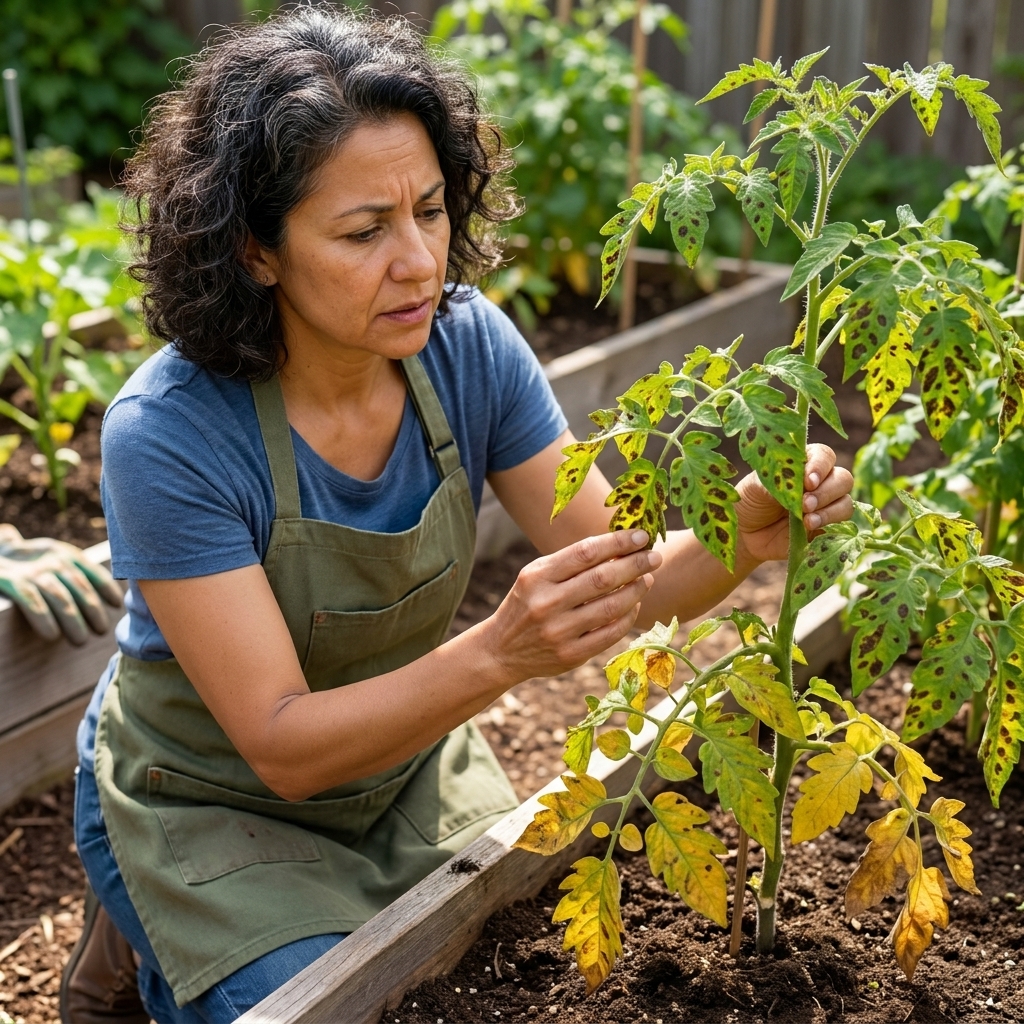
What it will not do: replace good spacing, consistent watering, pruning, or disease-resistant varieties. If tomato leaves stay wet and crowded, companions cannot outsmart blight.
Best companions for tomatoes
Below are my most reliable tomato sidekicks, organized by what they do best. You do not need all of them. Pick a few that fit your space and your cooking habits.
Herbs
- Basil: A classic for a reason. Gardeners often find basil may help with pest pressure, and the flowers bring in pollinators if you let a plant or two bloom. How to plant: 1 to 2 basil plants near each tomato, about 8 to 12 inches away from the main stem.
- Parsley: Low-growing, easy to tuck in, and attractive to beneficial insects when it flowers. How to plant: Edge of the bed or in front of tomatoes where it will not be shaded all day.
- Chives or garlic chives: Helpful for general pest confusion and great in small spaces. How to plant: A clump near the tomato cage, 6 to 10 inches away.
- Oregano and thyme: Spreading groundcover herbs that can act like living mulch in warm climates, keeping soil shaded and reducing splash-up. How to plant: Let them trail at the bed edge, not right up against the tomato stem.
- Dill: Wonderful beneficial insect magnet, especially for ladybugs and lacewings. How to plant: A little farther away (12 to 18 inches) so it does not shade young tomatoes. Plant dill in succession if you want it all season.
Flowers
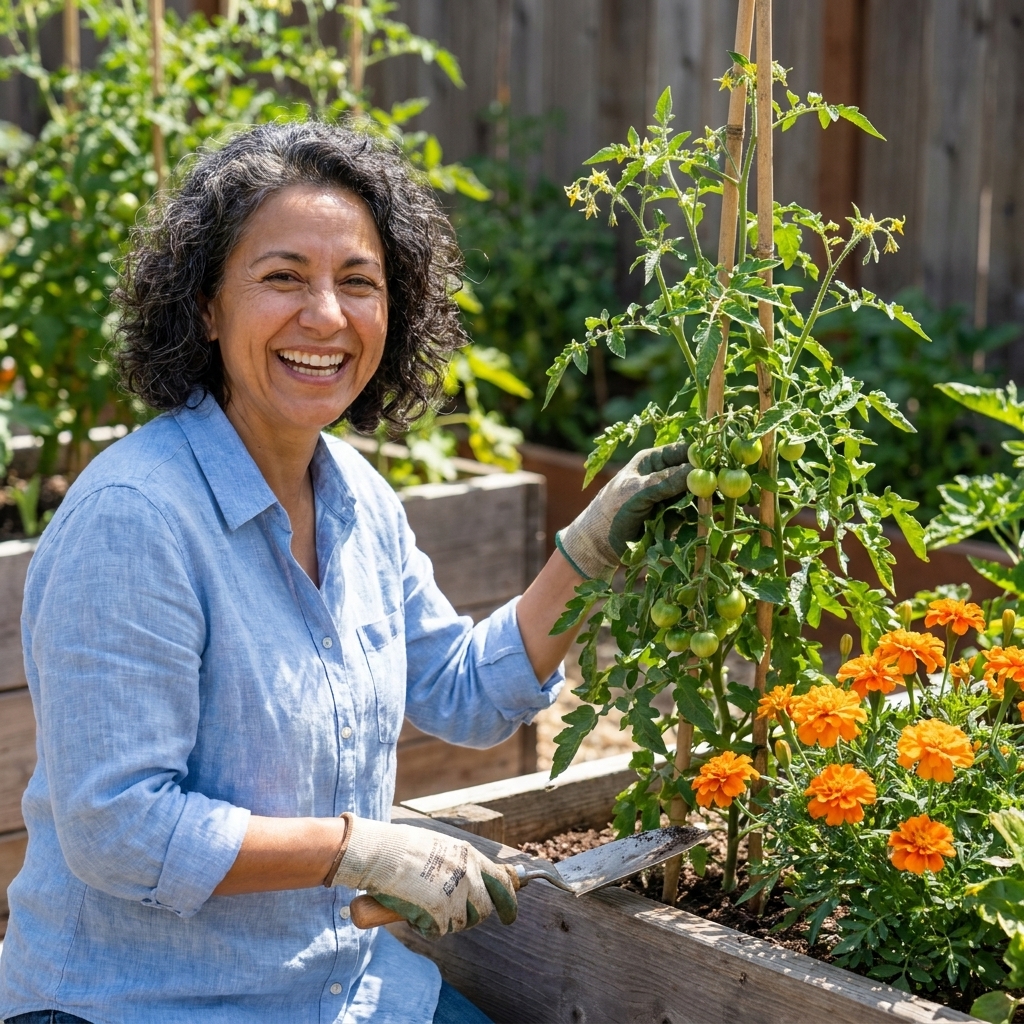
- Marigolds (especially French marigolds): Great for bringing in beneficial insects, and some types are associated with nematode suppression. Just a gentle reality check: results vary by cultivar, planting density, and timing, and scattered marigolds are not a guaranteed pest shutdown. How to plant: Along the bed border or between tomatoes, giving each marigold 10 to 18 inches of space.
- Nasturtiums: One of my favorite “decoy” plants. Aphids often choose nasturtiums first, and the flowers bring pollinators. How to plant: Let them spill over the edge of a bed or container. Keep leaves from smothering tomato stems.
- Calendula: Cheerful, long-blooming, and a reliable beneficial insect draw. How to plant: Bed edges where it gets sun and does not crowd your tomato zone.
- Borage: A big, bristly plant with gorgeous blue flowers that bees adore. How to plant: Give it room, or place it near the bed instead of inside it.
Vegetables
- Onions, garlic, and scallions: Great neighbors that stay relatively compact and do not compete heavily with tomatoes above ground. How to plant: In a ring around tomatoes or in rows between tomato plants, with typical bulb spacing.
- Carrots: Work well under tomatoes if you maintain consistent moisture. How to plant: Sow carrots at the front of the bed before tomatoes get huge, then keep them watered evenly.
- Lettuce and spinach: Excellent early-season companions. They enjoy the light shade tomatoes provide once summer heat ramps up. How to plant: Plant greens on the tomato’s east or north side (in the Northern Hemisphere) so they get morning sun.
- Radishes: Fast, space-efficient, and helpful as a gap filler before tomatoes size up. How to plant: Sow near the bed edge and harvest early to keep things open.
- Beans (bush beans): A handy use of space and a good garden friend. Beans fix nitrogen, but most of that benefit shows up after the season as roots and plant matter break down, so think of it as a modest, longer-term soil win. How to plant: Keep a bit of distance so beans do not tangle in tomato cages. Aim for 12 to 18 inches from the tomato stem.
Low growers for beneficial insects
- Cilantro (coriander): When allowed to flower, cilantro is a beneficial insect beacon. How to plant: Succession plant, because it bolts quickly in heat. Let a few plants flower at the edges.
- Sweet alyssum: Not a vegetable, but it deserves a shout. It is one of the best low-growing beneficial insect attractors and fits beautifully along bed edges. How to plant: A border strip near tomatoes to help bring in hoverflies and parasitic wasps.
Companions by problem
If you are planting with a specific goal in mind, start here.
For aphids and whiteflies
- Nasturtiums (as a decoy)
- Sweet alyssum (to attract hoverflies)
- Dill and cilantro (when flowering, to attract predators)
For pollination and fruit set
- Borage
- Calendula
- Marigolds
- Basil flowers (let one plant bloom)
To reduce soil splash and steady moisture
- Thyme or oregano at edges (living mulch style)
- Lettuce as a seasonal groundcover
Note: For fungal disease prevention, nothing beats pruning lower tomato leaves, mulching with straw or leaves, and watering at the soil line.
Plants to avoid near tomatoes
Some plants compete with tomatoes, share pests and diseases, or can stunt growth. A little distance goes a long way.
Close relatives
- Potatoes: Both are prone to blight, and pests like Colorado potato beetles can bounce between them. If you grow both, separate them as much as your space allows. Bonus habit: do not prune potatoes and then tomatoes with the same dirty tools if disease is active.
- Eggplant and peppers: They can be grown in the same garden, but I avoid planting them shoulder-to-shoulder. They share several pests and diseases, so spacing and crop rotation matter more.
Tricky neighbors
- Brassicas (cabbage, broccoli, kale): Not a universal never, but they can be tricky to fit together in tight beds because big brassica leaves and big tomato growth both want room and steady feeding. If you have space, you can absolutely make it work.
- Fennel: Fennel can inhibit growth of many garden plants. Give it its own corner.
- Walnut trees (black walnut in particular): Tomatoes are sensitive to juglone. Avoid planting tomatoes near the drip line.
What about cucumbers and squash?
You will see mixed opinions because it depends on your space. Cucumbers and squash are not enemies of tomatoes, but in tight plantings, when leaves overlap, they can create a dense canopy that limits airflow and makes fungal issues more likely. If you grow them together, train cucumbers up a trellis, keep squash to the bed edge, and prune tomatoes for breathing room.
Quick myth check
You may hear that tomatoes cannot be planted near corn because of “shared pests.” The real issue is practical: corn gets tall and thirsty, can shade tomatoes, and can make harvesting feel like navigating a maze. It is not an automatic disaster, but it is a pairing that needs extra space and a plan.
Spacing and placement
Companion planting succeeds when tomatoes still get what they crave: sun and airflow. A few practical guidelines:
- Give tomatoes room. In-ground, many varieties do best with roughly 24 to 36 inches between plants (more for sprawling indeterminates).
- Match spacing to tomato type. Determinate tomatoes stay more compact, so they are easier to tuck into tighter beds. Indeterminate tomatoes keep growing and need more elbow room, stronger staking, and fewer companions jammed at their feet.
- Keep the stem zone clear. Avoid planting companions right against the stem. Leave 6 to 12 inches open so you can water, mulch, and check for pests.
- Use the edges. Most companions shine at the border: herbs, alyssum, marigolds, lettuce, and radishes.
- Think vertical. Trellis tomatoes and cucumbers, then use the ground layer for low companions.
Easy layouts
Raised bed layout (4 x 8 ft)
Simple and reliable: Plant 3 to 4 tomatoes down the center (depending on variety size). Border the bed with basil and marigolds, then tuck lettuce or radishes into any open sunny pockets early in the season.
In-ground row layout
Plant tomatoes in a row with your usual spacing. Add an alternating strip of onions or scallions beside them, then place nasturtiums at row ends and alyssum along the path edge to keep beneficials nearby.
Container layout for patios and balconies
My urban-gardening heart loves this one. In a large container (at least 10 to 20 gallons depending on variety), plant:
- 1 tomato (center)
- 1 basil (near the rim)
- 1 small marigold or trailing nasturtium (near the rim)
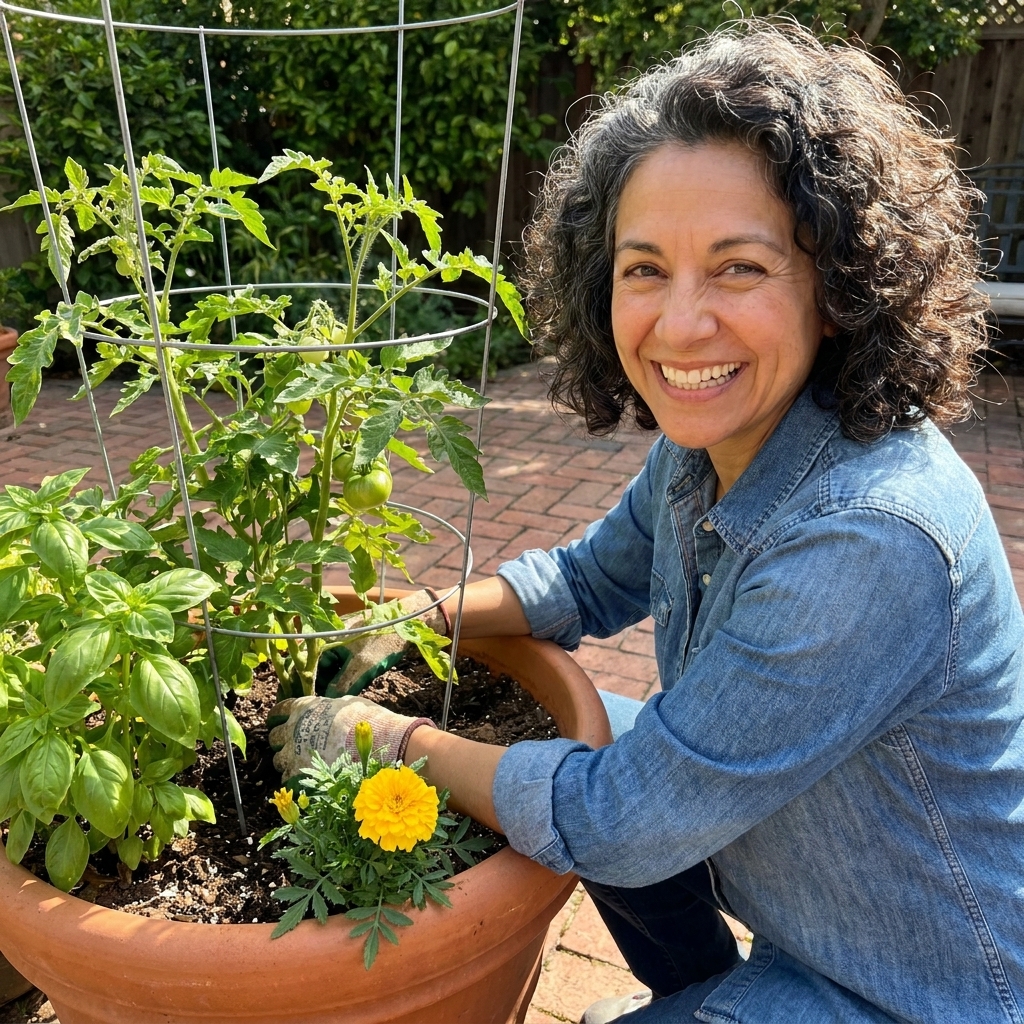
Tip: Do not overstuff the pot. Crowding in containers leads to stress, and stressed tomatoes are pest magnets.
Companion planting and organic pest control
If you garden organically, companion planting is one layer of a bigger strategy. Here are the other layers I pair it with for tomatoes:
- Mulch to reduce soil splash and stabilize moisture.
- Consistent deep watering to prevent blossom end rot and cracking.
- Pruning and staking for airflow.
- Hand checks twice a week for hornworms, aphids, and early disease spots.
- Crop rotation when possible. Tomatoes do best when not planted in the same spot year after year.
Companion planting makes those habits easier because it builds a more balanced mini ecosystem around your tomatoes.
FAQ
Can I plant basil in the same hole as a tomato?
I do not. It is tempting, but it usually crowds the root zone and makes watering tricky. Instead, plant basil 8 to 12 inches away, still close enough to enjoy the benefits.
How close should marigolds be to tomatoes?
Close, but not touching. I like them 10 to 18 inches away, often along the bed edge or between tomatoes where they will not block airflow.
Do companion plants replace pest control?
They reduce pressure, but they are not a force field. If pests show up, I still rely on hand-picking (hello, hornworms), a strong spray of water for aphids, and encouraging beneficial insects with flowers.
What is the simplest companion plan for beginners?
Tomatoes + basil + marigolds, with a border of sweet alyssum if you have space. It is easy, pretty, pollinator-friendly, and genuinely useful.
A gentle plan for next season
If you are feeling overwhelmed, start small: pick one herb you will actually use (basil is a crowd-pleaser), one flower to invite beneficial insects (marigold or alyssum), and one quick crop to fill space early (radishes or lettuce). Give everything room to breathe, keep the soil evenly moist, and check plants regularly.
Tomatoes will still have their opinions, because tomatoes always do. But with good companions nearby, they are much more likely to reward you with heavy vines and that unmistakable sun-warmed, tomato-leaf scent every time you brush past.