From plant division to repurposed edging, these 15 cost-effective garden design ideas help you refresh your landscape with less money and more creativity.
Gardening insights
10 Drought-Tolerant Landscaping Ideas for a Low-Maintenance Yard
Create a beautiful, water-wise yard with practical xeriscaping ideas. Learn drought-tolerant plants, soil and mulch tips, drip irrigation, and smart design for less work and more color.

Elena Rosales
Elena Rosales is a certified Master Gardener and lifelong plant enthusiast who believes anyone can cultivate a green thumb. After transforming her tiny urban balcony into a thriving plant oasis, she moved to a half-acre homestead to grow her own food and flowers. Today, she shares practical, hands-on gardening advice to help the Hortello community bring more green into their lives.
Published September 21, 2026
Updated September 21, 2026
If you have ever watched your hose run for what feels like hours and still ended up with crispy edges on your plants, I have been there. I remember my first summer on my half-acre place, convinced I could keep everything looking like a spring catalog with sheer determination. Spoiler: the sun disagreed.
The good news is drought-tolerant landscaping does not mean a yard full of rocks and regret. A truly water-wise yard is about smart design, the right plants, and a few soil and irrigation tweaks that make everything easier. Below are 10 ideas you can mix and match, whether you have a tiny front strip, a backyard you want to actually use, or a slope that has been tormenting you for years.

Before you plant
This is the part that saves money, water, and regret. Do a quick read of your yard first, then choose plants and irrigation to match what is actually happening out there.
- Sun and heat: note full sun spots, afternoon scorch zones, and any reflected heat off walls or paving.
- Slope and drainage: where does water run, and where does it puddle after a storm?
- Soil texture: sandy soils drain fast, clays hold water but can bake hard, and loam is the unicorn everyone wants.
- Cold and heat tolerance: check USDA zone, heat exposure, and local restrictions (some “tough” plants are not allowed in certain areas).
Elena tip: If you are not sure about your soil, do the low-tech test. Wet a handful and squeeze. If it holds a firm ribbon, you have more clay. If it falls apart instantly, you are on the sandy side. Either way, you can design for it.
What makes a landscape drought-tolerant?
Xeriscaping is not a single style. It is a set of principles: reduce thirsty lawn, group plants by water needs, improve soil so it holds moisture, cover bare soil with mulch, and deliver water efficiently. When those pieces work together, you can cut irrigation dramatically and still have a yard that feels alive.
- Design first: shade, wind, and slope affect water needs more than you might think.
- Soil matters: healthy soil holds moisture longer, even in hot weather.
- Right plant, right place: drought-tolerant does not mean “never water,” it means “does not panic when it gets dry.”
1) Replace thirsty lawn with “living lawn” patches
If you love the look of green, keep it, just shrink it. A small “picnic patch” of grass (or a grass alternative) feels intentional and is far easier to maintain than wall-to-wall turf.
Try these lawn alternatives
- Buffalograss (warm-season, low water once established)
- Blue grama (tough, prairie-native in many regions)
- Creeping thyme (best for light foot traffic, fragrant blooms)
- Sedges like Carex (great in part shade, soft texture)
Elena tip: Whatever you choose, plan a clear edge. A crisp border makes any lawn alternative look polished instead of “oops, the lawn died.”
2) Build wide beds and avoid narrow strips
Those narrow sidewalk and curb strips (and any other skinny “hellstrip” areas) are water vampires. Convert them into wider beds with drought-tolerant plants and mulch. You will water less because plant canopy and mulch shade the soil, which cuts evaporation and keeps roots cooler.
A good rule: the more bed space you have, the fewer awkward corners you mow, trim, and irrigate.
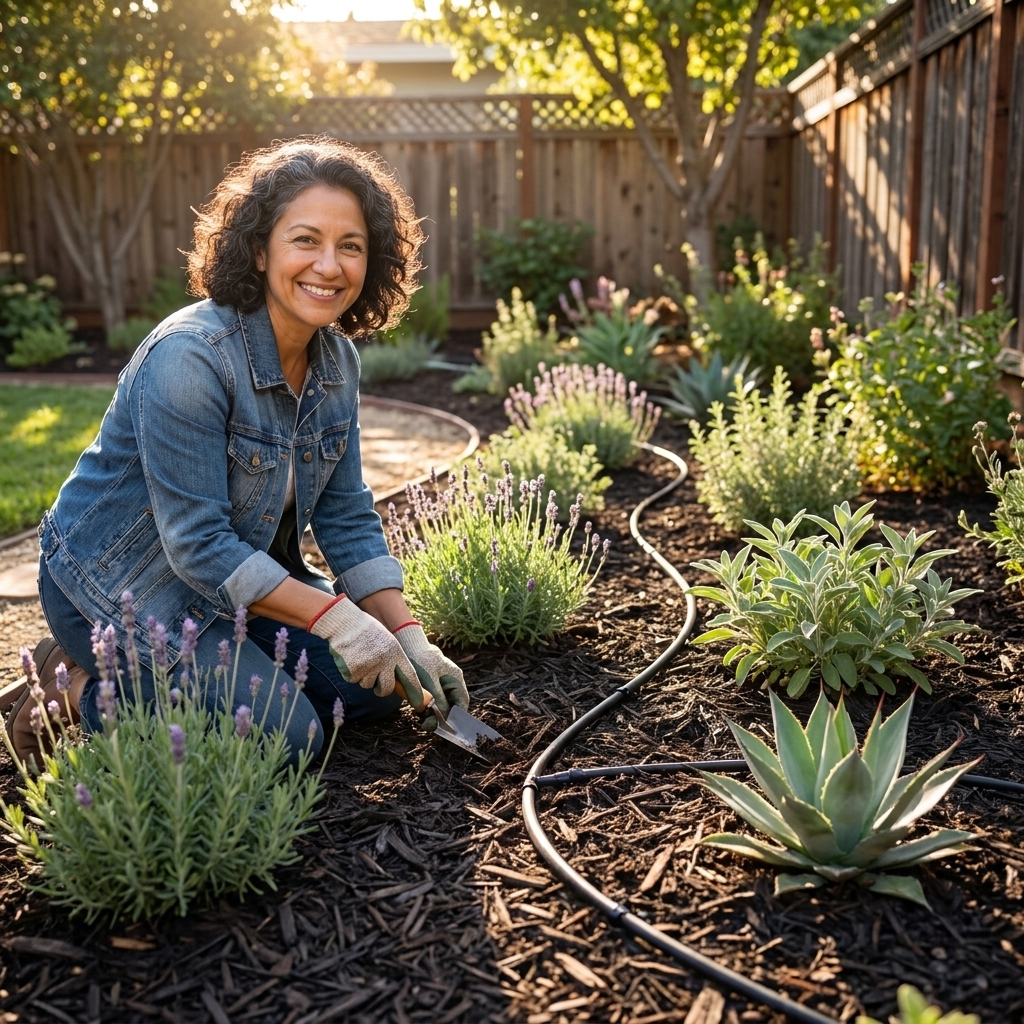
3) Use mulch like it is irrigation
Mulch is one of the cheapest ways to make a yard more drought-tolerant immediately. It lowers soil temperature, slows evaporation, and reduces weeds that steal water.
Mulch options (and where they shine)
- Shredded bark: great general-purpose mulch for beds, stays put better than chips.
- Wood chips: excellent around trees and shrubs, breaks down slowly.
- Gravel: useful in very dry climates and around plants that hate wet feet, but it can reflect heat.
- Leaf mulch: free if you have trees, wonderful for soil life, best in low-wind areas.
How much: Aim for 2 to 4 inches, keeping mulch a few inches away from plant stems and tree trunks to prevent rot.
4) Improve soil without overdoing it
I know “improve your soil” can sound like homework, but in a dry climate it is basically a water-saving tool. The goal is better moisture-holding and healthier roots, not rich, fluffy potting mix in the ground.
- Top-dress with compost: a half-inch to one inch layer once or twice a year is often plenty, especially under mulch.
- Skip aggressive tilling: it breaks soil structure and can make moisture swings worse.
- Use mulch to do the work: wood-based mulches break down slowly and feed soil life over time.
- Know when to go light: in some arid regions with native clays, heavy amendments can create a “bathtub effect” where water sits in the planting hole. If in doubt, amend broadly and shallowly, not deep in one spot.
Elena tip: If you only do one soil thing, mulch first. You can keep refining soil over time, but mulch pays you back immediately.
5) Group plants by water needs
This is the design trick that makes everything else easier. Put higher-water plants together near the house or where runoff collects, and place the toughest plants out in the hot, exposed zones.
A simple 3-zone setup
- Oasis zone: near patio or entry, a few favorites you do not want to sacrifice.
- Transition zone: most shrubs and perennials that want occasional deep watering.
- Arid zone: the “set it and forget it” section with the hardest, most drought-adapted plants.
6) Switch to drip irrigation
Drip irrigation is the quiet hero of low-maintenance yards. It puts water at the root zone instead of spraying it into wind and heat.
Drip basics that prevent headaches
- Use a filter and pressure regulator so emitters do not clog or blow off.
- Lay lines before mulching so you can troubleshoot easily.
- Water deeply, less often to encourage deep roots.
My honest confession: The first drip system I installed looked like spaghetti. The second time, I mapped it with a cheap roll of twine first. Ten minutes of planning saved me hours of crawling around later.
7) Use shrubs as the backbone
Perennials come and go, but shrubs create structure year-round and usually need less fuss once established. Think of them as the framework that makes your yard look finished even in the dry season.
Reliable drought-tolerant shrubs (choose for your region)
- Lavender (full sun, excellent drainage)
- Rosemary (can be a shrub, great scent, loves heat)
- Texas sage (fantastic in hot, arid climates)
- Manzanita (beautiful bark, excellent for dry Western gardens)
- Potentilla (cold-hardy option with long bloom)
Design tip: Repeat the same shrub 3 to 5 times through a bed. Repetition makes xeriscapes look intentional, not like a random plant adoption event.
8) Add drought-tough perennials
Color is where xeriscaping gets fun. Many of the best bloomers are naturally adapted to leaner soils and less frequent watering.
Perennial favorites for dry gardens
- Salvia (pollinator magnet, many varieties)
- Yarrow (flat-topped blooms, hardy and dependable)
- Blanket flower (Gaillardia, heat lover)
- Coreopsis (cheerful yellow, long bloom)
- Russian sage (airy purple, drought-tough once established)
- Penstemon (hummingbird favorite in many regions)
Pairing idea: Lavender + salvia + yarrow gives you months of bloom with a soft, silvery-green palette that screams “Mediterranean vacation,” even if you are just taking the trash out.
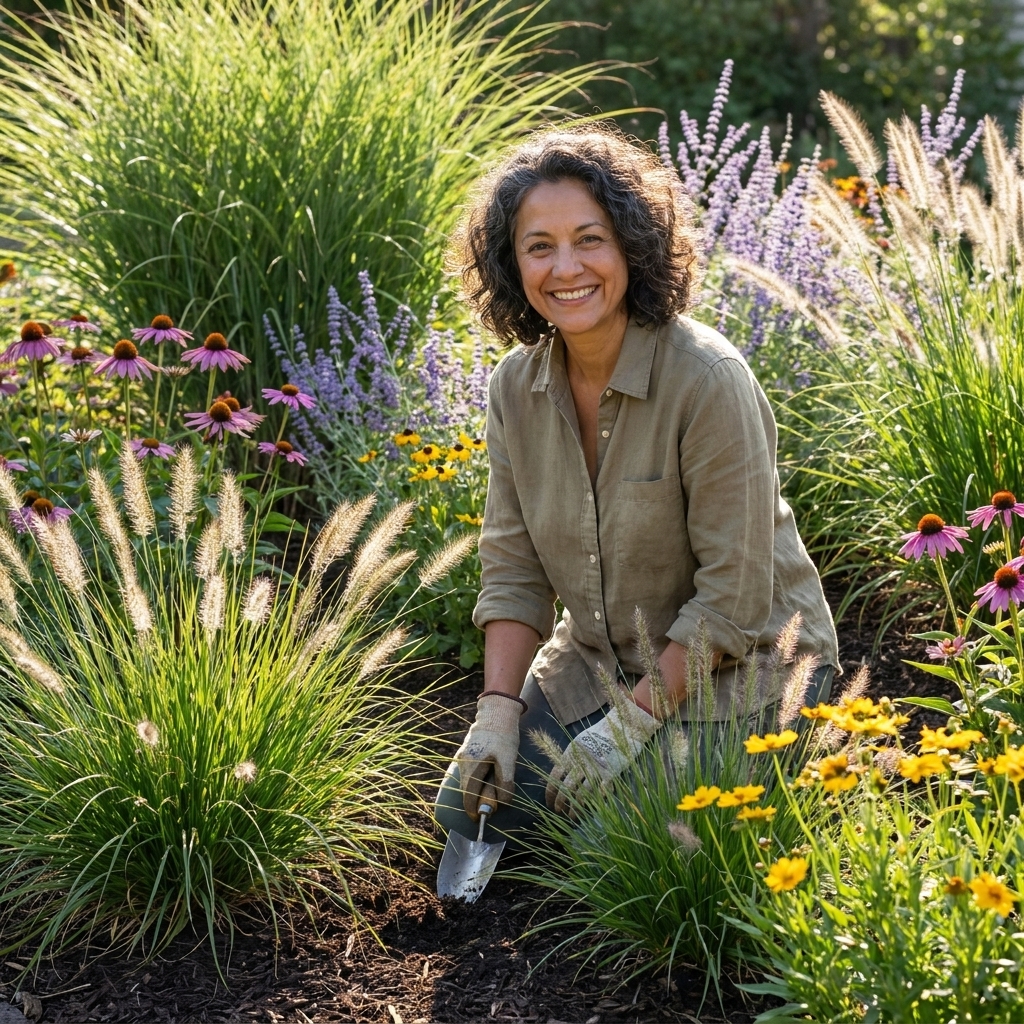
9) Use ornamental grasses wisely
Ornamental grasses are the easiest way to add that lush, swaying texture people associate with well-designed landscapes. Many are very drought tolerant once established, especially when matched to your climate.
Good options to look for
- Blue grama (also works as a lawn alternative)
- Little bluestem (great fall color)
- Feather reed grass (best in cooler climates or moderate water-wise beds, it can struggle in the driest, hottest sites without irrigation)
- Mexican feather grass (beautiful, but check invasiveness in your region)
Maintenance note: Most grasses just need a cutback once a year. Do it in late winter before new growth starts.
10) Choose permeable hardscaping
Hardscape can reduce water needs, but the wrong hardscape can increase heat and runoff. Permeable materials let water soak in where plants can use it.
Low-maintenance hardscape ideas
- Decomposed granite paths (compactable, natural look)
- Gravel patios with edging (great drainage, easy to refresh)
- Permeable pavers (more polished, still infiltration-friendly)
- Stepping stones in gravel (simple and charming)
Bonus: Defined paths keep foot traffic off planting beds, which protects soil structure and helps it absorb water better.
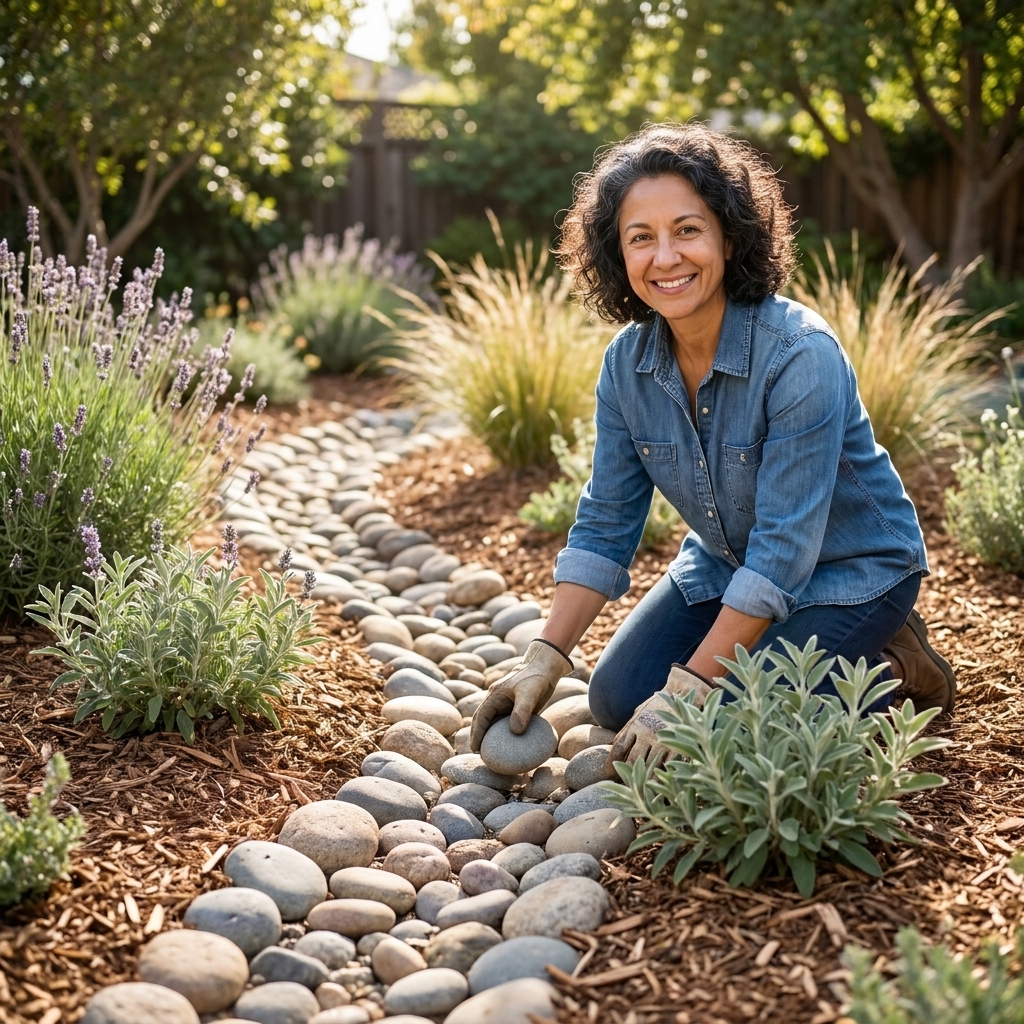
11) Catch runoff with a dry creek bed
This is one of my favorite “looks fancy but is actually practical” upgrades. A dry creek bed guides stormwater away from trouble spots and into planted areas where it can soak in slowly.
How to make it work
- Follow the natural slope and direct water away from foundations.
- Use a mix of stone sizes so it looks natural and resists shifting.
- Plant the edges with deep-rooted, drought-tolerant plants that can handle occasional wet feet.
Plant combinations that stay tough
If choosing plants is the part that makes your brain freeze, here are a few reliable combos. Treat these as templates and swap in region-appropriate natives or locally proven varieties.
- Silver and purple: lavender + Russian sage + blue fescue
- Hot-sun pollinator bed: salvia + yarrow + blanket flower + little bluestem
- Evergreen structure: rosemary + dwarf olive (where hardy) + low sedum groundcover
- Southwest vibe: agave (or cold-hardy yucca) + penstemon + decorative gravel mulch
One caution: Succulents and Mediterranean herbs both like dry conditions, but they do not always share the same winter tolerance. Double-check hardiness before you fall in love. Also, keep an eye on invasiveness lists for your area, not just for Mexican feather grass. Local extension offices usually have a simple “do not plant” list.
Low-maintenance care
Watering
Even drought-tolerant plants need regular watering while they establish. Think in seasons, not days. Year one is about rooting in, year two is about stretching roots deeper, year three is when many plants start acting truly tough.
- New plantings: Start with deep watering 1 to 2 times per week, then adjust based on heat, wind, and soil type. If the top few inches are still moist, wait. If the soil is dry several inches down, water.
- How to check “deep”: Use a trowel, a soil probe, or even a long screwdriver. You want moisture down about 6 to 8 inches for most perennials, and deeper for shrubs and trees.
- New shrubs and trees: A slow hose trickle, a temporary drip loop, or a deep root watering tool can help you soak the entire root zone, not just the planting hole.
- Morning irrigation: reduces evaporation and disease pressure.
Weeds
Weeds are easiest when they are tiny. A 5-minute walk-through once a week with a bucket is strangely satisfying and prevents the “how did that become a shrub?” moment.
Pruning
Aim for light, seasonal maintenance instead of heavy shearing. Many drought-tolerant shrubs look best with a natural shape and minimal fuss.
FAQ
Is xeriscaping expensive?
It can be, but it does not have to be. The biggest costs are usually hardscaping and mature plants. You can phase it in: start by converting one area, improving soil, adding mulch, and installing drip in stages. Also check for local rebates for turf removal, smart controllers, and drip conversion. Some cities and water districts will surprise you.
Does drought-tolerant mean I never water?
No. It means the landscape can thrive on less water once established and it is more forgiving during dry spells. New plantings always need consistent moisture while roots develop.
What is the best mulch for drought tolerance?
For most gardens, a 2 to 4 inch layer of wood-based mulch is the sweet spot. In very arid climates, gravel mulch can work well for plants that prefer extra drainage, but be mindful of heat reflection near tender plants.
Should I use native plants?
When you can, yes. Natives are often the easiest path to a resilient, low-maintenance yard because they are adapted to your local rainfall patterns and soils. Just remember: “native” does not automatically mean “no water ever,” especially in the first year.
A simple start this weekend
If you want the biggest impact with the least overwhelm, do this: pick one problem area, remove the thirsty turf or weeds, lay down drip (or at least a soaker hose), and mulch deeply. Then plant 3 to 5 repeat shrubs and tuck in perennials around them. That is the bones of a drought-tolerant design, and it will already look calmer and more intentional.
And if anything goes sideways, welcome to gardening. I have had my own disasters, including the Great Zucchini Invasion of 2019, and I still believe the best gardeners are just the ones who keep adjusting.