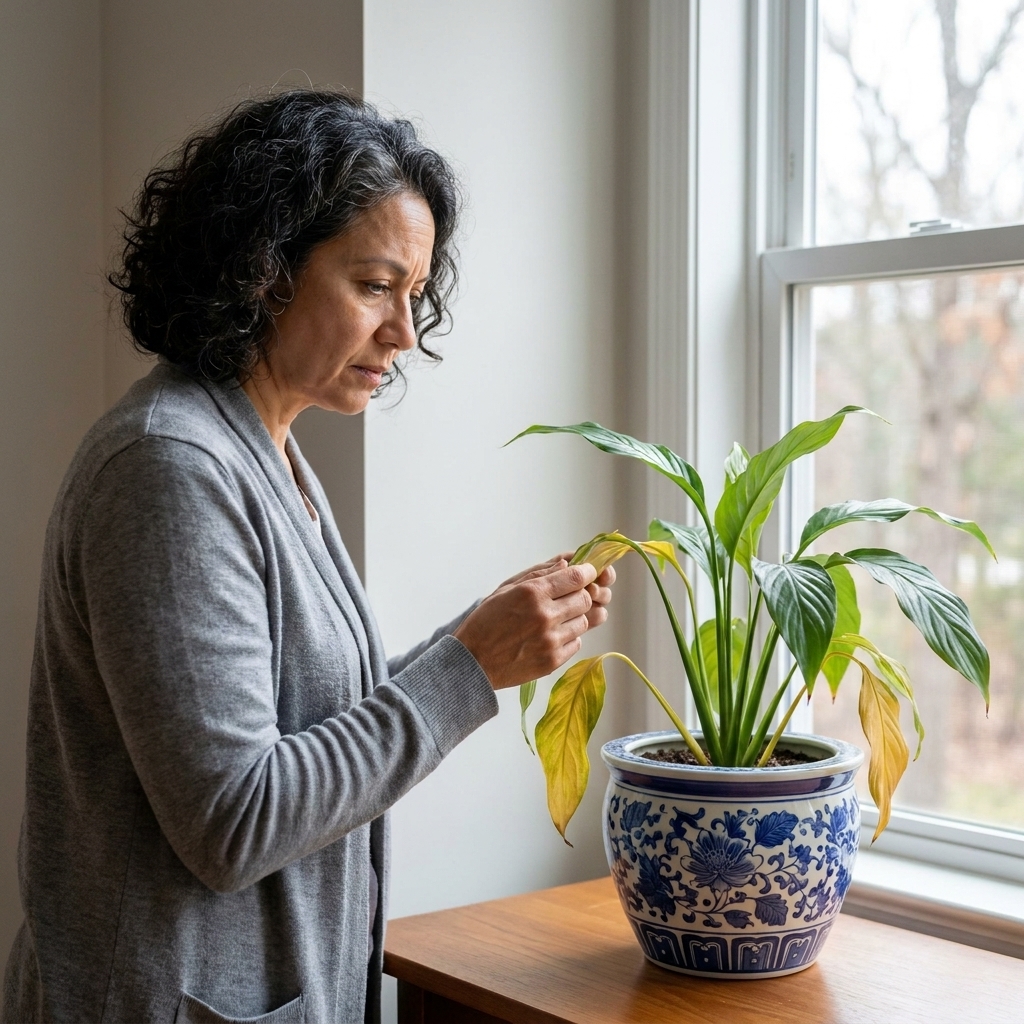
From watering problems to nutrient issues, pests, and disease, here are common reasons veggie leaves turn yellow, plus practical steps to correct the issue.
Gardening insights
7 Reasons Tomato Leaves Turn Yellow (And How to Fix It)
Yellow tomato leaves can signal watering trouble, nutrient deficiencies, pests, disease, herbicide drift, or simple stress. Here are common causes plus simple, organic fixes.

Elena Rosales
Elena Rosales is a certified Master Gardener and lifelong plant enthusiast who believes anyone can cultivate a green thumb. After transforming her tiny urban balcony into a thriving plant oasis, she moved to a half-acre homestead to grow her own food and flowers. Today, she shares practical, hands-on gardening advice to help the Hortello community bring more green into their lives.
Published September 21, 2026
Updated September 21, 2026
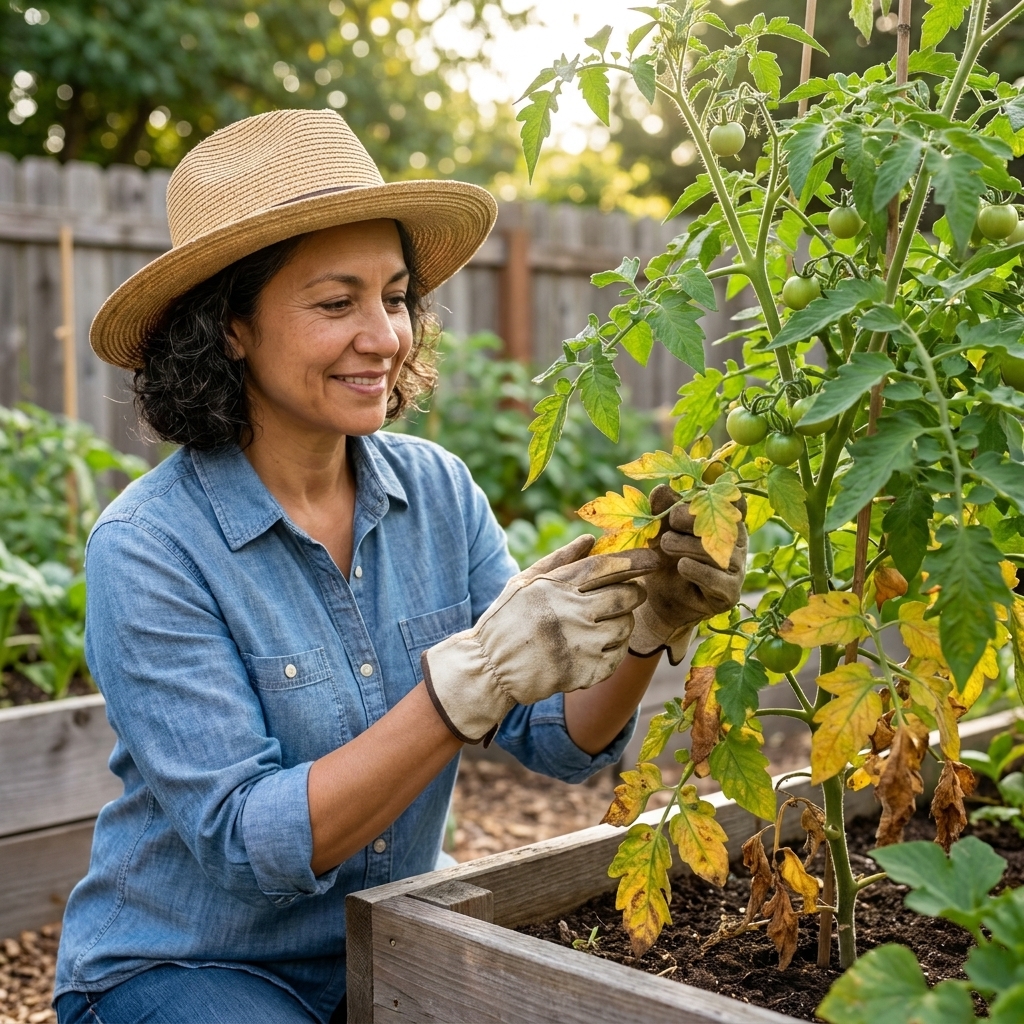
Few things make a gardener’s stomach drop faster than seeing tomato leaves fade from deep green to a sickly yellow. I have been there. Sometimes it is a quick fix (a watering tweak), and sometimes it is your plant waving a tiny yellow flag that says, “Help, my roots are unhappy.”
The good news: yellowing leaves are one of the easiest tomato problems to diagnose. The pattern, where it starts, and what the leaf looks like up close can usually point you to the cause.
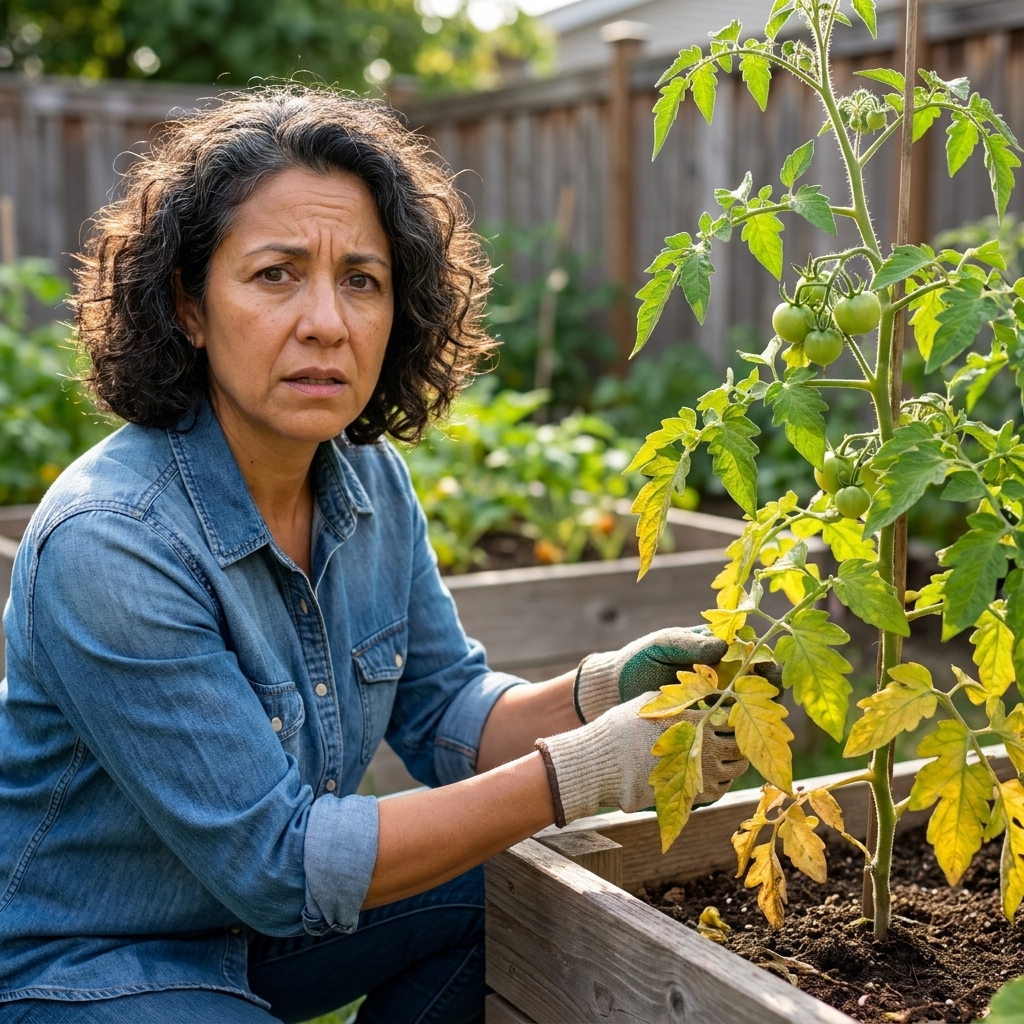
Before we dig into the seven most common reasons, here is my quick rule of thumb:
- Yellowing that starts on lower leaves is often normal aging, a mobile nutrient deficiency (like nitrogen), or a root problem.
- Yellowing that starts on new growth often points to an immobile nutrient deficiency (like iron) or stress affecting uptake.
- Yellow leaves plus spots, rings, or fuzzy growth raises the odds of disease.
1) Overwatering or poor drainage
If I had to pick the most common cause of yellow tomato leaves, it would be “too much love” in the form of water. Tomatoes like evenly moist soil, but they hate sitting in it. When roots are waterlogged, they cannot grab oxygen. The plant responds by yellowing, often starting with older leaves.
Clues to look for
- Yellow leaves that feel soft or limp
- Soil that stays wet for days
- Wilting even though the soil is moist
- Yellowing that spreads after heavy rain or frequent watering
How to fix it
- Check moisture the right way: Stick your finger 2 inches into the soil (or use a moisture meter). If it feels wet, wait.
- Water deeply, less often: Aim for the root zone, not the leaves. In-ground, many gardens do well with about 1 to 1.5 inches per week as a starting point, adjusting for heat, wind, mulch, plant size, and soil type. A good target is moist soil several inches down, not soggy.
- Improve drainage: Add compost, grow in raised beds, or mound soil for better runoff.
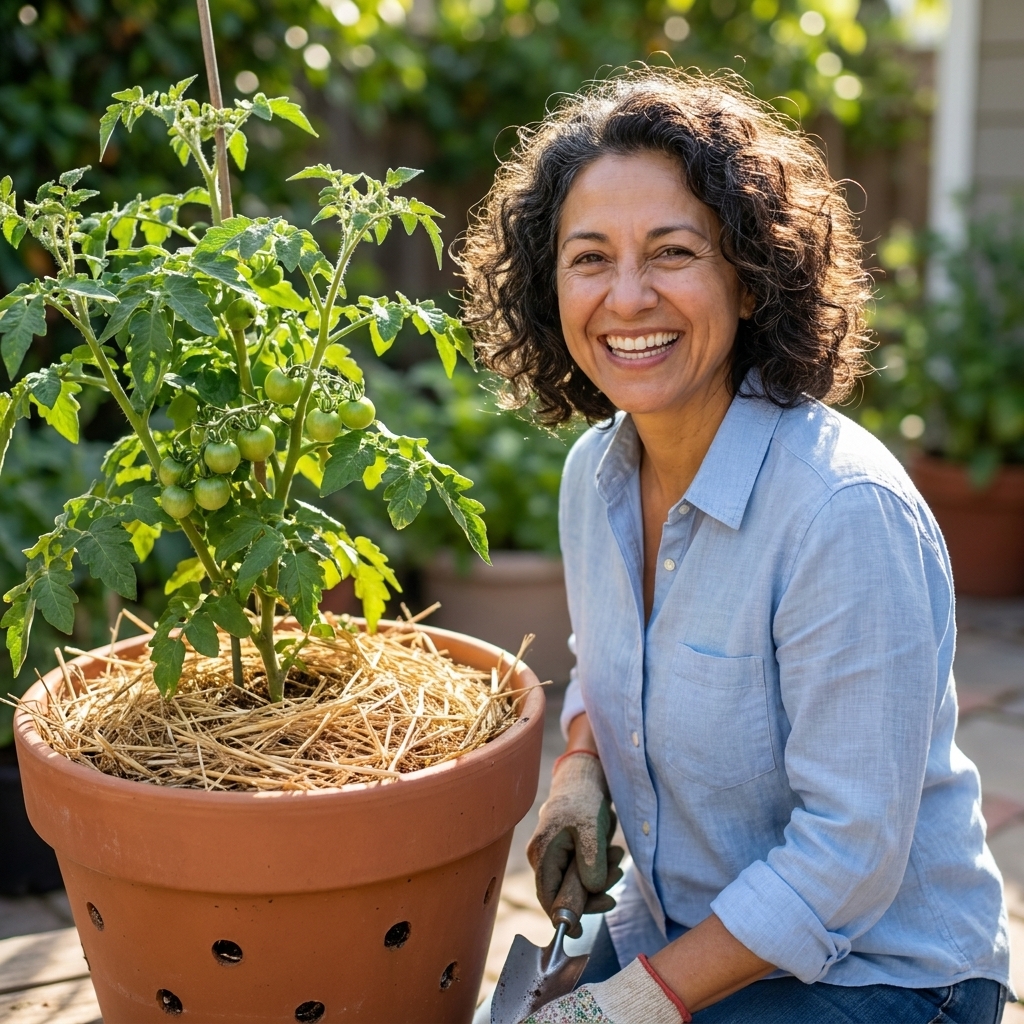
- For containers: Make sure there are drainage holes and the pot is not sitting in a saucer of water.
2) Underwatering and heat stress
On the flip side, inconsistent watering can also turn leaves yellow. In hot weather, tomatoes transpire like crazy. If the roots cannot keep up, older leaves may yellow and drop as the plant prioritizes new growth and fruit.
Clues to look for
- Dry, crumbly soil pulling away from the sides of a pot
- Leaf edges that look crispy or scorched
- Wilting during the day that improves at night (mild stress)
- Blossom end rot showing up on fruit alongside leaf issues
How to fix it
- Water on a schedule that matches the weather: During heat waves, container tomatoes may need water daily.
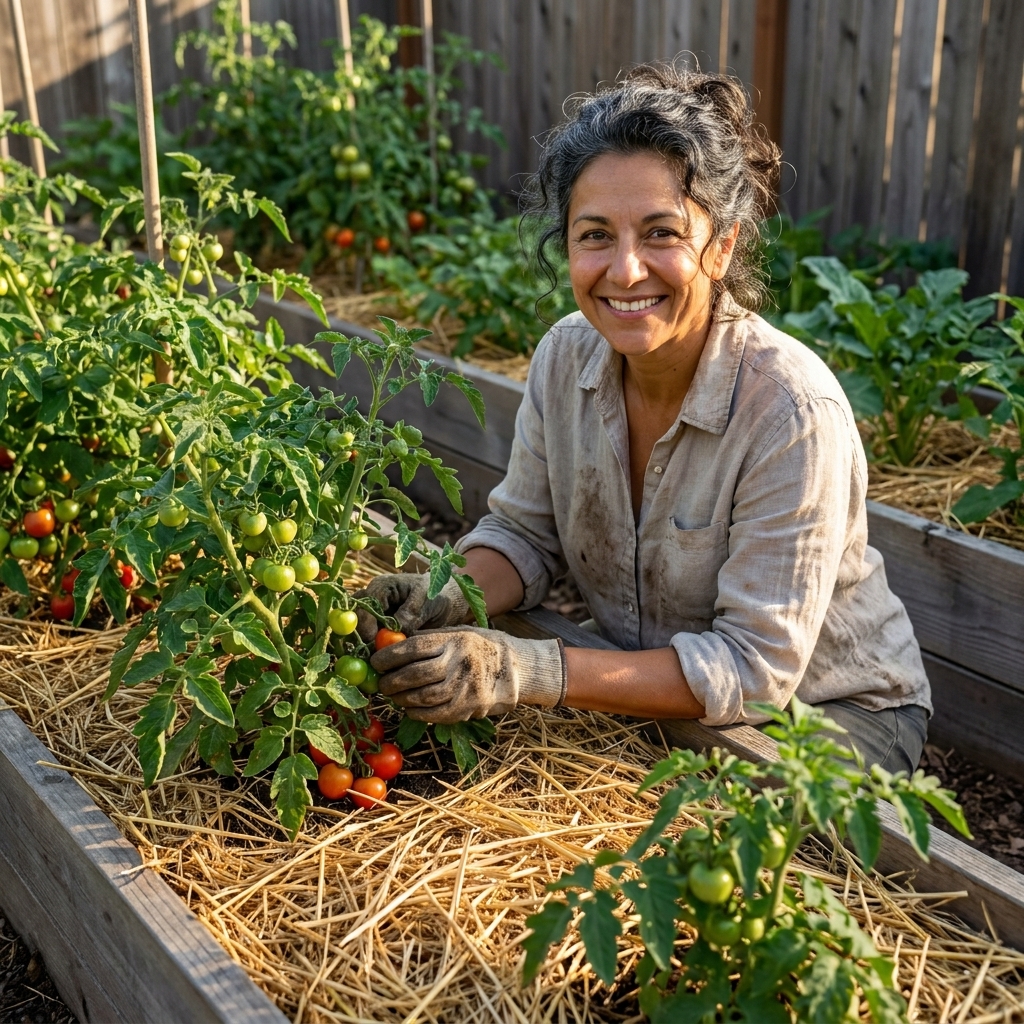
- Mulch: 2 to 3 inches of straw, shredded leaves, or untreated grass clippings helps stabilize moisture.
- Shade during extreme heat: A light shade cloth in the afternoon can reduce stress without slowing growth too much.
3) Nitrogen deficiency
Nitrogen is mobile in the plant, so when it is in short supply, tomatoes pull nitrogen out of older leaves to feed new growth. The result is a slow fade to pale green then yellow, usually starting at the bottom.
Clues to look for
- Older leaves turn uniformly yellow (not blotchy) and may drop
- Overall growth seems slow or spindly
- New leaves are smaller than expected
How to fix it (without overdoing it)
- Feed with a balanced organic fertilizer (something like 4-4-4 or 5-5-5) according to the label.
- Use a gentle nitrogen boost if plants are clearly hungry: fish emulsion, alfalfa meal, or well-finished compost.
- Avoid going too high-nitrogen once flowering is underway. Too much nitrogen can mean gorgeous leaves and fewer tomatoes.
Quick confession: my “Great Zucchini Invasion” year taught me that overfeeding is a thing. Tomatoes are a little more forgiving than zucchini, but they will absolutely take nitrogen and run with it.
4) Magnesium deficiency
Magnesium deficiency often shows up as interveinal chlorosis, meaning the tissue between veins turns yellow while veins stay greener. It usually starts on older leaves first.
Clues to look for
- Yellowing between veins on lower or mid-level leaves
- Leaf edges may curl upward
- More common in sandy soils or after heavy rains (nutrients leach)
How to fix it
- Soil-first approach: Add compost to improve nutrient holding capacity.
- Consider magnesium supplementation: If your soil test suggests low magnesium, apply dolomitic lime (also raises pH) or a magnesium-specific amendment as directed.
- Epsom salt note: A small, occasional Epsom salt drench can help if magnesium is truly low, but it is not a cure-all. If you already have adequate magnesium, it can throw other nutrients out of balance.
5) Iron deficiency
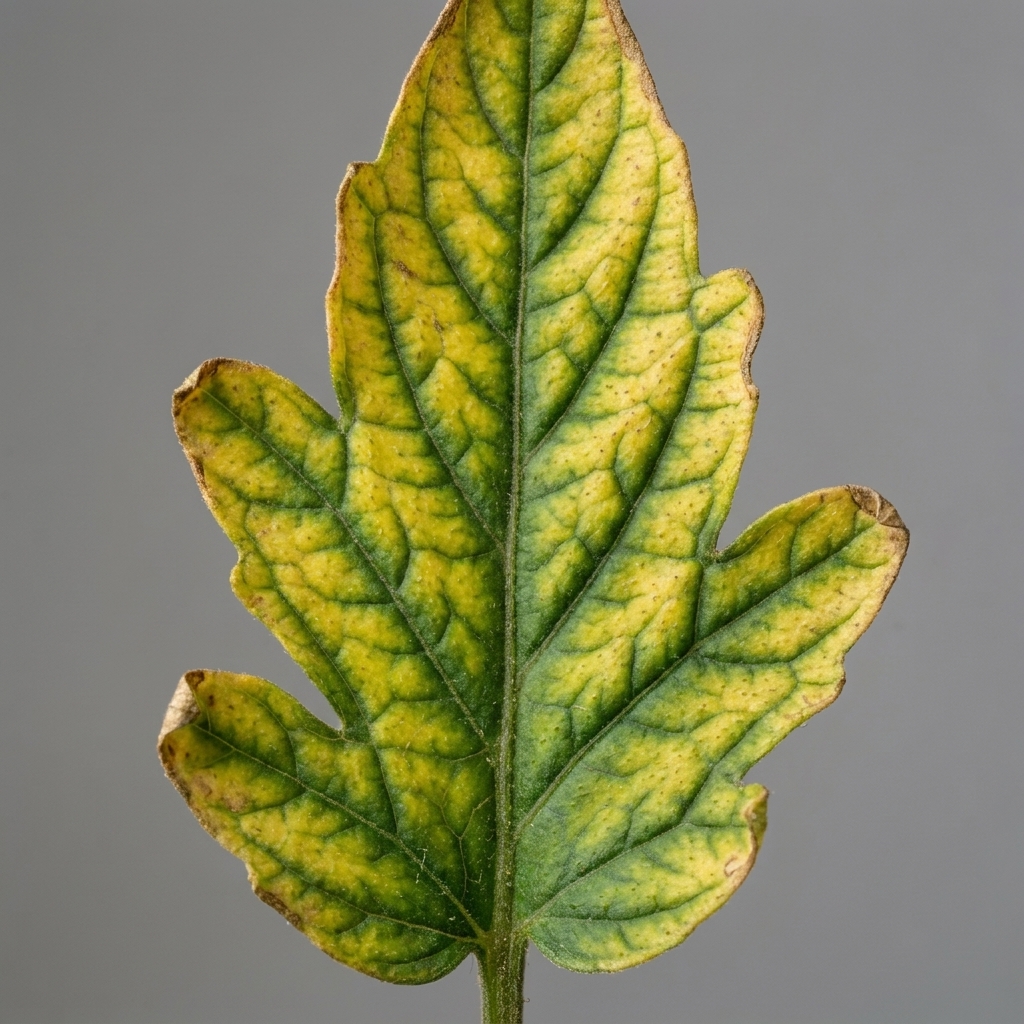
If the newest leaves are turning yellow while the veins remain green, think iron. Iron is not mobile in the plant, so deficiency appears on fresh growth first. It is often an uptake problem rather than a lack of iron in the soil, especially when soil pH is too high.
Clues to look for
- New leaves are pale yellow with greener veins
- Older leaves look relatively normal at first
- Often happens in alkaline soils or after overwatering (stressed roots)
How to fix it
- Check pH: Tomatoes prefer roughly 6.0 to 6.8. If your soil is much higher, iron becomes harder for plants to access.
- Support root health: Fix drainage and avoid soggy conditions.
- Use chelated iron for quicker correction, following label directions, especially in containers.
6) Blight or leaf spot
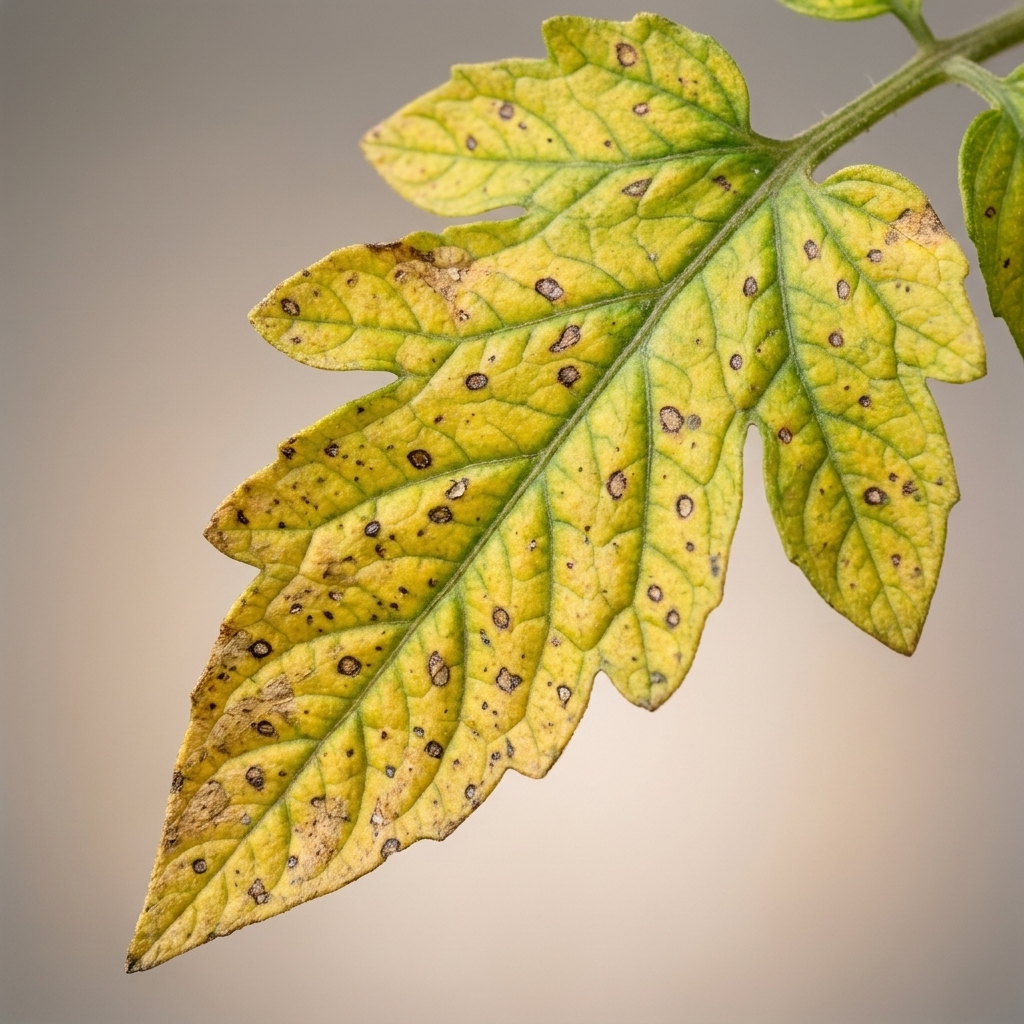
When yellowing comes with brown spots, rings, or a “freckled” look, disease climbs the suspect list. Early blight often creates target-like rings on older leaves. Septoria leaf spot tends to look like many small dark spots with tan or light centers, and those pale centers often develop tiny black specks (fruiting bodies) as it progresses. Both typically start low and move upward, especially in warm, humid weather or after rain splashes soil onto foliage.
Clues to look for
- Lower leaves yellow first, then develop spots
- Spots expand, leaves brown and drop
- Problem worsens after rain, overhead watering, or crowding
How to fix it
- Prune and remove infected leaves: Snip off affected lower leaves and dispose of them in the trash, not compost.
- Improve airflow: Space plants properly and prune suckers selectively.
- Water at the base: Drip irrigation or a soaker hose is your best friend here.
- Mulch: Prevent soil splash by keeping a clean mulch layer under plants.
- Organic sprays: Copper or biofungicides can help slow spread when used early. Always follow label instructions. Apply when pollinators are not active and leaves can dry, and avoid spraying right before rain.
7) Pests or root stress
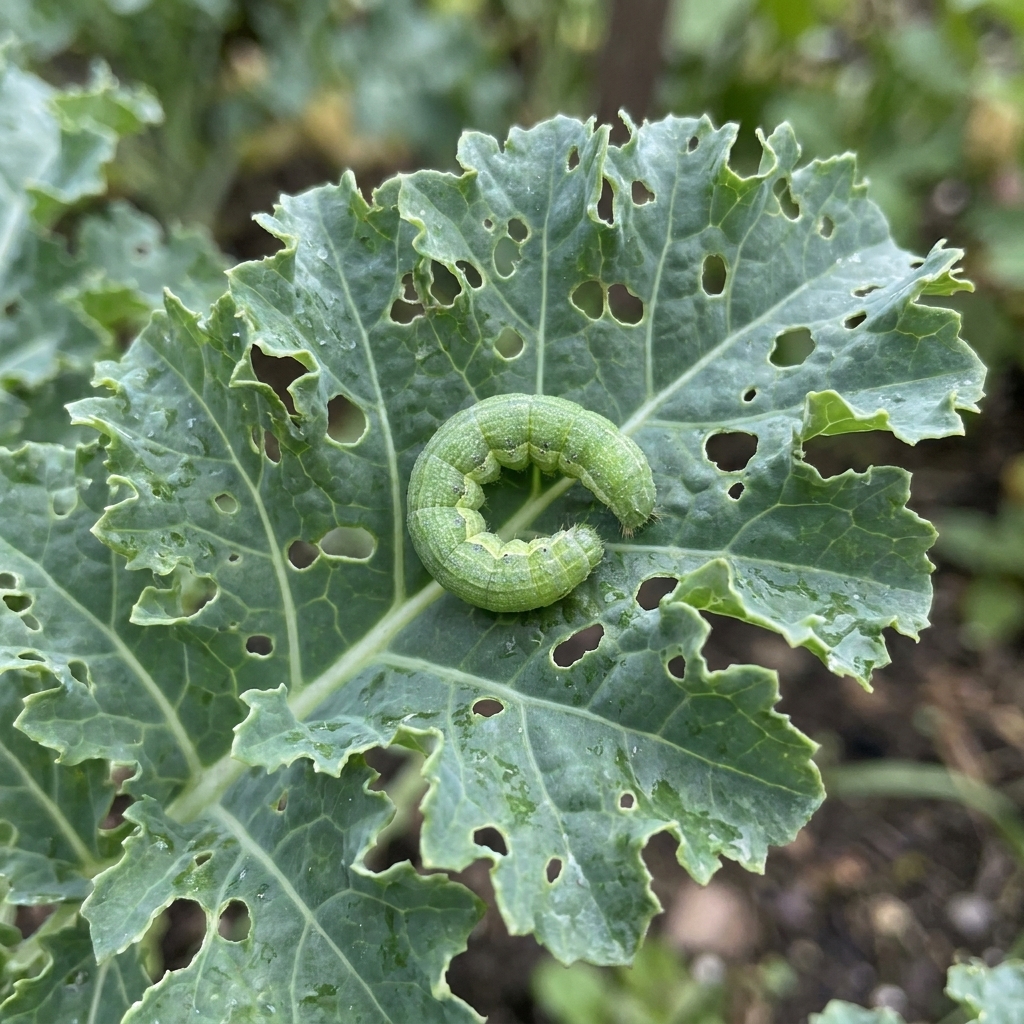
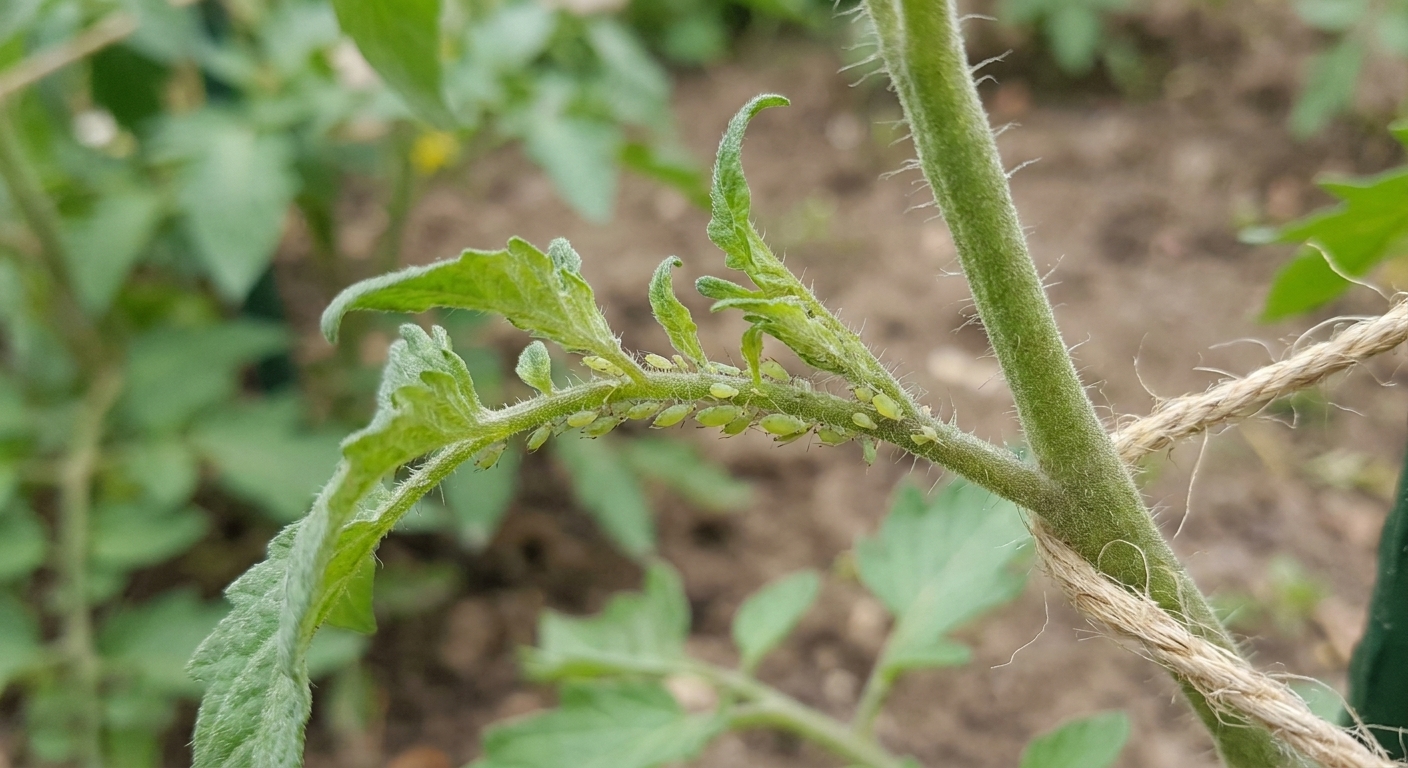
Sometimes yellow leaves are not about nutrients at all. Sap-sucking pests like aphids, whiteflies, and spider mites can cause stippling, yellowing, and overall decline. And below ground, root-knot nematodes can reduce the plant’s ability to absorb water and nutrients, leading to persistent yellowing and poor vigor even when you are doing everything “right.”
Clues to look for
- Aphids/whiteflies: Sticky residue (honeydew), ants, clusters of insects on tender growth
- Spider mites: Fine webbing, tiny pale speckles on leaves, worse in hot dry weather
- Nematodes: Stunted plants, yellowing that does not improve with feeding, roots with small swellings or galls when you pull the plant
How to fix it
- For pests: Spray leaf undersides with a strong jet of water, introduce or protect beneficials (ladybugs, lacewings), and use insecticidal soap if needed.
- For mites: Rinse the undersides of leaves regularly, avoid drought stress, and use horticultural oil or insecticidal soap if infestation is heavy (follow label and test on a small area first).
- For nematodes: Rotate crops, plant resistant tomato varieties (look for “N” on the label), and add lots of organic matter. In raised beds, consider solarizing soil in the hottest part of summer if nematodes are persistent.
Other common culprits
Potassium deficiency
When tomatoes are setting and sizing up fruit, potassium demand goes up. If potassium is low, older leaves may show yellowing at the edges that can progress to browning or a scorched look.
- Try this: Use a balanced tomato fertilizer (not just nitrogen) and consider a soil test if it keeps happening. Keep watering steady because drought stress makes nutrient issues look worse.
Herbicide drift
If new growth looks twisted, cupped, ferny, or just “wrong” along with yellowing, consider herbicide drift or contamination (from lawn weed killers, treated hay or straw, or nearby spraying).
- Try this: Avoid using grass clippings from treated lawns, be cautious with unknown straw or manure sources, and shield plants if spraying happens nearby. If damage is severe, replanting may be the fastest path.
Transplant shock
A few yellow lower leaves right after transplanting can be normal while the plant reroutes energy into new roots. If new growth stays green and the plant perks up within a week or two, you are likely fine.
What yellow leaves you can ignore
Not every yellow leaf is a crisis. Tomatoes naturally shed some older leaves, especially the ones shaded under a dense canopy. If only a few bottom leaves turn yellow, the rest of the plant looks vigorous, and there are no spots or pests, you can usually:
- Prune off the yellowing lower leaves for better airflow
- Mulch and keep watering consistent
- Monitor for spread
Quick checklist
- Where is it starting? Lower leaves vs new growth
- What is the pattern? Uniform yellow vs between veins vs spots
- How is the soil moisture? Wet, dry, or swinging back and forth
- Any pests? Check leaf undersides and growing tips
- Any recent changes? Heat wave, heavy rain, new fertilizer, transplanting
- When in doubt: Do a soil test. It saves time, money, and a lot of guessing
FAQ
Should I cut off yellow tomato leaves?
If the leaf is older and fully yellow, yes, it is usually safe to remove. If yellowing is tied to disease, prune affected leaves promptly and sanitize pruners between plants. Always avoid stripping too many leaves at once, since foliage fuels fruit growth.
Can yellow leaves turn green again?
Sometimes, if the cause was mild stress or a minor nutrient issue caught early. But many yellowed leaves will not fully recover. Focus on correcting the underlying problem and watch for healthy new growth.
Why are my tomato leaves yellow but the veins are green?
That pattern is often magnesium deficiency on older leaves or iron deficiency on newer leaves. Use the “where it starts” clue to narrow it down, and consider a soil test if it keeps happening.
Are coffee grounds good for yellow tomato leaves?
Coffee grounds are best used as a small addition to compost, not as a quick fix around tomato stems. They do not reliably correct nutrient deficiencies, and if used in thick layers they can mat and shed water. Mixing them into compost (or lightly into soil) avoids the crusty layer problem.