Droopy leaves can mean two very different problems. Here’s how to tell if your plant is overwatered or underwatered, what to check first, and how to rescue...
Gardening insights
Why Your Basil Is Wilting and How to Fix It
Wilting basil is usually a watering, heat, light, or root problem. Learn quick at-home checks to diagnose the cause, revive your plant fast, and prevent wilt indoors or in the garden.

Elena Rosales
Elena Rosales is a certified Master Gardener and lifelong plant enthusiast who believes anyone can cultivate a green thumb. After transforming her tiny urban balcony into a thriving plant oasis, she moved to a half-acre homestead to grow her own food and flowers. Today, she shares practical, hands-on gardening advice to help the Hortello community bring more green into their lives.
Published September 30, 2026
Updated September 30, 2026
Basil has a way of going from perky and fragrant to dramatically droopy in what feels like five minutes. The good news is that wilting is a symptom, not a mystery. With a few quick checks, you can usually pinpoint the cause and get your plant back to making pesto dreams instead of plant-parent guilt.
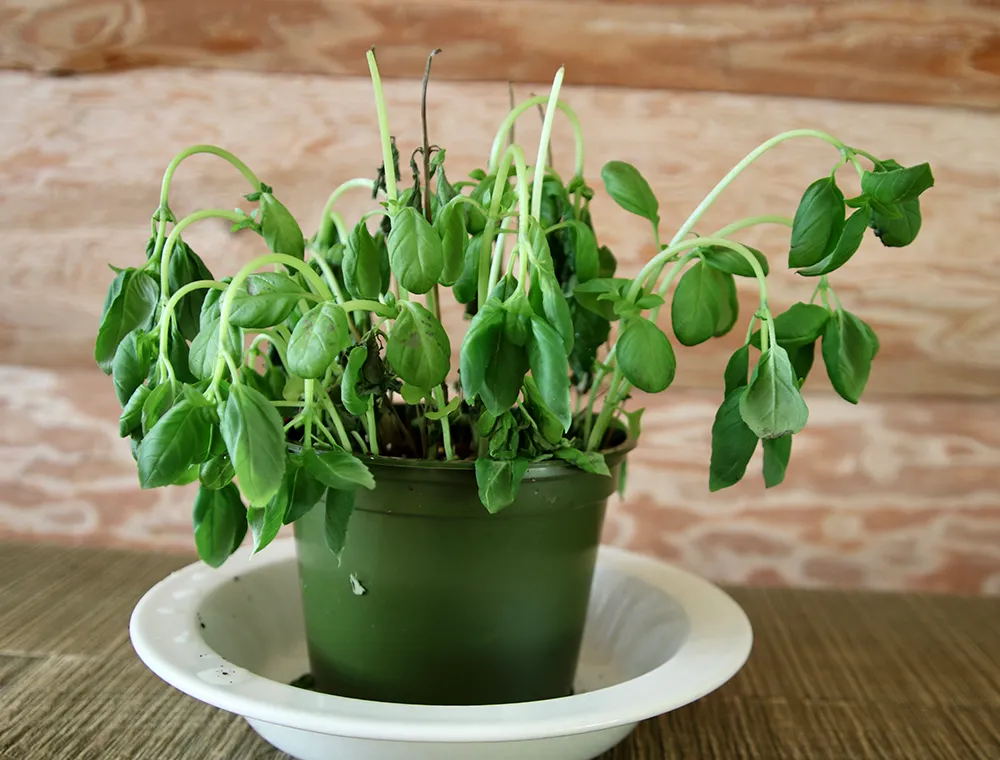
Start here: a 2-minute basil wilt check
Before you change anything, take a breath and do these fast checks. They will tell you whether you are dealing with thirst, too much water, heat stress, low light, or a root issue.
- Touch the soil 1 to 2 inches down: Is it dry, evenly moist, or soggy?
- Lift the pot: A very light pot usually means the soil is dry. A heavy pot that stays heavy day after day can point to poor drainage or too-frequent watering.
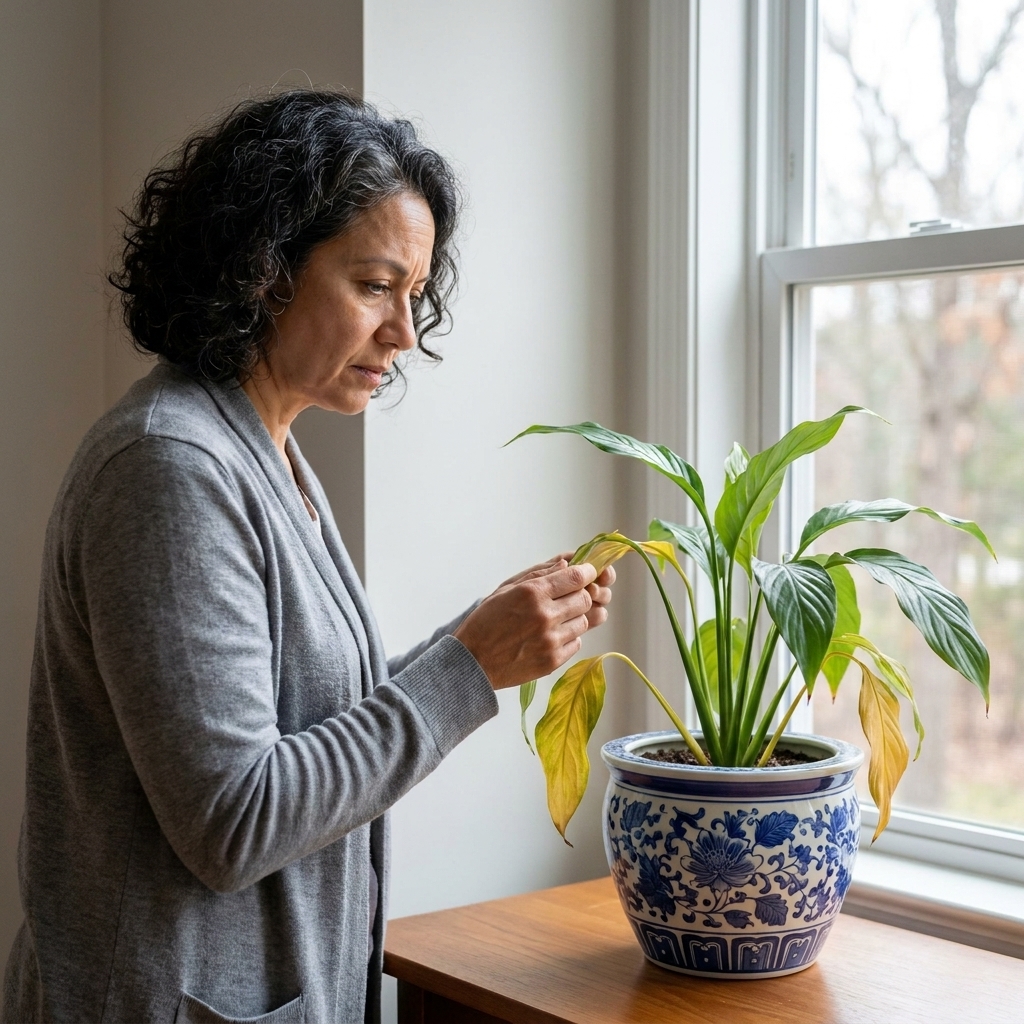
- Look at the leaves: Limp but still green often means water or heat. Yellowing plus wilt often points to root trouble or disease.
- Check the temperature and sun: Basil loves warmth, but hot midday sun in a pot can cook it fast.
- Check light indoors: If stems are long and leggy (big gaps between leaves), it is usually not getting enough light.
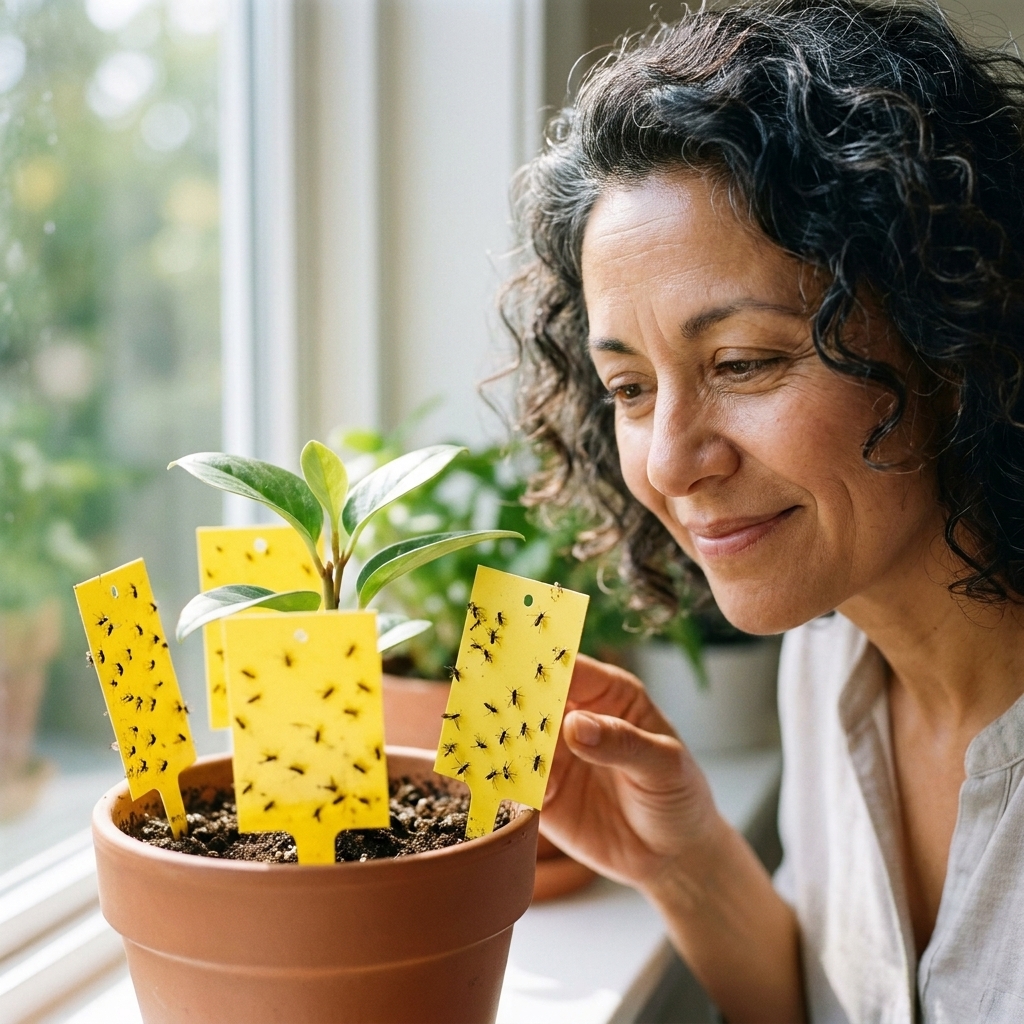
- Peek for pests: Check the underside of leaves for tiny dots, webbing, or clusters of soft-bodied insects.
Cause #1: Underwatering
If your basil is wilting and the soil feels dry, you likely have a thirsty plant. Basil has big, thin leaves that lose water quickly, especially in containers and sunny windows.
Signs it is underwatered
- Soil is dry an inch down and may pull away from the pot edges
- Leaves droop but stay green (at least at first)
- Plant perks up noticeably after watering
What to do now
- Water deeply: Water until it runs out the drainage holes, then let it drain fully.
- If the soil is hydrophobic (water runs right through): Bottom-water the pot for 15 to 30 minutes by setting it in a bowl of water, then drain.
- Give temporary shade: Move the pot out of harsh sun for the rest of the day while it rehydrates.
My balcony lesson: On hot days, basil can need water daily. In small terracotta pots, sometimes twice. Terracotta breathes, which is lovely for roots, but it dries out fast.
Cause #2: Overwatering and low oxygen
Overwatering is less about the calendar and more about oxygen. Basil roots need air in the soil. When you water frequently in a slow-draining mix, the root zone can stay saturated, oxygen drops, roots struggle, and the plant wilts even though the pot feels damp.
Signs it is overwatered
- Soil feels wet or swampy, especially days after watering
- Leaves wilt and may turn pale or yellow
- Musty smell from the pot, fungus gnats hovering, or algae on the soil surface
What to do now
- Pause watering: Let the top couple inches dry out.
- Improve drainage: Make sure there is a drainage hole and the pot is not sitting in a saucer full of water.
- Boost light and airflow: Bright light helps the plant use water and speeds gentle drying.
If you suspect root rot
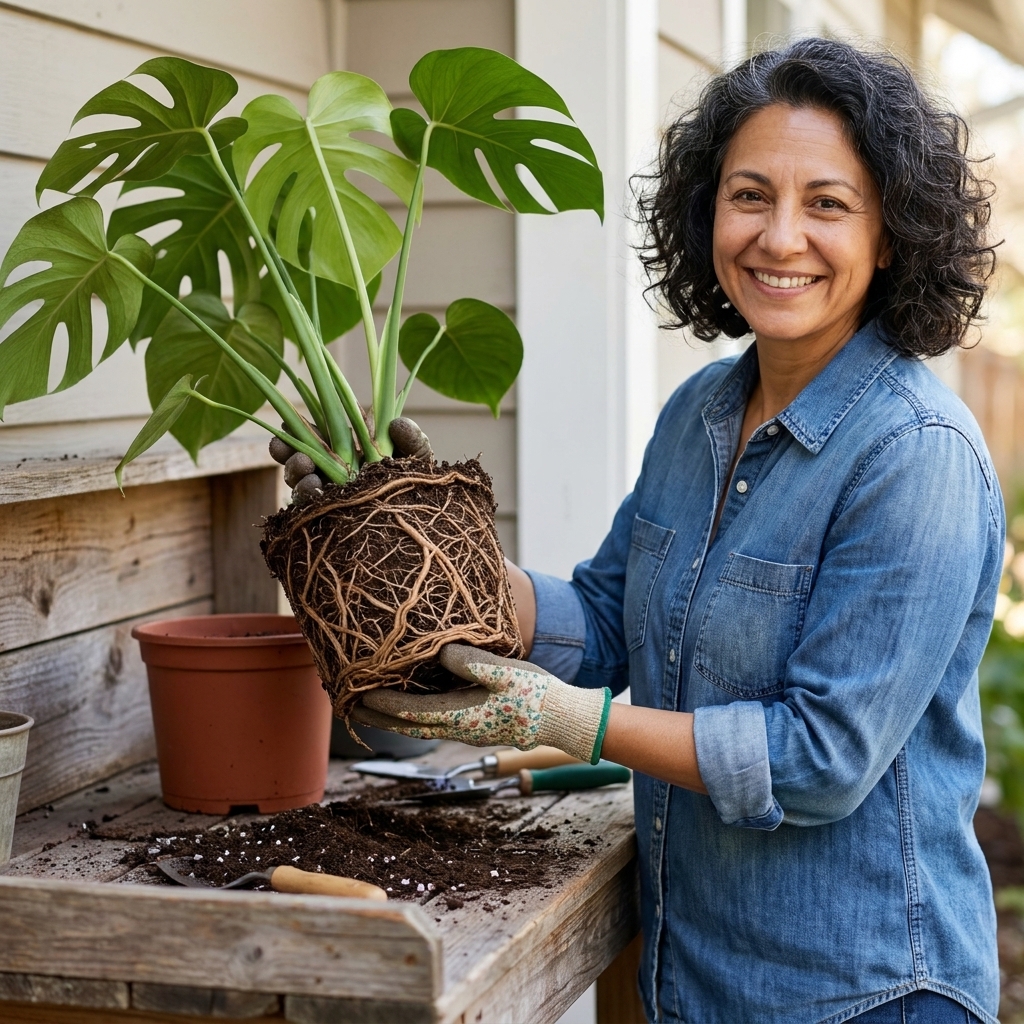
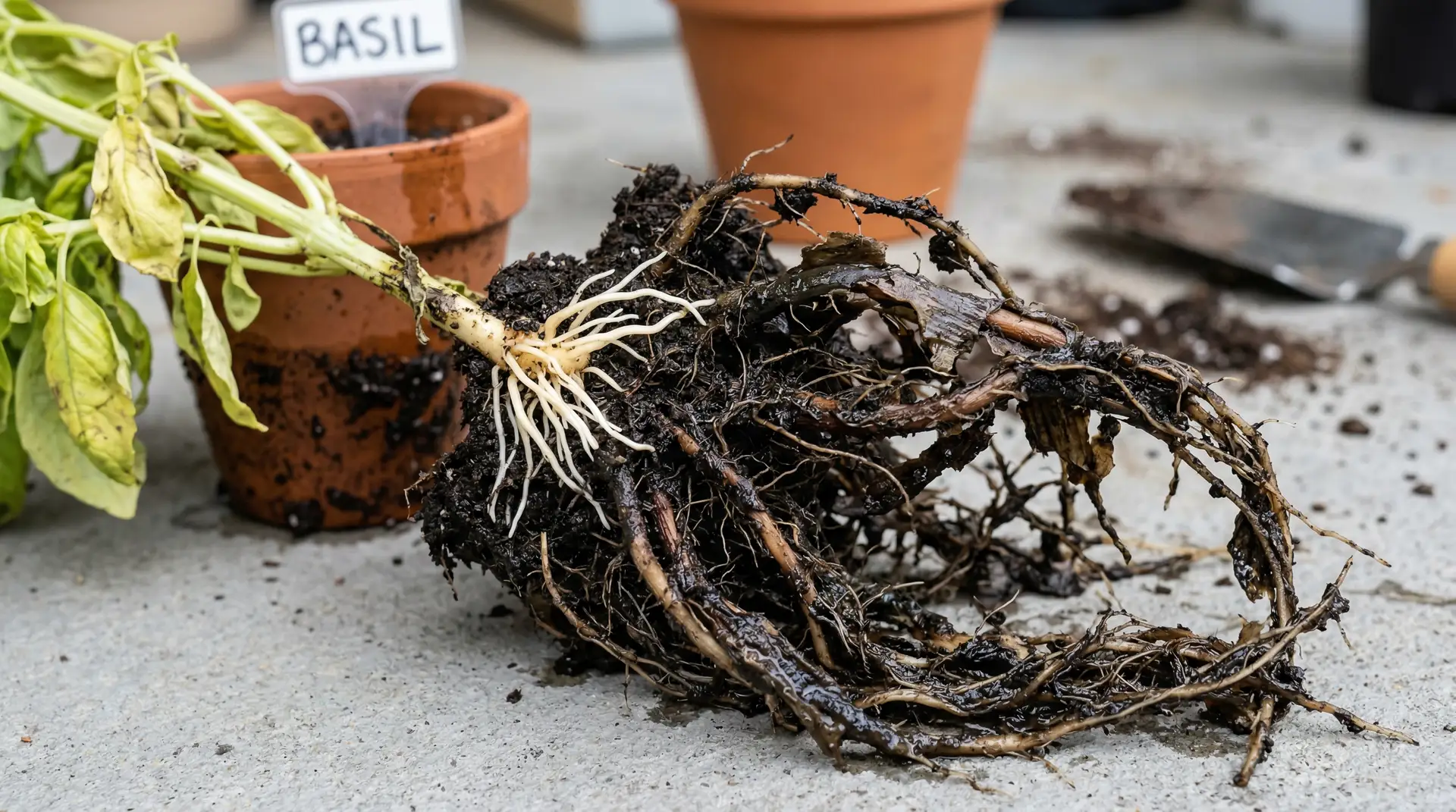
If basil keeps wilting in wet soil, slide it out of the pot and check roots. Healthy roots are light-colored and firm. Rotting roots look brown or black and feel mushy.
- Trim off mushy roots with clean scissors.
- Repot into fresh, airy potting mix in a clean pot with drainage.
- Water once to settle the soil, then wait until the top inch dries before watering again.
Cause #3: Heat stress
Basil loves warm weather, but containers heat up quickly and basil leaves lose moisture faster than roots can replace it. A plant can wilt in full sun even when the soil is not bone dry.
Signs it is heat-stressed
- Wilting happens during the hottest part of the day
- Leaves may look limp but recover in the evening
- Leaf edges may look scorched or crispy after repeated stress
What to do now
- Move to afternoon shade: Morning sun and afternoon shade is often perfect for potted basil.
- Water in the morning: This sets the plant up for hot afternoons.
- Mulch the soil surface: A thin layer of straw or shredded leaves in a pot can slow evaporation.
- Skip misting as a fix: Misting usually does not raise humidity for long, and keeping leaves wet can sometimes contribute to fungal issues indoors.
Cause #4: Root issues
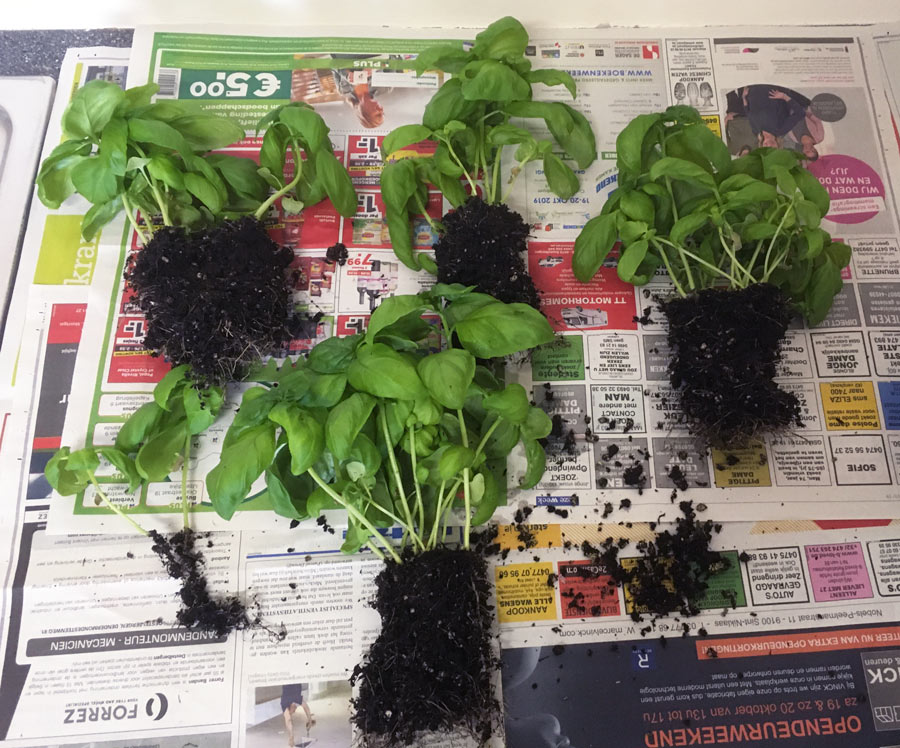
Sometimes basil wilts because the roots simply cannot do their job. The classic culprit is a crowded grocery store basil pot, which is usually dozens of seedlings packed together like a tiny basil city.
Quick checks
- Is the pot jam-packed with stems? Crowding makes plants compete for water and nutrients.
- Does water sit on the surface? Compacted soil or no drainage can suffocate roots.
- Are roots circling the bottom? If you see a tight root mass, it needs a bigger home.
What to do now
- Up-pot: Move basil to a container 1 to 2 sizes larger with drainage holes.
- Use a light potting mix: For containers, choose a quality potting mix, not garden soil. If your mix is heavy, blend in perlite for extra air space.
- Split crowded basil: Gently tease apart the clump and replant in 2 to 4 pots. Yes, a few seedlings will sulk. Most will thank you.
Cause #5: Transplant shock
Basil can wilt after moving from nursery conditions to your home or garden. It is adjusting to new light, wind, temperature swings, and watering patterns. Even careful gardeners see this, myself included.
Signs it is transplant shock
- Wilting starts within 24 to 72 hours after transplanting
- Plant looks generally healthy otherwise, with no mushy stem base
- Leaves may droop in sun and perk up in shade
What to do now
- Shade for a few days: Bright shade outdoors or indirect light indoors helps.
- Keep soil evenly moist, not soaked: The goal is steady moisture while roots re-establish.
- Hold fertilizer briefly: Wait 1 to 2 weeks, then feed lightly if needed.
Other things to check
Cold stress
Basil is a warm-season herb. Chilly nights or cold drafts can cause limp, darkened leaves.
- Check: Did temperatures dip to around 50 to 55°F (10 to 13°C), or did the plant sit in an air-conditioned draft or against a cold window?
- Fix: Bring pots indoors overnight, move away from cold windows, and avoid planting outside until nights stay reliably warm.
Low light (especially indoors)
Basil grown indoors often wilts because it is stretching, not because it is thirsty. When light is weak, stems get leggy, leaves get smaller, and the plant struggles to balance water use.
- Check: Are there big gaps between leaves, or is the plant leaning hard toward the window?
- Fix: Aim for 6 to 8+ hours of bright light, or use a grow light. Rotate the pot weekly so it grows evenly.
Stem damage
If a main stem is kinked, crushed, or chewed, water cannot move upward properly.
- Check: Look for bent stems, pinched spots, or soft collapse at the soil line.
- Fix: Prune above the damage to encourage new branching, then stake if needed.
Pests (especially indoors)
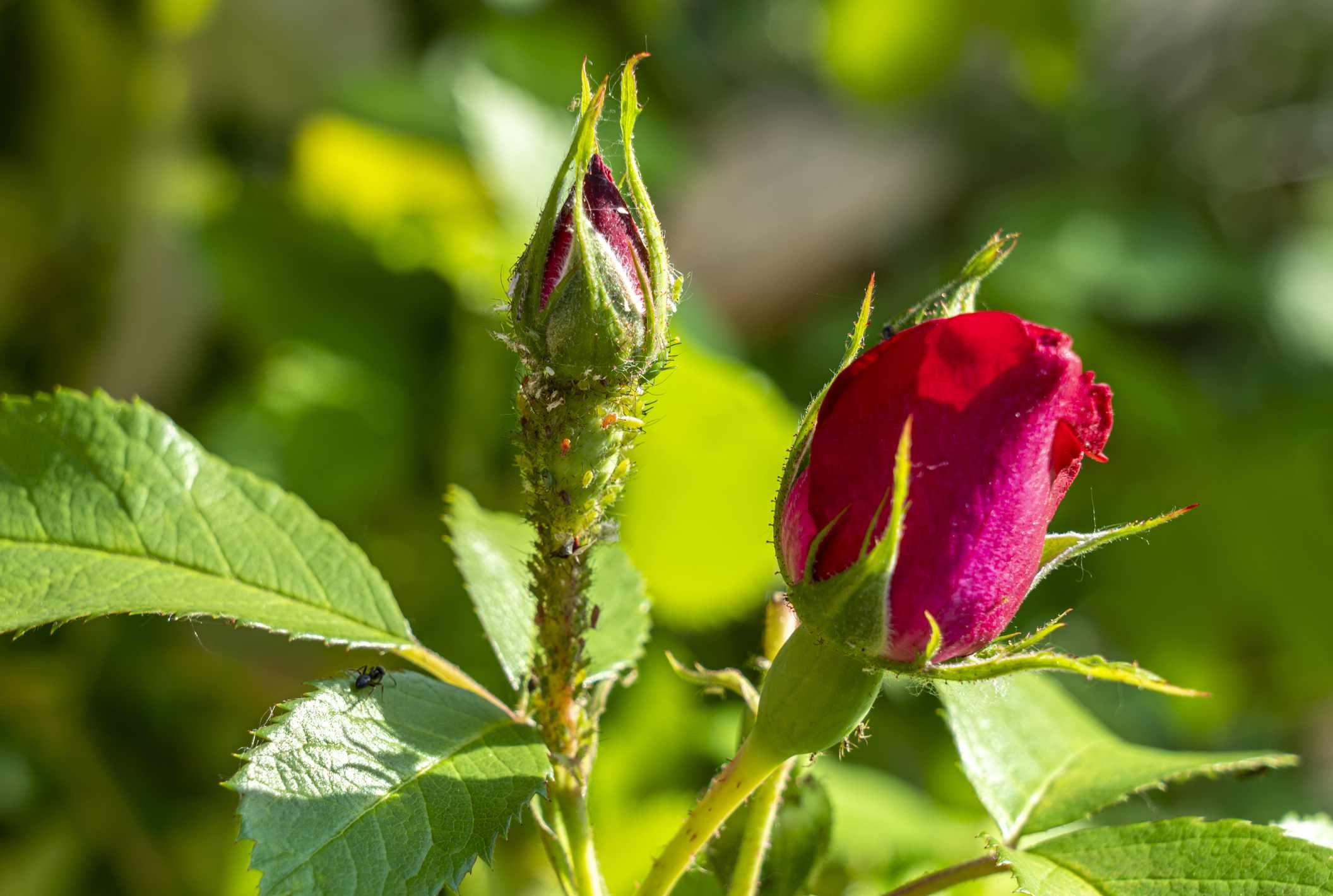
Aphids and spider mites can cause general decline and limp growth.
- Check: Sticky residue, tiny moving specks, fine webbing, or distorted new growth.
- Fix: Rinse the plant thoroughly, then use insecticidal soap as needed. Increase humidity and airflow for spider mites.
Disease (sometimes it is not watering)
If the plant keeps declining even after you correct moisture and light, disease may be involved. Basil downy mildew can show up as yellowing on top of leaves with gray or purple fuzz underneath. Fusarium and other wilts can cause stunting and a plant that never really rebounds.
- Check: Persistent yellowing, fuzz under leaves, stunted growth, or a steady downhill slide that does not match your watering.
- Fix: Isolate the plant from others, remove the worst leaves, and improve airflow. If symptoms spread quickly, it is often best to compost the plant and start fresh.
Revive wilted basil: simple rescue plan
If you want a straightforward approach, this is my go-to order of operations. It prevents the classic mistake of watering an already waterlogged plant.
- Check soil moisture 1 to 2 inches down.
- If dry: Deep water and drain well.
- If wet: Pause watering, improve drainage, and move to brighter light.
- Get it out of harsh sun for the day.
- After 24 hours: If it is still wilting, inspect roots for crowding or rot and repot if needed.
Prevention tips
For indoor basil pots
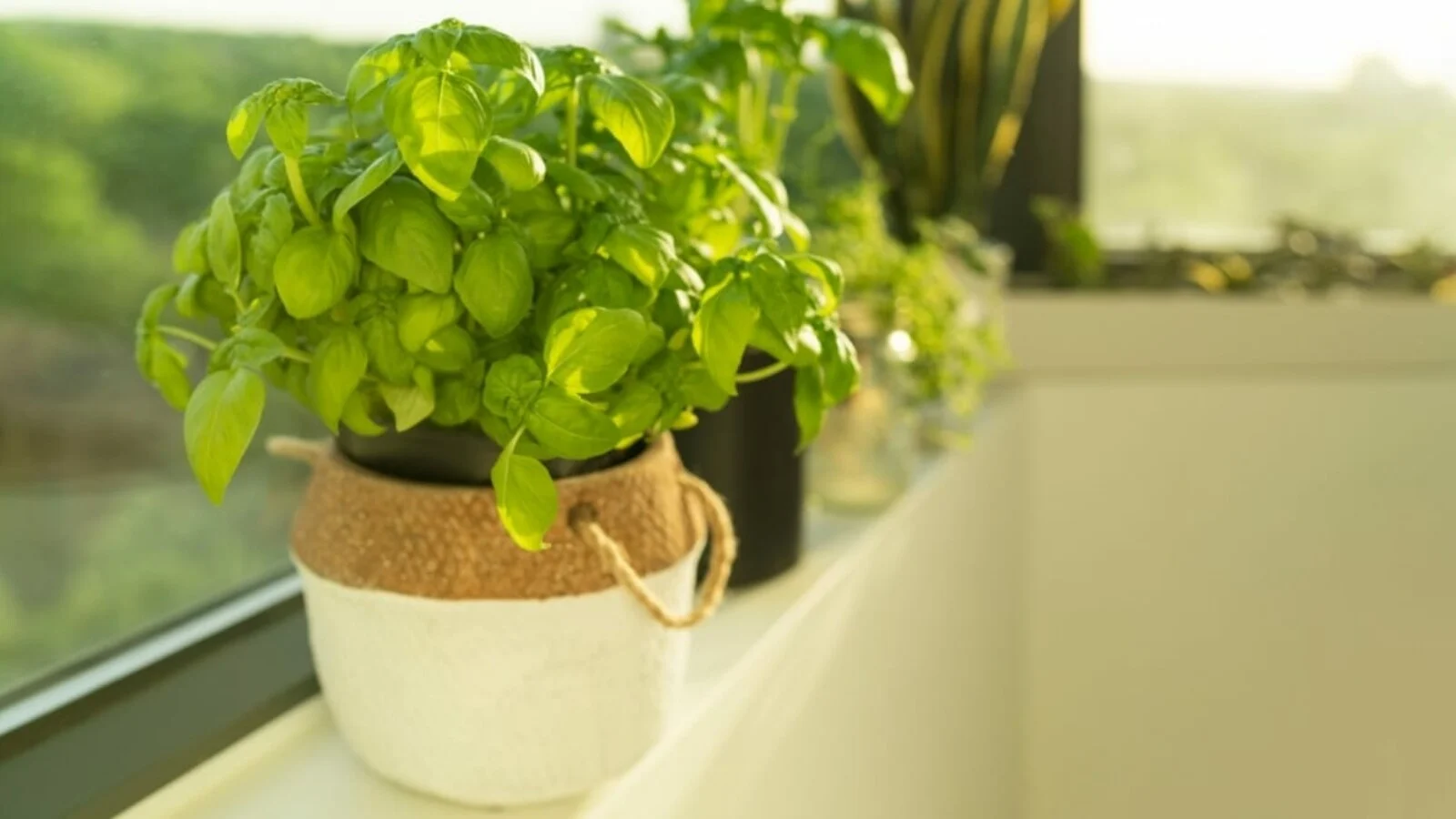
- Light is everything: A bright south or west window is ideal. Many homes still need a grow light for truly happy basil. Aim for 6 to 8+ hours of bright light, and watch for leggy stems as your clue.
- Water on a rhythm, not a schedule: Water when the top inch is dry. In winter, that may be much less frequent.
- Choose the right pot: Drainage holes are non-negotiable. Use a saucer, but do not let the pot sit in water.
- Pinch early and often: Regular harvesting encourages branching, which helps the plant balance water use and reduces floppy growth.
For garden beds
- Plant after nights warm up: Basil hates cold soil.
- Improve soil structure: Mix in compost for moisture retention plus good drainage.
- Water deeply: A thorough soak a couple times a week beats a daily sprinkle, depending on your weather and soil.
- Mulch: A 1 to 2 inch layer keeps moisture steady and cools the root zone.
For windowsill herb planters
- Rotate the pot weekly: Basil leans toward light, which can make it look limp on one side.
- Watch heat build-up: Glass can intensify sun. If leaves wilt daily at the same time, pull it back from the window a few inches or add a sheer curtain.
- Do not overcrowd: Give each plant space for airflow and root room, especially in long trough planters.
When to start over
I am all for second chances, but basil is also fast to replace. If most roots are mushy, stems are collapsing at the base, or the plant never perks up after a few days of corrected moisture, light, and heat, it is often kinder to compost it and start fresh. The silver lining is that every wilted basil plant teaches you something about your light, your watering habits, or your pot setup.
FAQ
Why is my basil wilting even though I watered it?
Most often, the soil is staying too wet and the roots are low on oxygen. Check moisture 1 to 2 inches down. If it is wet, let it dry slightly and confirm the pot has drainage. If wilting continues, inspect roots for rot or crowding and consider whether the plant is heat-stressed or light-starved.
Will basil come back after wilting?
Yes. If the cause is temporary thirst or heat stress, basil often perks up within hours. If the roots are damaged from rot or disease, recovery depends on how much healthy root tissue remains and whether you repot into fresh mix.
Should I cut back wilted basil?
If leaves are just limp, fix the cause first. Once the plant is hydrated and stable, pinch back leggy stems to encourage bushy regrowth. If stems are damaged or blackened, prune above healthy tissue.