Stop fungus gnats at every life stage with a simple, natural indoor plant plan: dry-outs, sticky traps, BTI drenches, and long-term prevention.
Gardening insights
How to Get Rid of Fungus Gnats in Houseplants
Tired of fungus gnats hovering around your houseplants? Follow this step-by-step, low-toxicity plan to break their life cycle and keep them from coming back.

Elena Rosales
Elena Rosales is a certified Master Gardener and lifelong plant enthusiast who believes anyone can cultivate a green thumb. After transforming her tiny urban balcony into a thriving plant oasis, she moved to a half-acre homestead to grow her own food and flowers. Today, she shares practical, hands-on gardening advice to help the Hortello community bring more green into their lives.
Published September 21, 2026
Updated September 21, 2026
If you have ever watered a houseplant and watched a tiny cloud of little black flies lift off like you disturbed their meeting, welcome to the fungus gnat club. I have been there, both on a sunny city windowsill and later in my homestead potting shed. The good news is fungus gnats are very manageable without harsh synthetic insecticides. The not-so-fun news is you have to break their life cycle, not just swat the adults.
This guide walks you through what to do, in order, using simple supplies you can find at home or at any garden center.
What fungus gnats are (and why they return)
Fungus gnats are tiny, mosquito-like flies that thrive in moist potting mix. The adults are annoying, but the real issue is their larvae, which live in the top layer of soil and feed on fungi and decaying organic matter. In heavy infestations, larvae can nibble fine roots, especially on seedlings and delicate plants.
They keep coming back because their life cycle is quick. Indoors, it is often about 3 to 4 weeks from egg to adult, and it can be faster in warm conditions. Eggs hatch quickly, larvae feed in the soil, then pupate and emerge as adults ready to lay more eggs. If you only tackle the flying adults, you will still have a whole generation developing under the surface.
Quick ID
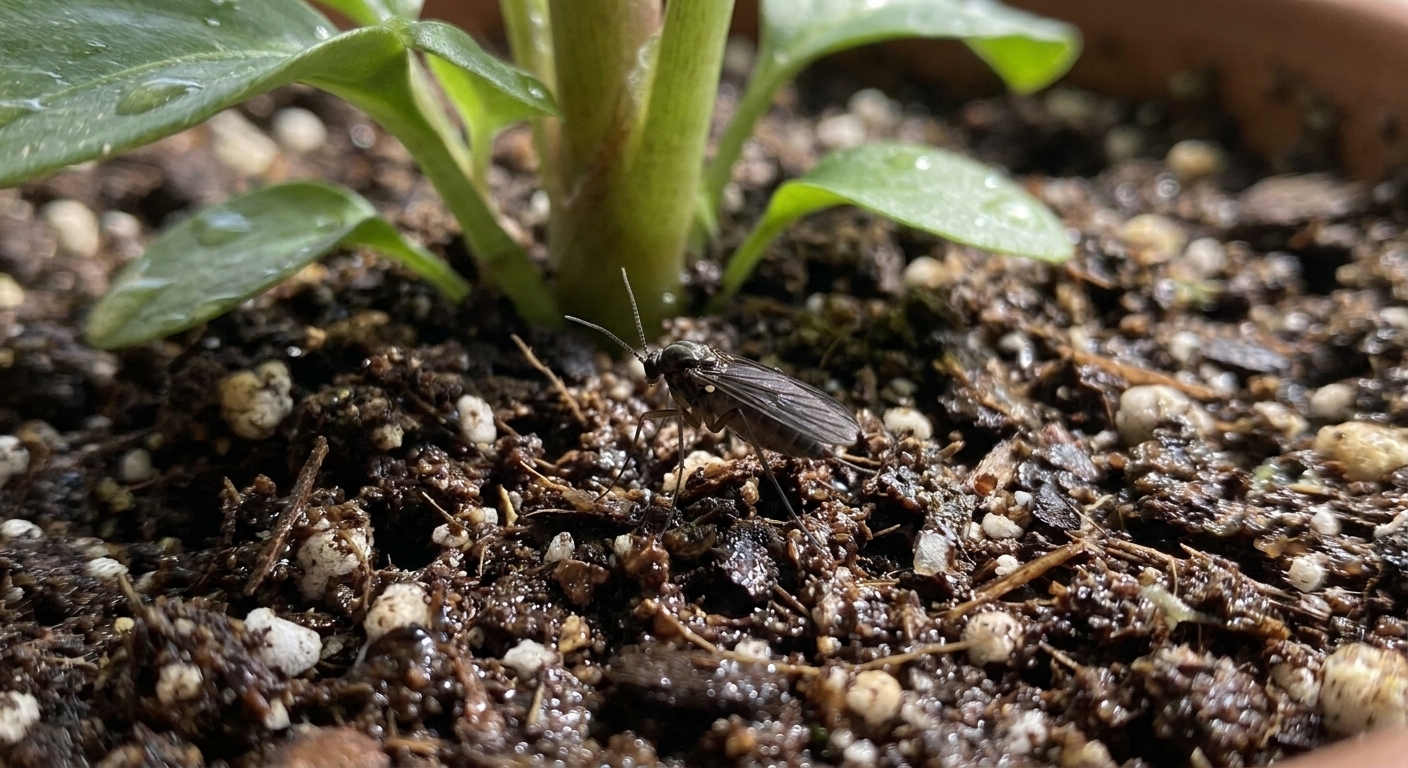
Before you launch into battle, make sure you are fighting the right pest. Fungus gnats usually look like tiny dark flies that:
- Hover and crawl around the soil surface and pot rim
- Fly up when you water or bump the pot
- Hang out near moist soil more than around leaves
Common lookalikes:
- Fruit flies: more likely around kitchen produce, drains, and trash, not potting soil
- Drain flies: fuzzy, moth-like, usually around sinks and showers
- Thrips: slender insects on leaves, often causing silvery streaking or distorted new growth
Step-by-step: Natural control
This plan uses a one-two-three punch: trap adults, target larvae, and remove the conditions they love.
Step 1: Isolate and assess
If only one or two pots are affected, move them away from your other houseplants for a few weeks. Fungus gnats are not great fliers compared with many flies, but they can still spread around a room, especially between nearby pots.
Do a quick check:
- Is the potting mix staying wet for days?
- Is there decaying leaf litter on top of the soil?
- Is the pot too large for the plant, leaving extra soil that never dries?
- Are drainage holes blocked or the pot sitting in water?
Step 2: Fix watering (the real root cause)
I say this gently because I have done it: fungus gnat outbreaks often start with love, not neglect. Many houseplants want the top inch or two of soil to dry before you water again. Constantly moist mix is basically a nursery for gnat larvae.
- Let the top 1 to 2 inches dry out before watering (for many common tropical houseplants).
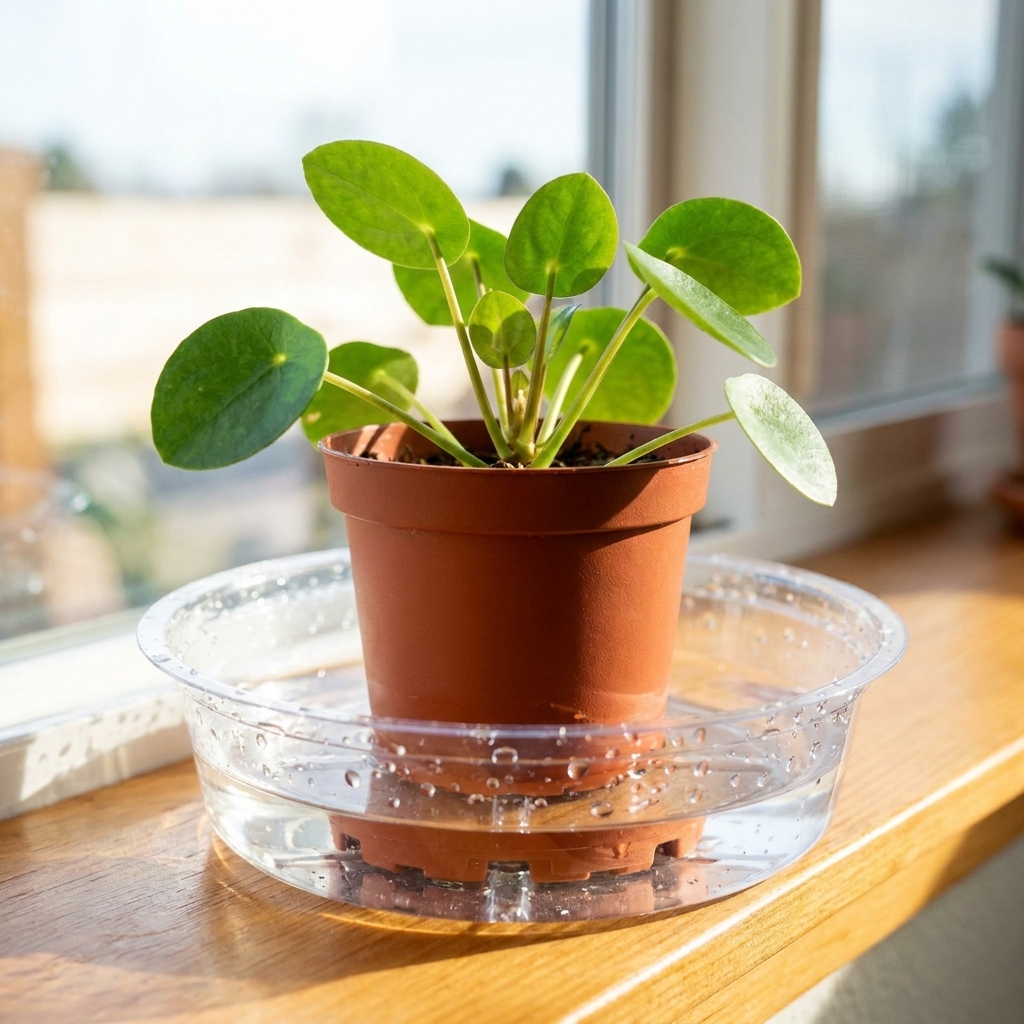
- Empty saucers so pots are not sitting in water.
- Water deeply, less often instead of frequent sips.
Helpful tweaks: a little more light, a bit more airflow, or a small fan can help the soil surface dry more predictably.
Exception: If you are growing moisture-lovers like some ferns, you can still beat gnats, but you will rely more heavily on biological controls and surface barriers in the next steps.
Step 3: Catch adults with sticky traps
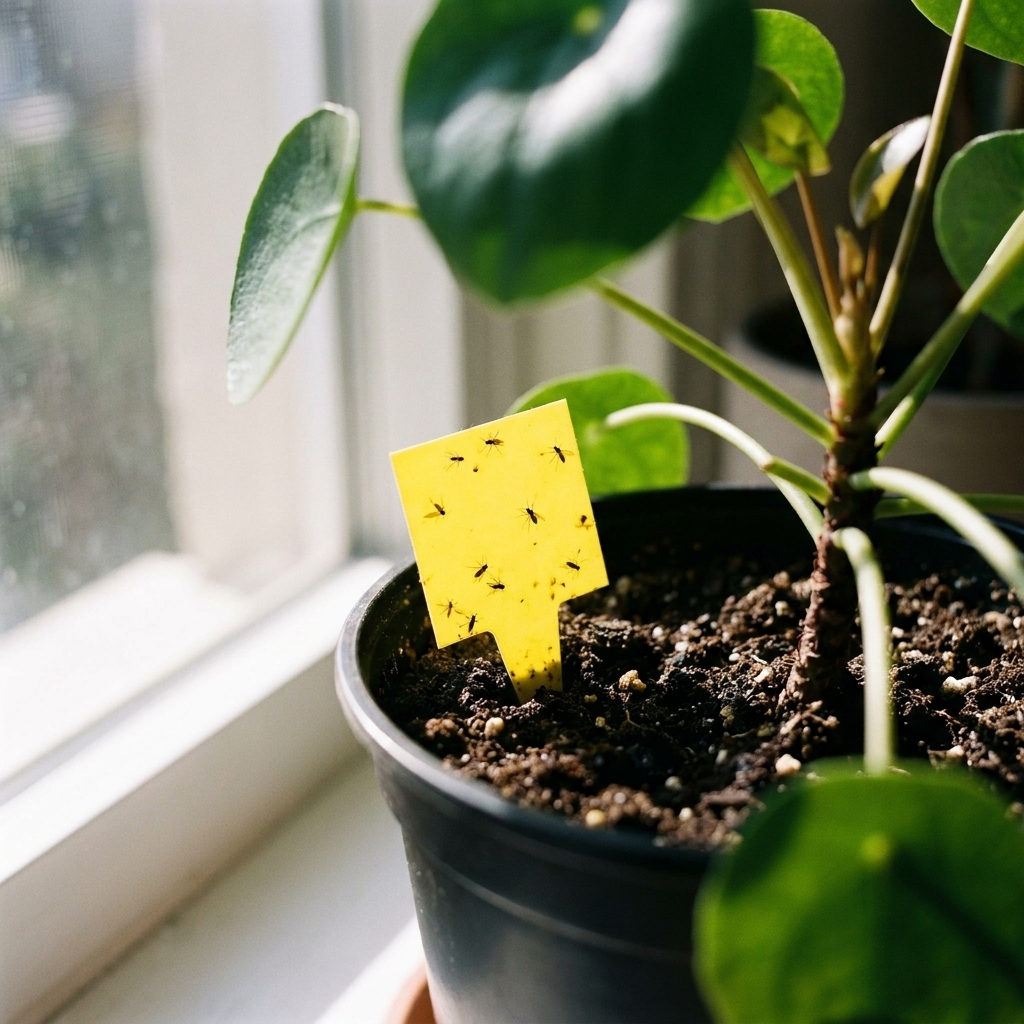
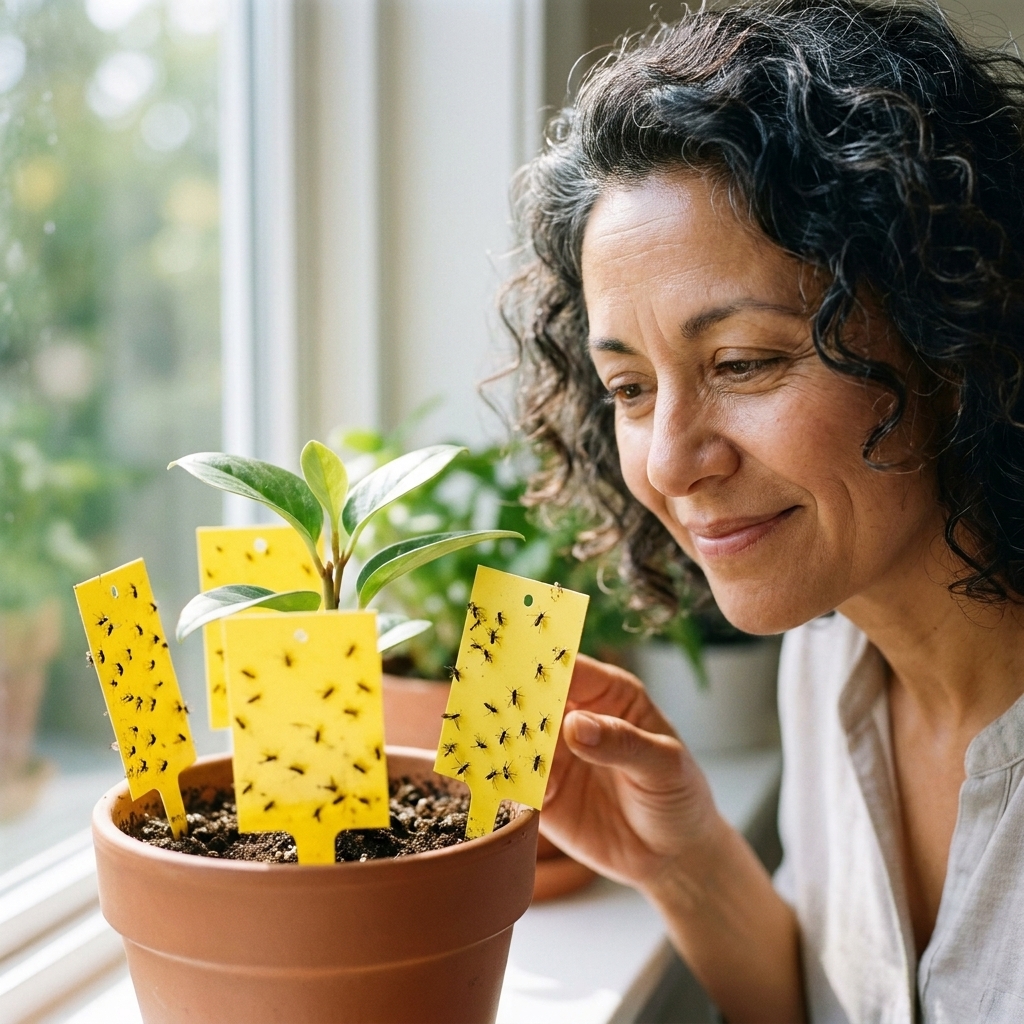
Sticky traps will not solve the problem alone, but they are excellent for knocking down the adult population fast and for monitoring progress. Plan to keep them up for about a month while you work through the life cycle.
- Place traps right at soil level, not up in the foliage.
- Use 1 to 2 traps per pot for small to medium pots.
- Replace when they are covered or dusty.
If you see the number of trapped gnats dropping each week, you are on the right track.
Step 4: Treat larvae with BTI
If I could only recommend one gnat solution, it would be BTI (Bacillus thuringiensis israelensis). It is a naturally occurring soil bacterium used in organic gardening and is considered low-toxicity when used as directed. It targets certain fly larvae, including fungus gnats.
Common forms include mosquito dunks or bits. Here is how to use them:
- Make a soak: Place a piece of dunk or a small amount of bits in a watering can, add water, and let it sit for 30 minutes to a few hours.
- Water the plant with the BTI solution so it reaches the top layers of soil where larvae live.
- Repeat weekly for 3 to 4 weeks to cover multiple life cycles.
BTI works best when you are also letting the soil surface dry between waterings. The duo is powerful.

Step 5: Add a dry top layer (optional)
Fungus gnats love laying eggs in damp organic material. A dry, gritty top layer makes that much harder.
Good options:
- Horticultural sand (coarse, not playground sand)
- Fine pumice
- Small-grain lava rock
Apply a layer about 1/2 inch, or simply enough to create a consistently dry top layer based on your particle size. Keep it dry on top as much as the plant allows.
Avoid: Adding compost or worm castings as a top dressing while you are actively fighting gnats. Those are wonderful amendments, but during an infestation they can feed the problem.
Step 6: Use beneficial nematodes (for stubborn cases)
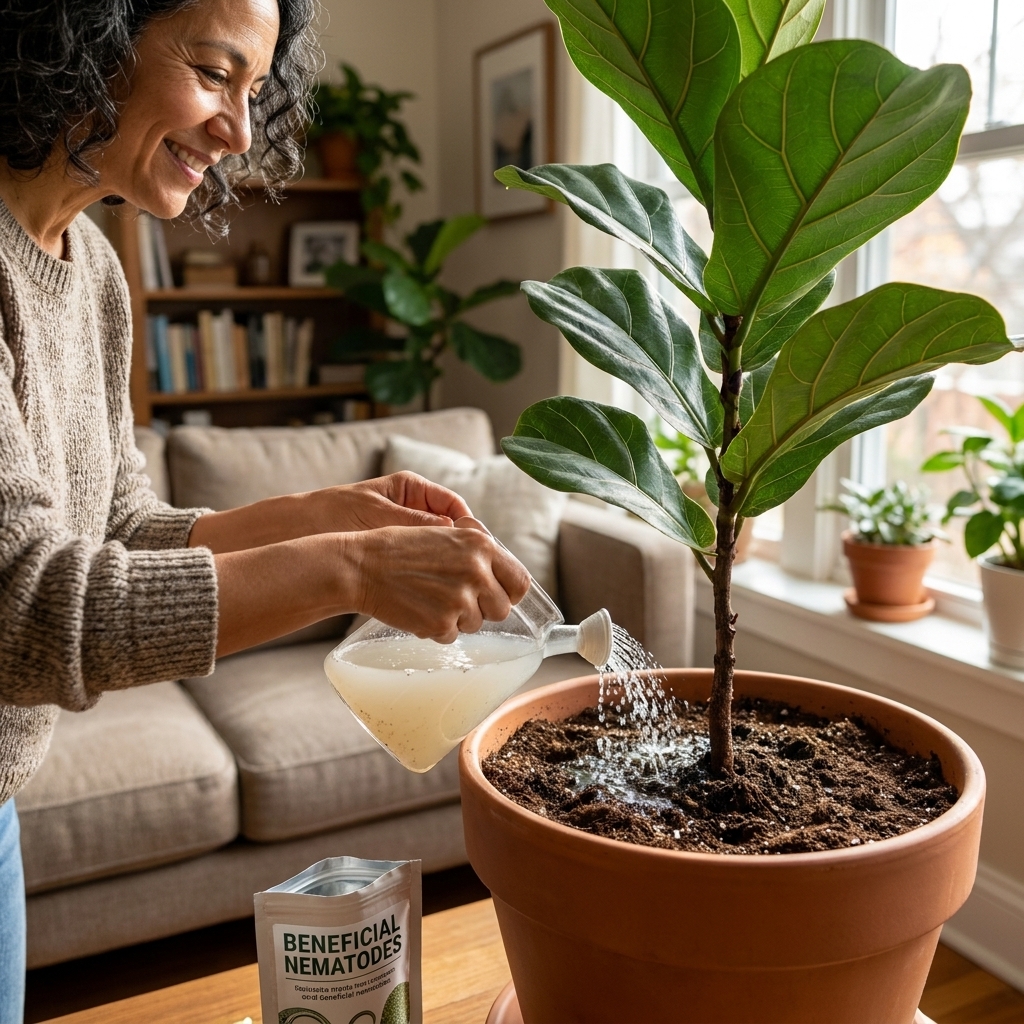
If you have a persistent outbreak, especially across many plants, beneficial nematodes (often sold as Steinernema feltiae) are an organic, soil-dwelling biological control that hunts gnat larvae.
- Follow package directions carefully and use fresh product.
- Apply to moist soil and keep it slightly moist for the first week so the nematodes can move.
- Use sticky traps at the same time to reduce the adult population.
This is a great option for plant parents who keep a lot of indoor pots and want a more system-wide approach.
Step 7: Repot only if needed
Repotting can help, but it is not always necessary and it can stress the plant if done at the wrong time. I repot when:
- The potting mix is old, compacted, and staying wet too long
- There is visible mold, algae, or a sour smell
- The infestation is severe and not improving after 2 to 3 weeks of BTI plus traps
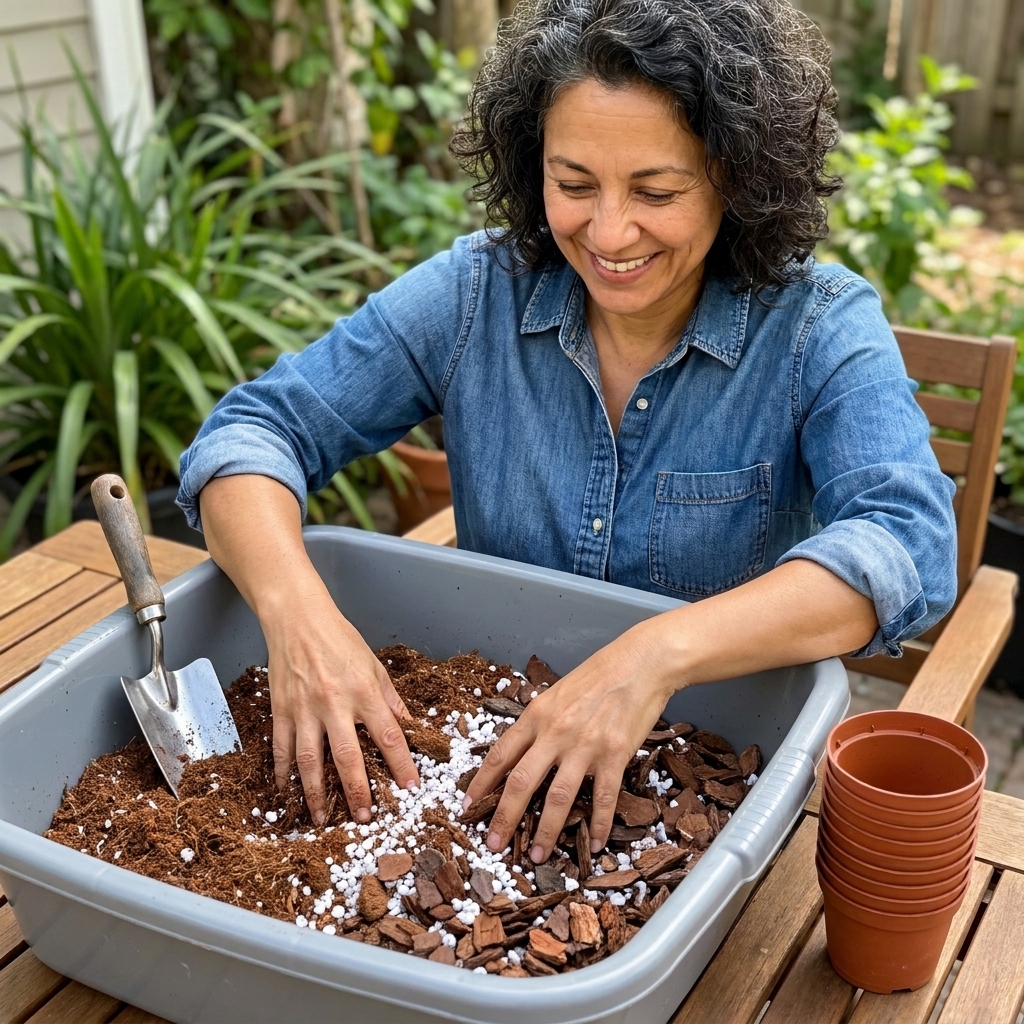
If you repot: discard the old mix, rinse the pot, and gently shake off as much soil as you can from roots without tearing them up. Replant in a fresh, well-aerated indoor mix (often improved with perlite or pumice for better drainage).
What not to do
- Do not drench soil with hydrogen peroxide repeatedly. A one-time dilute flush is sometimes suggested, but frequent use can stress roots and disrupt beneficial microbes.
- Do not rely on vinegar traps. They can catch some adults, but they do nothing for larvae in the soil.
- Do not keep adding more products every few days. Pick a plan and stick with it long enough to interrupt the life cycle.
- Do not “seal” the soil with plastic wrap. It can create mold issues and suffocate roots.
Prevent them from coming back
Once you have the gnats under control, prevention is mostly about soil moisture management and cleanliness.
- Use well-draining mixes and pots with drainage holes.
- Bottom-water when appropriate to keep the top layer drier (especially for plants that tolerate it).
- Remove dead leaves from the soil surface and saucers.
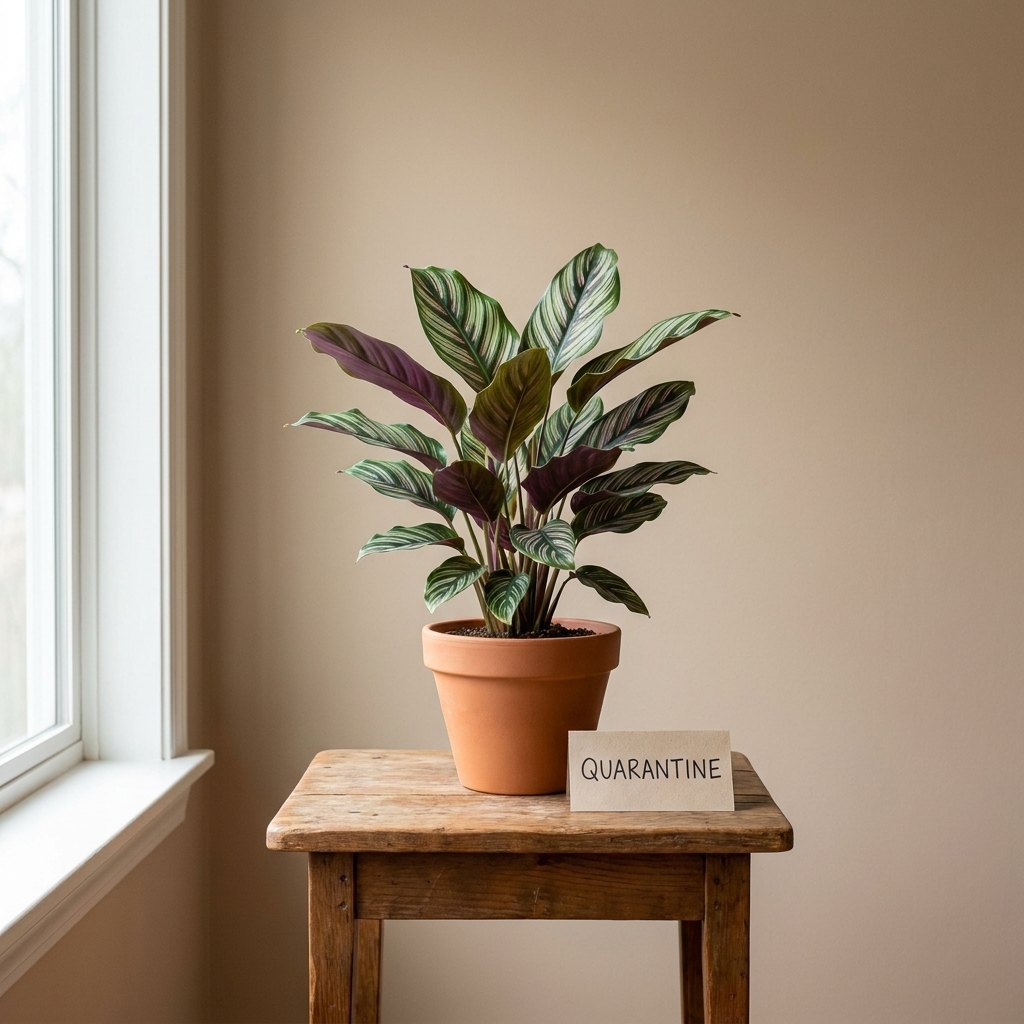
- Quarantine new plants for 1 to 2 weeks and check for gnats before placing them with your collection.
- Store potting mix sealed so it does not become a gnat nursery in the bag.
Timeline
- Days 1 to 3: You should notice fewer adults flying if you set sticky traps and reduce watering.
- Week 1 to 2: Larvae numbers drop as BTI or nematodes begin working, and adult emergence slows.
- Weeks 3 to 4: Many infestations are resolved if you stayed consistent.
That said, this is not a guarantee. Cooler homes, dense mixes, low light, or soil that stays wet can stretch the timeline.
How to tell you are done: you see no adults on traps for 7 to 10 days, and your soil is drying on a healthy schedule for that plant.
If you are not seeing improvement by week 2, usually one of two things is happening: the soil is still staying wet, or gnats are breeding in more than one pot (often the one you least suspect).
FAQ
Are fungus gnats harmful to humans or pets?
They are more annoying than dangerous. Fungus gnats do not bite, and they are not known for spreading disease in homes. The main concern is plant stress from larval feeding in heavy infestations.
Why do I have fungus gnats even though I barely water?
Sometimes it is not the amount, it is how long the mix stays wet. Dense soil, low light, cool temperatures, and oversized pots can keep the root zone damp for a long time. Improving drainage and adjusting watering frequency usually fixes the underlying issue.
Will cinnamon on top of the soil stop fungus gnats?
Cinnamon can have mild antifungal properties, but it is not reliable as a gnat control strategy. If you want something that consistently works, use BTI and sticky traps while dialing in watering habits.
Can I use neem oil for fungus gnats?
Neem is more effective for certain leaf-feeding pests than for soil-dwelling gnat larvae. A soil drench can help a bit, but it is generally slower and less predictable than BTI or beneficial nematodes.
Do fungus gnats mean my soil is bad?
Not necessarily. It usually means the top layer has stayed moist long enough for eggs and larvae to thrive. Even high-quality potting mixes can host gnats if conditions are right. Think of gnats as feedback: your watering and airflow can be tweaked.
A neighborly pep talk
Fungus gnats can make you feel like you are failing at houseplants. You are not. This is one of those classic indoor gardening rites of passage, right up there with over-loving a pothos and underwatering a fern. Stick with the steps, stay consistent for a few weeks, and you will get your peaceful, gnat-free windowsill back.