A down-to-earth, organic pest control plan for your veggie garden: identify the culprit, use soft sprays correctly, invite beneficial insects, and prevent re...
Gardening insights
Natural Aphid Control for Roses
Stop aphids on roses without harsh chemicals. Use water sprays, beneficial insects, insecticidal soap, and neem or horticultural oil for healthier blooms.

Elena Rosales
Elena Rosales is a certified Master Gardener and lifelong plant enthusiast who believes anyone can cultivate a green thumb. After transforming her tiny urban balcony into a thriving plant oasis, she moved to a half-acre homestead to grow her own food and flowers. Today, she shares practical, hands-on gardening advice to help the Hortello community bring more green into their lives.
Published September 21, 2026
Updated September 21, 2026
If you have ever walked out to admire your roses and found the newest growth covered in little green (or black, or pink) specks, you have met aphids. They cluster on tender tips, suck sap, and leave behind sticky honeydew that can lead to sooty mold. The good news is you do not need harsh chemicals to get your roses back on track. With a few simple, repeatable steps, you can knock aphids back fast and make it much harder for them to settle in again.
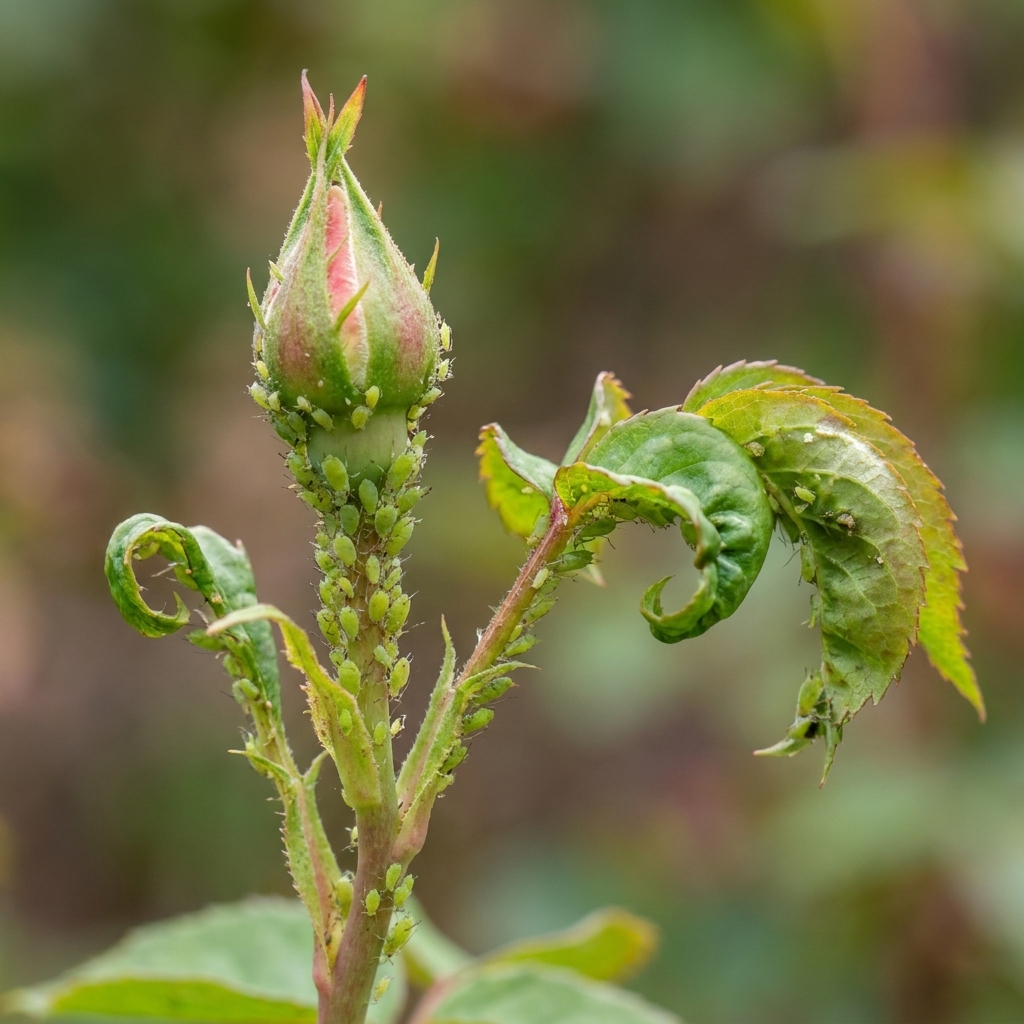
Below are four chemical-free methods I use on my own roses, plus a simple game plan for choosing the right one depending on how bad the infestation is.
1) Blast them off with water
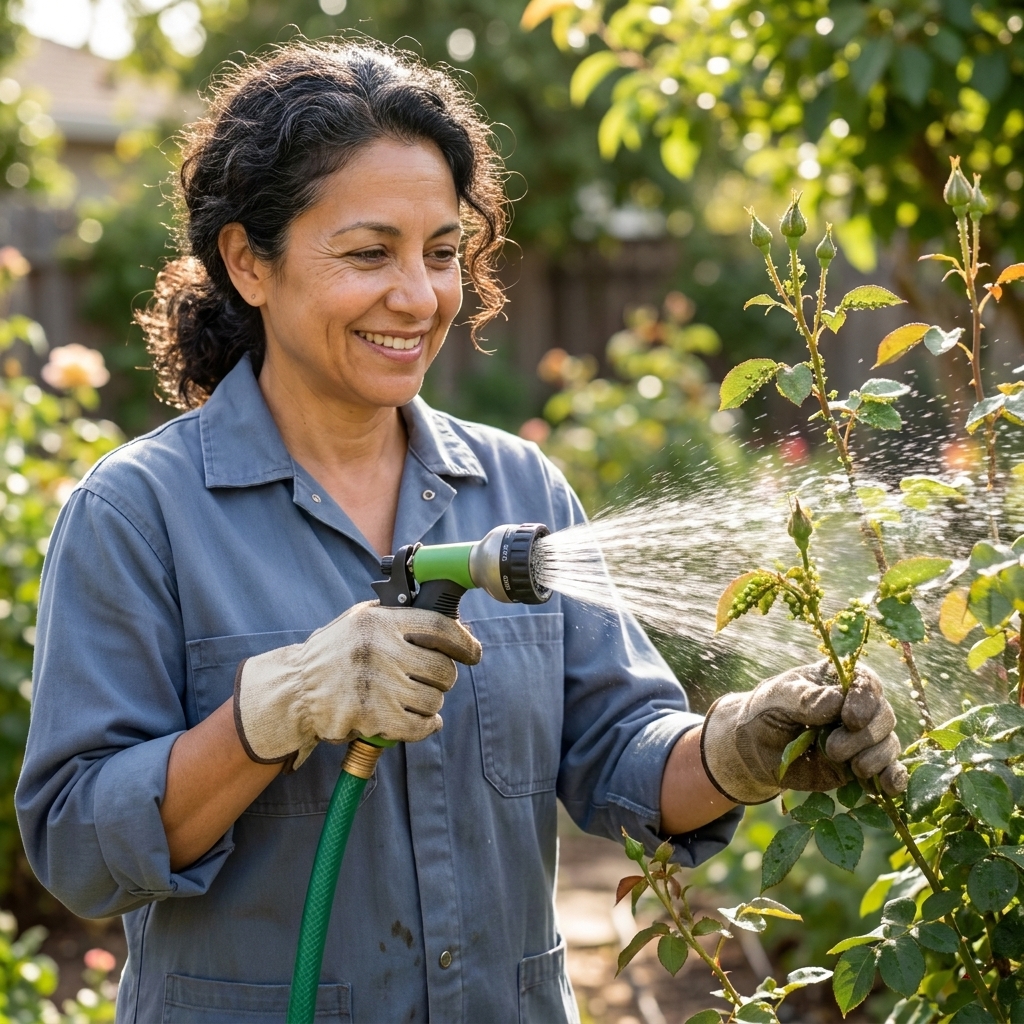
This is the most underrated aphid control, and it is my first move when I spot them early. Aphids are soft-bodied and easy to dislodge. A firm spray of water knocks them off the plant, and many will die, get eaten, or fail to find their way back to the same tender tip (especially if you are thorough and repeat it).
How to do it
- Use a hose with a spray nozzle set to a strong, focused stream (not a mist).
- Spray in the morning so foliage dries quickly.
- Target the undersides of leaves and the tender tips where aphids hide.
- Repeat every 1 to 3 days for a week if needed. Aphids reproduce quickly, so consistency matters.
Rose-friendly tips
- Avoid blasting open blooms at point-blank range. Aim at stems and leaf clusters to prevent petal bruising.
- If your rose is in a container, you can tilt or rotate it to reach the undersides more easily.
- If ants are running up and down the stems, water alone may feel like a temporary win. (More on ants below.)
- Check again after watering or rain. Fresh growth can attract a new wave.
2) Recruit beneficial insects
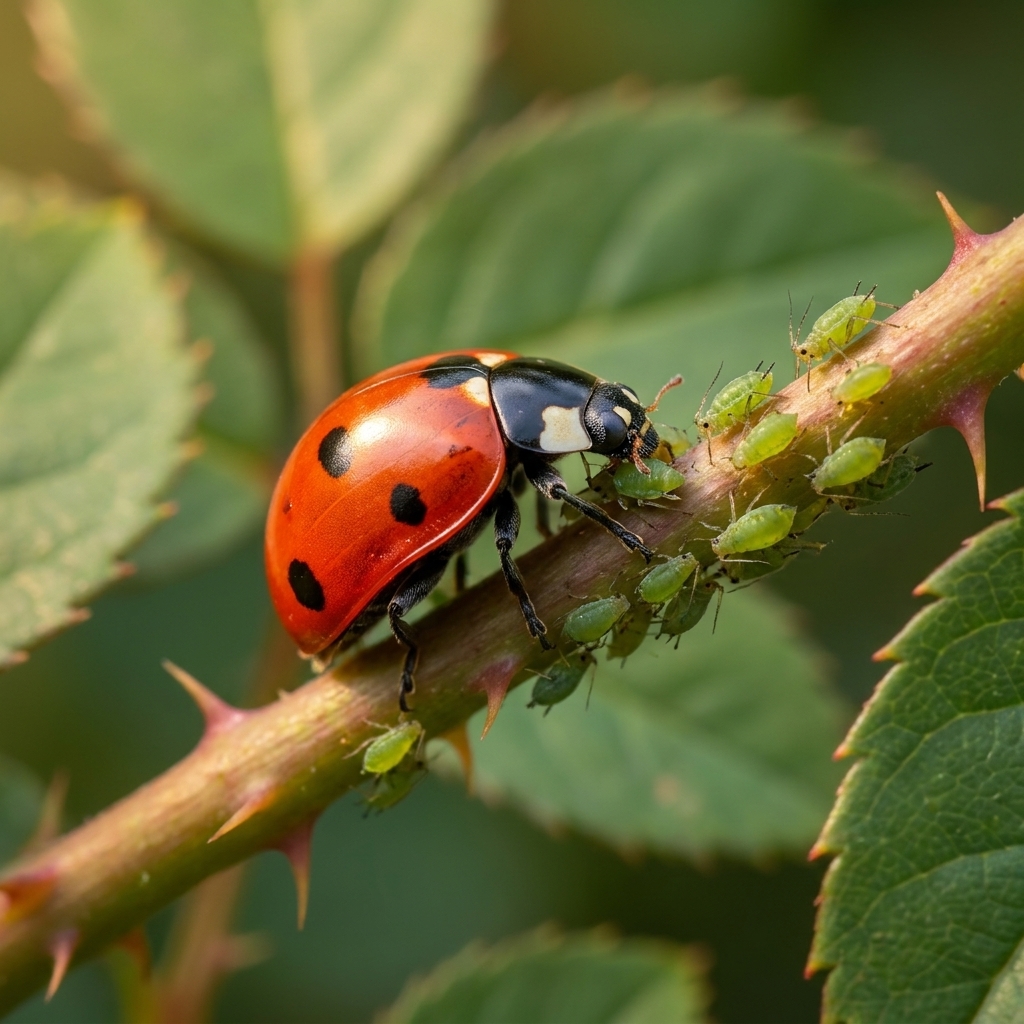
When aphids show up, nature usually sends help, but sometimes the timing is off. Encouraging beneficial insects is a long-term solution that makes your garden more resilient. Lady beetles (ladybugs), lacewings, hoverfly larvae, and tiny parasitic wasps all eat or parasitize aphids.
How to invite beneficials in
- Plant small-flowered “nectar bars” nearby, like sweet alyssum, dill, cilantro (let it flower), yarrow, and calendula. These provide nectar and pollen that adult beneficials need.
- Skip broad-spectrum sprays, even organic ones, when you can. They can harm the good guys too.
- Provide water: a shallow dish with pebbles and a little water can help beneficials stick around.
- Manage ants if they are “farming” aphids. Ants can chase off predators, so reducing ant traffic can make beneficial insects much more effective.
Should you buy ladybugs?
You can, but I treat purchased ladybugs as a “maybe.” They often fly away, especially if there is not much food or if you release them in the heat of the day. If you do buy them, release at dusk, lightly mist the plant first, and make sure there are aphids present so they have a reason to stay.
3) Use insecticidal soap
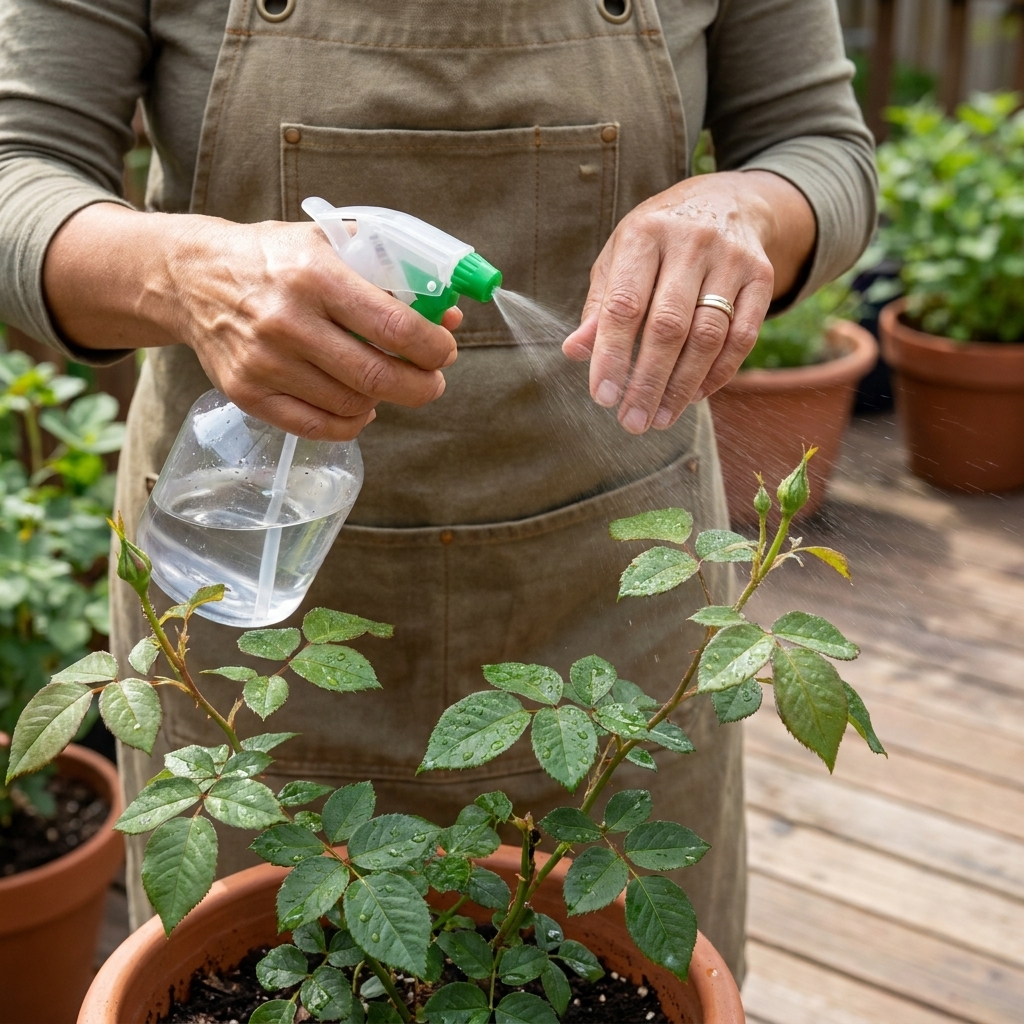
Insecticidal soap works by disrupting cell membranes and the insect’s protective outer layer, which causes soft-bodied pests like aphids to dehydrate. It is effective, budget-friendly, and breaks down quickly in the environment. The key is thorough coverage because soap must touch the aphids to work.
My go-to spray mix
In a clean spray bottle, mix:
- 1 quart (4 cups) water
- 1 teaspoon mild liquid soap (unscented Castile soap is a good choice)
Important: Avoid products marketed as “detergents,” heavy degreasers, bleach additives, or antibacterial soaps. These can burn leaves.
How to apply without harming roses
- Test first: spray a few leaves and wait 24 hours to check for spotting or burn.
- Spray early morning or evening, not in hot sun. Heat plus soap can stress foliage.
- Soak the colonies, especially on undersides and new growth.
- Reapply every 4 to 7 days as needed.
- If using soap, you can rinse gently the next day if your rose seems sensitive, or if temperatures rise.
- Do not mix soap and oil in the same tank unless the product label specifically says it is safe. Combinations can increase the risk of leaf burn.
If you have ever had a gardening moment like my Great Zucchini Invasion of 2019, you know restraint is a skill. Do not increase the soap concentration “just to be sure.” Stronger is not better here.
4) Neem or horticultural oil
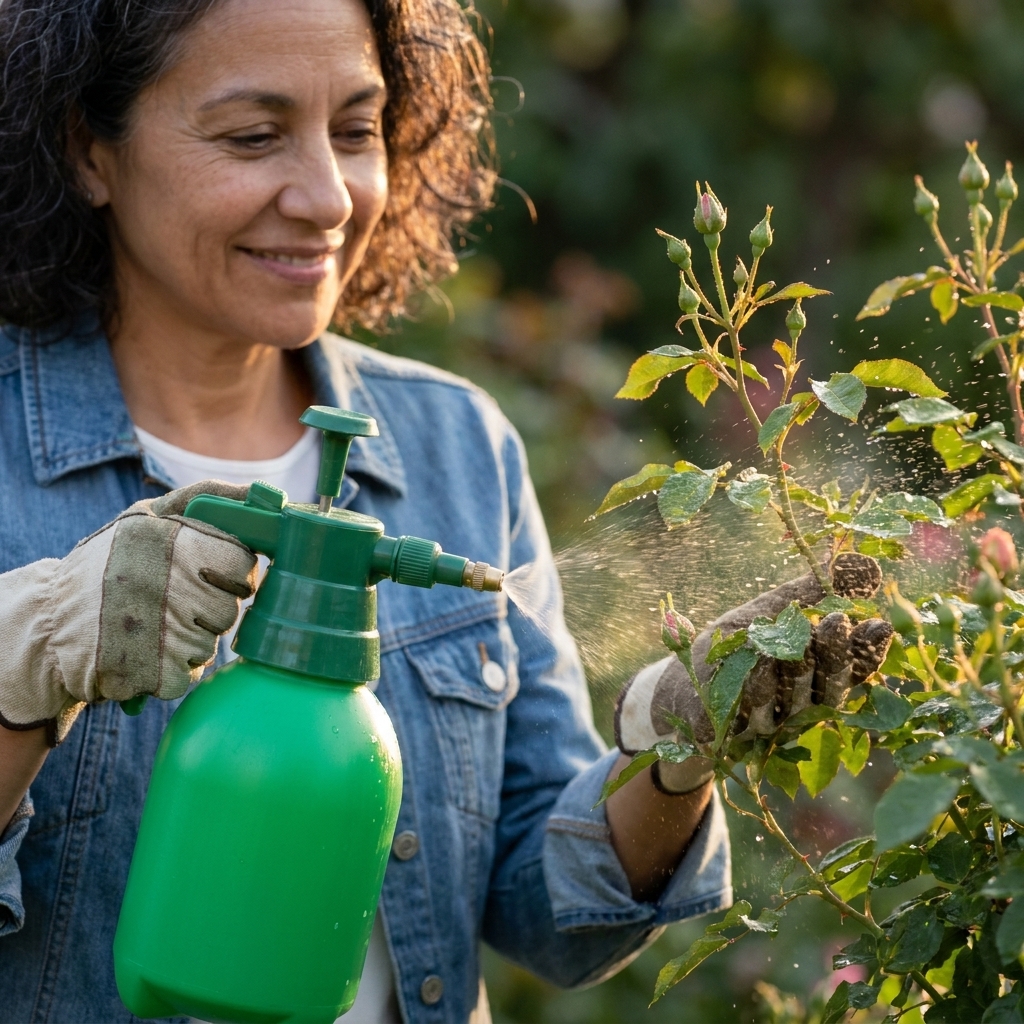
When aphids keep rebounding or you are dealing with a larger infestation, oils can be very helpful. Horticultural oil is a light, refined mineral or plant-based oil labeled for use on plants. These oils work mainly by coating and smothering pests like aphids. Neem can also help, but results depend on the formulation. Products that contain meaningful amounts of azadirachtin may affect feeding and development, while many ready-to-spray “neem oil” products are primarily clarified extract and act more like a smothering oil.
How to use oils safely on roses
- Follow the label exactly for dilution rates and frequency. Different products vary.
- Spray when temps are mild, ideally below about 85°F (29°C), and out of direct sun.
- Do not spray stressed plants (drought-stressed, recently transplanted, or heat-stressed roses are more likely to burn).
- Avoid spraying open flowers when possible to protect pollinators and preserve bloom quality. Target stems, buds, and leaf clusters.
- Avoid spraying when bees are active. Evening is usually the safest window.
Neem vs horticultural oil
- Horticultural oil is often the gentler, more straightforward choice for smothering pests.
- Neem can be useful, but it is not a magic eraser and it can still harm beneficials if sprayed directly on them. Check the product label so you know what you are actually buying.
Pick a method
If you are standing there with the hose in one hand and a spray bottle in the other, here is how I decide:
- Just a few aphids on new growth: water blast, then monitor.
- Small colonies returning: water blast plus insecticidal soap once a week.
- Heavy infestation with sticky honeydew: prune the worst tips (lightly, so you do not sacrifice every bud), then soap or oil with thorough coverage, then repeat in 5 to 7 days.
- Aphids every season like clockwork: plant for beneficial insects and avoid over-fertilizing (more on that next).
If you keep losing new growth despite repeat treatments, or you start seeing odd, persistent distortion that looks more like a virus than simple aphid damage, it is worth contacting your local extension office or a Master Gardener group for region-specific help.
Prevention
Aphids adore soft, nitrogen-rich growth. That is why they often show up right after a big feeding or a flush of new spring leaves.
Small changes that help
- Go easy on high-nitrogen fertilizer. Choose a balanced, slow-release organic fertilizer and follow the package rate.
- Water consistently. Stressed plants are generally more vulnerable and recover more slowly after pest damage.
- Prune for airflow. Crowded growth gives aphids more protected hiding spots.
- Inspect weekly. Check the newest growth and the undersides of leaves. Catching aphids early is half the battle.
FAQ
Will aphids kill my rose bush?
Usually, no. Aphids can distort new growth and reduce blooms, but established roses rarely die from aphids alone. The bigger issue is ongoing stress, sticky honeydew, and the way aphids can attract ants that “farm” them for sweetness.
Why are there ants on my roses?
Ants love aphid honeydew and will protect aphids from predators. If ants are busy on the stems, aphid control gets harder. Reduce aphids first, and consider using a sticky barrier product on the main canes (following label directions) if ants are persistent. You can also look for and manage nearby ant trails so you are not fighting a constant resupply.
When is the best time of day to treat aphids?
Morning or early evening is ideal. You avoid hot sun (which can increase leaf burn with soaps or oils) and you give leaves time to dry. If you are working around pollinators, evening is often the safer window.
Do I need to prune off aphid-covered growth?
If a tip is heavily infested and curled, snipping it off can save time and reduce the population quickly. Drop the clippings in the trash or a sealed bag. Do not toss them at the base of the rose and hope for the best.
A simple weekly routine
If you want a low-stress plan, here is what I recommend:
- Once a week: inspect new growth closely.
- At first sight of aphids: blast with water.
- If they return: apply insecticidal soap and repeat in 4 to 7 days.
- If they keep rebounding: step up to horticultural oil or a neem product that is labeled for aphids, and follow the label.
- All season: keep a few beneficial-friendly flowers nearby, manage ants if needed, and avoid overfeeding nitrogen.
Your roses can absolutely be gorgeous without turning your garden into a chemistry lab. A little persistence, a little observation, and a willingness to get your hands wet is usually all it takes.