Everything you need to grow a healthy Swiss cheese plant indoors, plus foolproof stem-cutting propagation steps for stronger roots and fuller pots.
Gardening insights
How to Prune Leggy Houseplants
Step-by-step pruning tips to fix leggy houseplants and encourage bushier, thicker growth. Learn where to cut, how much to remove, and what to do after trimming.

Elena Rosales
Elena Rosales is a certified Master Gardener and lifelong plant enthusiast who believes anyone can cultivate a green thumb. After transforming her tiny urban balcony into a thriving plant oasis, she moved to a half-acre homestead to grow her own food and flowers. Today, she shares practical, hands-on gardening advice to help the Hortello community bring more green into their lives.
Published September 21, 2026
Updated September 21, 2026
Leggy houseplants have a way of making even a cozy room feel a little tired. Long stems, wide gaps between leaves, and a plant that seems to lean toward the window like it is trying to eavesdrop on the outdoors. The good news: legginess is fixable. With the right cuts in the right places, you can redirect your plant’s energy into branching and fresh, thicker foliage.
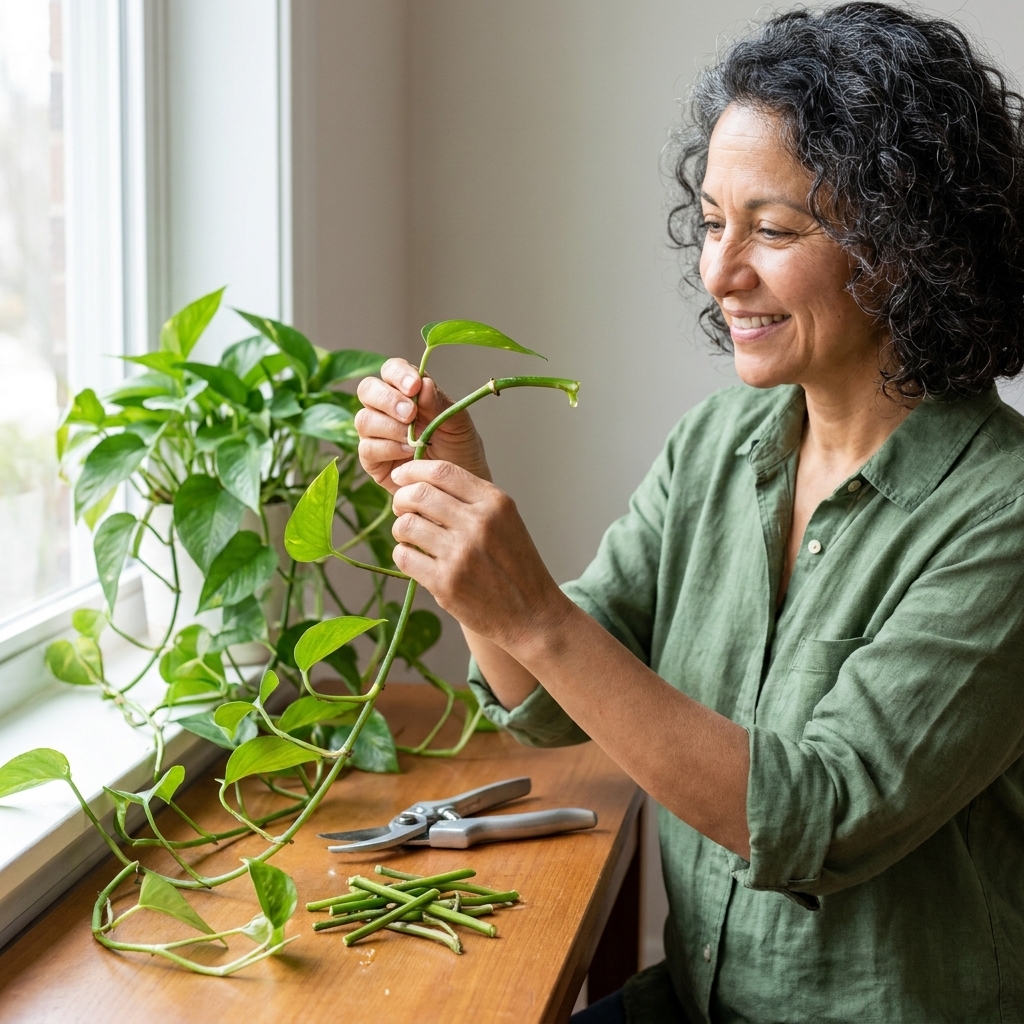
I have absolutely been guilty of “letting it go a little longer” until my pothos looked like a green jump rope. Pruning felt scary the first time. Then the new growth came in, and I wondered why I waited.
What “leggy” really means
Leggy growth usually shows up as:
- Long internodes (big spaces between leaves)
- Smaller or fewer leaves than usual
- Top-heavy or leaning stems
- Bare lower stems on vining plants
It is often caused by insufficient light . Plants stretch toward the brightest source they can find. That said, a few other things can contribute too, especially in combination:
- Warm indoor temps paired with low light
- Not rotating the pot, so one side does all the stretching
- Overfertilizing (especially high nitrogen), which can push fast, weak growth
- Natural aging and leaf drop on older vines
Pruning helps a lot, but for lasting results you will also want to improve light or rotate the plant regularly. Otherwise it can simply get leggy again.
Before you cut: quick checklist
1) Pick the right time
Most houseplants bounce back fastest during active growth, typically spring through early fall. You can prune in winter if you must, but regrowth is slower and the plant may look bare for longer.
2) Grab the right tools
- Sharp scissors or pruning snips
- Rubbing alcohol (or soap and hot water) to clean blades
- A small cup or jar if you want to propagate cuttings
Clean cuts reduce tissue damage and infection risk. Dull blades crush stems, which can invite rot.
3) Quick safety note
If you are pruning plants like pothos, philodendron, or any plant with milky sap, consider wearing gloves and keeping cuttings away from kids and pets . (Also: wash your hands after, even if you feel very tough and fearless.)
4) Water the day before (usually)
A mildly hydrated plant handles stress better. Avoid pruning right after the soil has been soaked if your plant is prone to stem rot (like some succulents). For those, aim for dry-to-lightly-moist soil.
The key concept: find the node
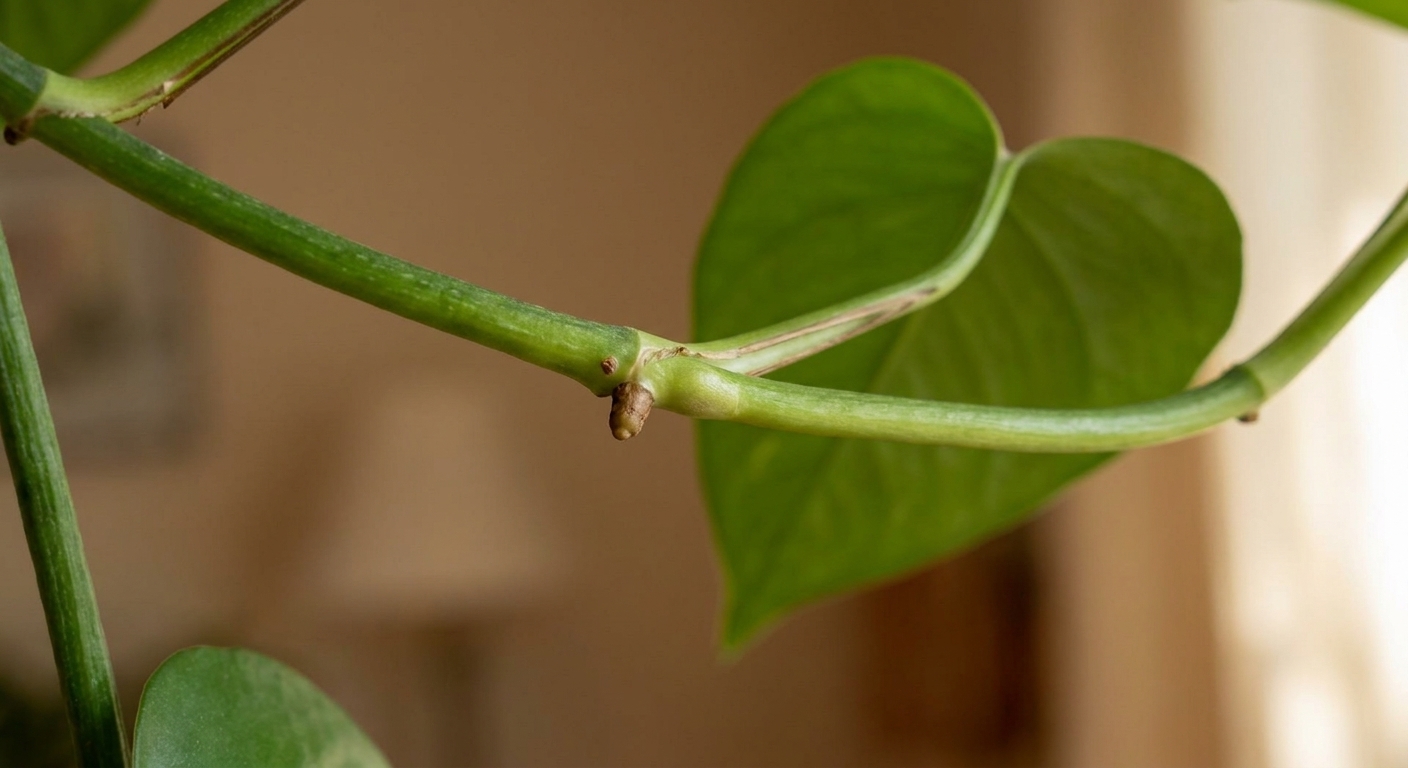
If you remember one thing, make it this: new growth comes from nodes. A node is where a leaf attaches to the stem. On many plants you will also see little bumps, tiny aerial roots, or a small bud sitting near the node.
When you cut just above a node, the plant is encouraged to activate buds at that node and branch out. When you cut without thinking about nodes, you can end up with long bare stubs that take longer to look good.
Step-by-step: how to prune for bushier growth
Step 1: Decide your “fullness goal”
Take a minute to step back and look at the plant from all sides.
- If only one side is sparse, you may only need a few strategic cuts.
- If the whole plant is stretched, plan on a bigger reset prune and rooting some cuttings to replant into the pot.
I like to turn the pot slowly and identify the longest, barest stems first. Those are usually your best candidates.
Step 2: Choose your cut points
For most leafy houseplants, aim to cut:
- 1/4 to 1/2 inch above a node (enough to avoid damaging the node, not so much that you leave an awkward stump)
- Above a node with a healthy leaf or a visible bud or aerial root nub
Rule of thumb: The lower you cut (closer to the base), the more dramatic the transformation. If you are nervous, start higher. You can always trim more later.
Step 3: Make clean cuts
Use one smooth snip. If sap oozes (common with philodendrons and pothos), blot with a paper towel. If you are pruning multiple plants, wipe blades with alcohol between plants to avoid spreading pests or disease.
Step 4: Do not remove too much at once
For most houseplants, a conservative guideline is removing no more than 25 to 35 percent of the plant’s total foliage in one session. It is species-dependent, though. Fast growers (pothos, tradescantia, many philodendrons) can often handle more. Slow growers (some hoyas, ficus) usually prefer staged pruning over a big haircut.
Step 5: Use the cuttings to thicken the pot
This is the secret sauce for “bushier” results, especially with vining plants.
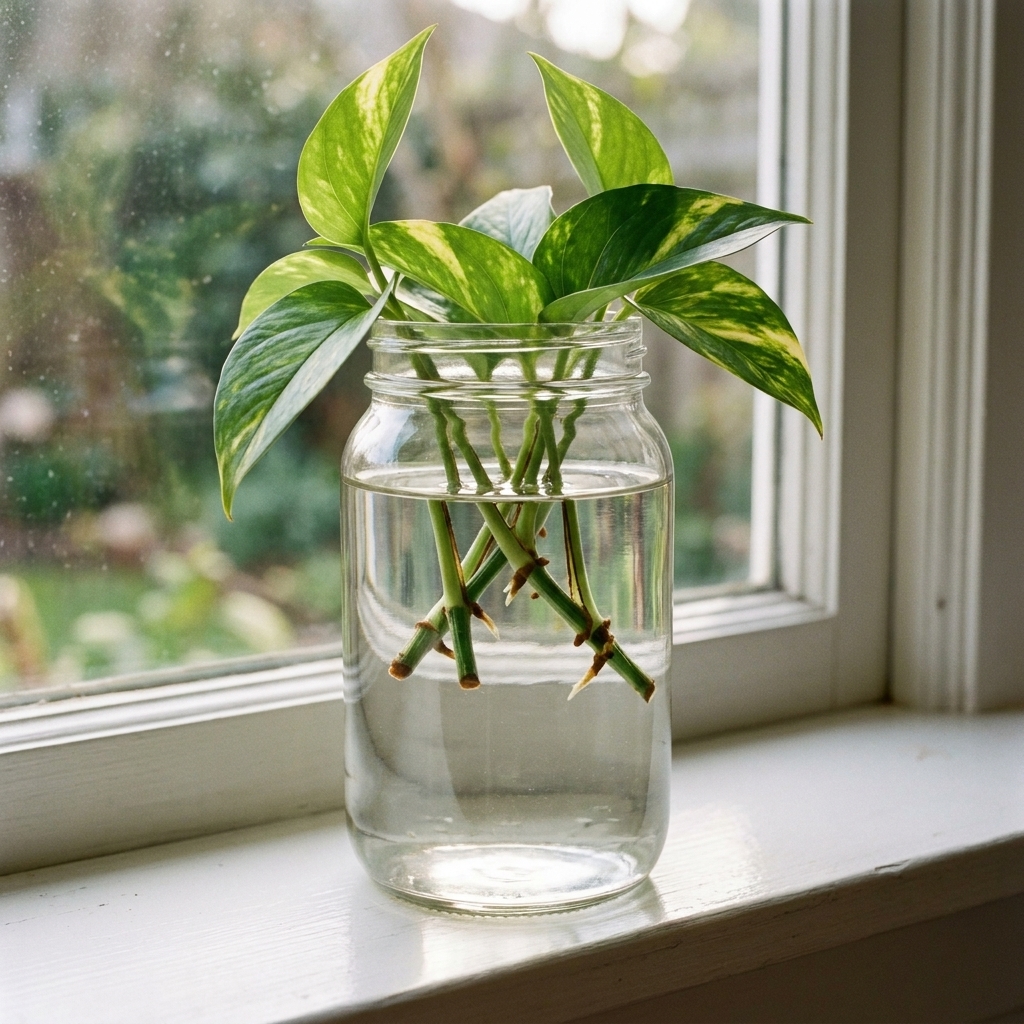
- Trim your cuttings so each has at least 1 to 3 nodes.
- Remove any leaves that would sit below the waterline or soil line.
- Root in water or directly in moist potting mix , then plant them back into the same pot.
When you replant rooted cuttings around the edges and into bare spots, you are not just encouraging branching. You are literally adding more stems, which makes the plant look fuller faster.
Where to cut: common houseplants
Pothos and heartleaf philodendron
- Cut just above a node on the vine you want to branch.
- To fill a bare pot, take longer cuttings, root them, then tuck them back in.
- If vines are extremely bare, you can “reset” by cutting back to 6 to 12 inches above the soil, but only if the plant is healthy, getting decent light, and the remaining vine has multiple viable nodes.
Tradescantia (inch plant)
- Pinch or snip tips frequently. This plant responds dramatically to regular trimming.
- It roots ridiculously easily. Pop cuttings right back into the pot.
- Leggy tradescantia often means not enough light. Bright, indirect light makes a huge difference.
Hoya
- Go slow. Hoyas can be touchy about big haircuts.
- Trim back long, leafless runners to a node with leaves.
- Do not remove spurs (the little woody nubs where flowers form). Those spurs rebloom. Not every hoya makes them obvious, so if you can identify them, prune around them.
Spider plant
- Legginess is often about light (and sometimes inconsistent watering). Move it brighter first.
- To refresh the look, remove older outer leaves at the base.
- Trimming leaf length is optional and cosmetic only. It does not make the plant bushier, and it can leave blunt tips. For a truly fuller plant, improving light and care helps most. If it is lanky from age, dividing and repotting is often the most effective fix.
Succulents (jade, echeveria rosettes on stems, etc.)
- Let cuts callus before planting cuttings, usually a few days to a week (until the cut end is dry), depending on thickness and humidity.
- Cut above a node or leaf pair on branching succulents (like jade).
- Leggy rosettes can be beheaded and rerooted, leaving the base to push pups.
Aftercare: help your plant rebound fast
Light: the non-negotiable
Pruning fixes shape, but light fixes the cause. After pruning:
- Move the plant to brighter indirect light (or closer to a window with a sheer curtain).
- Rotate the pot a quarter turn weekly so growth stays even.
- Consider a simple grow light if you only have low-light windows.
If “bright indirect” feels vague, here is a simple gut-check: it is a spot where you can comfortably read during the day without turning on a lamp, but the sun is not blasting directly onto the leaves for hours.
Water: keep it steady, not soggy
After a haircut, the plant has fewer leaves, so it may use water more slowly. Check soil moisture and adjust. This is a common moment when well-meaning plant parents overwater.
Fertilizer: wait a beat
If your plant is healthy and actively growing, you can fertilize lightly 2 to 4 weeks after pruning. Avoid fertilizing a stressed plant immediately after a big cutback, especially in winter.
Humidity and airflow
Normal indoor humidity is fine for most houseplants, but avoid crowding freshly pruned stems against a cold windowpane or in a stagnant corner. Good airflow helps cuts dry and reduces fungus risk.
Support while it fills in (optional)
If you have a vining plant that looks stretched while you wait for regrowth, a small trellis, moss pole, or even a few gentle plant clips can help it look tidier. Think of it as a little scaffolding during the glow-up.
Troubleshooting: when pruning does not work (yet)
“I pruned, but it is not branching.”
- Give it time. Many plants take 2 to 6 weeks to show new shoots.
- Check light. Low light can stall branching.
- Look for hidden stress. Rootbound pots, compacted soil, or pests can slow regrowth.
“The stems are bare and woody. Can it regrow leaves there?”
Sometimes yes, sometimes no. Vining aroids (pothos, philodendron) often sprout from nodes on older vines. Some plants will not re-leaf old wood well. In those cases, the fastest path to fullness is rooting cuttings and replanting them.
“My plant wilted after pruning.”
Mild droop can happen, especially if you pruned on a hot, bright day or the plant was dry. Move it out of harsh sun, water if needed, and give it a few days. If wilting persists, check roots and stems for rot.
“Can I prune a plant with pests?”
You can, but be strategic. If the plant has spider mites, thrips, or mealybugs, pruning can remove a lot of the population quickly. Just remember to sanitize tools and follow up with treatment, because pests love tender new growth.
A simple pruning plan you can repeat
If you want a low-stress routine that works for many leafy houseplants, try this:
- Every 2 to 4 weeks: pinch or trim the longest tips back to a node.
- Monthly: rotate the pot and check light exposure.
- Seasonally: do one bigger shape prune, then propagate and replant cuttings to thicken the pot.
This steady approach prevents the “one long vine, no leaves” situation from creeping back in. (Ask me how I know.)
FAQ
How far back can I cut a leggy houseplant?
As long as you leave healthy nodes and the plant is otherwise healthy, many common houseplants tolerate a significant cutback. A cautious range is 25 to 35 percent at once. Fast growers can often handle more, but it is smart to do major resets during active growth and in good light.
Should I cut above or below a node?
For shaping the mother plant, cut just above a node to encourage branching from that area. For propagation cuttings, you will typically cut just below a node so the node can be placed in water or soil to root.
Will pruning always make a plant bushier?
Pruning encourages branching on plants that have the biology for it, especially vining and many upright leafy plants. For plants that grow from a single crown (like some rosette types), you may see more new leaves from the center rather than side branches. Light and overall health still matter most.
One last neighbor-to-neighbor tip
If pruning makes your palms sweat, start with a single vine or stem. Make one thoughtful cut above a node, root the piece you removed, and watch what happens over the next few weeks. Once you see those new buds waking up, pruning stops feeling like “ruining” your plant and starts feeling like giving it a fresh haircut and a better life.