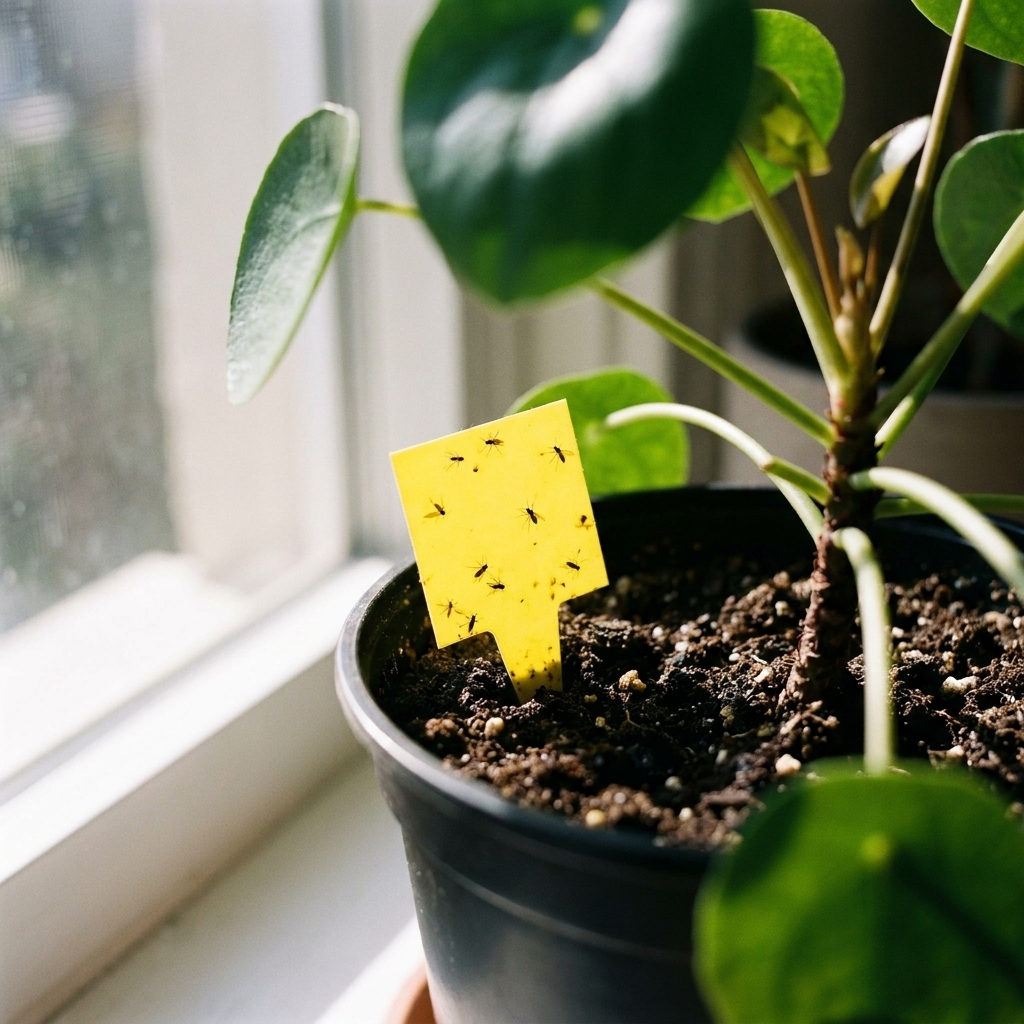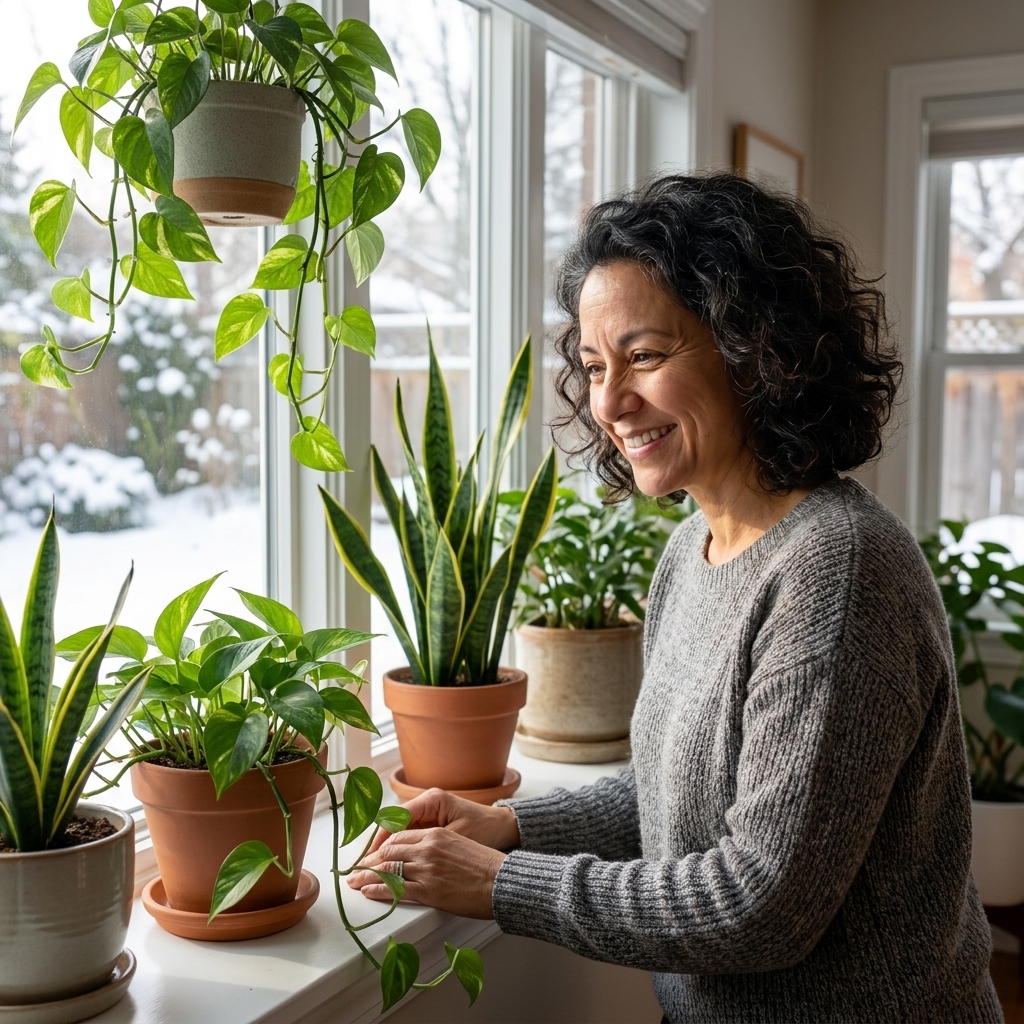
Winter can be tough on houseplants. Learn how to adjust watering, boost humidity, and maximize low winter light so your indoor plants stay happy until spring.
Gardening insights
Monstera Deliciosa Care and Propagation
Learn how to grow a lush Monstera deliciosa indoors: the best light, soil, watering routine, support, and a simple step-by-step guide to propagating from stem cuttings.

Elena Rosales
Elena Rosales is a certified Master Gardener and lifelong plant enthusiast who believes anyone can cultivate a green thumb. After transforming her tiny urban balcony into a thriving plant oasis, she moved to a half-acre homestead to grow her own food and flowers. Today, she shares practical, hands-on gardening advice to help the Hortello community bring more green into their lives.
Published September 21, 2026
Updated September 21, 2026
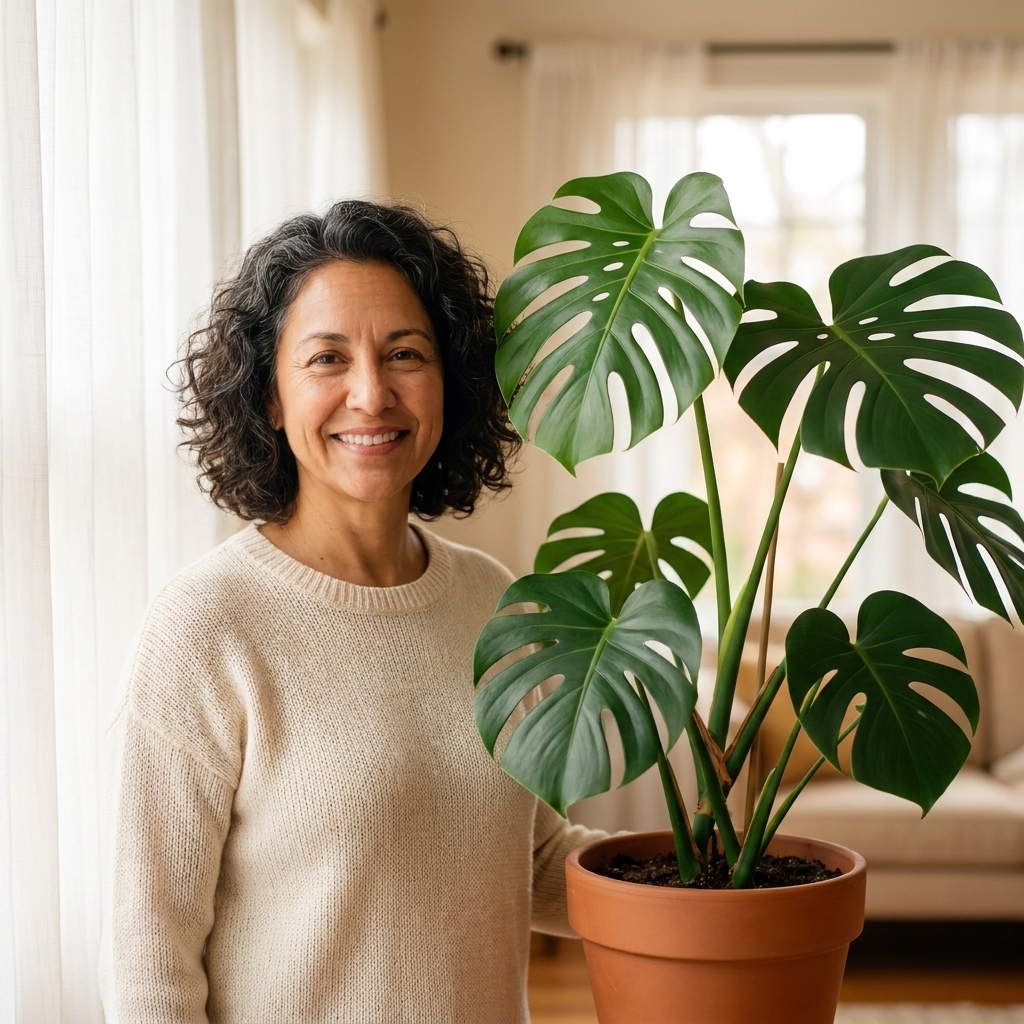
Monstera deliciosa is the houseplant that makes you feel like you live in a sunny jungle loft, even if your “plant room” is actually the corner of a living room. Those glossy, split leaves are not just pretty. They are often a clue that your plant is maturing and getting enough light and support to level up. And if it is not, Monstera is wonderfully chatty about it.
I have grown Monsteras in a too-dim city apartment, on a bright balcony (where I learned what sunburn looks like on tropical leaves), and now on my homestead in a sunroom that basically functions as a plant spa. In all three places, the care rules stayed the same: give it bright, indirect light, a chunky soil mix, and water thoroughly until runoff, then let the top couple inches dry.

Meet Monstera deliciosa
Monstera deliciosa (often called Swiss cheese plant) is a tropical aroid native to Central America. In the wild it climbs trees, sending aerial roots down the trunk as it reaches for brighter light. Indoors, it wants to do the same thing, just with a moss pole instead of a rainforest tree.
- Growth habit: Climbing vine with thick stems and aerial roots
- Signature look: Large heart-shaped leaves that develop splits (fenestrations) as the plant matures
- Speed: Moderate to fast in spring and summer with good light
- Toxicity: Toxic if chewed or ingested by pets or kids (insoluble calcium oxalates)
Light: the key to big leaves
If you take one thing from this guide, let it be this: light drives everything. Fenestrations are mostly a maturity and light story, but support and overall vigor matter too. A Monstera can stay alive in low light, but it often grows leggy with smaller, solid leaves.
Best light indoors
- Ideal: Bright, indirect light for most of the day
- Good options: A few feet back from a south or west window, or near an east window
- Can it take sun? Gentle morning sun is usually fine. Midday sun can scorch leaves, especially through glass, but acclimation matters. Some Monsteras can handle a couple hours of direct sun if you introduce it gradually.
Signs your light is off
- Too little light: Long gaps between leaves, smaller new leaves, little to no splitting, slow growth
- Too much light: Pale patches, crispy brown edges, bleached spots
My neighbor-over-the-fence tip: Rotate the pot a quarter turn every week or two. Monsteras lean toward the window like they are trying to eavesdrop. Also, do not twist individual leaves to face the light. Let the plant do its own thing, since it can take a week or two to reorient.
Soil: chunky and airy
Monsteras hate sitting in soggy soil, but they also do not want to dry into a brick. The sweet spot is a mix that holds a little moisture while leaving plenty of air around the roots.
A simple Monstera soil mix (DIY)
- 2 parts high-quality indoor potting mix (peat or coco-based)
- 1 part orchid bark (chunky texture for airflow)
- 1 part perlite or pumice (drainage and oxygen)
- Optional: a handful of worm castings for gentle nutrition
If you prefer bagged mixes, look for “aroid mix” or amend regular potting soil with bark and perlite until it feels light and springy in your hands.
Pot choice matters
- Drainage holes: Non-negotiable
- Material: Terracotta dries faster (helpful if you tend to overwater). Plastic holds moisture longer (helpful in very bright, warm rooms).
- Size: Go up 1 to 2 inches wider when repotting. Too big a pot holds too much wet soil.
Watering: soak, drain, wait
Monsteras like a thorough drink, then a break. I water until it runs out of the drainage holes, let it drain fully, and then I do not touch it again until the top layer dries.
How often should you water?
Instead of a strict schedule, use a simple test:
- Stick your finger into the soil about 2 inches deep.
- If it feels dry at that depth, water.
- If it still feels cool and damp, wait a few days and check again.
For big pots: The top 2 inches can be dry while the lower root zone is still wet. In large containers, also check deeper with a wooden skewer, lift the pot to learn its “dry weight,” or use a moisture meter as a double-check.
In many homes, that lands somewhere around every 7 to 14 days in spring and summer, and less in winter. But light, pot size, and humidity can shift that a lot.
Overwatering vs underwatering
- Overwatering signs: Yellowing leaves (especially lower ones), persistently wet soil, fungus gnats, soft or mushy stems near the base
- Underwatering signs: Drooping, curling leaves, crispy edges, dry soil pulling away from the pot
Failure confession: I once “saved” a droopy Monstera by watering it three times in a week. It was not thirsty. It was cold. Cold plus wet is a rough combo, since the plant drinks slowly and roots can get stressed. The roots sulked for a month. Now I check soil first, always.
Humidity and temperature
Monstera deliciosa is adaptable, which is why it is so forgiving indoors. Still, you will get prettier growth when you avoid extremes.
- Temperature: 65 to 85°F (18 to 29°C) is the happy zone. Avoid cold drafts and heating vents.
- Humidity: Average home humidity works, but 50% to 60% helps leaves unfurl smoothly.
Easy humidity boosts
- Group plants together
- Run a small humidifier nearby
- Use a pebble tray (helpful, but modest effect)
Misting is fine if you enjoy it, but it is not a reliable humidity solution on its own.
Feeding: steady, not heavy
Monsteras are not heavy feeders, but they do appreciate a steady trickle of nutrients during active growth.
- When: Spring through early fall
- What: Balanced houseplant fertilizer (something like 10-10-10 or 20-20-20), a gentle organic liquid fertilizer, or a slow-release option mixed into the top layer
- How: Feed at half strength every 4 weeks, or follow your product label. If you use something strong like 20-20-20, dilution is your friend.
In winter, I usually pause fertilizing unless the plant is actively pushing new growth under strong light.
Support: poles and stakes
Because Monstera is a climber, giving it support is not just about keeping it upright. It can also encourage larger leaves and more mature growth.
Choosing a support
- Moss pole: Best for encouraging aerial roots to grab on. Great for mature plants.
- Coir pole: Lower maintenance than moss, still climbable
- Stake or trellis: Good for basic support, less “root grip”
Gently tie the main stem to the pole with soft plant ties. Do not tie by the leaf petioles (the leaf stalks). Those need to move freely to angle toward the light.

Pruning and shaping
Pruning helps keep your Monstera full, balanced, and not aggressively invading your walkway like my Great Zucchini Invasion of 2019. Different plant, same lesson: sometimes you have to edit for harmony.
What to prune
- Yellow or damaged leaves (cut near the base of the leaf stem)
- Overly leggy vines (cut above a node to encourage branching)
- Stems you plan to propagate
Tool tip: Use clean, sharp pruners. Wipe blades with rubbing alcohol before and after to reduce disease spread.
Repotting: when and how
Monsteras do not mind being a little snug, but they will eventually slow down if rootbound.
When to repot
- Roots circling the pot or coming out of drainage holes
- Soil drying out very quickly after watering
- Plant feels top-heavy and unstable
How to repot (quick steps)
- Choose a pot 1 to 2 inches wider with drainage holes.
- Add a layer of your chunky mix.
- Slide the plant out, loosen circling roots gently.
- Set it at the same soil level as before.
- Backfill, water thoroughly, and let it drain.
Propagation: cuttings 101
Propagating Monstera deliciosa is one of those gardening joys that feels like a magic trick. The key is understanding one word: node.
What is a node?
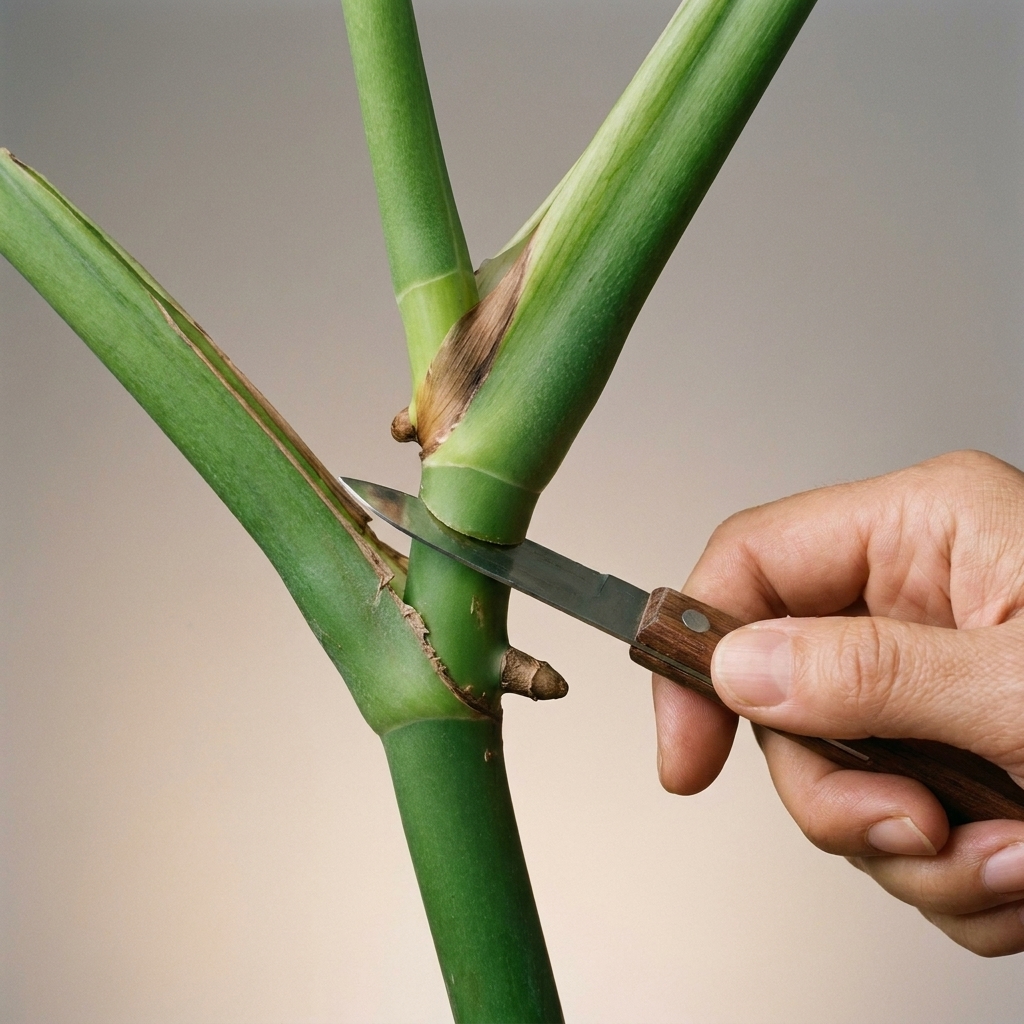
A node is the bumpy joint on the stem where leaves and aerial roots emerge. A Monstera cutting must include at least one node to root. A single leaf without a node can stay green in water for a while, but it will not grow into a new plant.
How to take a cutting
What you need
- Clean, sharp pruners or a knife
- A jar of water or a small pot with airy mix
- Optional: rooting hormone (nice, not required)
- A bright spot with indirect light
Step-by-step
- Choose the right stem. Look for a healthy vine with at least one leaf and a visible node. Bonus points if there is a little aerial root nub, since it often roots faster.
- Make the cut. Cut 1/2 to 1 inch below the node. If you are taking multiple cuttings, each piece should have its own node.
- Let it callus (optional but helpful). Set the cutting on a clean towel for 30 to 60 minutes so the cut end can dry slightly.
- Root it in water or soil. Either method works well. Pick the one that fits your routine.
- Wait for roots, then pot up. Once roots are established, move water-rooted cuttings into soil so they can transition to stronger, soil-adapted roots.
Rooting in water
Water propagation is beginner-friendly because you can see root growth. It is also a great way to catch problems early.
Steps
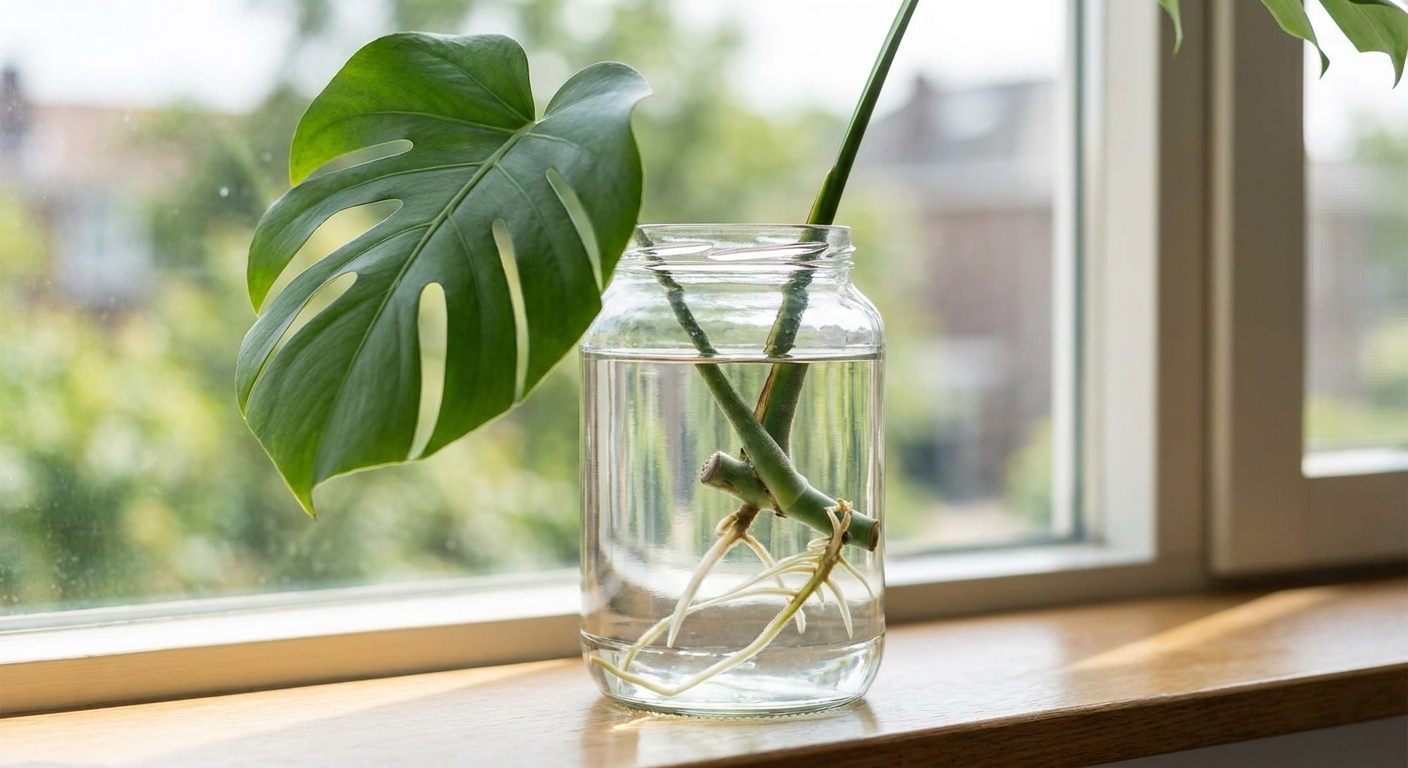
- Place the cutting in a jar so the node is submerged and the leaf stays above water.
- Put the jar in bright, indirect light.
- Change the water every 5 to 7 days, or sooner if it looks cloudy.
- Wait for several roots to form. Many people pot up when roots are about 2 to 5 inches long and starting to branch.
- Pot into a chunky soil mix, water thoroughly, and keep slightly moist (not soggy) for the first 1 to 2 weeks.
Timing: Many cuttings root in 2 to 6 weeks depending on warmth and light.
Rooting in soil
Soil propagation skips the water-to-soil transition. The tradeoff is you cannot watch the roots, so patience is required.
Steps
- Fill a small pot with a light, chunky mix and pre-moisten it.
- Plant the cutting so the node is covered and the leaf is above the soil line.
- Firm the soil gently and water lightly.
- Keep in bright, indirect light and maintain evenly moist soil for the first few weeks.
- After 3 to 6 weeks, test for roots by giving the cutting a gentle tug. Resistance usually means it has rooted.
Optional boost: Cover the pot loosely with a clear plastic bag to hold humidity, but open it daily for airflow to prevent mold.
Single leaf propagation?
If your cutting is just a leaf and petiole without any stem node attached, it will not grow into a full plant. It may stay alive in water for a surprisingly long time, which can be confusing, but it is essentially a “zombie leaf.” For true propagation, you need a node.
Leaf cleaning
Dust is sneaky. It dulls that pretty shine and also reduces how much light your plant can use.
- How: Wipe leaves with a soft, damp cloth. Support the leaf from underneath so you do not crease it.
- Skip: Leaf shine products. They can clog pores and make leaves look oddly plastic.
- Bonus: Cleaning day is pest-inspection day. Two chores, one playlist.
Variegated Monsteras
If you are growing a variegated Monstera deliciosa like ‘Albo’ or ‘Thai Constellation,’ the care basics stay the same, but expect a few diva tendencies:
- More light: They usually need brighter indirect light to support the white portions, since those areas do not photosynthesize.
- Slower growth: Variegation often means a slower pace, so be patient.
- More caution with sun: White tissue burns faster, so acclimate even more slowly if you add direct sun.
Common problems
Yellow leaves
- Most common cause: Overwatering or soil staying wet too long
- Fix: Let soil dry further between waterings, increase light, and consider a chunkier mix
Brown, crispy edges
- Common causes: Underwatering, low humidity, or fertilizer salts
- Fix: Water more consistently, flush soil occasionally, and aim for steadier humidity
Leaves not splitting
- Common causes: Plant is juvenile, not enough light, no support, or generally slow growth
- Fix: Increase indirect light, add a pole, feed lightly in the growing season, and give it time
Drooping leaves
- Common causes: Thirst, cold stress, or recent repotting
- Fix: Check soil moisture first, then adjust temperature and light; give repotted plants a couple weeks to settle
Root rot
- Clues: Soil stays wet and sour-smelling, black or mushy roots, yellowing plus limp growth that does not perk up after drying
- What to do: Unpot the plant, rinse roots, trim any mushy roots with clean snips, then repot into fresh chunky mix in a pot with drainage. Hold off on fertilizing until you see new growth.
Pests (spider mites, mealybugs, scale)
- First step: Isolate the plant
- Wash: Rinse leaves and stems in the shower or sink
- Treat: Insecticidal soap or horticultural oil, repeated weekly for a few rounds
Quick care checklist
- Light: Bright, indirect
- Water: When top 2 inches are dry (check deeper in big pots)
- Soil: Chunky, airy, fast-draining
- Support: Moss pole or stake for larger leaves
- Fertilizer: Monthly at half strength in growing season
- Propagation: Stem cutting with a node, root in water or soil
FAQ
Why are my new leaves coming in small?
Usually light. Low light leads to smaller leaves and longer stretches between nodes. Move your plant closer to a bright window (still indirect) and consider adding a grow light in darker seasons. Support helps too, since climbing often triggers more mature leaf size.
Should I cut aerial roots off?
You can, but I usually do not unless they are truly in the way. Aerial roots help the plant climb and can be guided into the soil or onto a moss pole.
How long does propagation take?
Most Monsteras root in 2 to 6 weeks in warm, bright conditions. Cooler rooms and low light slow everything down.
Is Monstera deliciosa the same as Monstera adansonii?
No. Monstera deliciosa has larger, thicker leaves and develops big splits as it matures. Monstera adansonii has smaller leaves with more holes and a vining habit.