Reliable herbs to grow indoors year-round, with practical tips for light, watering, pruning, seasonal care, and troubleshooting common problems.
Gardening insights
Winter Houseplant Care
Keep houseplants healthy through winter with smarter watering, steadier humidity, and better light. Simple, hands-on fixes for droopy leaves, dry tips, and slow growth.

Elena Rosales
Elena Rosales is a certified Master Gardener and lifelong plant enthusiast who believes anyone can cultivate a green thumb. After transforming her tiny urban balcony into a thriving plant oasis, she moved to a half-acre homestead to grow her own food and flowers. Today, she shares practical, hands-on gardening advice to help the Hortello community bring more green into their lives.
Published September 21, 2026
Updated September 21, 2026
Every winter, I get messages that sound like a plant SOS: “My pothos looks sad,” “My fiddle leaf dropped three leaves overnight,” “Why is everything… just kind of sulking?” If that’s you, take a breath. Winter changes the rules for indoor plants because it changes light, temperature, and humidity all at once.
The good news is you usually do not need a whole new routine. You need a few small adjustments, plus a little detective work. Here’s exactly what I do in my own home each winter to keep my indoor jungle alive and looking good.
What changes in winter
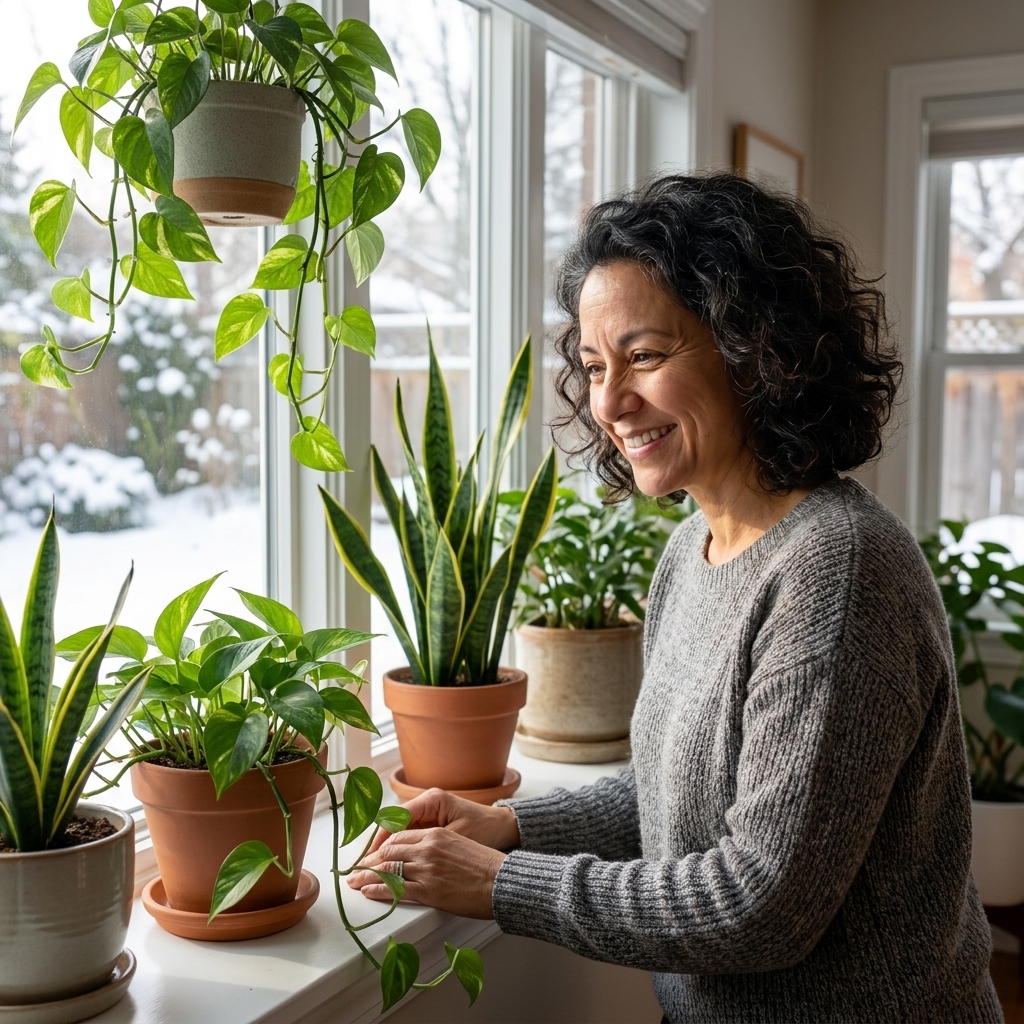
A lot of popular houseplants are tropical or subtropical, but there are plenty of exceptions (succulents, bulbs, herbs, and other “not from a rainforest” types). Either way, most indoor plants still feel the winter shift as a triple whammy:
- Less light: Shorter days and a lower sun angle mean slower growth and slower water use.
- Drier air: Heating systems lower indoor humidity, which can lead to crispy leaf edges and spider mites.
- Temperature swings: Cold windows, hot vents, and drafty doors create microclimates that stress leaves and roots.
So when a plant looks “off,” it is often not one single issue. It is the combo.
Watering in winter
If you only change one thing this season, make it this: winter watering is about timing, not calendar schedules. Plants use less water in low light, and soil stays wet longer. That is where root rot sneaks in.
Use the finger test
Instead of watering every Saturday because it feels productive (I’ve been there), check the soil first:
- For most tropical foliage plants (pothos, philodendron, monstera, peace lily): let the top 1 to 2 inches dry before watering.
- For succulents and cacti: let the soil dry all the way through.
- For thirstier plants (some ferns, fittonia): keep evenly moist, but never soggy. In winter, that still usually means longer gaps between waterings.
Stick your finger in, or use a wooden chopstick as a soil “dipstick.” If it comes out with damp soil stuck to it, wait.
Water thoroughly, then drain
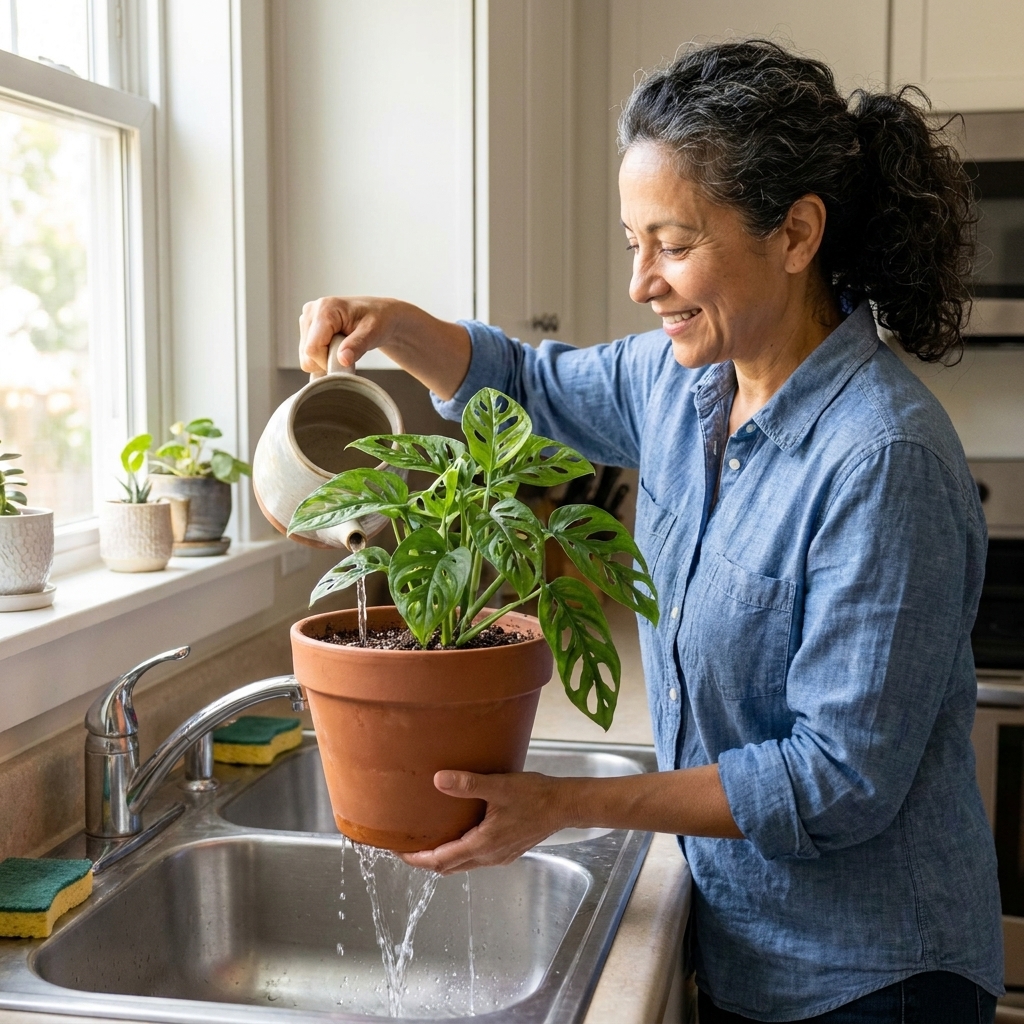
When you do water, water deeply until it runs out the drainage holes. Then empty the saucer or cachepot within 10 to 15 minutes. Roots sitting in cold, stagnant water in winter is a fast track to yellow leaves.
Watch for overwatering signs
- Yellowing lower leaves that drop easily
- Mushy stems or a sour soil smell
- Soil that stays wet for many days
If you suspect overwatering, pause watering, increase light if possible, and consider repotting only if the soil is staying soaked and roots are declining. Winter is not my favorite time to repot, but sometimes it is kinder than “waiting it out.”
Soil and pots matter more in winter
One sneaky winter problem is a potting mix that holds water like a sponge. Dense, peat-heavy soil can stay wet forever when growth slows. Drainage holes are non-negotiable, and your pot material plays a role too: terracotta dries faster than plastic or glazed ceramic. If a plant is always wet, the fix might be less “water less” and more “this soil is not draining.”
Humidity
Many common houseplants do well around 40 to 60 percent humidity, but winter indoor air can drop far below that. If you are seeing crispy tips, leaf curl, or buds dropping, low humidity is often part of the story.
A quick reality check: some plants (hello, calatheas and many ferns) often look their best closer to 50 to 70 percent. So think of 40 to 55 percent as a practical, realistic target for many homes, not the ceiling.
Measure it
A simple hygrometer (often under $15) removes the guesswork. Place it near your plants, not across the room.
Pick a strategy
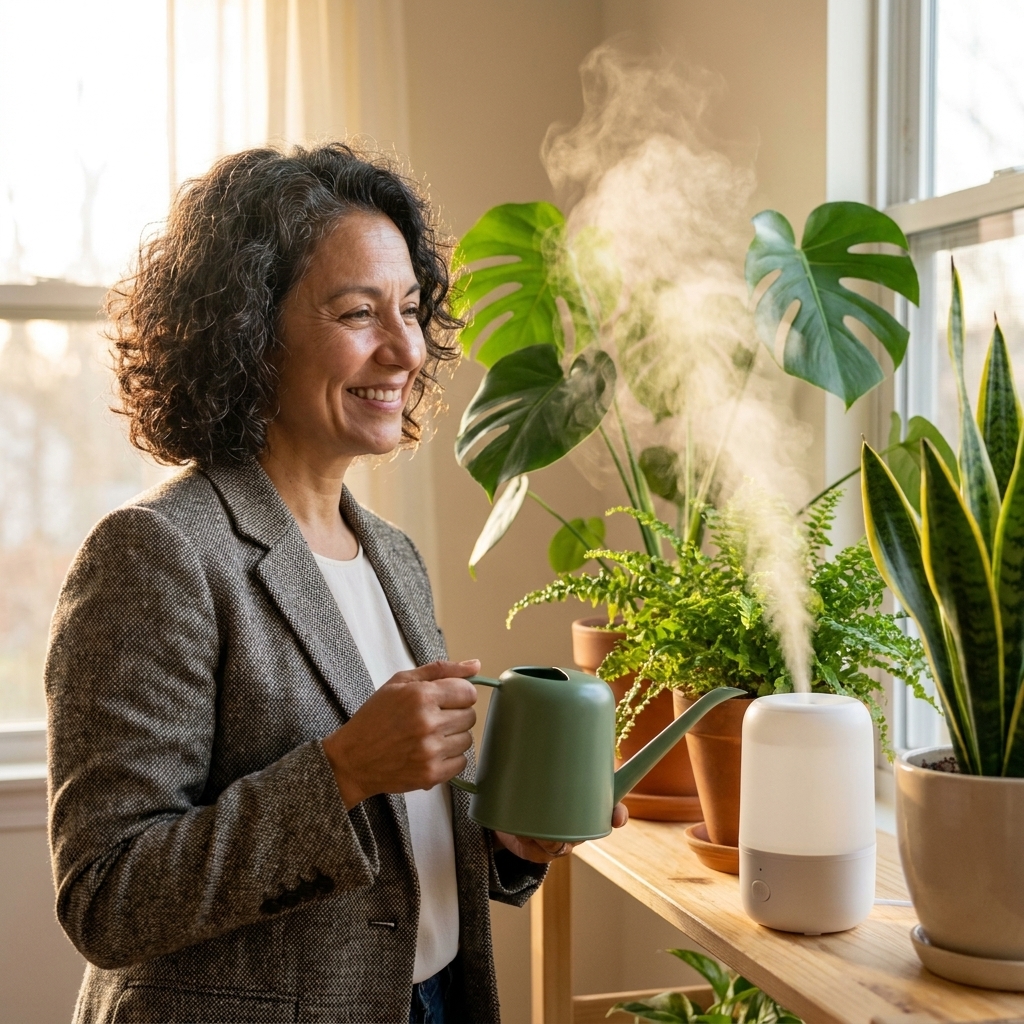
- Humidifier (best results): Run it near your plant cluster. Aim for 40 to 55 percent as a starting point for most homes, then bump higher for humidity lovers if you can. Clean it regularly to avoid mineral dust and buildup.
- Group plants together: Plants release moisture through transpiration. A cluster creates a slightly more humid pocket.
- Pebble trays: Helpful in small ways, especially for a single plant. Use a tray with pebbles and water below the pot’s base so roots never sit in water.
- “Plant spa” bathroom time: If you have a bright bathroom, a fern or calathea may love a winter vacation there.
Skip misting as the main fix
Misting feels nice, but it raises humidity for a very short time. I treat misting as “leaf cleaning with benefits,” not as humidity management.
Winter light
In winter, light is usually the limiting factor. Less light means slower growth, soil that dries more slowly, and more sensitivity to stress. Think of winter as a maintenance season, not a growth sprint.
Move plants closer to windows
- South or west windows: Brightest in the Northern Hemisphere. Great for succulents, citrus, and many sun-lovers.
- East windows: Gentle morning light, great for many foliage plants.
- North windows: Often too dim in winter unless the plant is very low-light tolerant.
Southern Hemisphere note: This flips, so north-facing windows are typically the brightest.
Cold glass warning: If leaves are touching a chilly windowpane, they can get damaged. Pull plants back an inch or two, especially on freezing nights.
Rotate and dust
Rotate pots every week or two so growth stays even. And wipe dusty leaves with a damp cloth. Dust acts like a little winter blanket over your plant’s solar panels. Also, skip leaf shine products. They can clog leaf pores and attract dust.
Consider a grow light
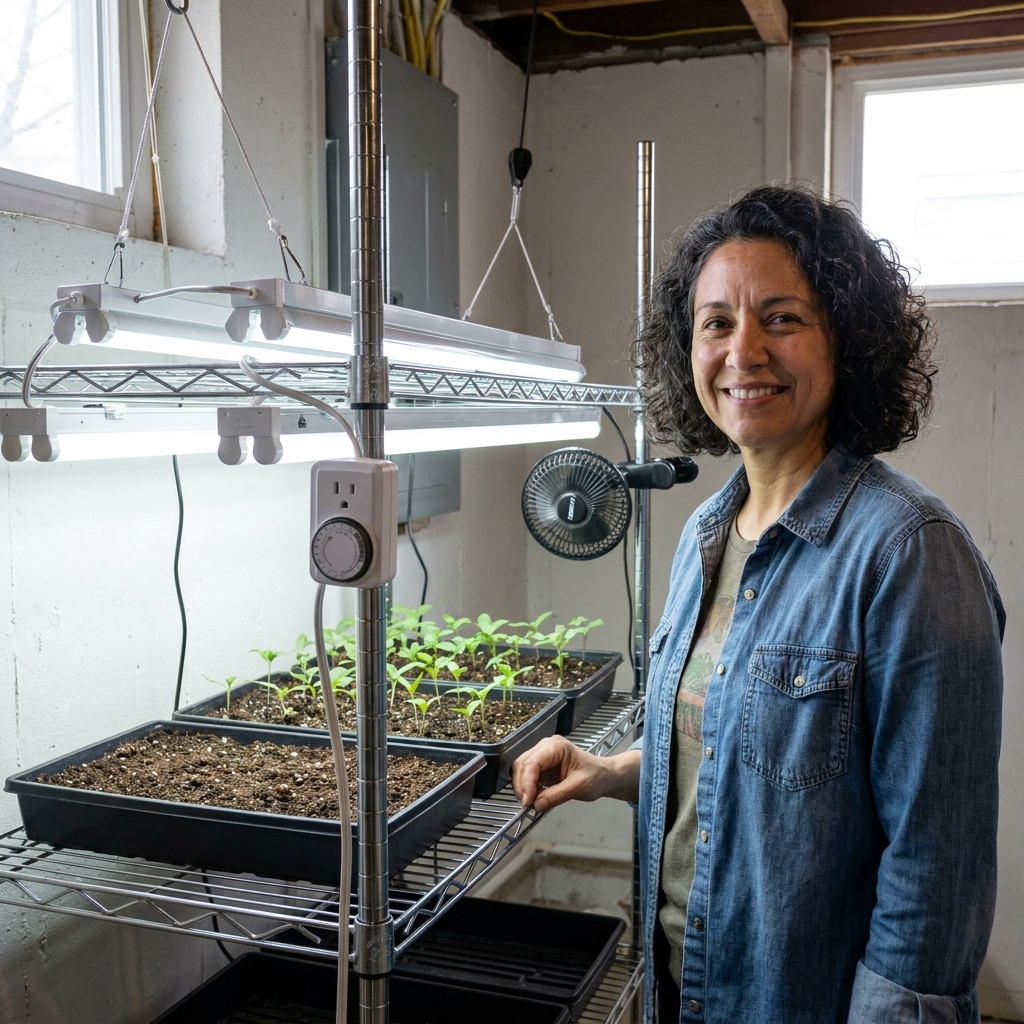
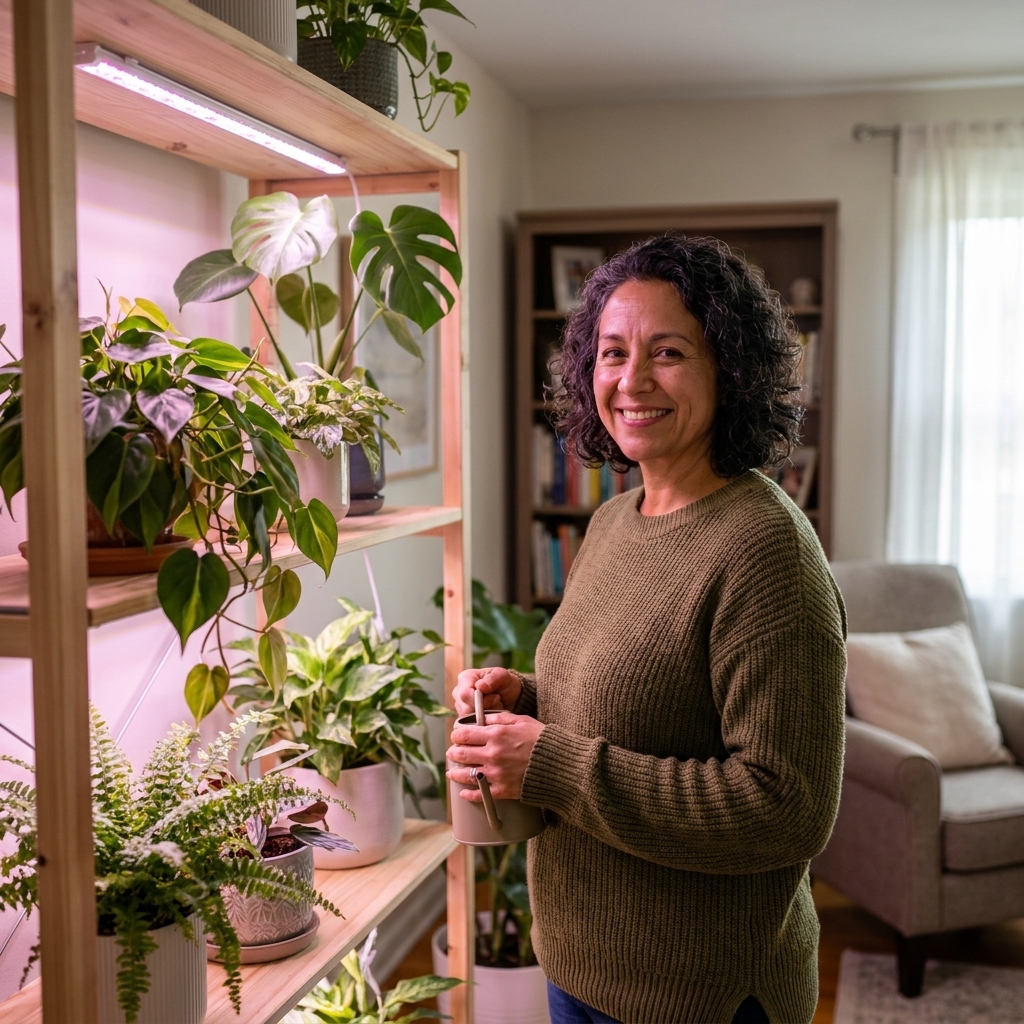
If you have long, dark winters or your windows are shaded, a basic LED grow light can be a lifesaver. You do not need a laboratory setup.
- Duration: 10 to 12 hours per day is a good starting point for foliage plants.
- Distance: Follow the product guidance, but many LEDs work best about 8 to 18 inches above the plant.
- Adjust as you go: If you see stretching, move the light closer or run it longer. If you see bleaching or crispy spots, back it off.
- Consistency: Put it on a timer. Your future self will thank you.
Temperature and drafts
Plants can handle “cooler” better than “swingy.” Winter stress often comes from bouncing between cold drafts and hot, dry air.
Avoid these spots
- Heat vents and radiators: Leaves dry out fast, and soil can go from wet to bone-dry in a day.
- Drafty doors and old windows: Cold blasts can cause leaf drop.
- Fireplaces: Beautiful, but very drying.
Easy fixes
- Redirect vent airflow away from plants (even a vent deflector can help).
- Move plants off cold floors, especially tile, near exterior walls. A plant stand or even a cork mat helps.
- Use curtains at night if windows are icy, but keep plants out of direct contact with cold fabric and glass.
Comfort zone
Most common houseplants are happiest around 65 to 75°F during the day and not much cooler than 60°F at night. If you like sleeping in a chilly room, move tropical plants a bit farther from the window at night.
Fertilizer and repotting
Winter is usually not the season for big changes. Your plants are not in a strong growth cycle, so heavy feeding and major pot upgrades can backfire.
Fertilizing
- Most foliage plants: Pause fertilizer or reduce to once every 6 to 8 weeks at half-strength if the plant is actively growing under good light.
- Succulents: Typically no fertilizer in winter.
If your plant is not pushing new growth, it is not asking for extra nutrition.
Repotting
If a plant is healthy but rootbound, I usually wait until spring. Repot in winter only if there is a problem you cannot solve otherwise, like waterlogged soil that never dries or clear root decline.
Pruning and cleanup
Remove yellowing leaves, trim crispy tips, and pinch leggy growth lightly if needed. Avoid aggressive pruning unless a plant is truly struggling. Think tidy, not makeover.
Winter pests
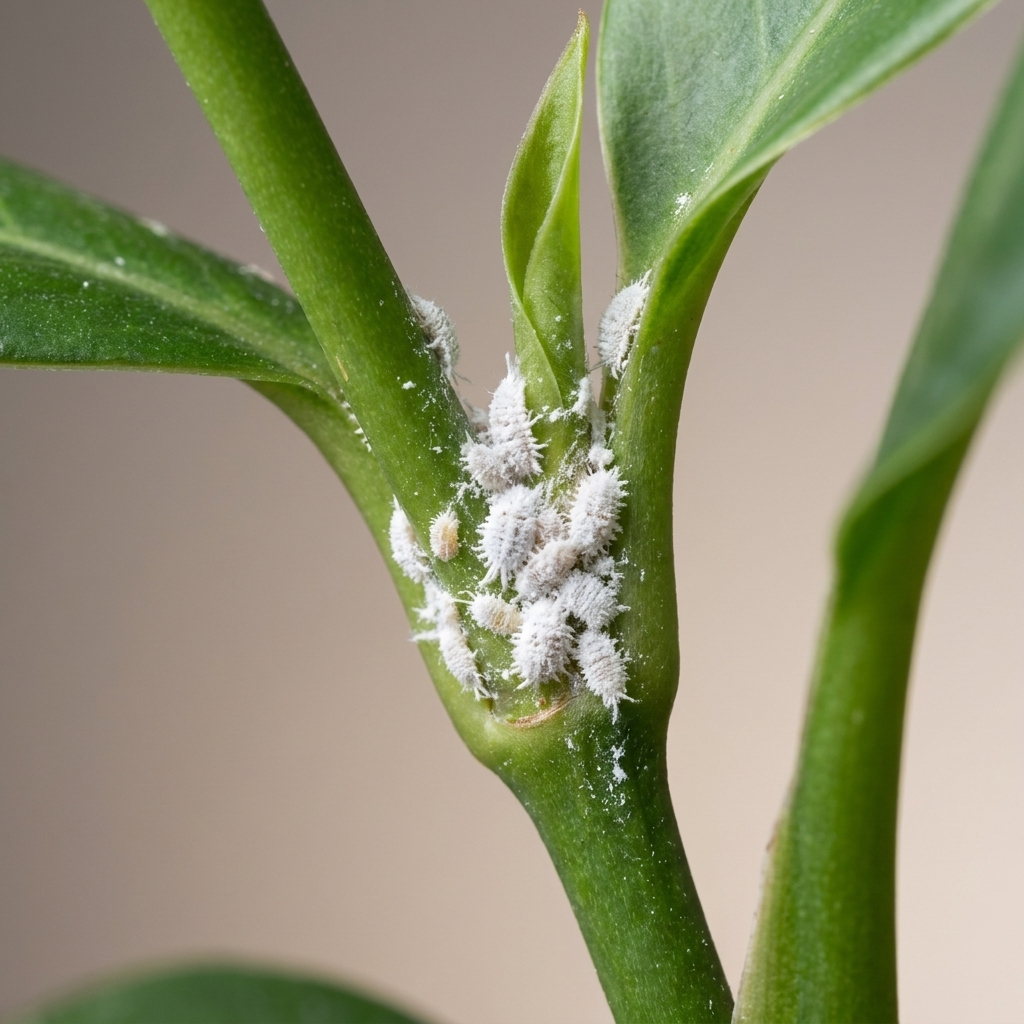
When humidity drops, certain pests throw a party. The two biggest winter offenders in my experience are spider mites and mealybugs.
Quick weekly check
- Look under leaves and at leaf joints.
- Check for webbing (spider mites) or cottony clumps (mealybugs).
- Inspect new plants before they join your collection.
- Quarantine new plants for 1 to 2 weeks when possible, even if they look fine. Pests love a surprise entrance.
First response
- Isolate the plant right away.
- Rinse foliage in the shower or sink (lukewarm water).
- Wipe leaves and stems with diluted soap solution or use insecticidal soap according to label directions.
- Repeat every 4 to 7 days for a few rounds (and follow the label). Spider mites especially may need the faster end of that schedule.
Quick troubleshooting
- Yellow leaves + wet soil: Overwatering or cold roots. Let it dry more between waterings, check drainage, increase light.
- Crispy tips: Low humidity, inconsistent watering, or salt buildup. Boost humidity, water more evenly, flush soil occasionally.
- Leaf drop after moving: Light and temperature shift shock. Give it 2 to 3 weeks of stable conditions.
- Leggy growth: Not enough light. Move closer to a window or add a grow light.
- Brown patches near the window: Cold damage from glass contact or drafts. Pull back slightly and shield from night chill.
My winter routine
If you want a low-stress rhythm, here’s what works in my own house:
- Once a week: Walk the plants, check soil moisture with a finger or chopstick, rotate the sun-lovers, quick pest scan.
- Every 2 weeks: Wipe dusty leaves, top up pebble trays, refill humidifier if you use one.
- Monthly (optional): Flush one or two plants to reduce mineral salt buildup if your water is hard. Water until it runs freely from the drainage holes for a minute, then let it drain completely.
And yes, I still lose a leaf here and there. Winter is a season. Your job is to keep the plant healthy enough to burst back to life when spring light returns.
FAQ
Should I water with warm water in winter?
Lukewarm is best. Very cold water can shock roots, especially if the pot is already cool near a window.
Do houseplants go dormant in winter?
Many slow down significantly due to low light, even if they are not truly dormant like outdoor perennials. Slower growth means slower water use and less need for fertilizer.
Is it okay to keep plants near a window in winter?
Usually yes, and it often helps. Just avoid letting leaves press against cold glass, and watch for drafts at night.
Why do my plants get fungus gnats in winter?
Fungus gnats thrive in consistently moist soil. Let the top layer dry more between waterings, bottom-water when appropriate, and use yellow sticky traps to monitor adults. If they keep coming back, treat the larvae in the soil with BTi (mosquito bits/dunks) or consider beneficial nematodes, and take a hard look at whether the potting mix is staying wet for too long.