Winter can be tough on houseplants. Learn how to adjust watering, boost humidity, and maximize low winter light so your indoor plants stay happy until spring.
Gardening insights
10 Low-Light Houseplants for Dark Corners
No sunny window? No problem. Meet 10 low-light houseplants for dim rooms and north-facing windows, plus simple care tips, drainage advice, and grow light guidance.

Elena Rosales
Elena Rosales is a certified Master Gardener and lifelong plant enthusiast who believes anyone can cultivate a green thumb. After transforming her tiny urban balcony into a thriving plant oasis, she moved to a half-acre homestead to grow her own food and flowers. Today, she shares practical, hands-on gardening advice to help the Hortello community bring more green into their lives.
Published September 21, 2026
Updated September 21, 2026
Some of the coziest spots in a home are also the hardest to plant up. Think: the hallway that never sees a sunbeam, the office corner behind your monitor, or that north-facing window that feels more like “ambient glow” than “light.” The good news is you still have options. A handful of houseplants are naturally adapted to the understory of forests, where light is filtered, dappled, and sometimes downright stingy.
Before we jump into my favorites, a quick, neighbor-over-the-fence truth: “low light” does not mean “no light.” Even the toughest plants need some brightness to maintain new growth. If you truly have a windowless room, you can still grow plants, but you will want a small grow light on a timer. I do this in winter and it feels like giving my plants a little morning coffee.
Quick safety note: Several plants on this list are toxic if pets or kids chew them (including pothos, philodendron, peace lily, ZZ plant, snake plant, and many aglaonema). If you have a curious nibble monster at home, double-check toxicity before you buy, or keep plants well out of reach.
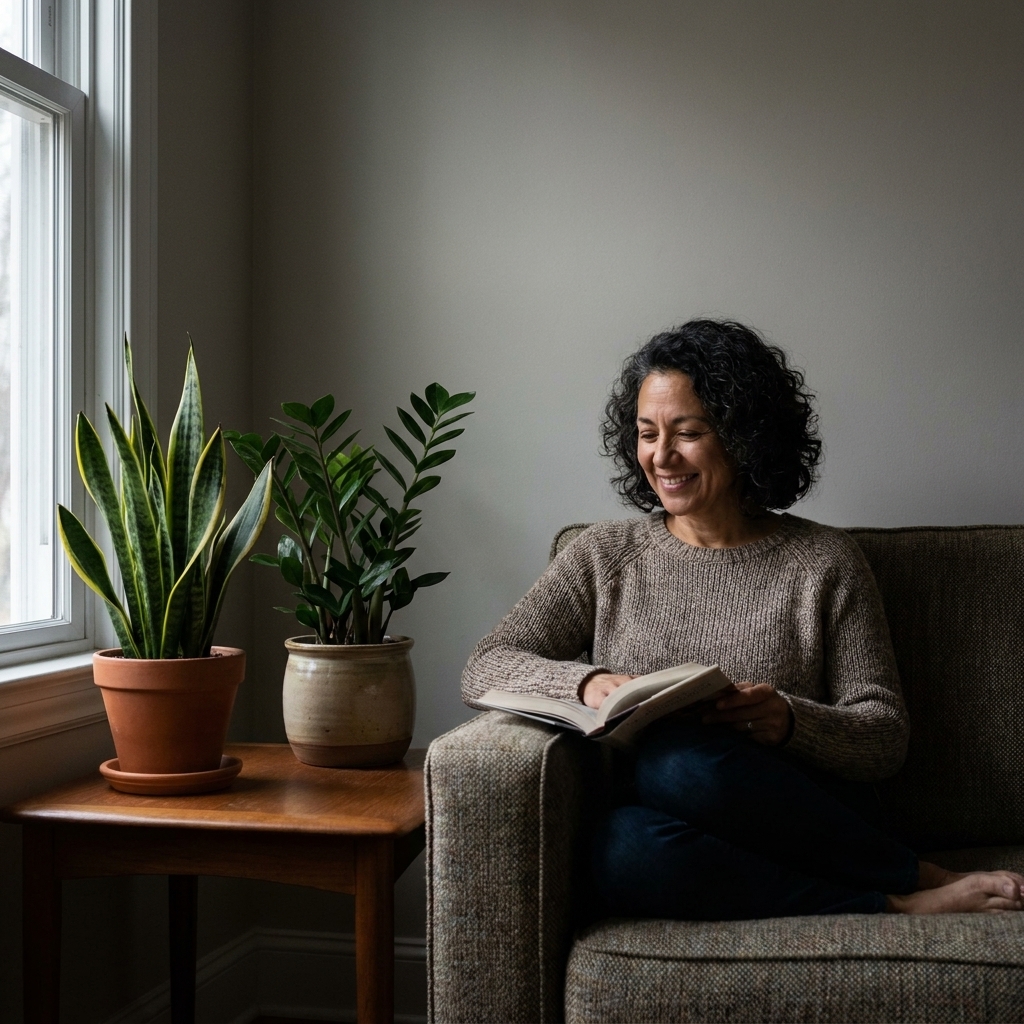
What counts as low light indoors?
Indoor light is wildly different from outdoor shade. Here is a practical way to think about it:
- Bright indirect light: Close to an east window, or near a bright north window. You can comfortably read a book there most of the day. (South or west can also work if the plant is set back or filtered so it avoids hot direct sun.)
- Low light: Several feet from a window, a north-facing room, or a space where you can see clearly but it feels “dim.” You can read, but you might want a lamp later in the day.
- Very low light: Far from windows or in rooms with minimal daylight. Plants can survive, but growth will be slow and a grow light makes a big difference.
If you are unsure, try the shadow test at midday. Stand where the plant will live and hold your hand up between the light source and a wall or the floor. A crisp shadow usually means brighter light. A faint, fuzzy shadow is typically low light. No clear shadow at all means you are in “consider a grow light” territory.
One more small clarification: when people say “very low light,” they usually still mean there is some ambient daylight in the space. A truly windowless room is “no light,” and that is grow-light territory.
10 low-light houseplants that do well
These are my tried-and-true picks for dim corners, north-facing windows, and rooms that do not get much direct sun. Some truly thrive in low light, and others are better described as “tolerate it gracefully.” I will note where each plant is especially forgiving, plus the most common mistake I see (and have personally made).
1) Snake plant (Dracaena trifasciata)
If you want a plant that politely ignores your busy schedule, start here. Snake plants tolerate low light, dry air, and the occasional missed watering. In brighter light they grow faster, but they can hold their own in dim spots.
- Why it works: Thick leaves store water and the plant adapts well to slower growth in low light.
- Water: Let soil dry out almost completely, then water thoroughly.
- Watch for: Mushy bases or falling leaves usually means too much water, not too little.
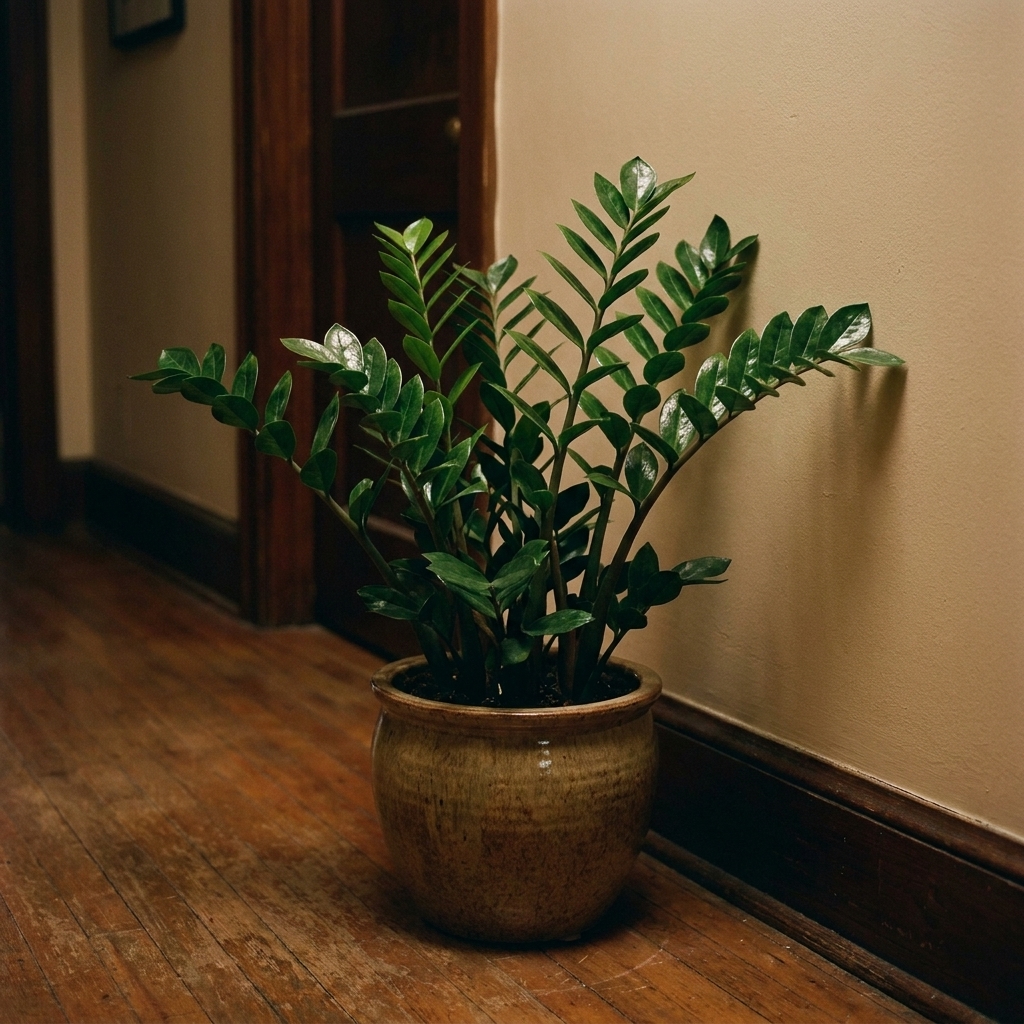
2) ZZ plant (Zamioculcas zamiifolia)
ZZ plants are the champions of “I forgot.” Their glossy, upright stems stay tidy and architectural, which makes them great for corners and entryways. They are also one of my top choices for offices.
- Why it works: Underground rhizomes store water and energy, so the plant can cruise in low light.
- Water: Only when the pot is mostly dry. In low light, this might be every 3 to 5 weeks.
- Watch for: Yellowing stems can be overwatering. Err on the dry side.
3) Pothos (Epipremnum aureum)
Pothos is my “confidence builder” plant. It will trail, climb, and forgive you while you learn. In low light it may grow more slowly and variegated varieties can turn greener, but it stays alive and attractive.
- Why it works: Naturally a climbing understory plant that tolerates shade.
- Water: When the top 1 to 2 inches of soil feel dry.
- Watch for: Long bare stretches on vines in very low light. Trim back and move a bit closer to a window if possible.
4) Heartleaf philodendron (Philodendron hederaceum)
Soft, heart-shaped leaves and an easygoing temperament. If you love the look of pothos but want a slightly more uniform, velvety vibe, heartleaf philodendron is a sweet choice for shelves and bookcases.
- Why it works: Shade-tolerant vine that stays flexible about conditions.
- Water: When the top couple inches are dry. It prefers evenly moist soil, but not soggy.
- Watch for: Tiny leaves and stretched stems are a sign it wants more light.
5) Cast iron plant (Aspidistra elatior)
This is an old-school houseplant for a reason. Cast iron plants are slow-growing, sturdy, and unfussy. If you have a darker corner that you do not want to baby, this one earns its keep.
- Why it works: Naturally adapted to shade and steady, lower-energy conditions.
- Water: Let the top half of the pot dry before watering.
- Watch for: Brown tips often come from salts or fertilizer buildup, low humidity, or uneven watering. A periodic deep flush helps.
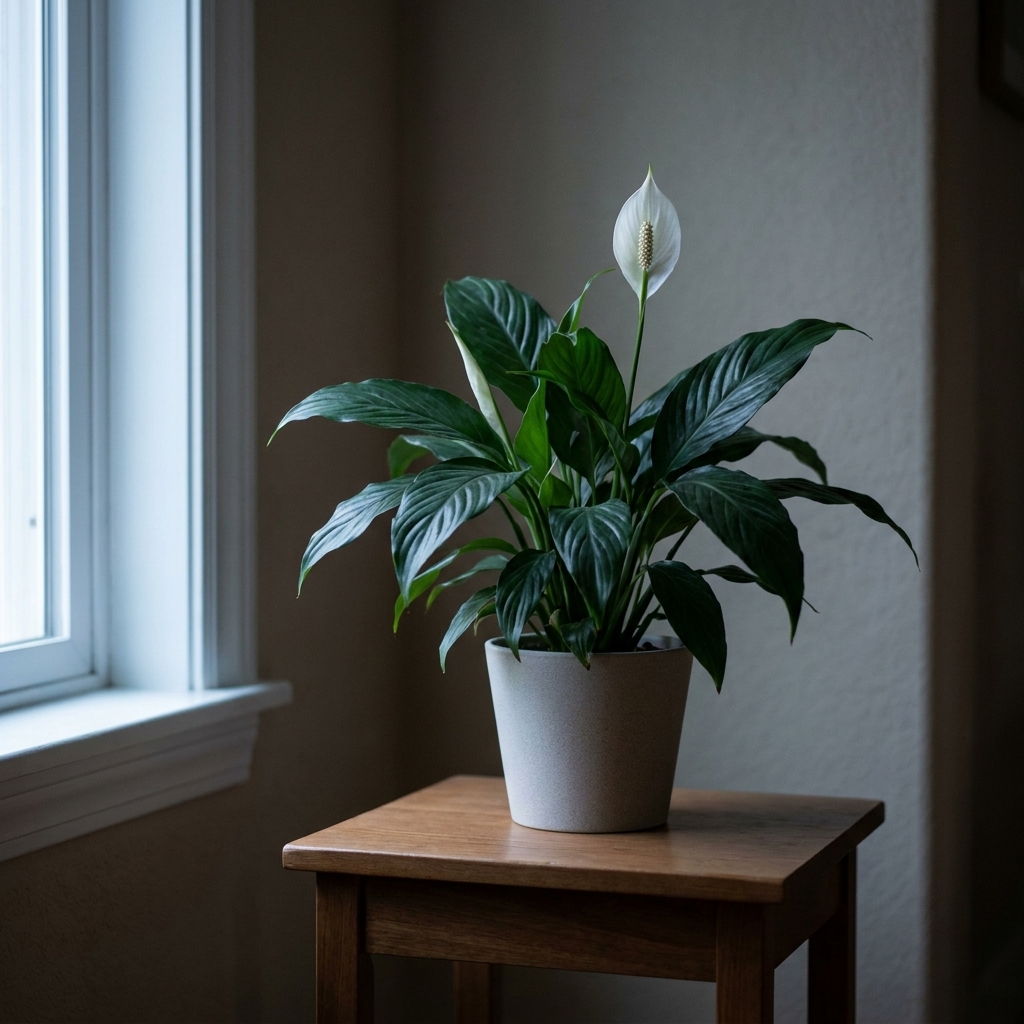
6) Peace lily (Spathiphyllum)
Peace lilies are famous for tolerating low light, and they also have one of the clearest ways of communicating: they droop when thirsty, then perk up after a drink. In lower light, blooming is less frequent, but the foliage can still look lush.
- Why it works: Understory plant that handles filtered light well.
- Best expectation: They do best in medium indirect light. Low light usually means slower growth and fewer flowers, and very low light can cause a gradual decline over time.
- Water: When the top inch feels dry, or when the plant just begins to droop.
- Watch for: Crispy edges can mean low humidity or mineral buildup. Use filtered water if your tap is very hard.
7) Chinese evergreen (Aglaonema)
Aglaonema is a fantastic “pretty but tough” plant. Many cultivars have silver, pink, or red tones, and they tolerate low light better than most colorful foliage plants. The brighter the leaf color, the more light it generally prefers, but many do fine in moderate to low light.
- Why it works: Adaptable foliage plant that tolerates indoor light levels well.
- Water: When the top 2 inches are dry.
- Watch for: Cold drafts. They sulk if temperatures drop suddenly.
8) Spider plant (Chlorophytum comosum)
Spider plants are cheerful, fast to fill out, and generous with baby plantlets. While they prefer brighter indirect light, they can handle north-facing windows and lower-light rooms if you keep expectations realistic: slower growth, fewer babies, and a slightly sparser look.
- Why it works: Resilient root system and adaptable growth habit.
- Water: When the top inch dries. They like more regular watering than snake plants or ZZ plants.
- Watch for: Brown tips are common with fluoride or salts. Filtered water helps, and so does trimming the tips for a cleaner look.
9) Bird’s nest fern (Asplenium nidus)
If you want something that feels like a little patch of rainforest, bird’s nest fern is it. The leaves unfurl from the center like a green fountain. It prefers consistent moisture and higher humidity, which makes it surprisingly happy in a dim bathroom (even with just a small window). In truly low light, expect it to hold steady more than it “takes off.”
- Why it works: Ferns evolved for filtered forest light.
- Water: Keep soil lightly moist, not soggy. Water around the plant, not into the central “nest.”
- Watch for: Crispy edges mean it is too dry, either in soil or air.
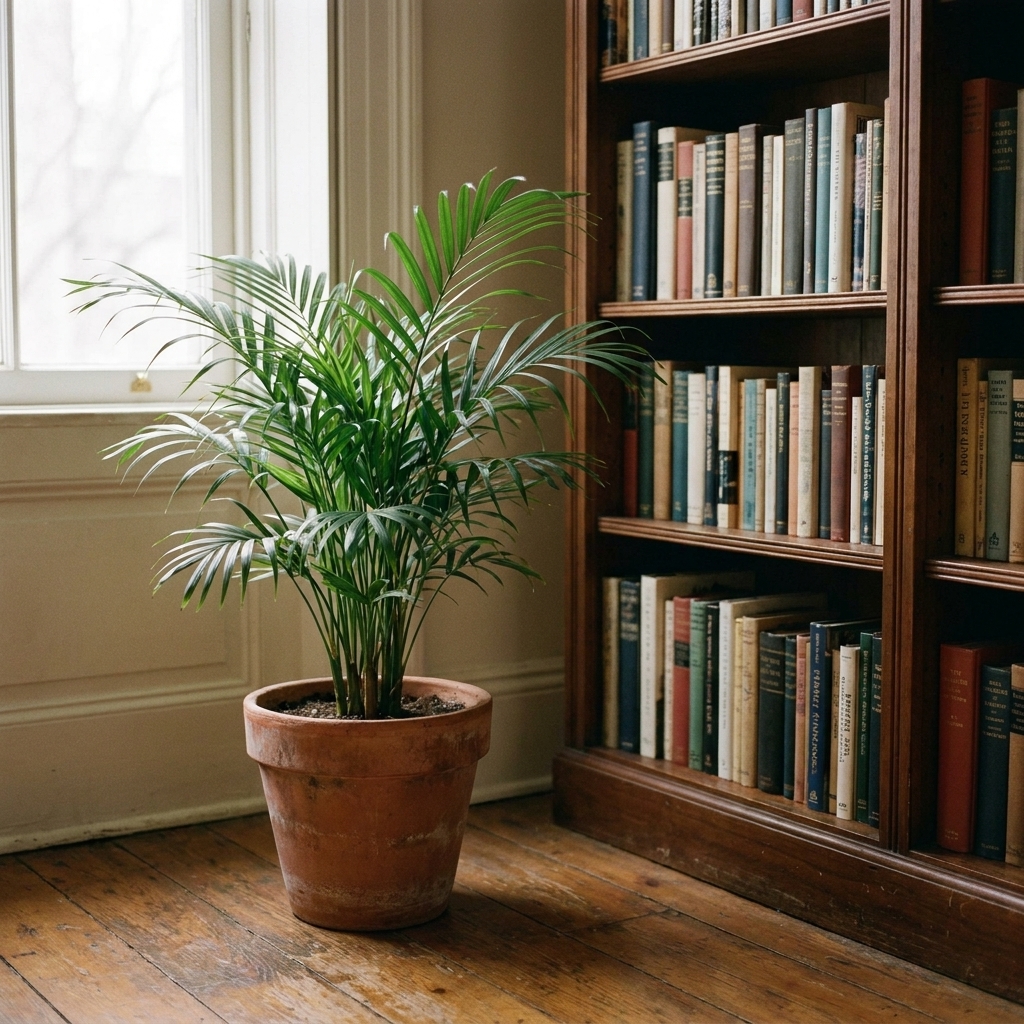
10) Parlor palm (Chamaedorea elegans)
Parlor palms have been making dim rooms feel elegant since the Victorian era, and I get why. They tolerate low light and stay relatively compact. Think of them as a slow, steady housemate rather than a fast grower.
- Why it works: Naturally grows under taller trees with limited light.
- Water: When the top inch or two dries. Do not let it sit in water.
- Watch for: Yellowing fronds often mean overwatering, while crispy tips can mean dry air.
Placement tips for dark corners
A few small tweaks can turn “surviving” into “doing well”:
- Use light-colored walls and pots. They bounce available light back toward the plant.
- Go closer than you think. Moving a plant from 10 feet away to 4 feet from a window can be the difference between slow decline and steady growth.
- Rotate monthly. Low light often comes from one direction, so turning the pot keeps growth more balanced.
- Dust the leaves. In low light, every bit of photosynthesis counts. A quick wipe with a damp cloth makes a real difference.
Watering in low light (the #1 place people go wrong)
In dim spaces, soil dries slower. That means the most common way low-light plants die is not from lack of sun, it is from too much love in the watering can.
My simple routine:
- Check soil with your finger before watering.
- When you do water, water deeply until it drains, then empty the saucer.
- If the plant is in very low light, assume it needs water less often than the same plant near a brighter window.
Drainage matters more than ever in low light. Use a pot with a drainage hole, and consider a lighter, airier mix (even adding a bit of perlite) so roots are not stuck in slow-drying soil.
If you are a chronic overwaterer (I see you, and I have been you), choose snake plant, ZZ plant, or cast iron plant first.
When “no light” needs a grow light
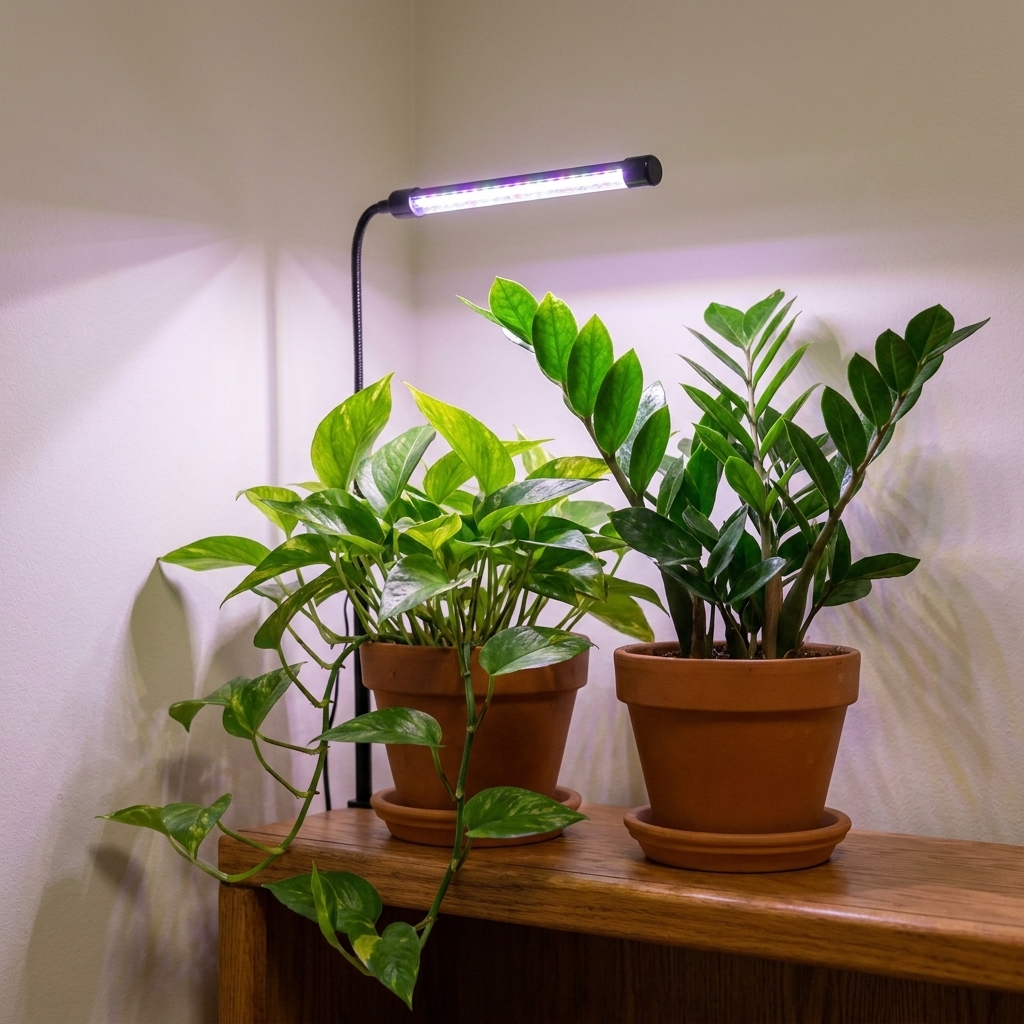
If your room has no window, your plant can still live there, but it will need an assist. A small LED grow light on a timer for 8 to 12 hours a day is usually enough for low-light tolerant plants like pothos, philodendron, snake plant, and ZZ plant.
Results depend on the light’s brightness and how close it is to the plant, so treat 8 to 12 hours as a starting point. If growth looks weak or leggy, move the light closer (gradually) or add an hour or two. Place the light above the plant, and start with a little distance so you do not accidentally stress it.
Quick troubleshooting
- Leggy growth: Not enough light. Move closer to a window or add a grow light.
- Yellow leaves: Often overwatering in low light. Let the pot dry more between waterings and check drainage.
- Brown tips: Mineral or fertilizer buildup, low humidity, or uneven watering. Try filtered water, flush the pot occasionally, and group plants together for a humidity boost.
- No new growth: Normal in low light, especially in winter. Focus on keeping the plant healthy rather than pushing fertilizer.
- Leaf drop: A little is normal when you move a plant into lower light. If it keeps dropping, it is usually a signal to increase light slightly or adjust watering.
FAQ
What is the best low-light plant for beginners?
If you want the easiest win, pick a snake plant or ZZ plant. They tolerate low light and forgive missed waterings, which is a rare and beautiful combo.
Can any of these plants live in a bathroom?
Yes. Peace lily and bird’s nest fern especially appreciate bathroom humidity, as long as there is at least some light. If the bathroom has no window, use a small grow light.
Should I fertilize low-light houseplants?
Light is the fuel. In low light, plants use fertilizer slowly. Feed lightly in spring and summer (half-strength, monthly is plenty), and pause in fall and winter unless you are using grow lights year-round.
My final nudge
Do not let a darker home talk you out of plants. Start with one sturdy pick, match your watering habits to the light you actually have, and give it a little time. Gardening, even indoors, is a relationship. And yes, you will make mistakes. I once overwatered a ZZ plant so thoroughly it basically staged a quiet protest. It forgave me. Most of these will forgive you too.