Turn sticky, compacted clay into a plant-friendly bed with organic matter, gentle cultivation, and smart timing. Step-by-step tips for better drainage and he...
Gardening insights
How to Aerate and Overseed Your Lawn
Revive a thin, compacted lawn with aeration and overseeding. Learn when to do it, how to choose seed, and the step-by-step process for thicker, healthier grass.

Elena Rosales
Elena Rosales is a certified Master Gardener and lifelong plant enthusiast who believes anyone can cultivate a green thumb. After transforming her tiny urban balcony into a thriving plant oasis, she moved to a half-acre homestead to grow her own food and flowers. Today, she shares practical, hands-on gardening advice to help the Hortello community bring more green into their lives.
Published October 2, 2026
Updated October 2, 2026
If your lawn feels like it is limping along, with thin patches, hard soil, puddles after rain, or grass that browns out fast, you are probably dealing with compaction and tired turf. Aeration and overseeding are my favorite one-two punch for that. You are creating little openings for air, water, and roots, then immediately refilling the lawn with new grass plants so it can thicken up and crowd out weeds.
I have done this in tiny city lawns and on my current half-acre, and the basics are the same. The difference between “meh” results and “wow, that worked” is timing, seed choice, and aftercare. Let’s walk through it together.
What aeration and overseeding do
Aeration: fixing compacted soil
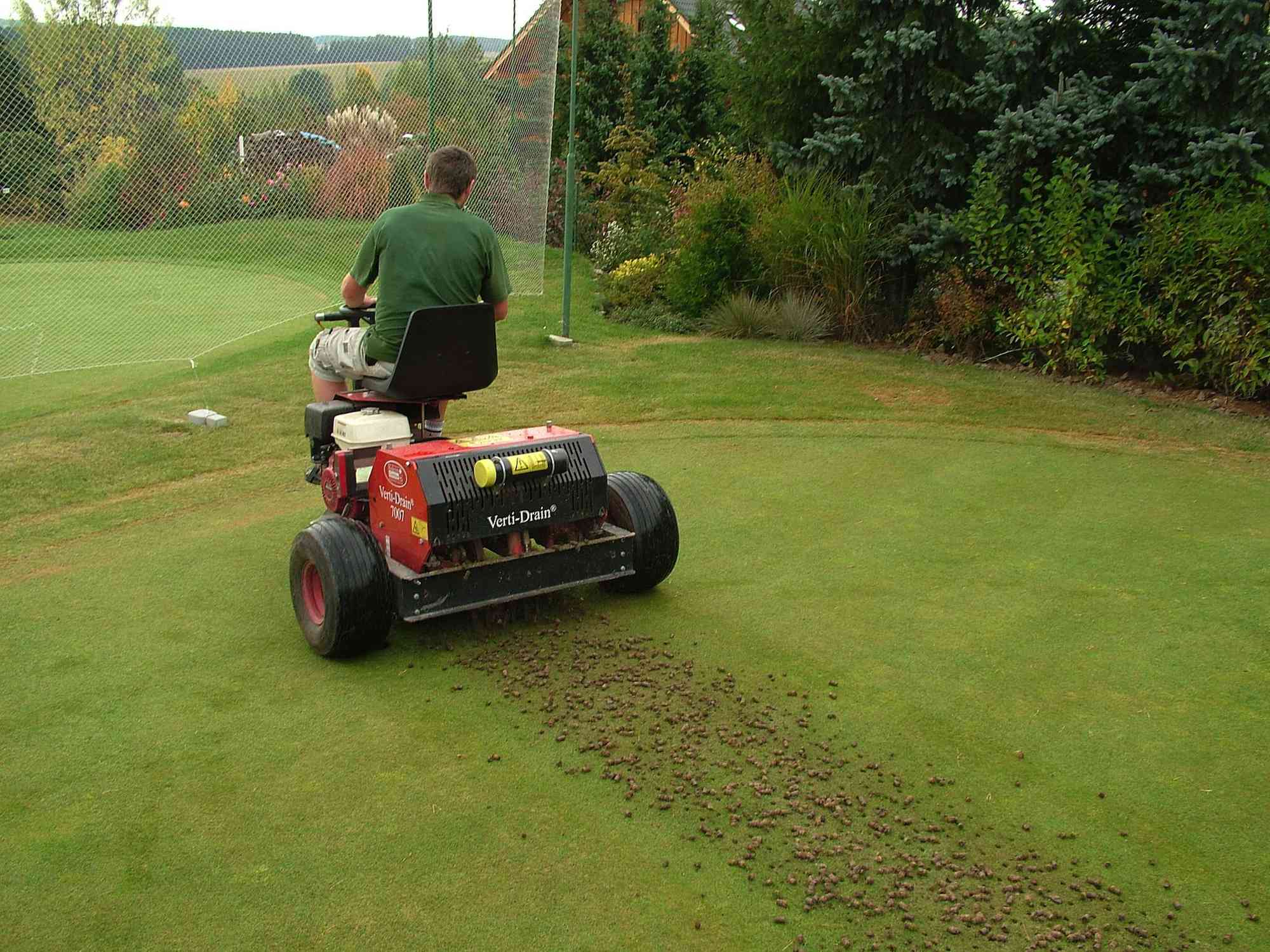
Most lawns get compacted over time from foot traffic, pets, mowing, and even just heavy clay soil doing its thing. Compaction squeezes out pore space in the soil, so grass roots struggle to breathe and grow. Core aeration removes small plugs of soil, leaving holes that loosen the surface and create channels for water and oxygen.
Overseeding: adding new grass plants
Overseeding means spreading grass seed directly into your existing lawn. You are not starting from scratch. You are increasing density, filling bare areas, and introducing newer, more resilient grass varieties. When you overseed right after aerating, seed gets great contact with soil, which boosts germination.
Why the combo works best
- Aeration alone helps roots but does not magically fill thin spots.
- Overseeding alone often fails because seed lands on thatch or hard soil and dries out.
- Together gives seed a protected place to settle, and gives your existing lawn a better root environment.
When to aerate and overseed
The best timing depends on your grass type and your local climate, but the goal is always the same: seed should germinate during the season when your lawn naturally wants to grow.
Cool-season grasses
If your lawn is mostly fescue, Kentucky bluegrass, or perennial ryegrass, aim for late summer to early fall. Soil is still warm (great for germination), nights are cooler, and weeds are slowing down.
- Best window: about 4 to 6 weeks before your average first hard frost.
- Also possible: early spring, but you will battle more weeds and summer stress.
Warm-season grasses
If you have Bermuda, zoysia, centipede, or St. Augustine, aeration is best in late spring to early summer, once the lawn is actively growing.
- Important note: With warm-season lawns, “overseeding” can mean different things. Many warm-season lawns are thickened and repaired with sod, plugs, or sprigs instead of seed. That said, bermudagrass is commonly seeded in some regions, and some warm-season seed is available (zoysia seed exists, but it is less common and can be slow). Many homeowners also overseed warm-season turf with annual ryegrass for winter color, which is a separate strategy and can create spring transition headaches.
Pick a soil moisture sweet spot
You want soil that is slightly moist. If it is bone dry, the aerator struggles. If it is soggy, you can tear up the lawn and smear the holes shut in clay. A great rule: water the day before if it has been dry, and aerate when the ground feels damp, not squishy.
Do you need aeration and overseeding?
If you are on the fence, here are quick ways to tell.
Signs you need aeration
- Water runs off instead of soaking in.
- The lawn feels spongy on top but hard underneath (thatch plus compaction).
- Grass roots are shallow, and the lawn dries out quickly.
- High traffic areas look thin or bare.
- You cannot easily push a screwdriver 3 to 4 inches into the soil.
Signs you need overseeding
- Thin turf where you can see soil between grass plants.
- Bare patches from pets, grubs, drought, or wear.
- Weeds are moving in because the grass is not dense enough to compete.
- Your lawn is a mix of “mystery grass” types and you want it to look more uniform over time.
Core vs spike aeration
For most home lawns, core aeration is the gold standard. This is the type that removes actual plugs of soil.
- Core aeration: Pulls plugs, relieves compaction, improves soil structure over time. Best choice for renovation work.
- Spike aeration: Pokes holes without removing soil. In heavy clay, it can compact the soil around the hole. It is better than nothing in some cases, but not ideal for true compaction relief.
If you are renting a machine, rent a core aerator.
Before you aerate
1) Mow a bit lower
Mow your lawn a bit shorter than your normal setting, but do not scalp it. Shorter grass makes it easier for seed to reach the soil and helps the aerator do a cleaner job.
2) Flag sprinklers and shallow lines
This is the unglamorous step that saves your weekend. Mark sprinkler heads, invisible dog fences, and any known shallow irrigation lines so the aerator does not find them first.
3) Deal with heavy thatch
If you have a thick thatch layer (roughly 1/2 inch or more), consider dethatching first. Seed struggles to reach soil through a felt-like mat. A quick reality check is whether water soaks in easily and whether you can peel up a spongy layer above the soil. Many lawns have a little thatch and do fine, but heavy thatch can sabotage overseeding.
Step-by-step weekend plan
Step 1: Aerate thoroughly
Make multiple passes, especially on compacted areas. I like to do two passes in perpendicular directions when the lawn is in rough shape.
- Target plug depth: About 2 to 3 inches is a solid goal if your machine and soil allow it.
- Hole spacing: A simple rule is roughly 3 to 4 inches between holes for meaningful improvement.
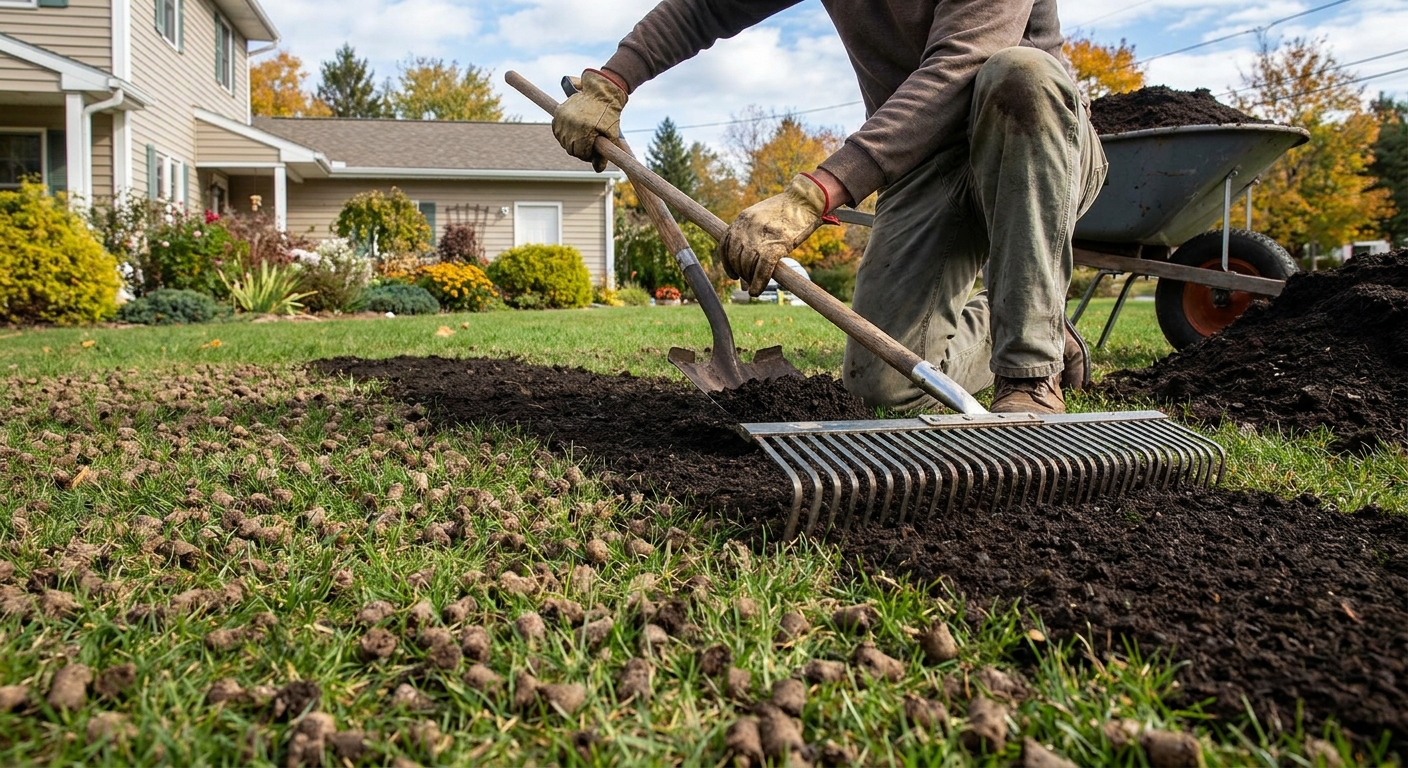
- Leave the plugs: Let them break down naturally. They look messy for a week or two, then disappear back into the canopy.
Step 2: Spread seed right after aeration
This is when the magic happens. The holes and disturbed surface help seed settle in.
- Use a broadcast spreader for larger areas.
- For small patches, hand-seeding works, but aim for even coverage.
- Split your seed into two batches and apply in two directions (north-south, then east-west) for better distribution.
Seeding rate tip: Seed labels usually list separate rates for “new lawn” versus “overseeding.” Use the overseeding rate for an established lawn, and bump toward the heavier end of that range if the turf is very thin.
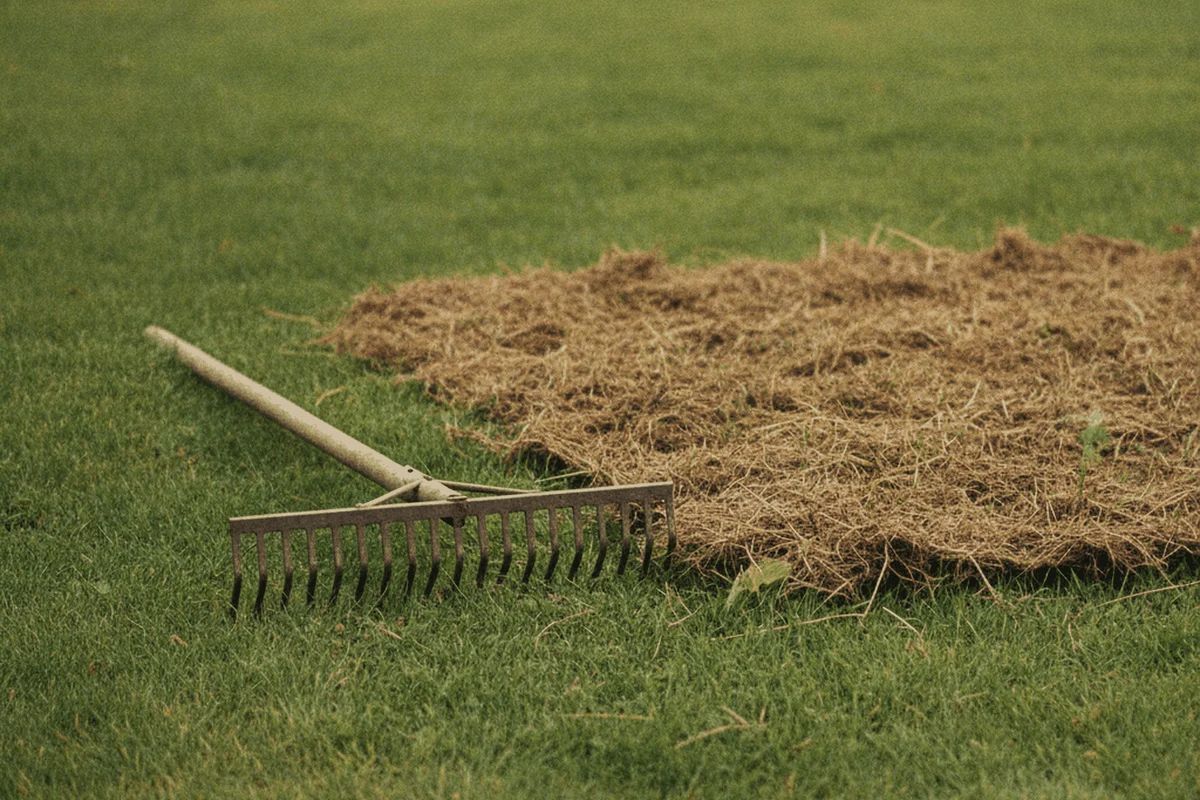
Step 3: Lightly rake or drag (quick, helpful)
After seeding, a quick pass with a leaf rake, lawn rake, or drag mat helps work seed into the aeration holes and improves soil contact. You are not burying seed deep. You are just tucking it in.
Step 4: Add a thin topdressing (optional)
If you want to level small bumps or improve moisture retention, apply a thin layer of compost or a compost-topsoil blend. You should still see grass blades poking through.
This step is especially helpful on:
- bare patches that dry out quickly
- sandy soils that do not hold moisture
- lawns that need a soil health boost
How to choose grass seed
Seed choice is where a lot of lawn projects go sideways. If you pick a grass that does not match your region, sunlight, or watering reality, it will not matter how perfectly you aerate.
Match your conditions
- Sun exposure: Full sun lawns can handle tougher, denser grasses. Shady lawns need shade-tolerant mixes.
- Traffic: If kids and dogs use the lawn like a racetrack, include durable varieties (often turf-type tall fescue or perennial rye for cool-season regions).
- Watering: If you cannot commit to frequent watering during establishment, choose drought-tolerant options for your region and be realistic about timing.
Buy quality seed
Look for grass seed with:
- High germination rate and low “weed seed” percentage on the label.
- Named varieties (not just “common”).
- A mix suited to your yard, which often performs better than a single variety.
If you are unsure what grass you already have, take a few close-up photos of blades and growth habit, or bring a sample to a local extension office or reputable garden center. It can save you from overseeding with something that looks totally different.
Fertilizer after overseeding
Often, yes, but gently. New seedlings appreciate nutrients, especially phosphorus for root development, but you do not want to blast tender sprouts with heavy nitrogen.
- Best option: a starter fertilizer labeled for seeding , used according to the package rate.
- If you topdress with compost: you may be able to use less fertilizer, depending on your soil.
One more real-world note: some regions restrict phosphorus applications unless a soil test shows you need it. If you have not tested your soil in a while, a basic soil test is the most boring, most useful lawn improvement tool I know.
Herbicides and pre-emergents
This is a common point of failure, especially in spring. Most pre-emergent crabgrass preventers stop seeds from sprouting, including your grass seed. If you plan to overseed, check product labels and timing carefully, and avoid applying pre-emergent in the areas you are seeding unless the label explicitly says it is compatible with seeding.
For post-emergent weed killers, the safest approach is to wait until the new grass has been mowed several times, then follow the label for your grass type and seedling timing.
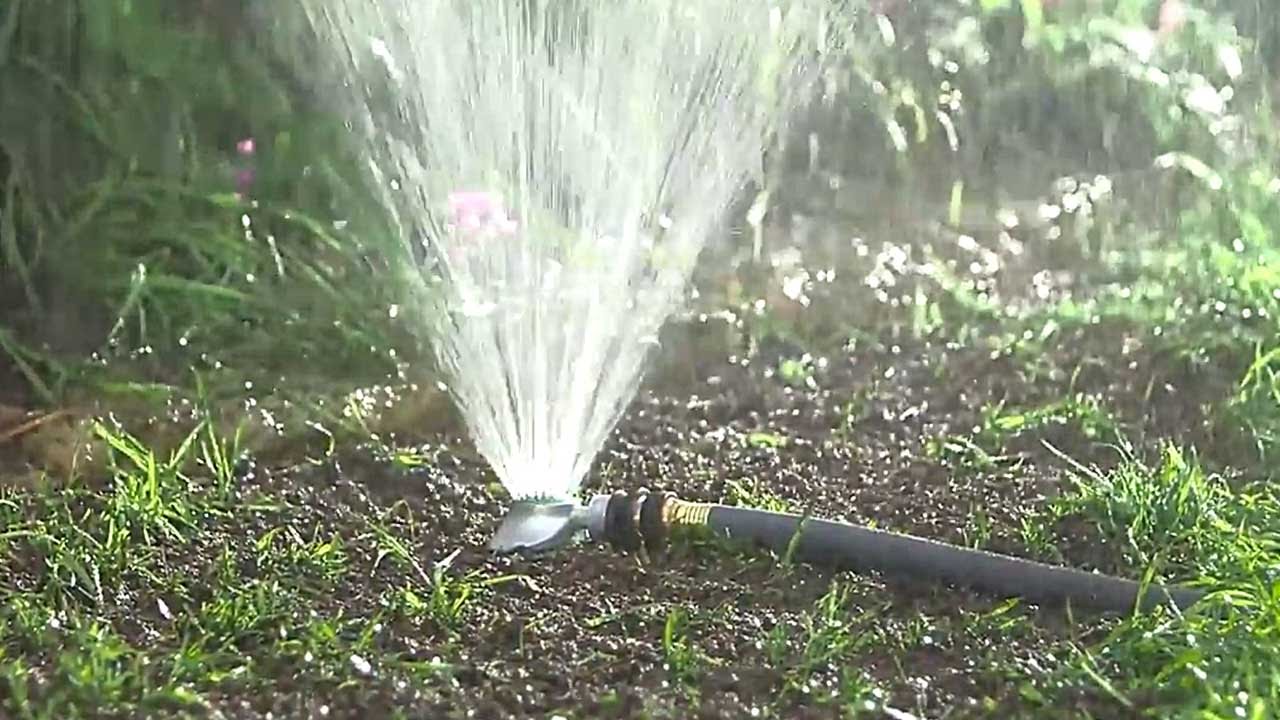
Watering after overseeding
Seed must stay consistently moist to germinate. Not flooded, not dry, just evenly damp at the surface.
A simple watering schedule
- Days 1 to 14: Light watering 1 to 3 times per day, depending on heat, wind, and soil. The goal is to keep the top 1/2 inch of soil moist.
- Weeks 3 to 4: Water less often but a bit deeper to encourage roots to chase moisture downward.
- After establishment: Transition to deeper, less frequent watering for a healthier lawn overall.
If you are thinking, “That sounds like a lot of watering,” you are not wrong. This is why fall overseeding is so much easier in many areas. Nature helps you.
Mowing and traffic
When to mow
Mow when the new grass reaches about 3 to 4 inches tall, and make sure the ground is relatively dry so you do not rut the soil.
- Use sharp mower blades to avoid yanking seedlings.
- Remove no more than 1/3 of the grass height in a single mow.
Keep off it if you can
Try to limit heavy foot traffic for the first month. I know, easier said than done if you have dogs. If you can, rope off the most tender areas or create a temporary path.
Common mistakes
- Aerating at the wrong time: Aerating during peak weed season or when grass is dormant makes it harder to recover.
- Using too little seed: Thin seeding gives thin results. Use the label’s overseeding rate, not the new-lawn rate.
- Letting seed dry out: Even one hot, dry afternoon can set you back.
- Overwatering: Constant sogginess can lead to fungal issues and poor roots.
- Skipping soil contact: Seed on top of thatch is bird food, not a lawn plan.
- Expecting perfection in 10 days: Some grasses germinate fast, others take weeks. Patience is part of the deal.
FAQ
Should I pick up the soil plugs after aerating?
No. Leave them. They break down with rain, mowing, and time, returning soil and microbes to the surface.
Can I overseed without aerating?
You can, but success rates drop, especially on compacted lawns. If you cannot aerate, rake aggressively to expose soil and consider a very light compost topdressing to improve seed contact.
How soon can I use weed killer after overseeding?
Avoid most herbicides until the new grass has been mowed several times. Always check the specific product label, since timing varies by active ingredient and grass type.
Do I need to dethatch every time?
No. Only dethatch if thatch is thick enough to block water and seed from reaching soil. Many lawns do fine with aeration and overseeding alone.
How long until the lawn looks thicker?
You will usually see sprouting within 5 to 21 days depending on grass type and weather. As a general guide, perennial ryegrass often pops in 5 to 10 days, fescue in 7 to 14, and Kentucky bluegrass in 14 to 21 or longer. The “filled in” look often takes 4 to 8 weeks, with the biggest improvement by the following growing season.
A quick checklist
- Mow slightly lower than usual
- Flag sprinkler heads
- Aerate with a core aerator (1 to 2 passes)
- Overseed immediately after aeration
- Lightly rake or drag to tuck seed in
- Optional: topdress lightly with compost
- Water to keep the surface consistently moist until germination
- Mow high with sharp blades once seedlings are tall enough
If your lawn is thin and tired, this project can be genuinely satisfying. There is something hopeful about sprinkling seed into those little aeration holes, then watching a scruffy yard slowly knit itself back together. And if you miss a spot or the watering schedule goes a little sideways, welcome to gardening. We adjust, we learn, and the grass still grows.