
Water-wise xeriscaping ideas that look lush without the thirst, plus plant combos, soil tips, and drip irrigation strategies for a low-maintenance yard.
Gardening insights
Grass vs. Clover Lawns
Thinking about swapping turfgrass for clover? Compare the pros, cons, and upkeep of traditional grass lawns vs. clover, plus how to overseed or transition successfully.

Elena Rosales
Elena Rosales is a certified Master Gardener and lifelong plant enthusiast who believes anyone can cultivate a green thumb. After transforming her tiny urban balcony into a thriving plant oasis, she moved to a half-acre homestead to grow her own food and flowers. Today, she shares practical, hands-on gardening advice to help the Hortello community bring more green into their lives.
Published September 21, 2026
Updated September 21, 2026
If you have ever stood in the yard with a hose in one hand and a guilt complex in the other, you are not alone. Traditional turfgrass lawns can be gorgeous, but they can also be thirsty, fussy, and oddly fragile in the exact spots your family actually uses. Clover has become a popular alternative because it often stays green with less input and can improve soil over time, but it is not a magic carpet either.
Let’s walk through how traditional grass and clover lawns compare in real life: looks, feel underfoot, mowing, watering, weeds, durability, and what it takes to maintain each one.

Quick definitions
Traditional grass lawn usually means cool-season turf (like Kentucky bluegrass, fescue, or ryegrass) or warm-season turf (like Bermuda, zoysia, or St. Augustine), depending on your region.
Clover lawn generally means white clover (Trifolium repens), often either:
- Microclover (a smaller-leaf type bred to blend into lawns with fewer visible flowers)
- Standard Dutch white clover (more common, usually cheaper, more flowers)
You will also hear “clover mix,” meaning a lawn that is mostly grass with clover intentionally included.
Grass vs. clover
Traditional grass lawns
- Pro: Tough for high traffic when established. Good turf varieties can handle kids, dogs, and backyard games, especially if you match species to your climate and sun.
- Pro: Classic, uniform look. If you want that smooth green carpet aesthetic, grass does it best.
- Pro: Fewer flowers. Grass does not bloom the way clover does in a regularly mowed lawn, which can matter if you have bee-sting allergies or barefoot little ones.
- Con: Often higher input. Many lawns need regular watering, fertilizing, and periodic weed control to look their best.
- Con: Can thin out in tough conditions. Shade, compacted soil, drought, and dog urine can turn turf patchy fast.
Clover lawns
- Pro: Often less watering once established. Clover can stay greener with less frequent deep watering than many cool-season, high-input lawns. (But a well-established warm-season grass like bermuda can also be impressively drought-tough.)
- Pro: Can reduce nitrogen fertilizer needs. Clover is a legume, meaning it can fix nitrogen through a relationship with soil bacteria. In plain terms, it feeds itself. In mixed lawns, it can also reduce how much nitrogen fertilizer you need, especially when clippings and plant matter decompose back into the soil. Direct nitrogen sharing to nearby grass during the growing season is real but often modest and variable.
- Pro: Fills in quickly. Clover germinates fast and can knit into bare spots that grass struggles with.
- Pro: Supports pollinators (when flowering). If you let it bloom, clover is a buffet for bees and other beneficial insects.
- Con: Not as wear-tolerant for rough play. Clover can handle light foot traffic, but it does not bounce back from constant running paths as well as well-chosen turfgrass.
- Con: Not everyone loves the look. Clover has a softer, meadowy feel, and it may not satisfy strict HOA expectations.
- Con: Winter look can be rough in colder climates. White clover is cold-hardy in many temperate zones, but it often goes dormant, browns, and can thin out. Winterkill risk rises with extreme cold, ice, and poor snow cover.
My take from years of community gardens and my own homestead: most people are happiest with a blend rather than an all-or-nothing switch. A grass and clover mix keeps the traditional feel while cutting fertilizer needs and improving resilience.
Maintenance that matters
Mowing
Grass: Typically mowed weekly in the growing season. Mowing height matters a lot for grass health. Taller mowing (often 3 to 4 inches for many cool-season lawns) shades soil and reduces weeds.
Clover: You can mow less. If you want fewer blooms (and fewer bees), mow more often. If you want pollinator support, mow less and let it flower. Most clover lawns look best with occasional mowing to keep things tidy and encourage dense growth.
Watering
Grass: Usually needs consistent watering during heat and drought, especially many cool-season grasses. Most turfgrasses prefer deep, infrequent watering, but you may still need to supplement regularly in summer.
Clover: Typically needs less once established, but it is not a cactus. Water during establishment and extreme drought. It is simply more forgiving if you miss a week.
Fertilizing
Grass: Many lawns require nitrogen to stay lush. Without it, grass can yellow, thin out, and invite weeds.
Clover: Needs little to no nitrogen fertilizer. Too much nitrogen can encourage grass to outcompete clover. If your soil is truly depleted, a gentle compost topdressing is usually a better move than high-nitrogen lawn feed.
Weed pressure
Grass: A dense, healthy turf can crowd out weeds, but thin lawns invite them. Many people rely on herbicides to keep broadleaf weeds down.
Clover: Dense clover can suppress many weeds by shading the soil. The catch is that most broadleaf weed killers will also kill clover, so weed management becomes more about density, hand pulling, and cultural practices (mowing height, overseeding, soil health).
Herbicides and pre-emergents
If you are adding clover, read labels like your lawn depends on it, because it does. Most common broadleaf herbicides (including many “weed-and-feed” products) will wipe out clover. Also note that some pre-emergent products can interfere with clover seed germination, which is a big deal if you are overseeding. If you need a pre-emergent strategy, plan your timing carefully and double-check the product’s reseeding window.
Pests and disease
Grass: Can be prone to fungal diseases (especially with frequent watering or low mowing), plus grubs and other turf pests in some regions.
Clover: Often has fewer serious, lawn-wrecking issues in typical home yards, but it is not immune. Leaf spots, powdery mildew, and insect visitors can show up, especially in humid conditions or stressed stands.
Dog spots
Grass: Dog urine can burn turf, especially in hot, dry conditions.
Clover: Clover often tolerates urine better and can fill in faster, though no plant is completely immune.

Feel and look
Texture underfoot
Grass: Springy, uniform, and often the most comfortable for running and games when thick.
Clover: Softer and a bit cushiony, with a cool feel. If you have only ever walked on clover in a patchy lawn, you may be surprised how plush a dense clover stand can be.
Color and seasons
Grass: Color depends heavily on species, fertility, and water. Some grasses go dormant and brown in drought or winter (which is normal, but not everyone likes the look).
Clover: Often stays green longer during dry spells, but it can go dormant, brown, or thin in winter depending on climate.
Flowers and practical tradeoffs
Grass: Minimal flowering in a frequently mowed lawn.
Clover: Flowers are a big part of the charm and the ecological value. They can also mean more bee activity. A few other real-life notes people do not always expect: clover blooms can stain light clothing, and any dense ground cover can feel a bit slick when wet.
What works for your yard
Here is the decision framework I use when neighbors ask over the fence.
Choose turfgrass if you want:
- A very uniform, classic lawn look
- Strong wear tolerance for sports, big dogs, or heavy foot traffic
- Easier compatibility with standard lawn care services and products
- Fewer flowers and less bee activity in barefoot zones
Choose clover (or clover-heavy) if you want:
- Lower watering needs and a greener look through many dry spells
- Less nitrogen fertilizer input
- Better soil structure and biology over time
- More biodiversity and pollinator support (if you let it bloom)
Choose a grass and clover mix if you want:
- The look and durability of grass with many of the soil benefits of clover
- Less need for nitrogen fertilizer
- A lawn that fills in bare spots faster
- A practical middle ground that still looks lawn-like
Quick reality check: sun, heat, and soil
- Shade: Clover can handle partial shade, but deep shade is hard on both clover and most turf. In heavy shade, you may be looking at shade-tolerant fine fescues, shade ground covers, or a mulched bed instead of a “lawn” lawn.
- Heat: In very hot-summer regions, warm-season grasses may outperform clover in durability and drought performance once established. Clover can still work, but expect it to slow down in extreme heat.
- Soil pH: White clover tends to prefer near-neutral soils. If your soil is very acidic, performance can lag unless you address pH over time (a simple soil test is the fastest way to stop guessing).
Switching to clover
You do not have to start from scratch. In fact, the easiest route is usually overseeding clover into existing turf.
Step 1: Pick microclover or Dutch white clover
- Microclover: smaller leaves, fewer noticeable flowers, tends to blend better with turfgrass, usually higher cost.
- Dutch white clover: inexpensive, easy to find, more flowers, slightly wilder look.
Step 2: Time it well
For many regions, the easiest windows are spring (after hard freezes are done) and late summer to early fall (when heat breaks but soil is still warm). Avoid seeding right before a heavy downpour that could wash seed into the gutter. If you use pre-emergents, check your product’s reseeding interval so you are not sabotaging germination.
Step 3: Prep for seed contact
Clover needs seed-to-soil contact to germinate well.
- Mow the lawn a bit shorter than usual.
- Rake or lightly dethatch to expose soil in thin areas.
- If soil is compacted, aerate. Clover appreciates loosened soil.
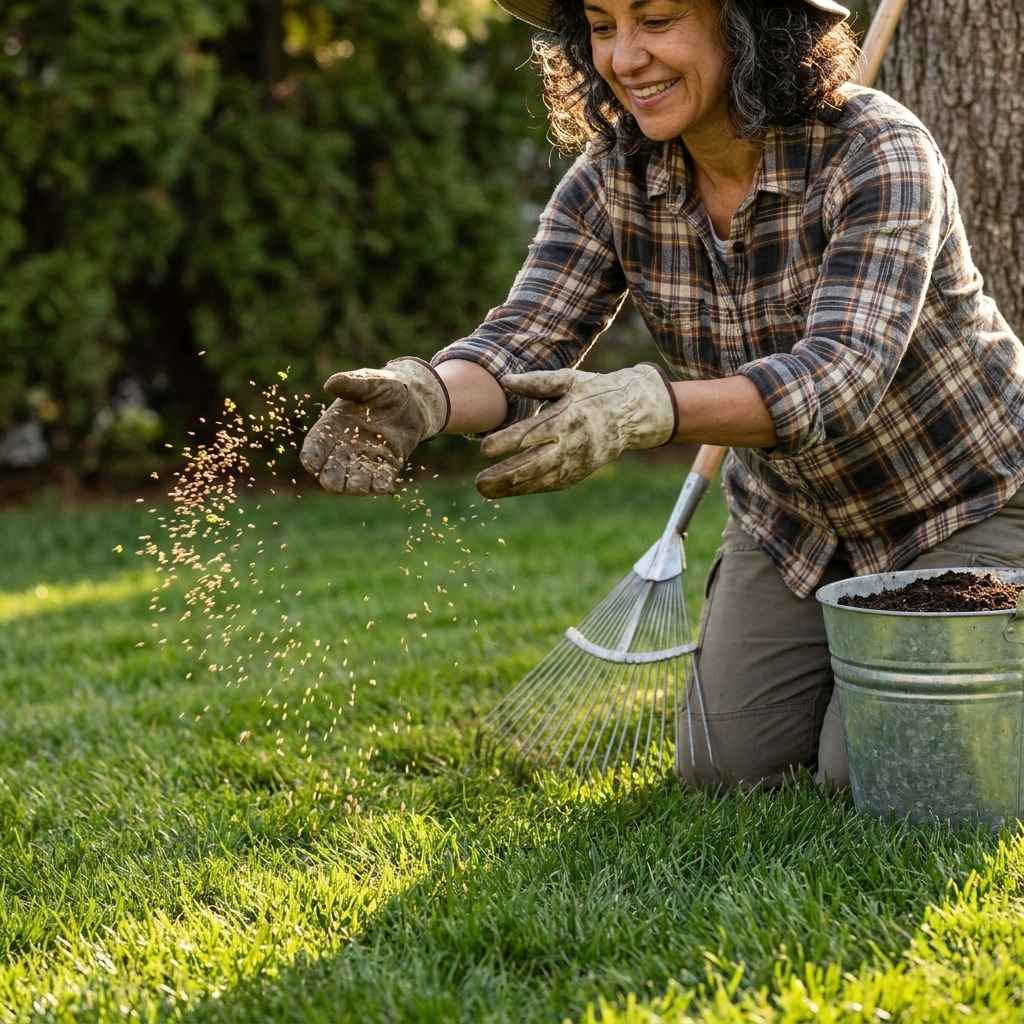
Step 4: Seed and lightly cover
- Broadcast seed evenly, focusing on thin spots.
- Lightly rake so seed settles into the surface.
- Topdress with a very thin layer of compost if you have it. Think dusting, not burying.
Step 5: Water for establishment
For the first 2 to 3 weeks, keep the surface consistently moist (light watering as needed so it does not crust over). Once seedlings are up and growing, taper back to deeper, less frequent watering.
Step 6: Adjust mowing
- For fewer blooms: mow a bit more often.
- For pollinators: mow less often and let it flower, then mow after a bloom cycle.
Small confession from my own learning curve: I once overseeded clover and then forgot to adjust my mower height. I scalped the whole patch right as it was getting established. Clover is forgiving, but I still felt like I personally owed it an apology.
Clover without committing
Not ready to go all-in? You can still get many of the perks by using clover strategically.
- Overseed clover only in the back yard. Keep the front yard traditional if curb appeal rules the day.
- Use microclover in high-visibility areas. It blends in better while still improving soil.
- Patch repair with clover. Clover is excellent for filling in thin, struggling spots where grass refuses to cooperate.
- Mix with drought-tolerant turfgrass. Fine fescues plus microclover can be a lovely, low-input combination in many regions.
Common concerns
Will clover take over my beds?
Clover can wander, especially if it goes to seed. A crisp bed edge and occasional hand pulling keeps it in line. Mulch in beds also helps a lot.
Is clover safe for kids and pets?
Generally, yes, as a ground cover. The bigger consideration is bee stings if your clover is flowering and kids are running barefoot. If that is a concern, mow before heavy play days or use microclover and keep it trimmed.
Can I still use weed-and-feed?
Most weed-and-feed lawn products target broadleaf plants, and clover is a broadleaf plant. If you want clover, plan on skipping those products and leaning into thick coverage, proper mowing, and spot hand weeding.
What about allergies?
Grass pollen allergies and bee sting allergies are different issues. Keeping a lawn closely mowed can reduce on-site flower and seedhead production (and therefore some local pollen and bee activity), but pollen can still blow in from elsewhere, and seedheads can appear between mowings. If allergies are significant in your household, consider a grass lawn kept consistently mowed, or a microclover mix managed to minimize blooms.
The bottom line
If you love the look of a classic lawn and need maximum durability, traditional turfgrass is still the best tool for the job. If you want a greener lawn with less watering and less nitrogen fertilizer, clover is a wonderful ally, especially as part of a mixed lawn.
If you are on the fence, start small: overseed clover into a back-yard section or a stubborn patch. Gardening is rarely about one perfect choice. It is about finding what thrives in your little slice of earth, with the time and resources you actually have.
FAQ
Does clover stay green in drought?
Often, yes, it can stay greener longer than many cool-season turf lawns, especially high-input bluegrass. In severe drought, clover will still slow down. In some climates, warm-season grasses can be the drought champions once established.
How often do you mow a clover lawn?
It depends on whether you want flowers. For a tidy look with fewer blooms, mow every couple of weeks during active growth. For pollinators, mow less frequently and let it flower, then mow after a bloom cycle.
Will clover come back every year?
White clover is a perennial in many climates, meaning it can return year after year. In colder regions it may die back and re-emerge, or you may need to overseed occasionally.
Can you mix clover with grass seed?
Yes. Mixing clover with turfgrass is one of the most practical approaches. It can reduce nitrogen fertilizer needs and helps fill gaps, while grass adds durability and a more traditional look.