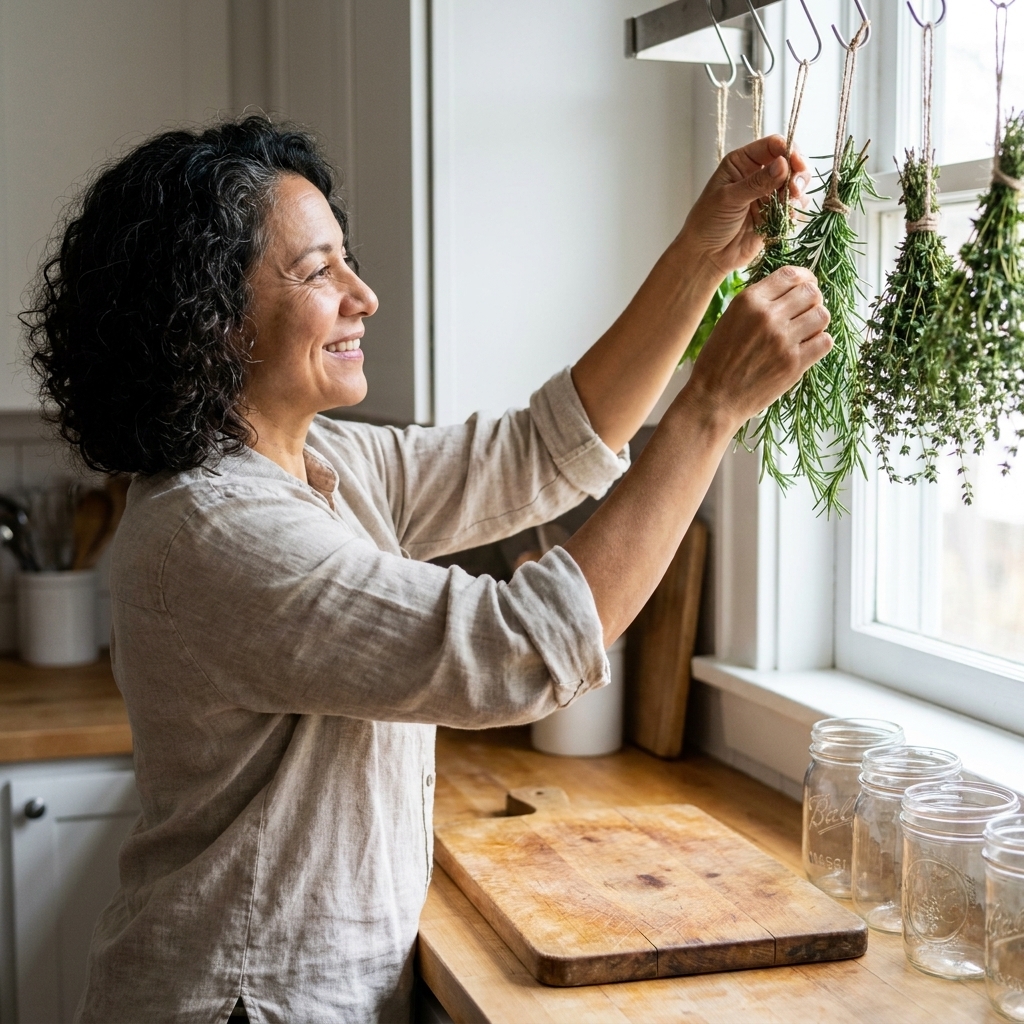
Pick herbs at the right time, dry them without losing flavor, and store them so they stay fresh and fragrant through winter soups, sauces, and teas.
Gardening insights
7 Reliable Herbs for a Kitchen Windowsill
Grow fresh herbs indoors year-round with seven reliable picks plus simple light, watering, and harvesting habits that keep windowsill pots healthy.

Elena Rosales
Elena Rosales is a certified Master Gardener and lifelong plant enthusiast who believes anyone can cultivate a green thumb. After transforming her tiny urban balcony into a thriving plant oasis, she moved to a half-acre homestead to grow her own food and flowers. Today, she shares practical, hands-on gardening advice to help the Hortello community bring more green into their lives.
Published September 21, 2026
Updated September 21, 2026
There is something quietly magical about snipping a few leaves of basil or thyme while your pasta water boils. No shoes, no mud, no “where did I put the pruners?” Just a sunny windowsill and a small parade of pots doing their thing.
And yes, you can keep herbs going year-round indoors, even if your “garden” is currently a kitchen ledge. The trick is choosing herbs that do not sulk in lower light and dry indoor air, then giving them a simple routine you can actually stick to. One honest note up front: in winter, truly vigorous growth often takes either a very bright window or a small grow light. Without that, some herbs will mostly “hold steady” until the days lengthen.
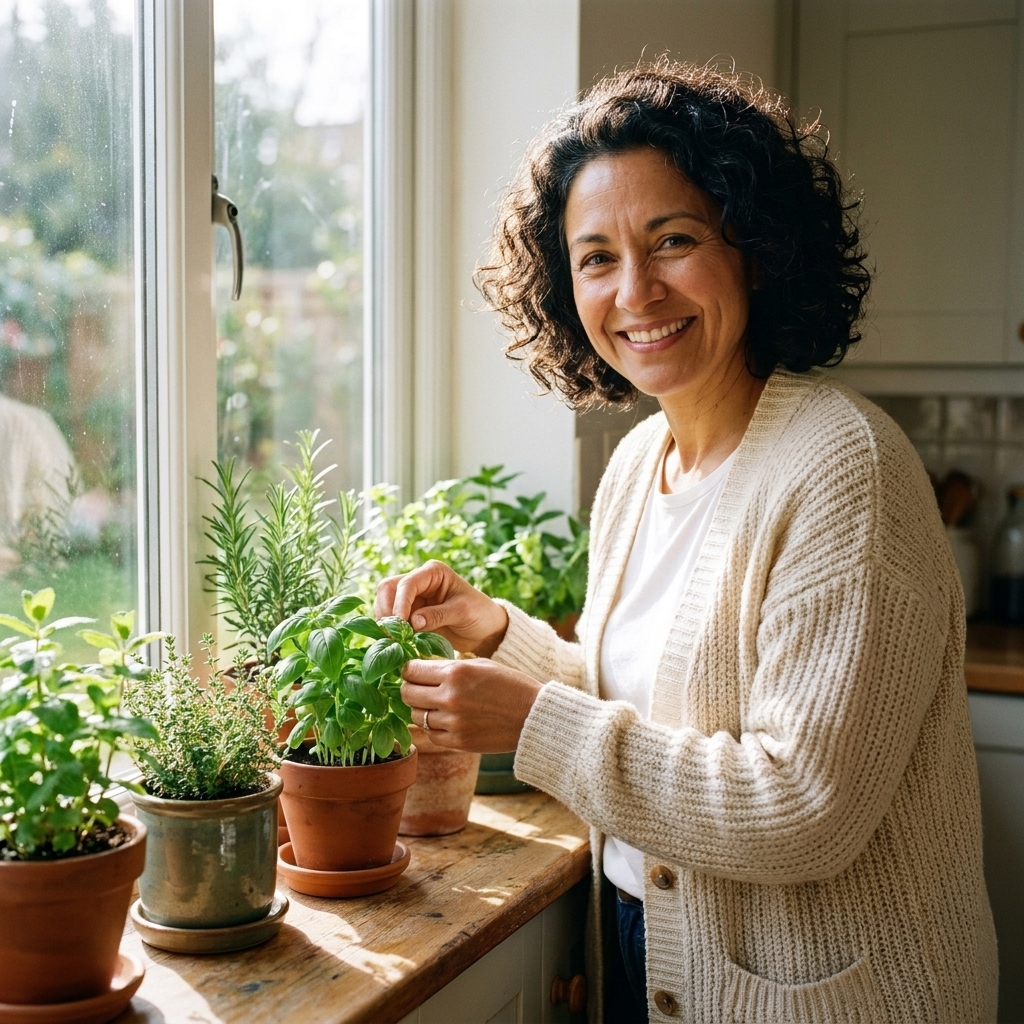
Before you start: what a windowsill can provide
Most windowsills are a mix of blessings and challenges. The blessing is easy access and decent light. The challenge is that indoor conditions swing fast: hot sun on the glass, chilly night drafts, dry air, and the occasional forgetful watering (no judgment, I have absolutely done the “crispy basil” walk of shame).
Light (the make-or-break factor)
- South-facing is usually best: bright light for most of the day.
- East-facing is excellent for gentle morning sun and less scorching.
- West-facing can work, but afternoon sun can overheat pots on the sill.
- North-facing is the hardest for edible herbs. A few can survive there (hello, mint and chives), but expect slower growth and leggier plants unless you add a small grow light.
A rough rule of thumb: if the window is bright enough that you can comfortably read nearby for much of the day, you are in the right neighborhood. But indoor light is tricky because our eyes adjust. For Mediterranean herbs (thyme, oregano, rosemary), aim for several hours of direct sun. If that is not happening, a simple grow light for 10 to 12 hours a day can turn “barely hanging on” into “actually harvesting.”
Containers and soil: set yourself up for forgiving
- Use pots with drainage holes. Saucers are fine. No drainage is how roots rot quietly while you think you are “being a good plant parent.”
- Pick a light potting mix (not garden soil). A basic indoor potting mix with a bit of extra perlite for drainage is perfect.
- Pot material matters. Terracotta breathes and dries faster. Plastic and glazed ceramic hold moisture longer. Match the pot to your habits (and how sunny your sill is).
- Size matters. For most herbs, a 4 to 6 inch pot is a sweet spot. Mint appreciates a little more room.
Watering: one rule, plus a simple nuance
Start here: water when the top 1 inch of soil feels dry. Then water thoroughly until you see excess drain out. Empty the saucer after 10 minutes so roots are not sitting in a puddle.
Nuance that saves a lot of herbs: Mediterranean types (thyme, oregano, rosemary) generally prefer drying a bit more between waterings than leafy herbs (basil, parsley, mint). When in doubt, let them lean slightly dry rather than constantly damp.
Starting plants: the easiest path
For most people, the fastest win is buying a small plant from a nursery. Grocery store herb pots can work, but they are often many seedlings crammed together (especially basil, and sometimes parsley and mint). If yours looks crowded, split it into a couple pots so roots have room to breathe.
7 reliable herbs for a kitchen windowsill
These are my go-to confidence builders. They are productive, forgiving, and more tolerant of indoor quirks than the fussy herbs (I am looking at you, cilantro that bolts the moment you blink). A couple, like basil and rosemary, may need extra light in winter to truly thrive. You will see those caveats noted below.
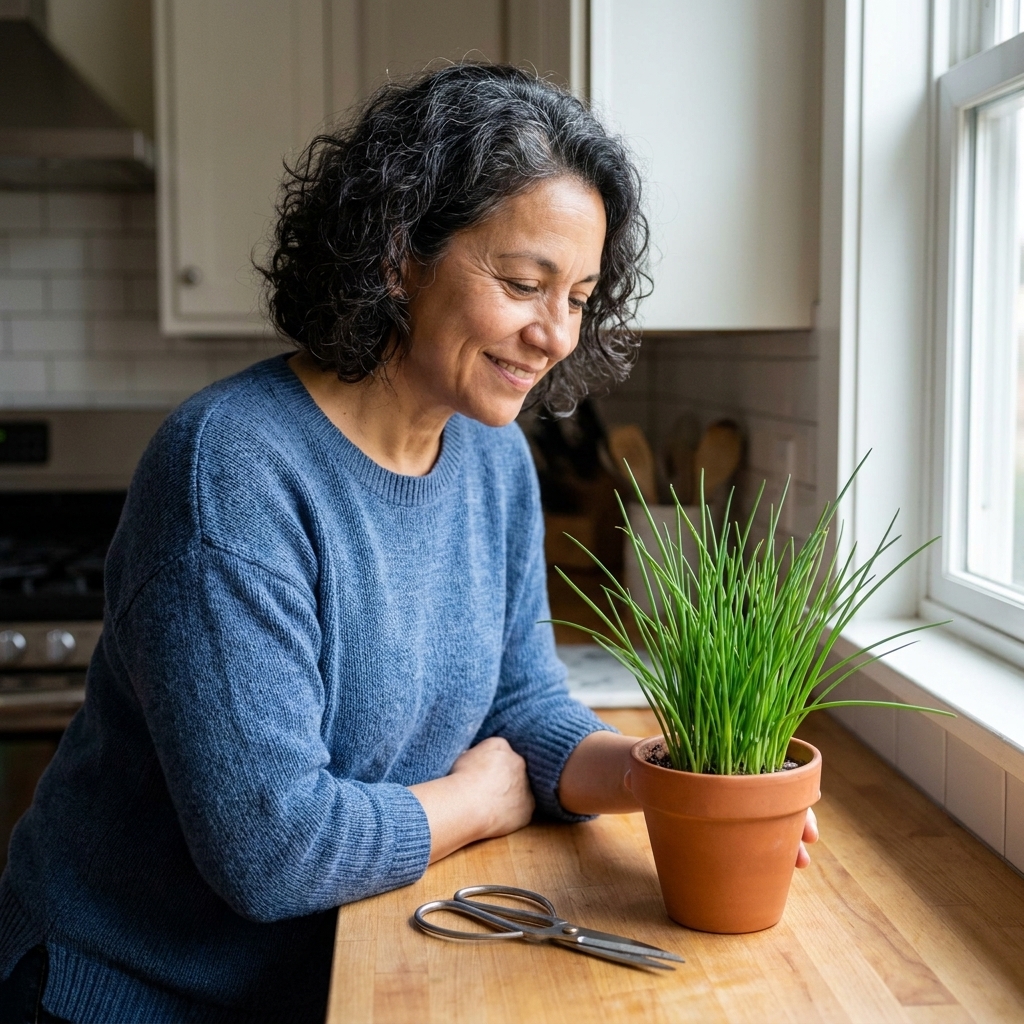
1) Chives
If I could pick one herb for a beginner windowsill gardener, it would be chives. They handle indoor life beautifully, stay tidy, and forgive the occasional missed watering better than many leafy herbs.
- Light: Bright light is best, but chives tolerate moderate light.
- Water: Even moisture, not soggy. Let the surface dry slightly between waterings.
- Harvest: Snip outer blades near the base. They regrow fast.
- Bonus: Their purple blooms are adorable if you ever move a pot outdoors for summer.
2) Mint
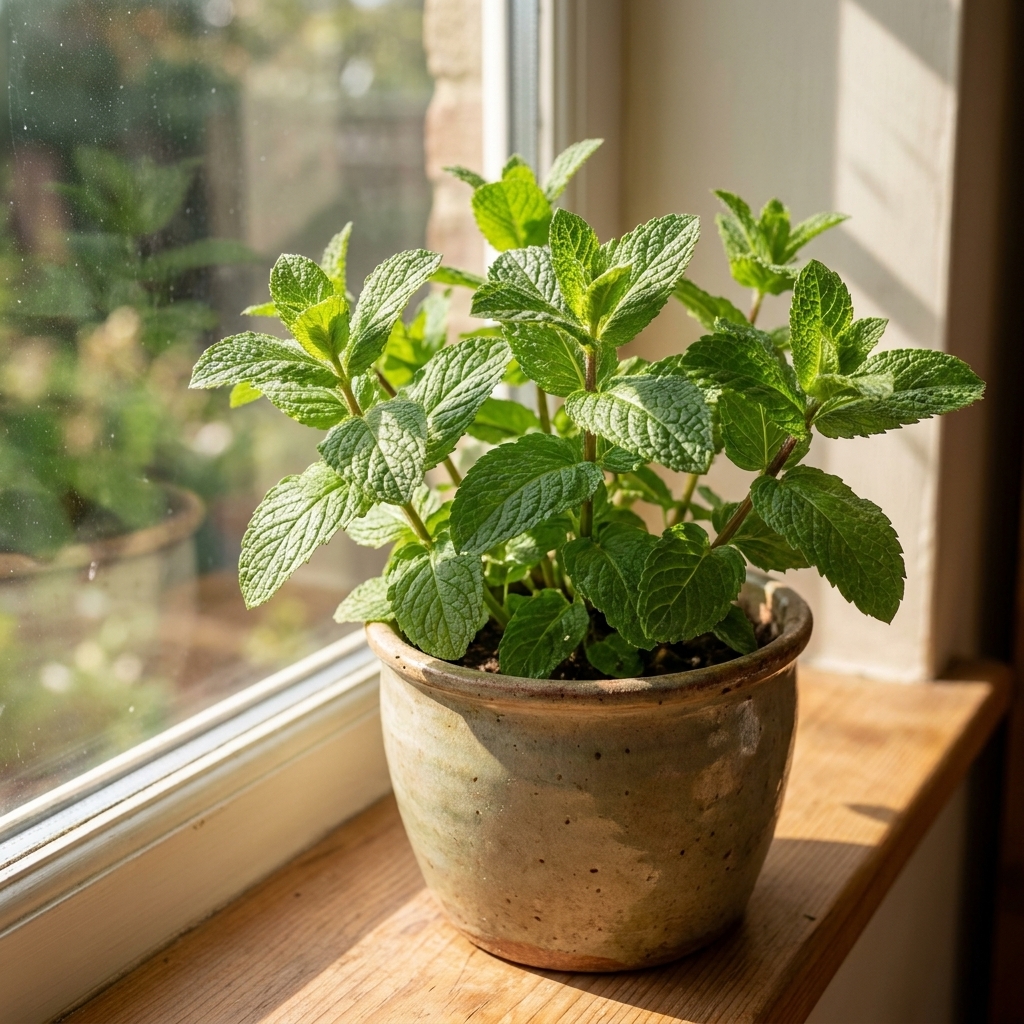
Mint is famous for taking over outdoor gardens, and indoors that enthusiasm turns into a reliable, fast-growing windowsill herb. Keep it in its own pot and you will be very happy.
- Light: Moderate to bright. Morning sun is perfect.
- Water: Mint likes consistent moisture. Do not let it go bone-dry.
- Harvest: Pinch tips often to encourage bushiness.
- Common issue: Spindly stems mean it wants more light. Trim it back and move it brighter if you can.
3) Parsley
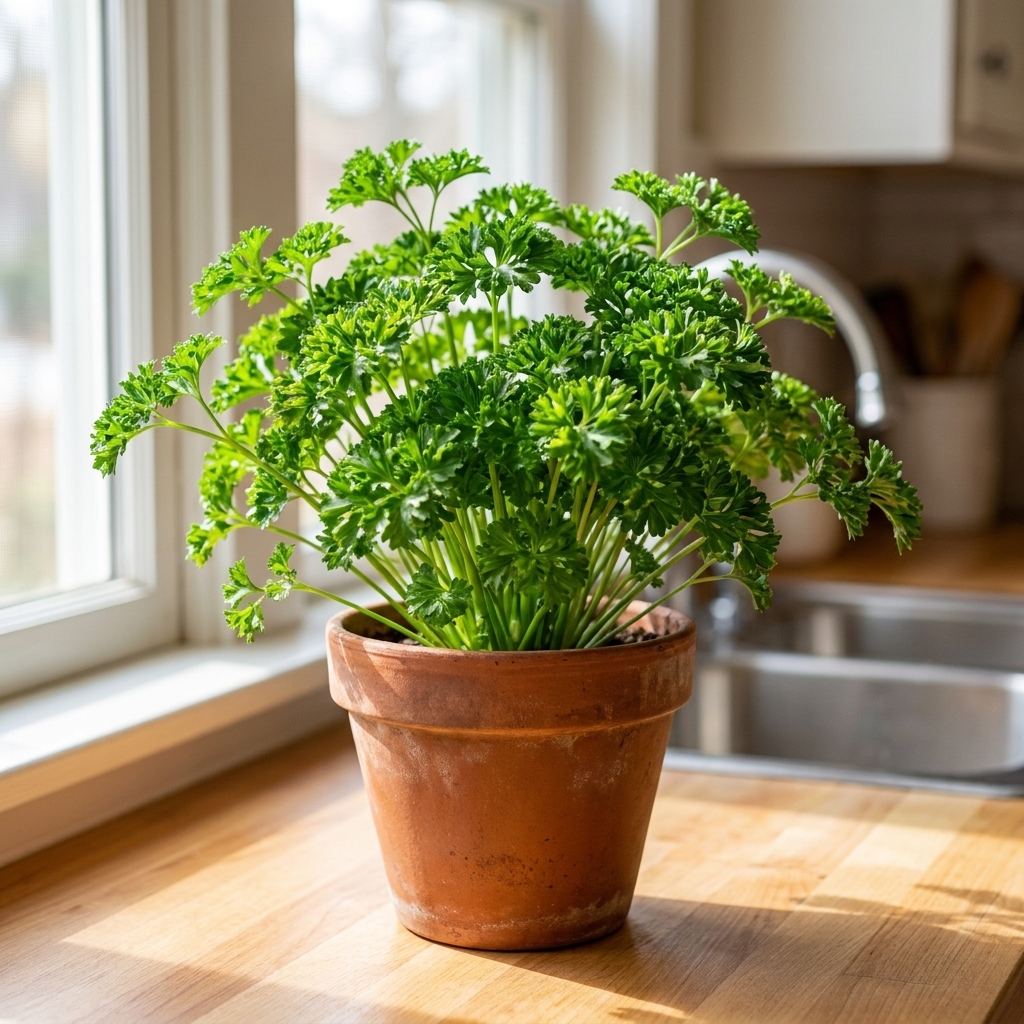
Parsley is a steady, practical herb that earns its keep. It is not flashy, but it is generous, and it tolerates indoor conditions better than many people expect.
- Light: Bright light helps keep it compact.
- Water: Water when the surface dries. Parsley does not love extremes.
- Harvest: Cut outer stems at the base to keep new growth coming.
- Tip: It is a slow starter from seed. If you want instant gratification, buy a small plant and keep it going.
- Good to know: Parsley is a biennial. Indoors it can last a long time, but older plants may eventually get tired or send up a flower stalk.
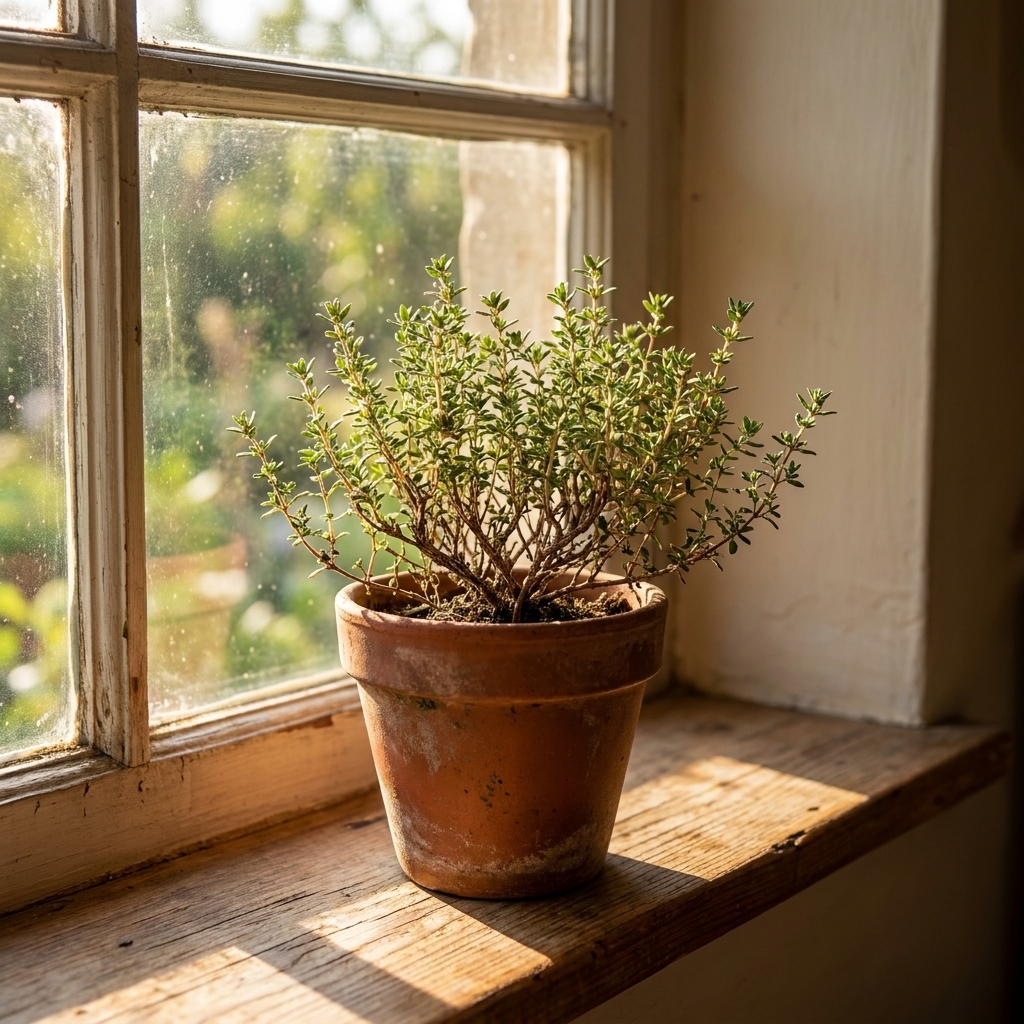
4) Thyme
Thyme is my “set it and mostly forget it” herb. It prefers slightly drier soil, has a lovely scent when you brush past it, and it stays compact, which is ideal for indoor spaces.
- Light: As much sun as you can give it.
- Water: Let the top couple inches dry before watering. Overwatering is the main way people lose thyme indoors.
- Harvest: Snip sprigs as needed. Regular light trimming keeps it from getting woody.
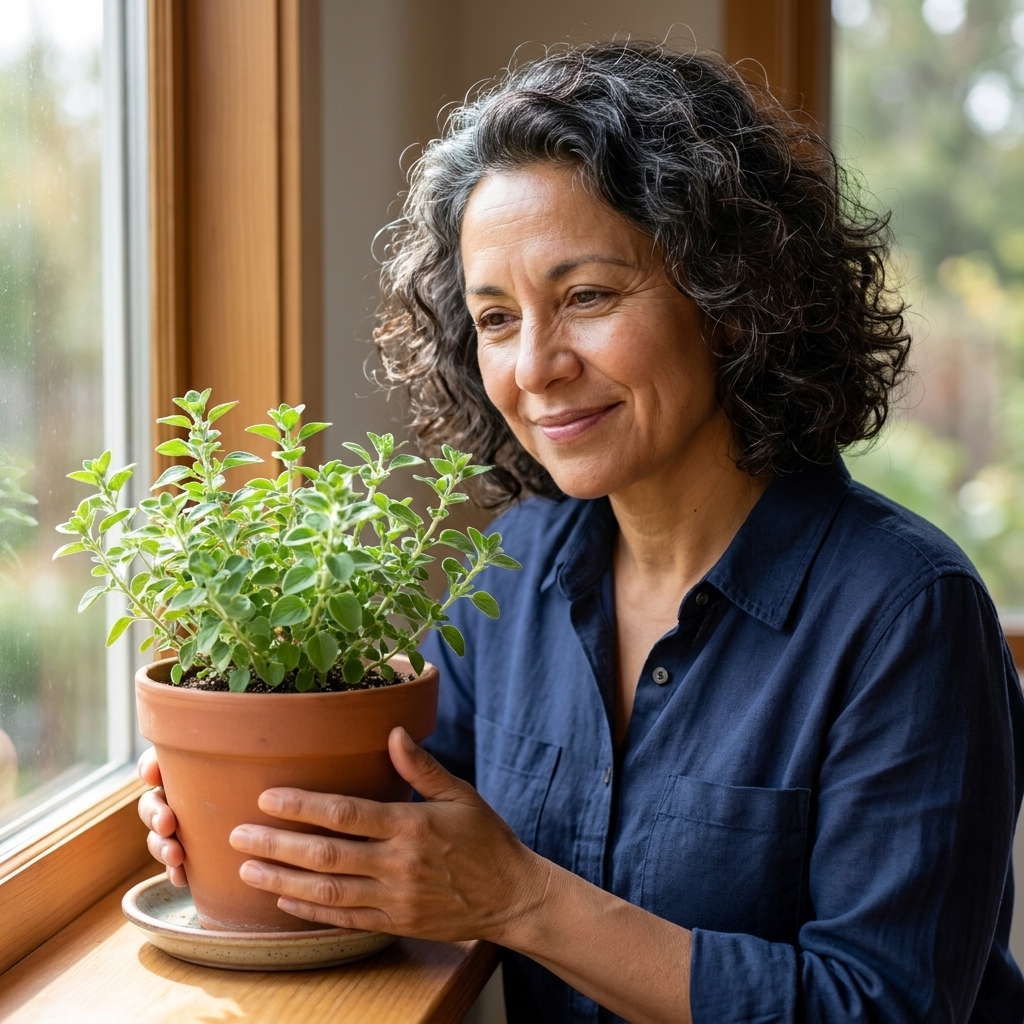
5) Oregano
Oregano is another Mediterranean herb that enjoys bright light and a little breathing room between waterings. Indoors, it tends to be milder than outdoor oregano, but still delicious.
- Light: Bright, direct light if possible.
- Water: Allow the top inch or two to dry out.
- Harvest: Pinch stems back regularly to prevent legginess.
- Tip: If it gets lanky in winter, give it a haircut and it will bounce back once light improves.
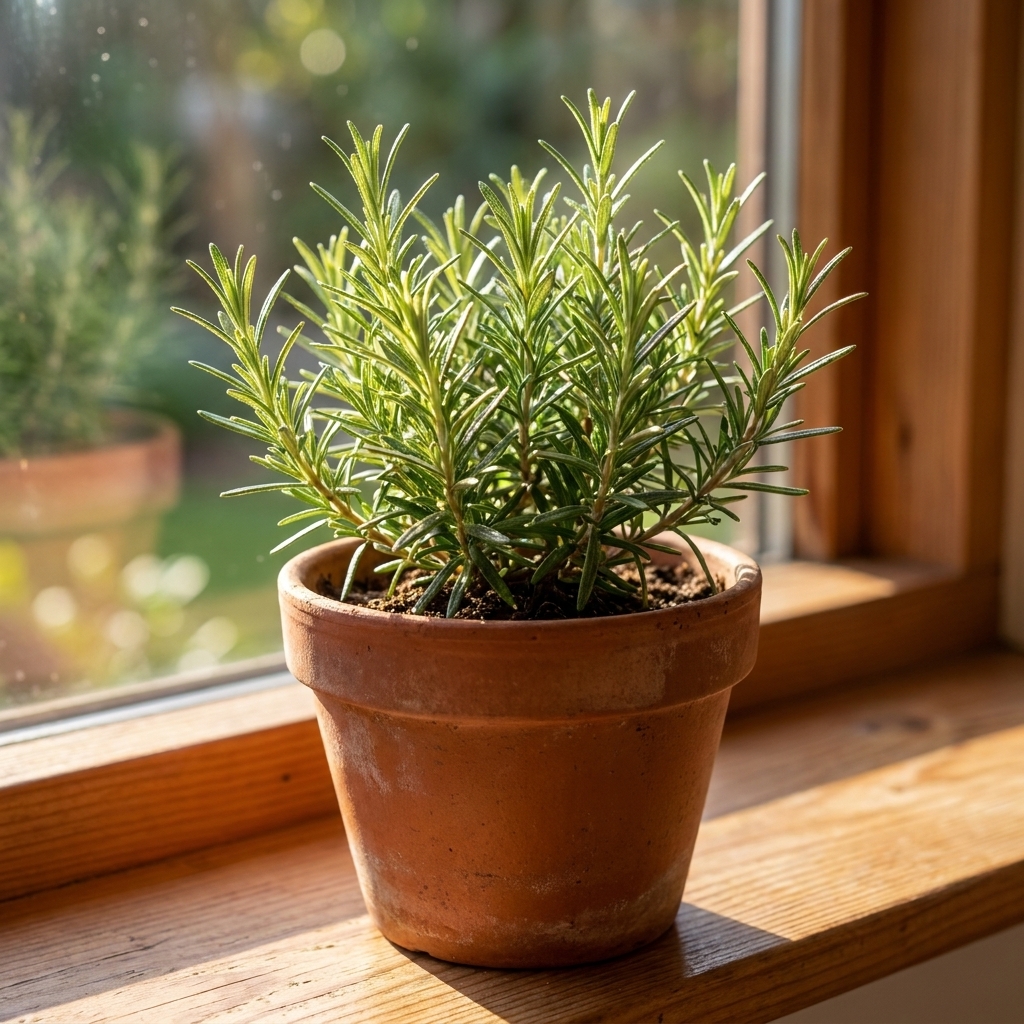
6) Rosemary (with a real caveat)
Rosemary can last for years indoors, but it needs two things many kitchens struggle to provide: very strong light and good airflow. If your rosemary always dies, you are not alone. Mine has broken my heart more than once. When it works though, it is wonderful.
- Light: Very bright light. A sunny south window is ideal, and a small grow light helps a lot in winter.
- Water: Water deeply, then let the soil dry partway before watering again. Never let it sit in water.
- Air: Good airflow helps prevent powdery mildew. Do not wedge it behind curtains.
- Harvest: Snip soft tips. Avoid cutting deep into old woody stems.
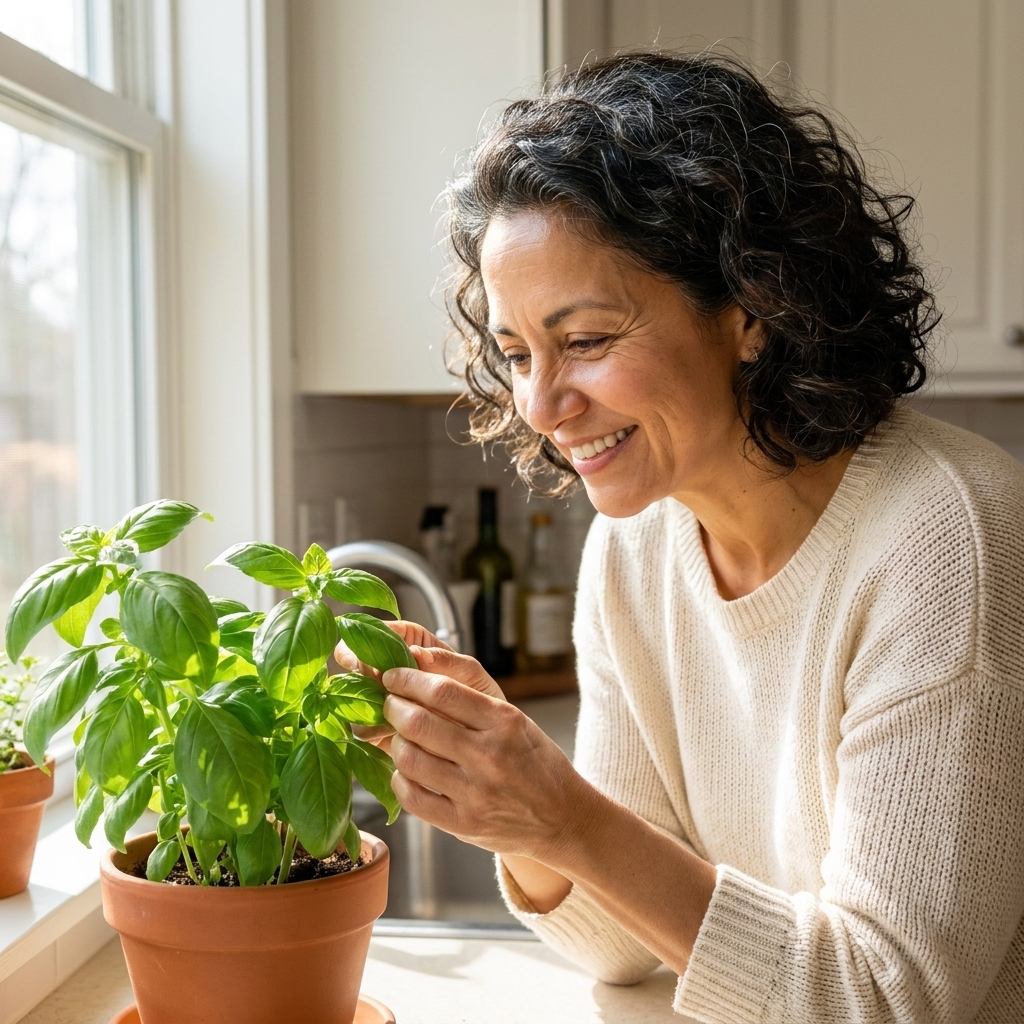
7) Basil (the quick-growing favorite)
Basil is not as long-lived indoors as thyme or chives, but it is so useful and fast that I still consider it a windowsill essential. The key is treating basil like a plant you actively shape, not one you politely take a leaf from once a week. In darker winter months, basil often slows down or gets leggy unless you add a grow light.
- Light: Bright light and warmth. Basil hates cold windows at night.
- Water: Basil likes evenly moist soil. If it droops, water promptly. It often perks back up.
- Harvest: Pinch above a pair of leaves to encourage branching. This is how you avoid the sad one-stem basil situation.
- Tip: If your basil is from the grocery store, it is often crowded. Split it into two or three pots for healthier roots.
- Expectation: Many indoor basil plants look their best for a few months. If yours starts declining, take cuttings, start a fresh plant, or treat it as a rotating “use and replant” herb.
Keep herbs thriving in every season
Winter: protect from cold and water less
- Pull pots a few inches away from the window at night if the glass gets icy.
- Water less often since growth slows in low light. Soggy winter soil is root-rot season.
- Rotate pots weekly so plants do not lean hard toward the light.
Summer: watch for heat spikes
- Check soil often during heat waves. Small pots can dry in a single afternoon.
- Use a curtain as a diffuser if leaves scorch in intense west-facing sun.
- Do not let leaves press against hot glass, especially basil and parsley.
Fertilizing: a little, not a lot
Indoors, herbs appreciate light feeding because they are stuck in a limited amount of soil. Use a balanced organic liquid fertilizer at half strength every 4 to 6 weeks during active growth. If it is midwinter and your herbs are barely growing, skip it.
Pruning: the secret to bushy plants
Most windowsill herb problems are actually shape problems. When you harvest correctly, you are pruning, and pruning is what tells the plant to branch.
- Pinch often: basil, mint, oregano
- Snip outer growth: chives, parsley
- Light trims: thyme, rosemary (avoid old wood)
When to repot
If water runs straight through the pot, roots may be circling and filling the container. Another possibility is a peat-heavy mix that has dried out and turned water-repellent. If that happens, soak the pot in a bowl of water for 15 to 30 minutes to re-wet the mix, then let it drain well. If growth stalls even with good light, or you see thick roots wrapping around the pot, move up just 1 to 2 inches in pot size and refresh with new potting mix. Your herb will usually respond within a couple weeks.
Pests and food safety
Indoors, the usual suspects are aphids and spider mites, especially in dry winter air. If you spot sticky leaves, tiny webbing, or clusters of little bugs, start with a firm rinse in the sink and prune the worst bits. Insecticidal soap can help, but avoid systemic insecticides on edible herbs. And yes, rinse herbs before you use them.
Common mistakes (and easy fixes)
“My herbs are tall and floppy.”
That is usually low light plus not enough pinching. Move them to a brighter window if possible, rotate weekly, and prune back by about one-third. Basil, mint, and oregano respond beautifully. If it is winter and your window is dim, add a small grow light and watch the difference.
“The leaves are yellowing.”
Most often: overwatering. Let the soil dry slightly between waterings, confirm the pot drains, and empty the saucer. If the plant is rootbound, repot.
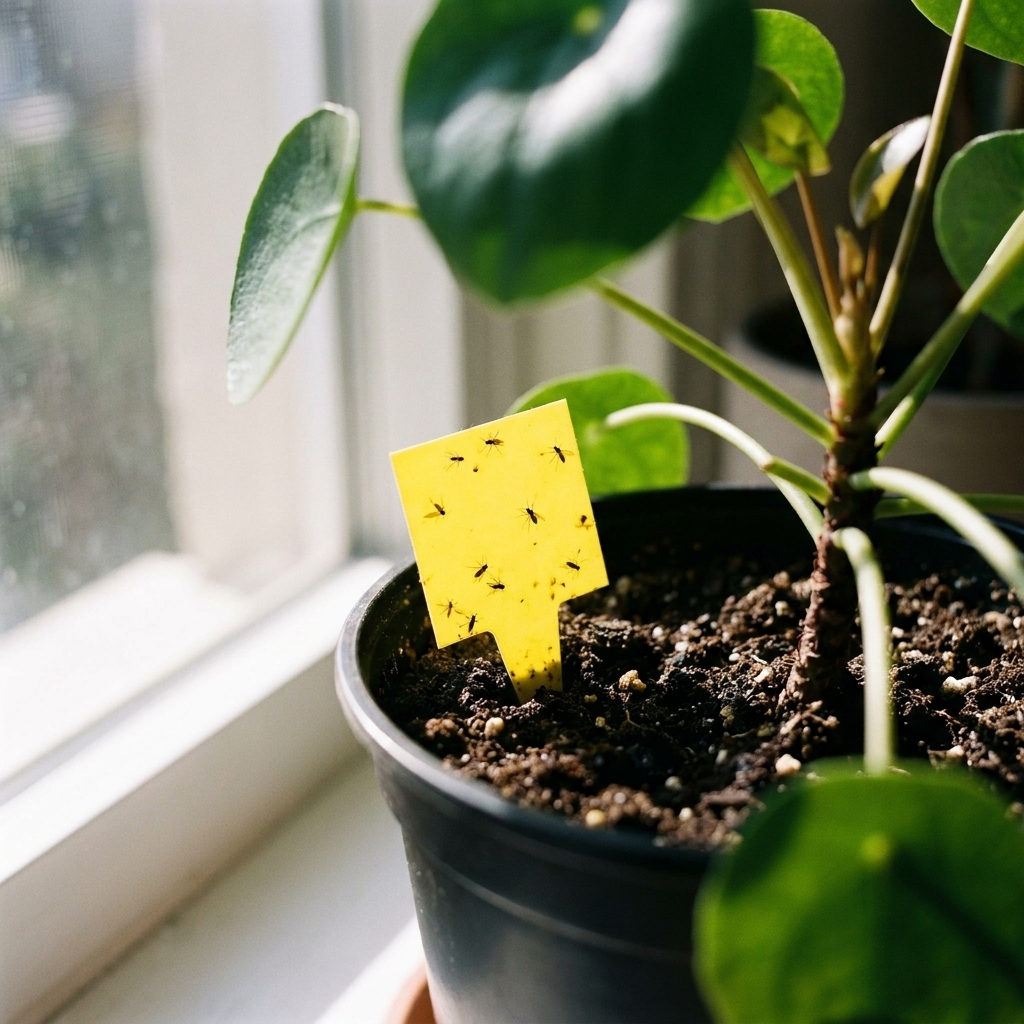
“Tiny flies are hovering around the pots.”
Those are likely fungus gnats, and they love consistently moist soil. Let the top inch dry out and water a bit less overall. Bottom-watering can help keep the surface drier, but it is not a magic trick if the pot stays wet all the time. Yellow sticky traps also help break the life cycle.
“My rosemary keeps dying and I feel cursed.”
Rosemary indoors is picky. Give it the brightest spot you have, do not overwater, and consider a small grow light in winter. If your kitchen is dim, choose thyme or oregano instead and save rosemary for outdoors when possible.
Quick setup checklist
- Pick 2 to 4 herbs from the list to start, not all seven at once.
- Use pots with drainage holes and saucers.
- Fill with fresh potting mix plus a little perlite.
- Place in the brightest window you have (east or south is ideal).
- Water when the top inch is dry (a bit more dry-down for thyme, oregano, rosemary), then drain the saucer.
- Harvest weekly to keep plants bushy and productive.
FAQ
Can I grow herbs from grocery store cuttings?
Sometimes. Mint often roots easily in water and transfers well to soil. Basil can root too, but it is usually easier to buy a small plant or start from seed. Woody herbs like rosemary can root from cuttings, but success indoors is less consistent.
How many hours of sun do windowsill herbs need?
Many herbs do well with 6 hours of bright light, but indoors that “brightness” is weaker than outdoors. If you get less than that, choose chives, mint, and parsley first, or add a small grow light for 10 to 12 hours a day. Mediterranean herbs usually want direct sun to stay compact.
What is the best temperature for indoor herbs?
Most herbs are happiest around 65 to 75°F (18 to 24°C). Keep basil warmer and away from cold drafts. Avoid pressing pots against cold winter glass.