A hands-on design guide for small backyards: smart zoning, vertical planting, multi-functional paths and seating, plus simple visual tricks that make a tiny ...
Gardening insights
Top 12 Fast-Growing Plants and Hedges for Backyard Privacy
Need privacy fast? Explore 12 quick-growing trees, shrubs, and bamboo for backyard screening, with USDA zones, sun needs, spacing, and care tips that actually work.

Elena Rosales
Elena Rosales is a certified Master Gardener and lifelong plant enthusiast who believes anyone can cultivate a green thumb. After transforming her tiny urban balcony into a thriving plant oasis, she moved to a half-acre homestead to grow her own food and flowers. Today, she shares practical, hands-on gardening advice to help the Hortello community bring more green into their lives.
Published September 21, 2026
Updated September 21, 2026
If you have ever caught yourself timing your backyard coffee to avoid a neighbor’s window (been there), a living privacy screen can change how your whole space feels. The trick is choosing plants that grow quickly and stay attractive, healthy, and manageable long-term.
Below are 12 of my favorite fast-growing options for natural backyard privacy, including evergreen trees, tall shrubs, and bamboo. I will also walk you through spacing, siting, and the biggest mistakes I see (and have personally made) when folks want a greener fence line yesterday.
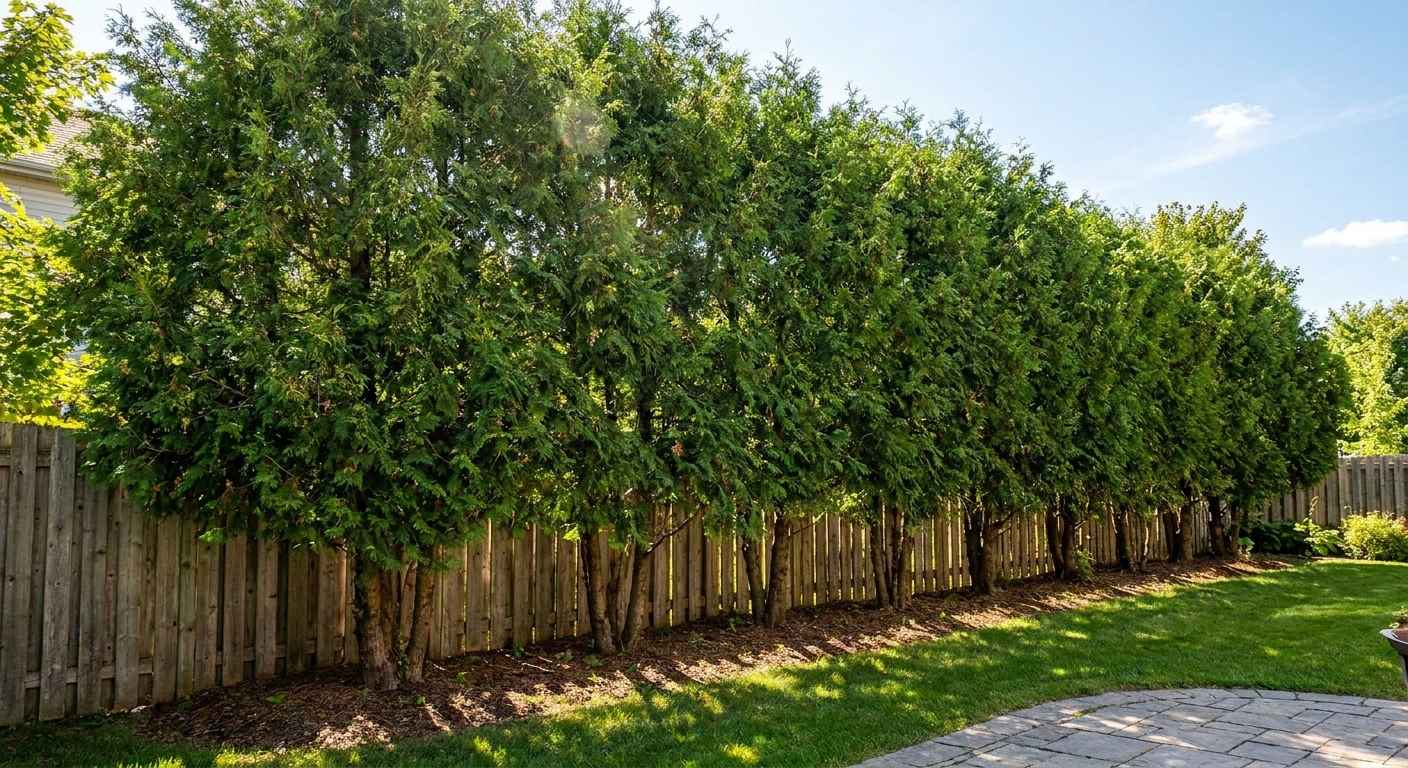
Before you plant: 7 things that make screens work
- Pick the right plant for the right width. Many privacy plants mature 10 to 20 feet wide. For example, ‘Green Giant’ can reach roughly 12 to 18 feet wide if you let it. If your planting strip is narrow, choose columnar forms or shrubs that tolerate pruning.
- Know your winter story. Evergreens give year-round screening. Deciduous hedges can be beautiful, but they will not block the view in winter unless they hold leaves or have dense twig structure.
- Plan for mature height. If you only need 6 to 8 feet of privacy, you do not need a 60-foot tree near your patio.
- Sun and soil matter more than hype. A “fast grower” in full sun can crawl in shade, and a “tough plant” can sulk in soggy soil. Match the plant to your site first.
- Water deeply the first two seasons. Fast growth requires consistent moisture while roots establish. Drip irrigation or a soaker hose is your best friend.
- Stagger plants for faster fill. A double row (offset like a zipper) often screens faster than a single line, even with slightly slower-growing plants. Just know it needs more width, more plants, and more water.
- Mind the property line. Check setbacks, HOA rules, and local restrictions (especially bamboo). And please call utility locating services before you dig. Your future self will enjoy having internet.
Quick note on zones: I am listing broad USDA hardiness zone ranges and general tendencies. Always verify for your exact microclimate and local guidance, since some plants are restricted or invasive in certain regions.
Top 12 fast-growing plants for privacy
1) Thuja ‘Green Giant’ (arborvitae)
If you want speed, evergreen coverage, and a classic hedge look, ‘Green Giant’ is hard to beat. It grows quickly once established and stays lush in winter.
- USDA zones: 5 to 8
- Sun: Full sun to part shade (fastest and fullest in sun)
- Evergreen: Yes
- Growth rate: Fast (often 2 to 3+ feet per year in ideal sites, usually slowing as it matures)
- Mature size: About 40 to 60 feet tall and 12 to 18 feet wide (unpruned)
- Best for: Long runs along property lines
- Spacing: About 5 to 8 feet apart for a hedge (closer for faster knit, wider for airflow and long-term health)
Elena tip: Give it room and resist the urge to plant too close to a fence. Crowding reduces airflow and invites winter burn and pests.
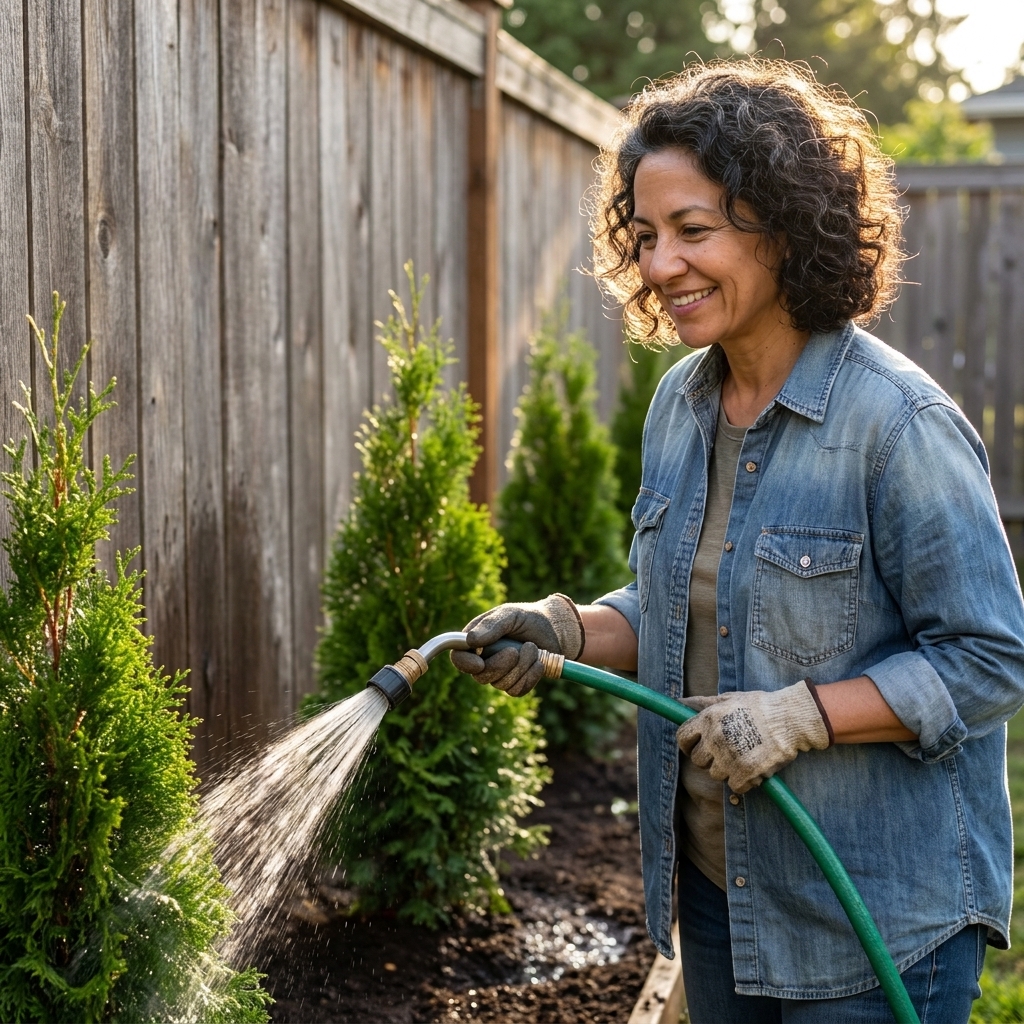
2) Emerald Green arborvitae (Thuja occidentalis ‘Smaragd’)
This one is a go-to for narrower spaces. It is slower than ‘Green Giant’, but still satisfying, and it stays more columnar.
- USDA zones: 2 to 7
- Sun: Full sun to part shade
- Evergreen: Yes
- Growth rate: Moderate to fast
- Mature size: Roughly 10 to 15 feet tall and 3 to 4 feet wide
- Best for: Tight side yards, near patios, smaller lots
- Spacing: Roughly 2.5 to 4 feet apart for a dense hedge (tighter spacing fills faster, but increases disease risk if airflow is poor)
Watch for: Deer browsing in many areas. If deer treat your yard like a salad bar, you may need protection or a different plant.
3) Leyland cypress (Cuprocyparis leylandii)
Leyland cypress is famous for fast screening, but it is not a set-it-and-forget-it plant. It needs room and thoughtful spacing to avoid disease issues in humid climates.
- USDA zones: 6 to 10 (best in 6 to 9)
- Sun: Full sun
- Evergreen: Yes
- Growth rate: Very fast
- Mature size: Often 40 to 70 feet tall and 12 to 20+ feet wide (unpruned)
- Best for: Large properties, big buffers
- Spacing: Often 8 to 12 feet apart
Elena tip: If your summers are humid and you struggle with fungal diseases, consider arborvitae or holly instead.
4) Cherry laurel (Prunus laurocerasus)
Glossy, broadleaf evergreen leaves make cherry laurel look rich and full even in winter. It can be clipped into a formal hedge or left more natural.
- USDA zones: 6 to 9 (some cultivars may vary)
- Sun: Full sun to part shade (often happiest with some afternoon shade in hot areas)
- Evergreen: Broadleaf evergreen in many climates
- Growth rate: Fast
- Mature size: Commonly 10 to 18 feet tall and 6 to 12 feet wide (variety dependent)
- Best for: Taller hedges, quick screening with a lush look
- Spacing: About 4 to 6 feet apart
Watch for: It can be vigorous. Prune after flowering if you want to control size and keep it dense.
Also check: Cherry laurel is considered invasive in some regions. Before planting, check your state or county invasive plant lists and local guidance.
5) Wax myrtle (Morella cerifera)
Wax myrtle is one of my favorite “fill fast” shrubs in warmer regions. It creates a soft, natural screen and tolerates a range of soils once established.
- USDA zones: 7 to 11
- Sun: Full sun to part shade
- Evergreen: Often evergreen or semi-evergreen depending on winter
- Growth rate: Fast
- Mature size: About 10 to 20 feet tall and 10 to 20 feet wide (can be kept smaller)
- Best for: Informal screens, naturalistic borders
- Spacing: About 4 to 6 feet apart
Bonus: The aromatic foliage is a little sensory treat when you brush past it.
6) Nellie R. Stevens holly (Ilex ‘Nellie R. Stevens’)
This holly is a workhorse privacy plant. It grows quickly, stays evergreen, and gives you that classic holly look with bright berries.
- USDA zones: 6 to 9
- Sun: Full sun to part shade
- Evergreen: Yes
- Growth rate: Fast
- Mature size: Roughly 15 to 25 feet tall and 10 to 15 feet wide
- Best for: Strong year-round screens, windbreaks
- Spacing: About 5 to 8 feet apart
Berry note: ‘Nellie R. Stevens’ is typically a female cultivar, and berry set is best with a compatible male holly pollinator nearby.
Elena tip: Wear gloves when pruning. Holly is not here to play, and neither are those leaves.
7) Privet (Ligustrum spp.)
Privet is a classic fast hedge, especially if you want a formal, sheared look. It responds well to pruning and can fill in quickly.
- USDA zones: Varies by species (often 4 to 8, some warmer)
- Sun: Full sun to part shade
- Evergreen: Some are evergreen or semi-evergreen, many are deciduous
- Growth rate: Fast
- Mature size: Varies widely, commonly 8 to 15 feet tall and wide if unpruned
- Best for: Formal hedges, quick dense walls of green
- Spacing: About 2 to 4 feet apart
Important: Some privets are invasive in parts of North America. Check local guidance before planting.
8) Clumping bamboo: ‘Alphonse Karr’ (Bambusa multiplex)
If you want privacy fast and you live in a warm-enough climate, clumping bamboo is the tidy choice. ‘Alphonse Karr’ has beautiful yellow canes with green striping and makes a lush screen without running all over your yard.
- USDA zones: About 8 to 11 (varies with exposure and cultivar)
- Sun: Full sun to part shade
- Evergreen: Yes in mild climates
- Growth rate: Fast
- Mature size: Commonly 10 to 20+ feet tall and 4 to 8+ feet wide per clump
- Best for: Quick screens, modern garden vibes
- Spacing: About 3 to 5 feet apart
Elena tip: Clumping bamboo spreads slowly outward, but it still gets wide. Plan a maintenance path so you can thin older canes.
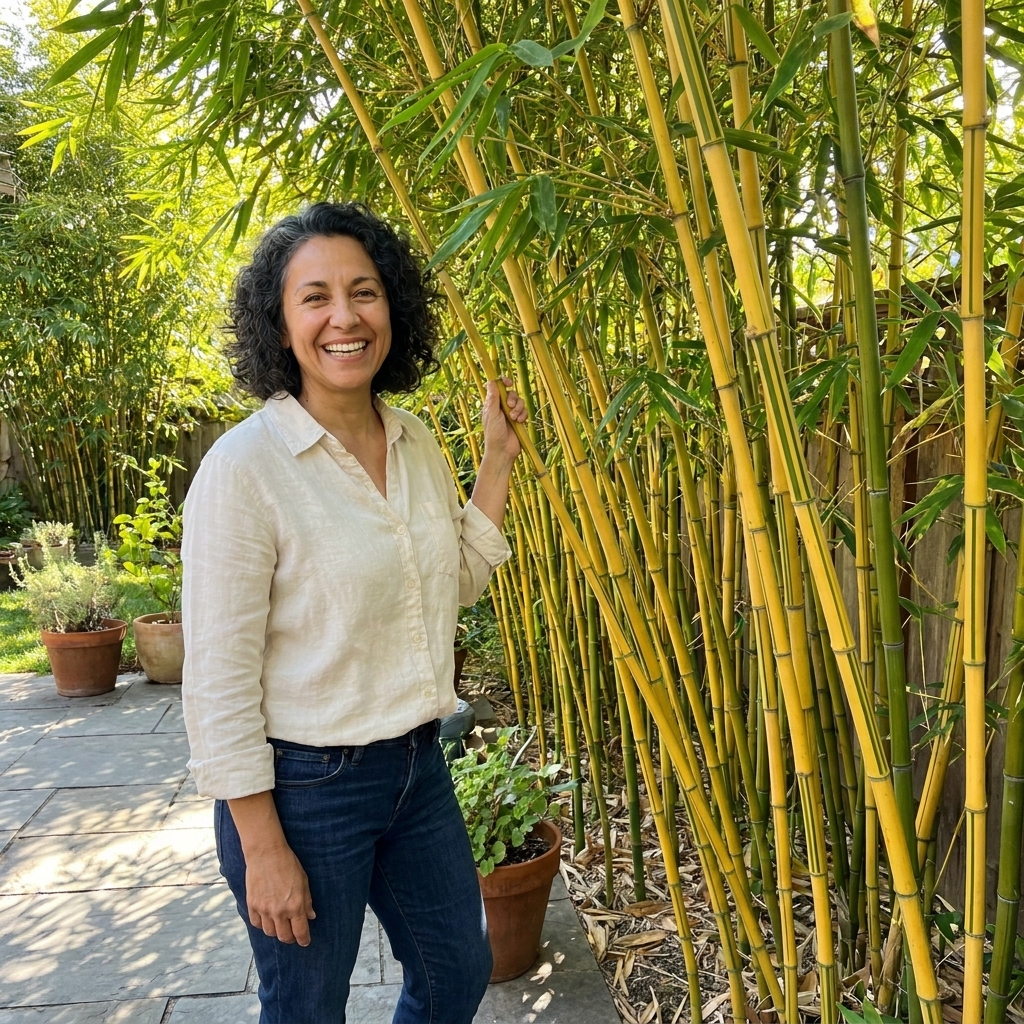
9) Clumping bamboo: ‘Gracilis’ (Bambusa textilis)
‘Gracilis’ is a favorite for a tall, narrow screen. It can give you height without eating your whole border, and it stays elegant rather than messy when properly thinned.
- USDA zones: About 8 to 11
- Sun: Full sun to part shade
- Evergreen: Yes in mild climates
- Growth rate: Fast
- Mature size: Often 20 to 35+ feet tall and 5 to 10 feet wide per clump
- Best for: Narrow side yards, tall screening
- Spacing: About 4 to 6 feet apart
Watch for: Wind exposure. Young bamboo can benefit from a sheltered establishment period.
10) Running bamboo (Phyllostachys spp.) with a root barrier
Running bamboo is the rocket ship of privacy plants. It is also the plant that has started more neighbor disputes than I can count. If you choose it, commit to containment from day one.
- USDA zones: Varies by species (often 5 to 9)
- Sun: Full sun to part shade (species dependent)
- Evergreen: Often evergreen-ish in mild climates, but can defoliate or look rough after colder winters
- Growth rate: Extremely fast
- Mature size: Commonly 15 to 40+ feet tall; spreads aggressively by rhizomes
- Best for: Large spaces where you can install and maintain containment
- Spacing: Usually planted as a grove, not a tight hedge, but plan your barrier footprint first
Containment rules that matter:
- Install a high-quality bamboo barrier (typically HDPE) to the recommended depth for your species (often 24 to 36 inches).
- Leave the barrier lip slightly above soil so rhizomes cannot hop over.
- Do a rhizome inspection trench on the outside edge once or twice a year and cut anything that tries to escape.
If that sounds like too much work, choose clumping bamboo instead. Your future self will thank you.
11) Red twig dogwood (Cornus sericea)
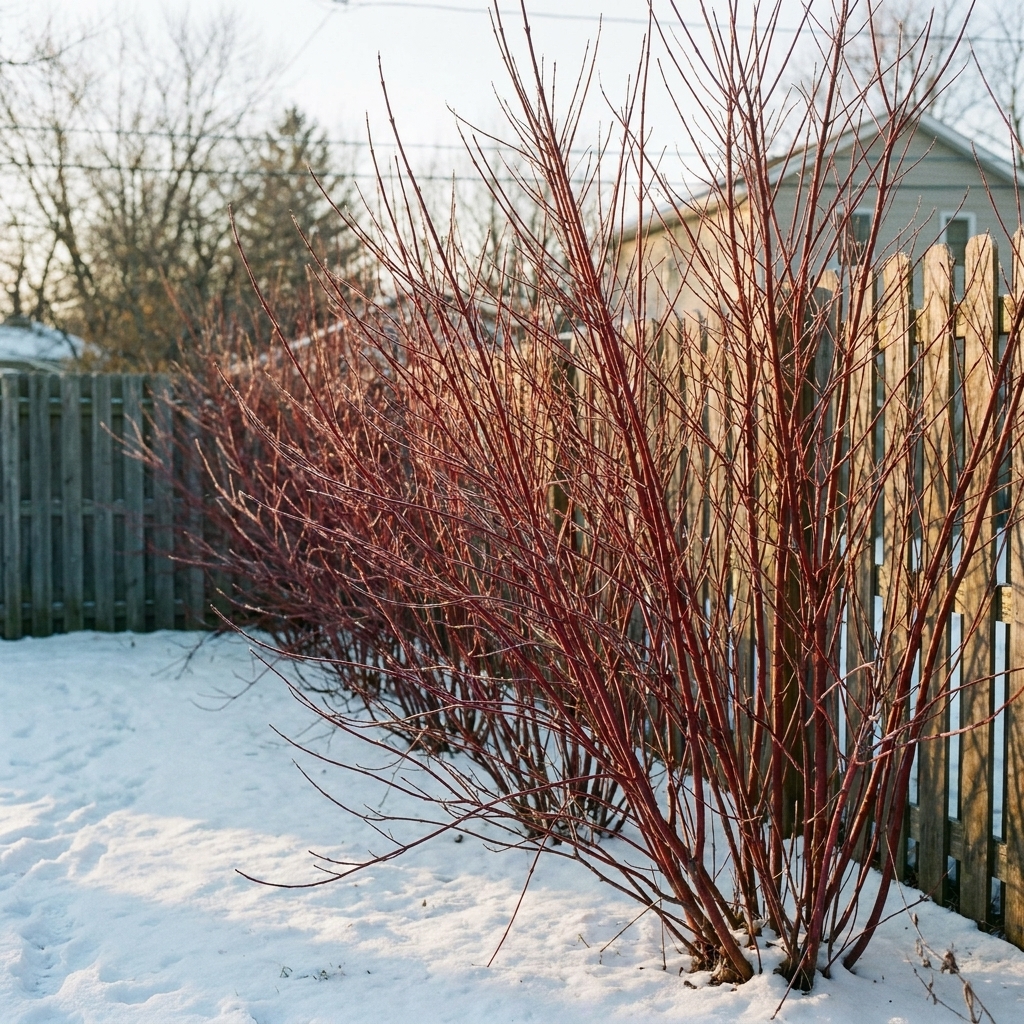
This is a fun choice when you want seasonal interest plus screening. In summer it is leafy and dense, and in winter those red stems glow against snow or gray skies.
- USDA zones: 2 to 7
- Sun: Full sun to part shade (best winter stem color in more sun)
- Evergreen: No
- Growth rate: Fast
- Mature size: Roughly 6 to 10 feet tall and 6 to 10 feet wide
- Best for: Naturalized screens, wetter spots, wildlife-friendly borders
- Spacing: About 4 to 6 feet apart
Watch for: It can spread by suckers. That is great for filling in, less great if you want a crisp edge. A yearly thinning or root pruning keeps it in bounds.
Elena tip: For the brightest winter color, prune out some of the oldest stems each year to encourage fresh new growth.
12) Rose of Sharon (Hibiscus syriacus)
For a flowering screen that still grows quickly, Rose of Sharon is a cheerful option. It is not evergreen, but it can build a tall, leafy wall during the growing season and it blooms when many shrubs are taking a break.
- USDA zones: 5 to 9
- Sun: Full sun to part shade (best flowering in sun)
- Evergreen: No
- Growth rate: Fast
- Mature size: Commonly 8 to 12 feet tall and 4 to 6 feet wide
- Best for: Summer privacy with flowers, pollinator-friendly hedges
- Spacing: About 3 to 5 feet apart
Watch for: Some varieties reseed readily. If you do not want volunteers popping up, choose a sterile cultivar when possible.
One more thing: In many climates it leafs out late in spring, so early-season privacy can be delayed.
Design shortcuts for faster privacy
Staggered double row
If you have the space, plant two rows offset so plants fill gaps quickly. This is especially effective with arborvitae, holly, and cherry laurel. Just remember: double rows cost more, need more water, and require a wider bed to avoid creating a crowded disease party.
Layering: tall + medium + low
Instead of one plant type in a straight line, layer a tall evergreen screen with a mid-layer of flowering shrubs and a low layer of grasses or perennials. It looks intentional and hides bare legs on shrubs over time.
Mix species to avoid a wipeout
A single-species hedge is simple, but it can be risky if a pest or disease shows up. Even alternating two compatible species can add resilience and a more natural look.
Planting and care basics
- Dig wide, not deep. Most roots spread outward. Aim for a hole 2 to 3 times as wide as the root ball.
- Set at the right height. Plant so the top of the root ball sits slightly above surrounding soil to prevent settling too deep.
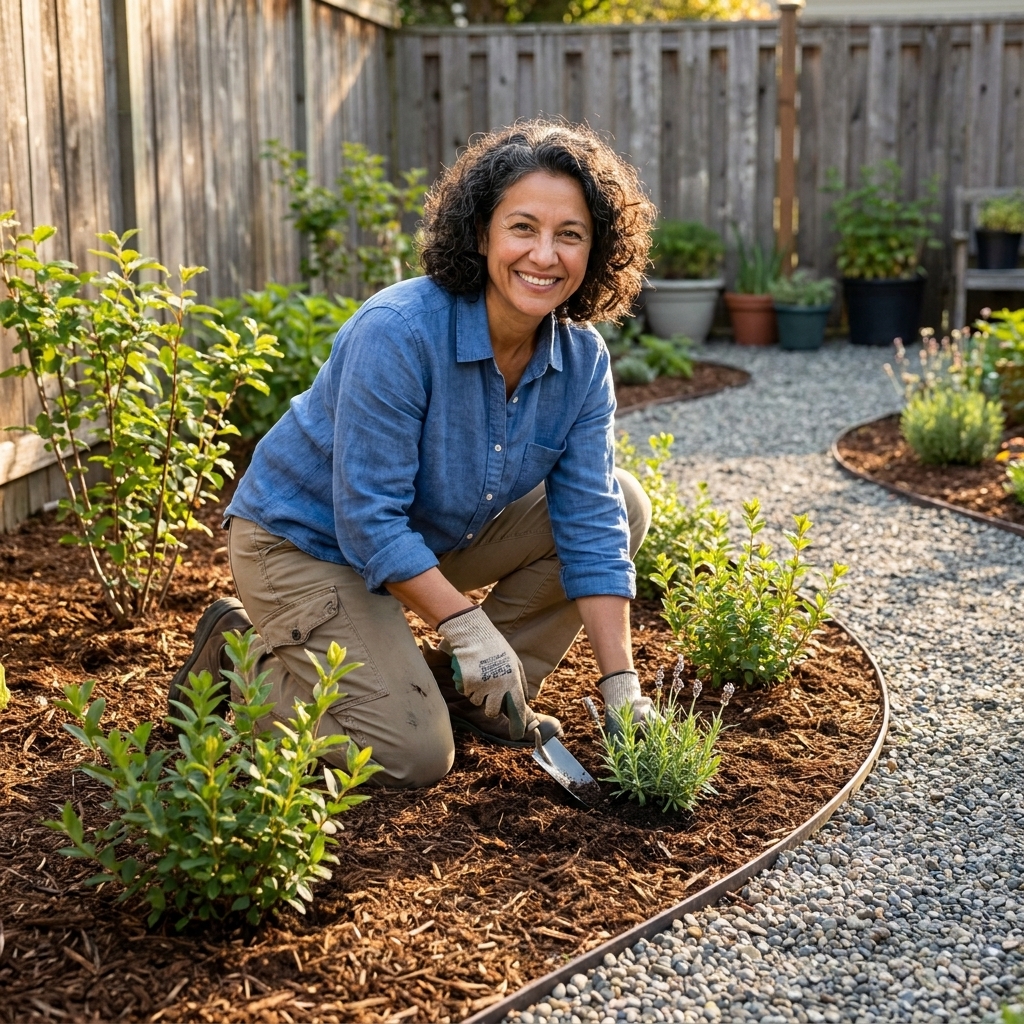
- Mulch like you mean it. Add 2 to 3 inches of mulch, but keep it a few inches away from trunks and stems.
- Water schedule: Deep water 1 to 2 times per week the first season (adjust for rain and heat). The second season, taper as roots establish.
- Prune early for density. Light tip pruning can encourage bushier growth, but do not shear evergreens into old wood unless the species tolerates it.
Confession from my own yard: I once planted a line too close together because I wanted instant privacy. It looked great for two years, then airflow dropped, stress went up, and I spent a summer playing whack-a-mole with browning sections. Spacing is not boring. It is kindness.
Common questions
What is the fastest evergreen for privacy?
In many regions, Thuja ‘Green Giant’ and Leyland cypress are among the fastest evergreen privacy choices. Your best option depends on climate, available space, and disease pressure in your area.
Is bamboo a good privacy screen?
It can be fantastic, especially clumping bamboo, which stays well-behaved. Running bamboo can work too, but only if you install a proper barrier and commit to ongoing containment checks.
How far from the fence should I plant a hedge?
Aim to plant far enough that the hedge can reach its mature width without pressing into the fence. For many privacy plants, that can be 3 to 6 feet or more, depending on the species. If you are unsure, look up the mature width and plant at least half that distance away from the fence line.
How can I get privacy sooner while plants grow?
Use temporary solutions like a simple trellis with fast annual vines (or a shade sail), then let your shrubs and trees take over. It is like putting up a curtain while your living wall grows in.
A gentle final nudge
If you tell me you want privacy fast, my gardener brain hears two questions: what will screen quickly this year, and what will still be a joy to live with five years from now? Choose plants that fit your space, give them the first-year care they need, and you will end up with a backyard that feels like your own little sanctuary.
If you want, tell me your USDA zone, sun exposure, soil drainage (fast draining, average, or stays wet), and how many feet of privacy you need. I can suggest the best 2 to 3 options from this list for your exact situation.