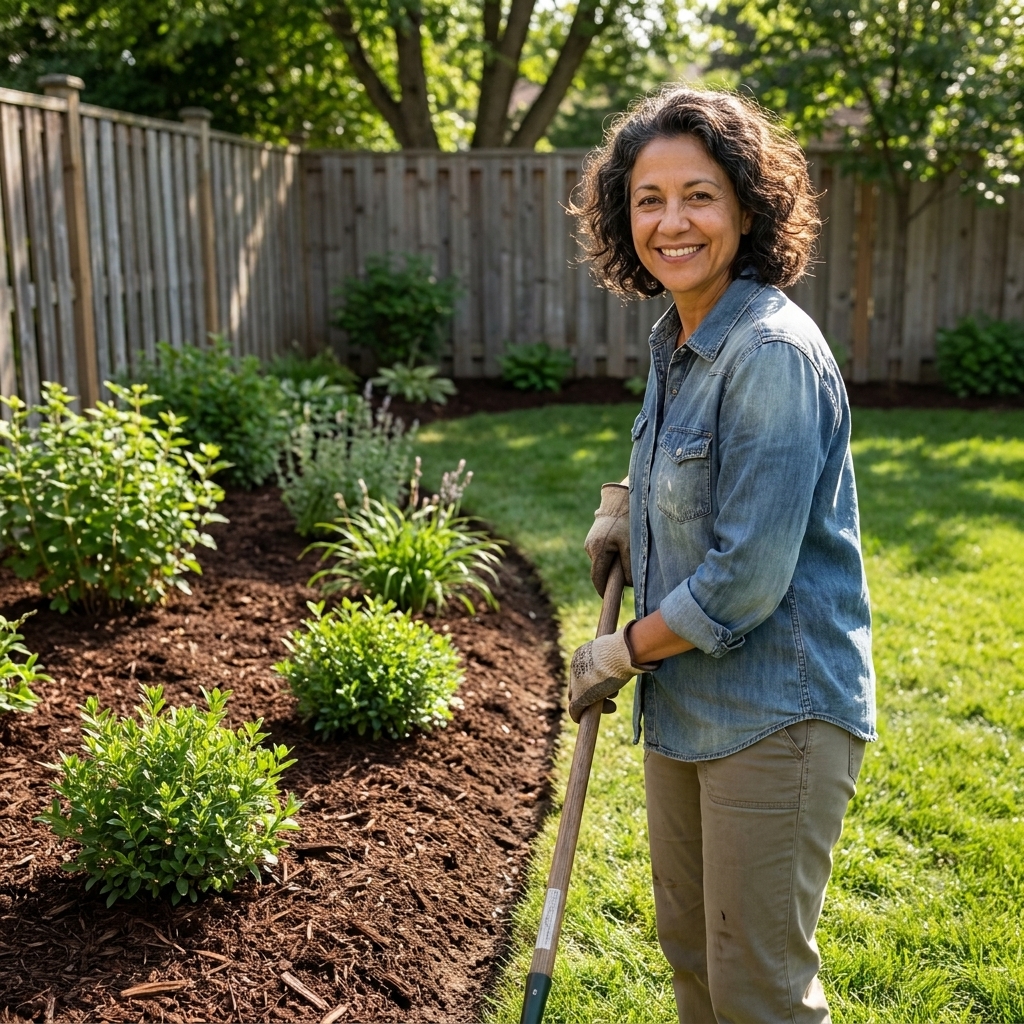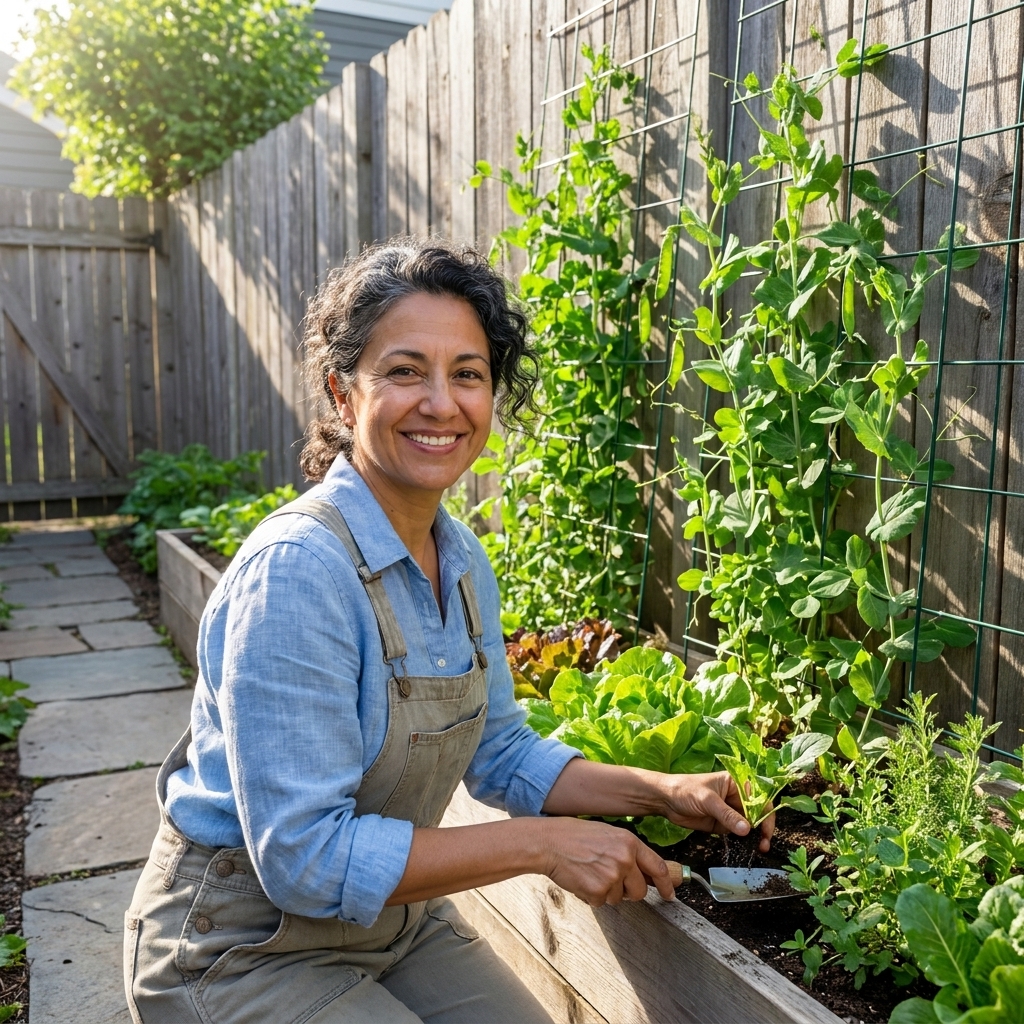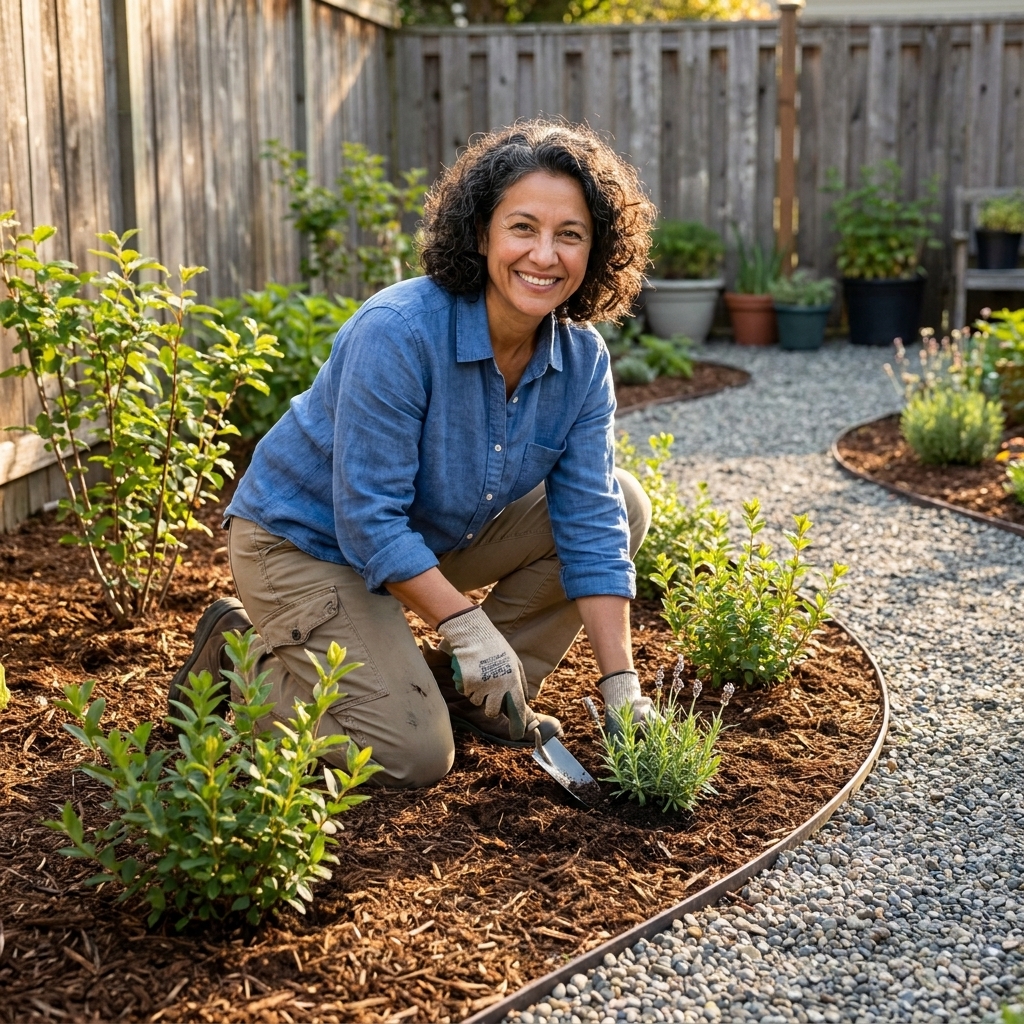
From plant division to repurposed edging, these 15 cost-effective garden design ideas help you refresh your landscape with less money and more creativity.
Gardening insights
Front Yard Landscaping for Curb Appeal
Plan a front yard that looks polished in every season. Get simple layouts, foundation planting basics, entry ideas, practical lighting and mulch tips, and plant picks for your climate.

Elena Rosales
Elena Rosales is a certified Master Gardener and lifelong plant enthusiast who believes anyone can cultivate a green thumb. After transforming her tiny urban balcony into a thriving plant oasis, she moved to a half-acre homestead to grow her own food and flowers. Today, she shares practical, hands-on gardening advice to help the Hortello community bring more green into their lives.
Published September 21, 2026
Updated September 21, 2026
There is a special kind of satisfaction in pulling into your driveway and thinking, “Yep. This feels welcoming.” Not fussy. Not perfect. Just cared for. That is curb appeal at its best.
When I turned my first tiny balcony into a jungle, I learned a lesson that still applies to front yards: a little structure makes the plants look intentional. In this guide, we will build that structure first, then layer in plants that thrive in your conditions, not just in a catalog photo.
Quick note: plant performance is wildly regional. If you can, check your USDA Hardiness Zone (and local heat zone guidance), then cross-check plant picks with your local extension office or a trusted local nursery.
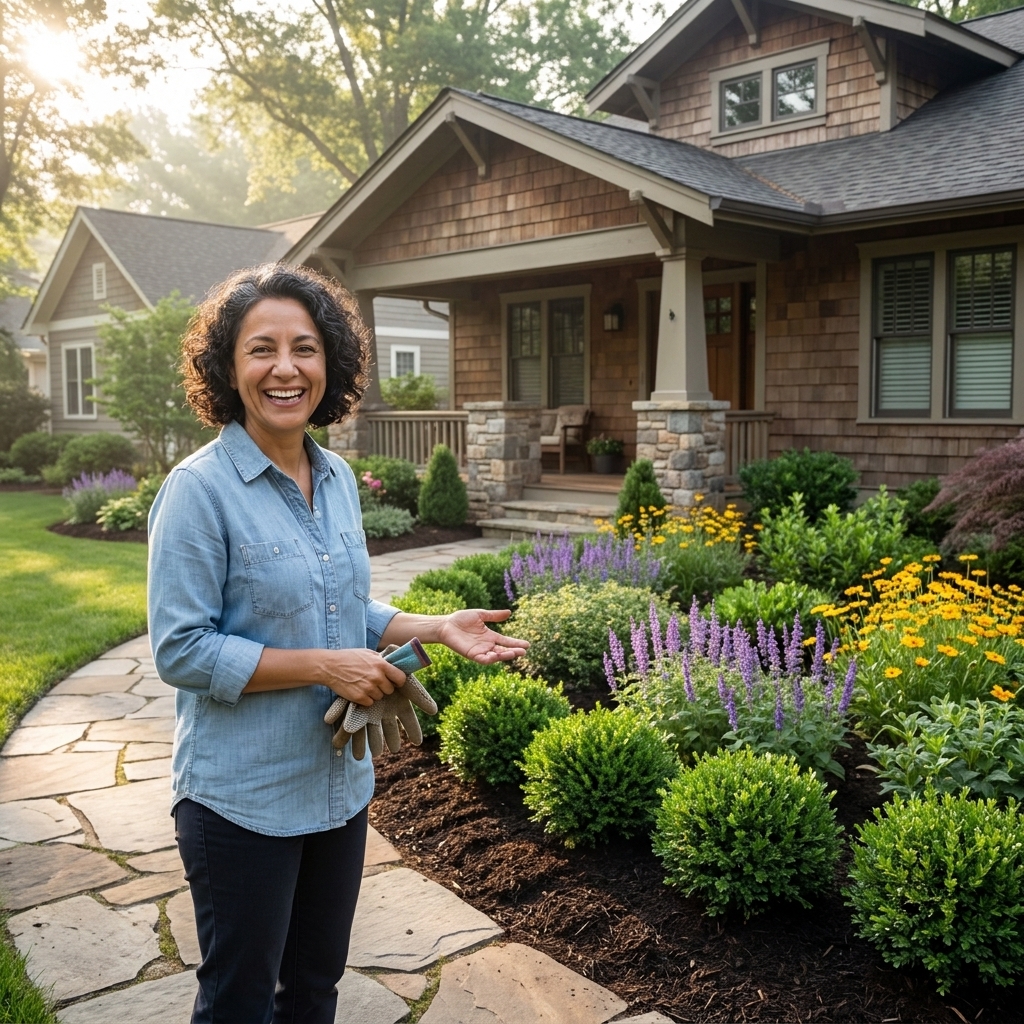
Start with a simple plan
Before you buy a single plant, take 15 minutes to stand at the curb and look at your home like a visitor. Where do your eyes go first? Where do you want them to go?
Do a quick front yard audit
- Sun: Note which areas get full sun (6+ hours), part sun, or shade.
- Water: Where does rain run off? Where does it puddle?
- Views: What should be highlighted (front door, porch, a pretty window) and what should be softened (utility boxes, blank wall, awkward corner)?
- Traffic: Where do people actually walk? If your guests cut across the lawn, your path is in the wrong place.
Pick a layout style
You can absolutely mix styles, but a consistent “spine” keeps things calm.
- Formal: Symmetry, straight lines, clipped evergreens. Great for colonials and traditional homes.
- Cottage: Curvy beds, layered blooms, soft edges. Lovely with bungalows and porches.
- Modern: Repeating shapes, bold mass plantings, clean materials like gravel or concrete.
- Naturalistic: Grasses, natives, and pollinator plants with a relaxed rhythm.
My go-to rule: Repeat a few plants in drifts instead of collecting one of everything. It is the fastest way to make a yard look designed.
Build curb appeal with bones
Plants get the glory, but hardscape and structure do the heavy lifting. If your front yard feels a little chaotic, it usually needs stronger bones.
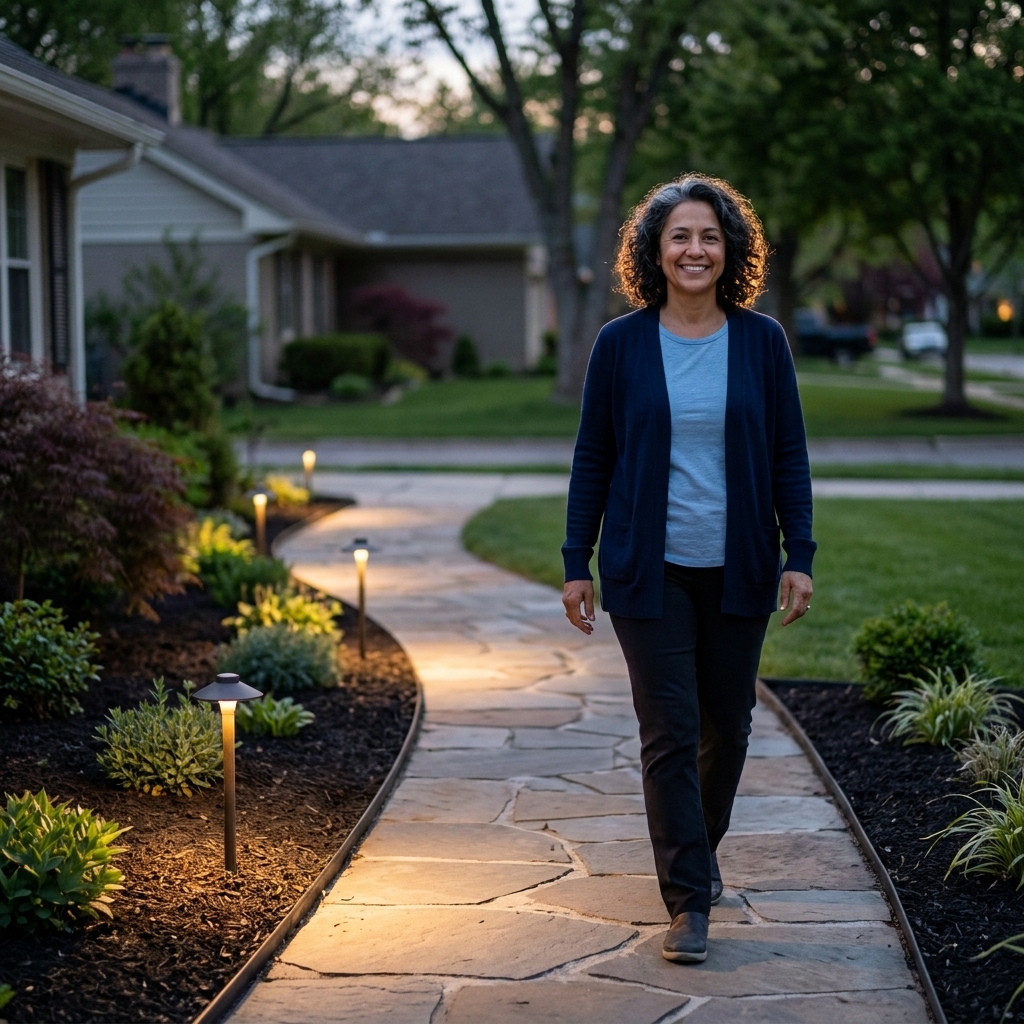
Walkways that invite people in
A front path should feel like an obvious yes. If it is too narrow or too steep, people hesitate or shortcut across your lawn.
- Width: 36 inches is a common minimum. If you want two people to walk comfortably side-by-side, aim more like 42 to 48 inches (and wider is even better if you have the space).
- Shape: Straight paths feel formal; gentle curves feel relaxed and spacious.
- Edging: Crisp edges instantly elevate the look, even with simple mulch beds.
Lighting that feels warm
Low-voltage path lights, step lights, and a warm porch fixture make the yard feel lived-in. Aim lights at the ground or a focal plant, not into your neighbor’s windows.
- Color temp: Look for warm light in the 2700 to 3000K range.
- Glare control: Choose shielded fixtures and downlighting so the light lands where you want it.
Define beds with clean lines
Whether you use steel edging, brick, stone, or a simple cut edge, a defined border is one of the cheapest curb appeal upgrades you can do in an afternoon.
Keep it looking sharp: refresh a cut edge a few times a season, or build in a small mowing strip (like pavers) so the lawn stays out of the bed.
Foundation planting basics
Foundation planting is the landscaping around your home’s base. Done well, it softens the building and frames windows and doors. Done poorly, it turns into a shrub traffic jam. I have trimmed my way out of that mistake more than once.
Layer tall to low
- Back layer (near the house): taller shrubs or small ornamental trees placed to frame corners and break up blank walls.
- Middle layer: medium shrubs and perennials for body and seasonal color.
- Front edge: low, mounding plants or groundcovers to create a tidy “hemline.”
Give plants future space
This is the part almost all of us get wrong at least once. When you buy a shrub, look at its mature width and plant so it can reach that size without being sheared into a green meatball.
- Spacing shortcut: A useful rule is “about half the mature width from the wall,” plus a buffer. As a baseline, try to keep 12 to 24 inches of clearance from siding or masonry for airflow and maintenance access (more with deep overhangs, cramped corners, or humid climates).
- Airflow matters: Good spacing can help reduce mildew pressure, some pest issues, and winter dieback.
Use evergreens as anchors
Evergreens keep the yard looking put-together in winter and make summer flowers pop. Mix textures: needles, glossy leaves, fine foliage, broad foliage.
Low-maintenance evergreen ideas (region-dependent): boxwood alternatives like inkberry holly, dwarf conifers, compact hollies, and hardy junipers. Yew can be a great option in the right climate, but it is toxic to people and pets if eaten. Junipers can have regional rust issues. When in doubt, ask a local nursery what stays healthy in your area.
Design a welcoming entry
If you do nothing else, make the area around the front door feel intentional. That is where the “welcome home” feeling lives.
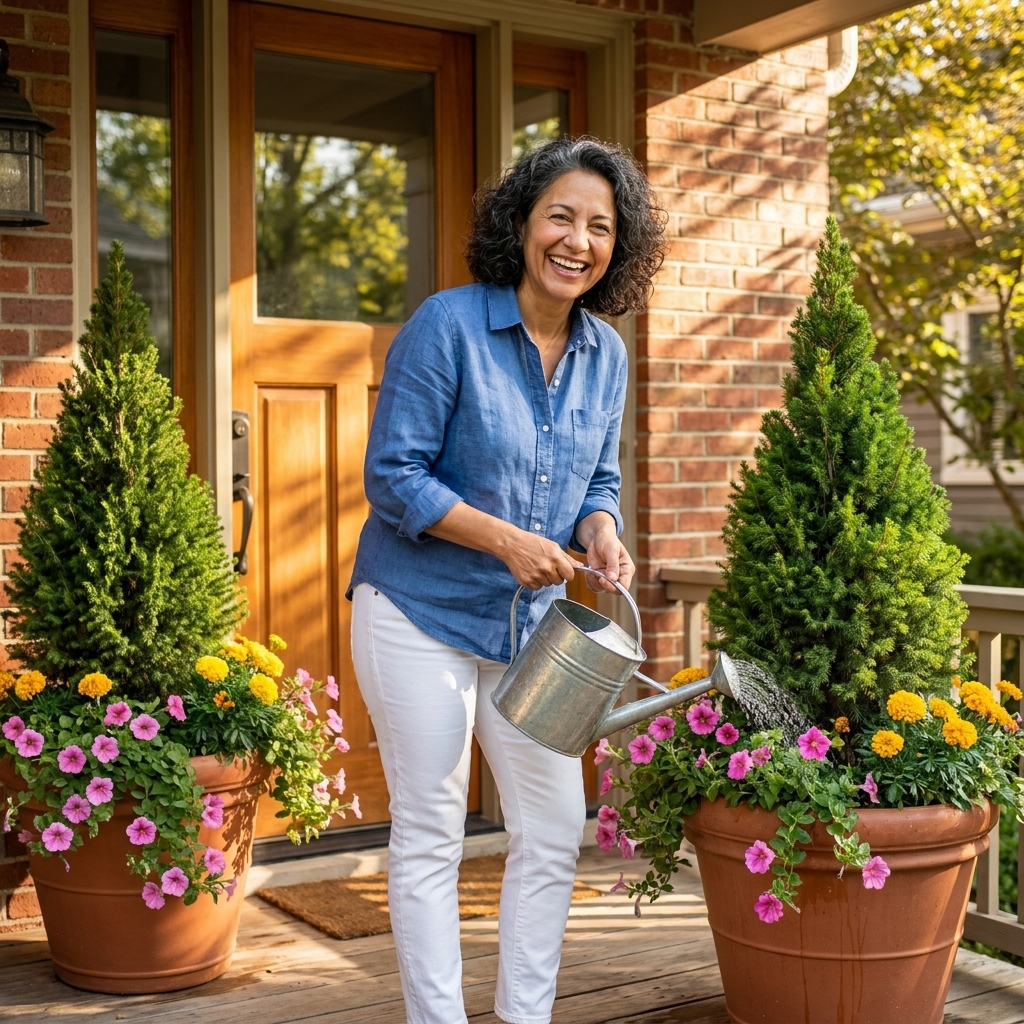
Frame the door
- Two containers: Classic for symmetry, especially if your house is formal.
- One statement pot: Great for small spaces or a modern look.
- Small tree nearby: A serviceberry, Japanese maple, or dwarf evergreen can create instant presence without blocking the house.
Choose one focal point
Pick one feature to be the star: a specimen shrub, a small tree, a beautiful mailbox area, or a porch sitting space. Everything else supports it. When everything is “special,” nothing is.
Plants for year-round appeal
The secret to a front yard that looks good in every season is not constant blooming. It is layers of interest: evergreen structure, long-blooming perennials, ornamental grasses, and a few seasonal headliners.
Year-round checklist
- Structure: evergreen shrubs or conifers for winter form
- Spring: bulbs and early flowering shrubs
- Summer: perennials with a long bloom window
- Fall: grasses, seed heads, asters, and foliage color
- Winter: bark texture, berries, and evergreen contrast
Low-maintenance perennials
These are reliable performers in many gardens, but always match plants to your sun and soil. The right plant in the right place is basically organic gardening magic.
- Sunny beds: coneflower, salvia, catmint, black-eyed Susan, yarrow, lavender (in well-drained soil)
- Part shade: heuchera, astilbe, brunnera, woodland phlox, ferns
- Pollinator-friendly staples: milkweed (where native), bee balm, anise hyssop, goldenrod (choose named, clumping varieties and avoid aggressive species common in your area)
Small trees that add polish
A small ornamental tree can do what ten shrubs cannot: create a focal point and a sense of maturity.
- Great front-yard candidates: serviceberry, dogwood (regional), redbud, crape myrtle (warm climates), dwarf magnolia, compact Japanese maple (often happiest with afternoon shade in hot areas)
Placement tip: Keep trees far enough from the house that mature canopies will not scrape the roof or crowd gutters.
Soil, mulch, and watering
A front yard can look gorgeous for one season on sheer determination. A front yard that looks good for years comes from soil health and sane watering.
Improve soil simply
- Top-dress beds: Add 1 to 2 inches of compost each year around plants, not piled against stems.
- Avoid over-tilling: It breaks soil structure and wakes up weed seeds.
- Test once: A basic soil test helps you avoid wasting money on the wrong amendments.
Mulch like you mean it
Mulch is curb appeal in a bag, but only if you apply it correctly.
- Depth: 2 to 3 inches is plenty for most beds.
- No mulch volcanoes: Keep mulch a few inches away from trunks and shrub crowns.
- Keep it off the house: Do not pile mulch against siding or wood trim. Leave a little breathing room.
- Refresh lightly: Top off as it breaks down instead of adding a new thick layer every year.
Water deeply, less often
New plants need consistent moisture while roots establish. After that, deep watering encourages deeper roots and better drought tolerance.
- Best practice: Water early in the day, at the soil level, and focus on the root zone.
- Upgrade option: Drip irrigation under mulch keeps foliage dry and makes watering almost effortless.
Easy front yard zones
If planning feels overwhelming, break the space into zones. Each zone gets one job.
Zone 1: Foundation beds
Softens the house and provides structure.
Zone 2: Path and entry
Guides guests and creates a welcoming moment at the door.
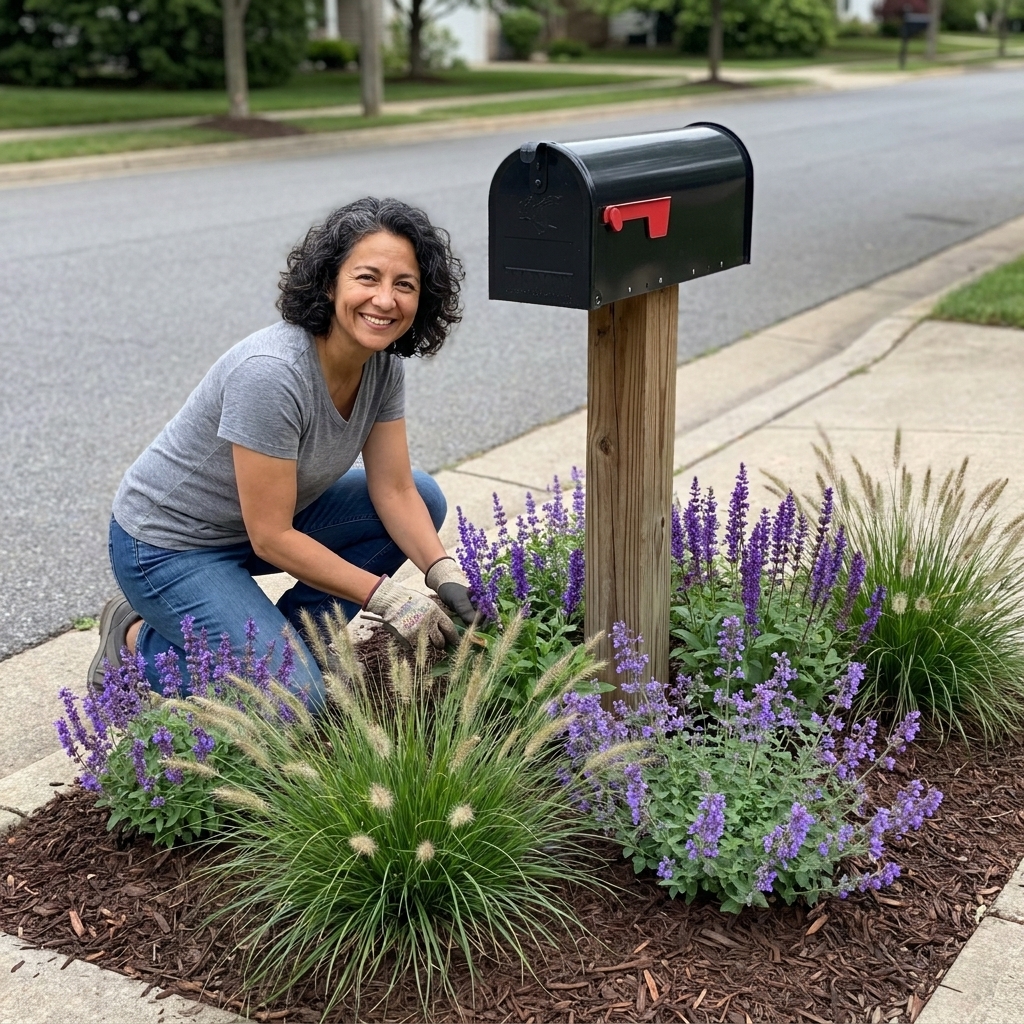
Zone 3: Curbside strip
This area takes heat, salt, and drought in many climates. Choose tough plants and keep heights low for visibility.
Also: check local rules, HOA guidelines, and visibility triangles near driveways and intersections before planting anything tall.
Zone 4: Focal point
A small tree, a mailbox garden, or a statement planting bed that draws the eye.
Common mistakes and fixes
I have made most of these myself, including the front-yard version of “planting enthusiasm.” You buy a few things, you tuck them in close for instant fullness, and by midsummer it looks like your shrubs are hosting a reunion.
- Mistake: Too many plant varieties in small beds. Fix: Reduce to 5 to 7 core plants and repeat them.
- Mistake: Shrubs planted too close to the house. Fix: Transplant while young or replace with smaller varieties, and leave a real maintenance gap.
- Mistake: No winter interest. Fix: Add 2 to 3 evergreen anchors and an ornamental grass or berried shrub.
- Mistake: Beds that look messy by midsummer. Fix: Add edging, refresh mulch, and use mounding plants at the front.
- Mistake: A lonely front door. Fix: Add lighting, a doormat moment, and at least one container.
Maintenance that matters
You do not need a high-maintenance yard. You just need a few good habits timed well.
Pruning timing basics
- Spring bloomers: shrubs that flower early (like lilac, forsythia, many hydrangeas depending on type) are often best pruned right after they bloom, so you do not cut off next year’s buds.
- Summer bloomers: many summer-flowering shrubs handle pruning in late winter or early spring.
- Always: remove dead, damaged, or crossing branches whenever you see them.
If you are unsure: look up your exact shrub variety and “blooms on old wood vs new wood.” That one detail can save you a whole season of flowers.
Two sample layouts
Small yard (low effort)
- 2 evergreen foundation shrubs at corners
- 3 to 5 medium shrubs staggered along the foundation (spaced for mature size and a maintenance gap)
- Drifts of 2 perennial varieties repeated (for example salvia + coneflower in sun, or heuchera + fern in shade)
- One small ornamental tree off to one side of the lawn
- Two matching containers at the entry
Medium yard (garden feel)
- Curved bed line that widens near the entry for a focal planting
- Foundation planting with layered evergreens plus flowering shrubs
- Perennial border along the path with repeated groups
- Curbside strip planted with tough, drought-tolerant plants and a clean edge
FAQ
What is the best low-maintenance front yard landscaping?
Start with evergreen structure, repeat a few reliable perennials, keep bed edges crisp, and mulch properly. Fewer plant varieties and more repetition looks cleaner and takes less work.
How do I landscape a front yard on a budget?
Focus on edges, mulch, and a strong plan before buying plants. Add plants in phases, prioritize small trees and evergreens for structure, and use divisions from friends or community plant swaps for perennials.
How far from the house should I plant shrubs?
Aim for roughly half the shrub’s mature width from the wall, then add a buffer for airflow and access. As a simple baseline, keep at least 12 to 24 inches between shrubs and siding or masonry (more in tight, shady, or humid spots).
How do I make my front yard look good all year?
Use evergreens and structural plants as your base, then layer in seasonal interest: spring bulbs, summer bloomers, fall grasses and seed heads, and winter berries or bark texture.
A gentle weekend plan
If you want results without burning out, here is a realistic approach.
- Weekend 1: Sketch your beds, define edges, weed, and refresh mulch.
- Weekend 2: Plant or adjust foundation anchors (evergreens and one focal plant).
- Weekend 3: Add perennials in repeated groups and set up an easy watering plan.
- Weekend 4: Entry upgrade: containers, lighting, and a tidy path.
Remember, the most charming yards are not the ones that never make mistakes. They are the ones that look like someone lives there and loves it. That can absolutely be you.