A clear, hands-on comparison of LED and fluorescent grow lights, plus practical specs, starter settings, and guidelines for choosing the right light for seed...
Gardening insights
Sunburn on Houseplants
Learn how to spot sunburned houseplant leaves, tell light scorch from watering or pests, and move plants safely with simple acclimation steps that prevent repeat damage.

Elena Rosales
Elena Rosales is a certified Master Gardener and lifelong plant enthusiast who believes anyone can cultivate a green thumb. After transforming her tiny urban balcony into a thriving plant oasis, she moved to a half-acre homestead to grow her own food and flowers. Today, she shares practical, hands-on gardening advice to help the Hortello community bring more green into their lives.
Published September 21, 2026
Updated September 21, 2026
It happens fast: you “just” scoot a plant closer to the window, the sun shifts for the season, or you set your pothos outside for some fresh air. Two days later, there are pale patches like spilled milk, crisp brown freckles, or an entire leaf that looks like it got toasted.
Good news: sunburn is common, very preventable, and totally manageable once you know what you are seeing. I have absolutely done the classic “one afternoon of good intentions” and turned a tender houseplant into a crunchy souvenir.
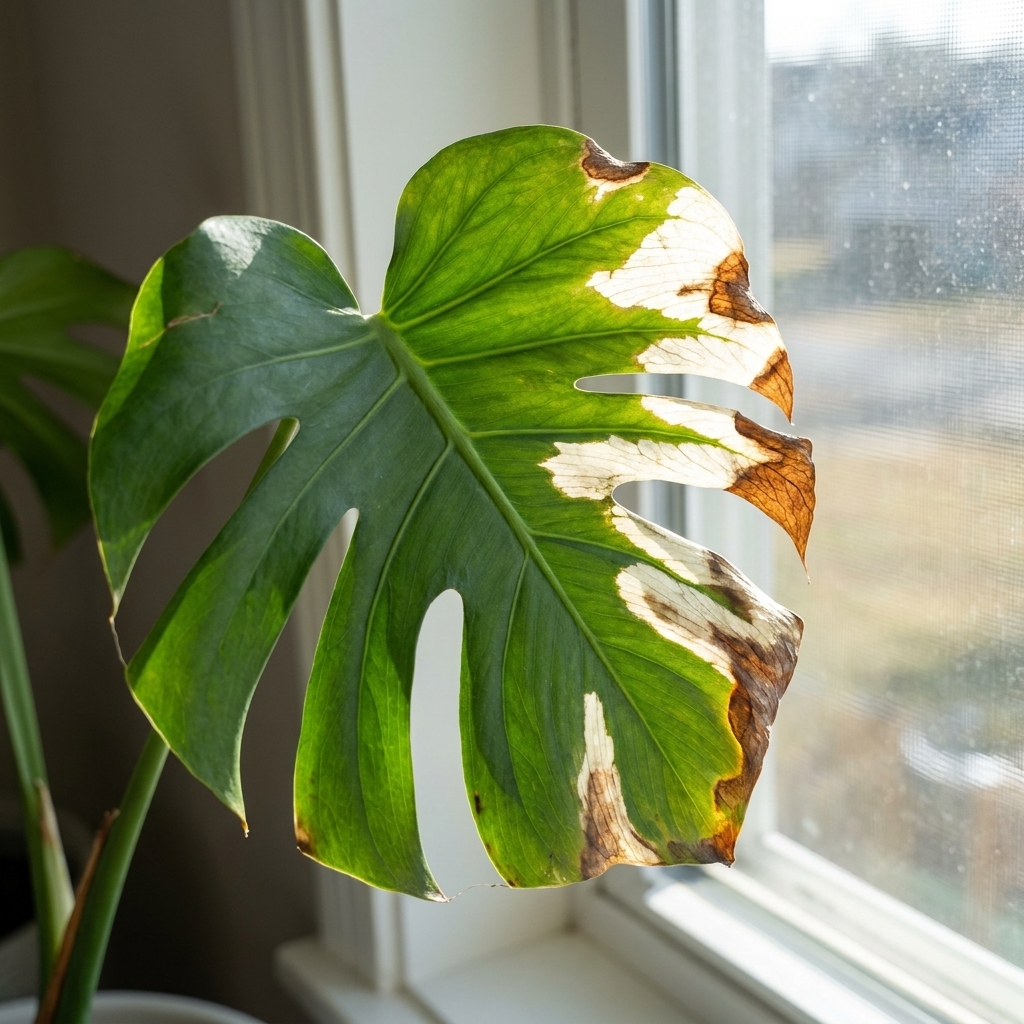
What sunburn looks like
Houseplant “sunburn” is physical tissue damage from light that is too intense for the plant’s current conditioning. You will also hear people call it leaf scorch, although “scorch” can sometimes mean other stress damage (like drought or salts). In this article, I mean scorch from too much direct light.
Indoors, the most common culprit is direct sun through glass, especially south or west windows, and especially after a plant has been living in lower light.
Common signs
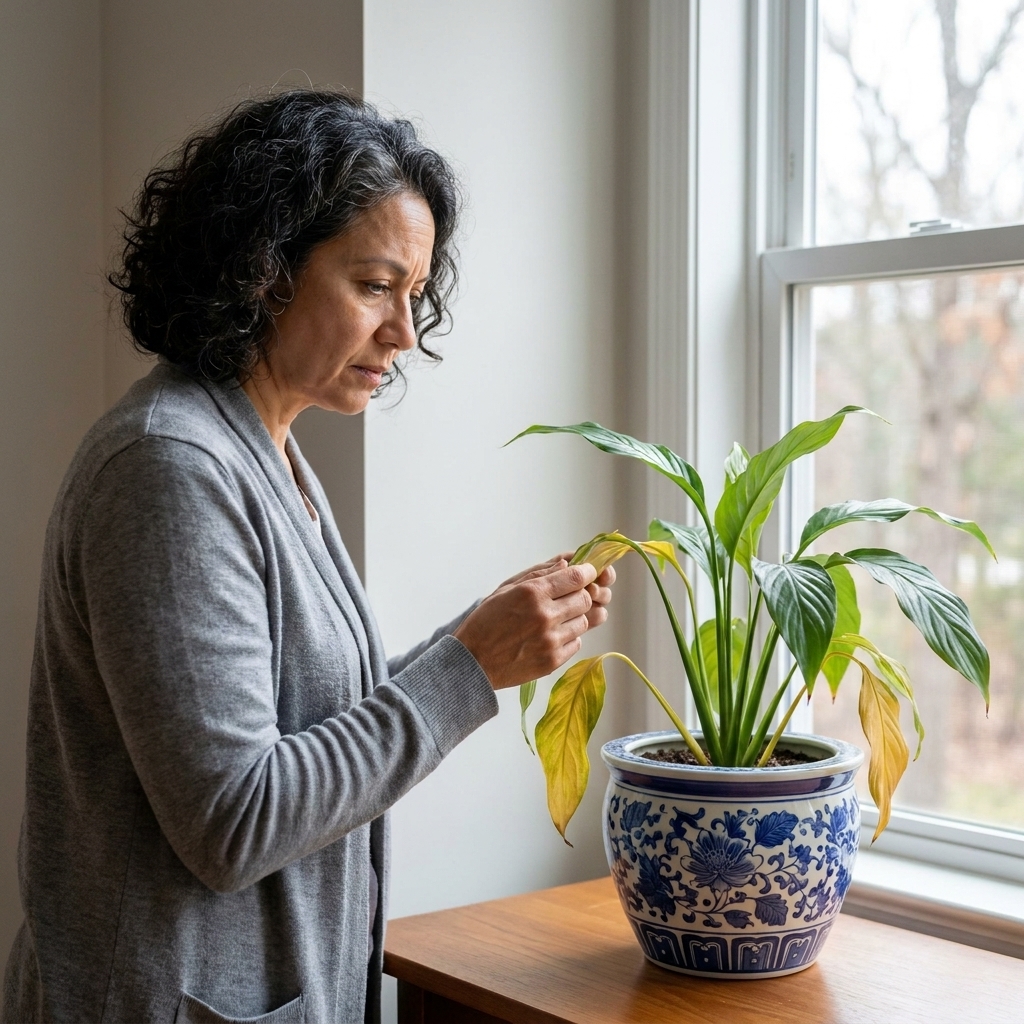
- Bleached or faded patches that look pale yellow, silvery, or almost white.
- Dry, crispy brown spots that often show up inside those lighter patches after a day or two.
- Sharp “sun-line” patterns where only the exposed portion of a leaf is damaged (for example, the part that faced the window).
- Leaves that feel papery instead of supple.
- Sudden damage on the newest, most exposed leaves while shaded leaves look fine.
One key detail: sunburn spots are usually dry. If the damaged area is mushy, wet, or spreading quickly, think infection, edema, cold damage, or a watering issue instead.
Also, a small heads up: you might still see a little more browning show up for a day or two after you move the plant, because that tissue was already injured. The goal is to stop new damage.
Sunburn vs other issues
Leaf damage can look similar at a glance, so here are the tells I use when I am playing plant detective.
Sunburn (light scorch)
- Shows up after a lighting change or a bright, sunny spell.
- Irregular bleached patches that later turn tan or brown.
- Damage is usually on the side facing the light source.
- Spots do not “rub off.”
Underwatering or low humidity
- Brown leaf tips and edges are more uniform and symmetrical.
- Entire plant may look dull or droopy, not just the sun-facing side.
- Soil feels dry and pulls away from the pot.
Overwatering (root stress)
- Yellowing across the leaf, often with softness.
- Lower, older leaves decline first.
- Soil stays wet and may smell sour.
Fungal or bacterial leaf spots
- Often have dark borders, rings, or a water-soaked look.
- Can spread from leaf to leaf even without a light change.
- Sometimes shows up after frequent misting and poor airflow.
Spider mites or thrips
- Fine speckling, stippling, or a “dusty” look.
- Webbing (mites) or tiny moving insects and black specks (thrips).
- Damage is not limited to the sun-facing side.
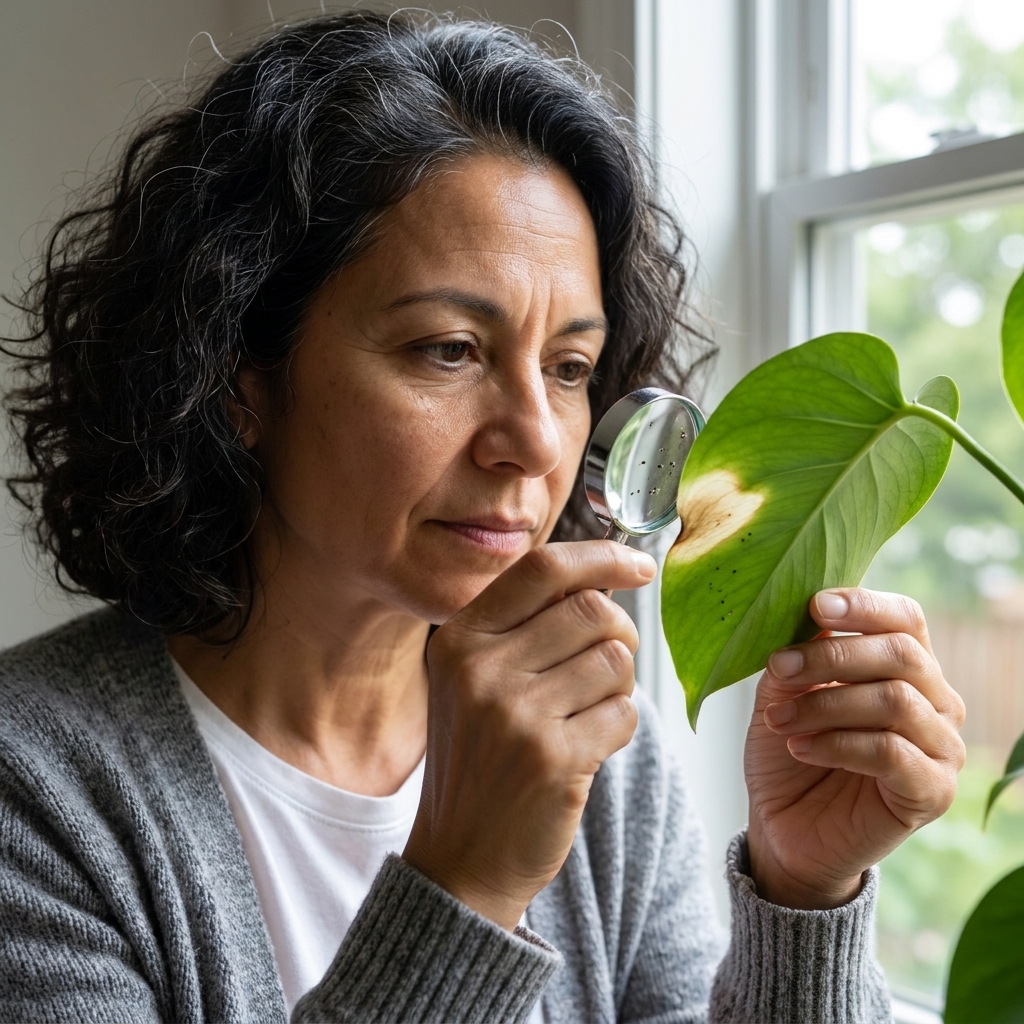
If you are unsure, take a flashlight and look closely under leaves and along stems. Pests leave clues. Sunburn mostly leaves a scorched story in the parts that got blasted.
Why it happens indoors
Plants adjust their leaves to the light they live in. A leaf grown in medium light is not automatically equipped for full, direct sun. When we move a plant suddenly, the leaf cannot “upgrade” quickly enough, so the cells get damaged.
Common triggers
- Seasonal sun shifts: winter sun angles can hit deeper into a room; spring and summer bring stronger intensity.
- Cleaning windows: it can increase light a bit, which sometimes is enough to push a sensitive plant over the edge.
- Moving closer to a south or west window: those can be intense for many tropical houseplants.
- Outdoor “field trip”: even bright shade outdoors can be much stronger than indoor light.
- Heat plus sun: a leaf pressed against warm glass can scorch faster.
What to do right away
Think of sunburn care as two steps: stop the damage, then help the plant recover.
1) Move it out of direct sun
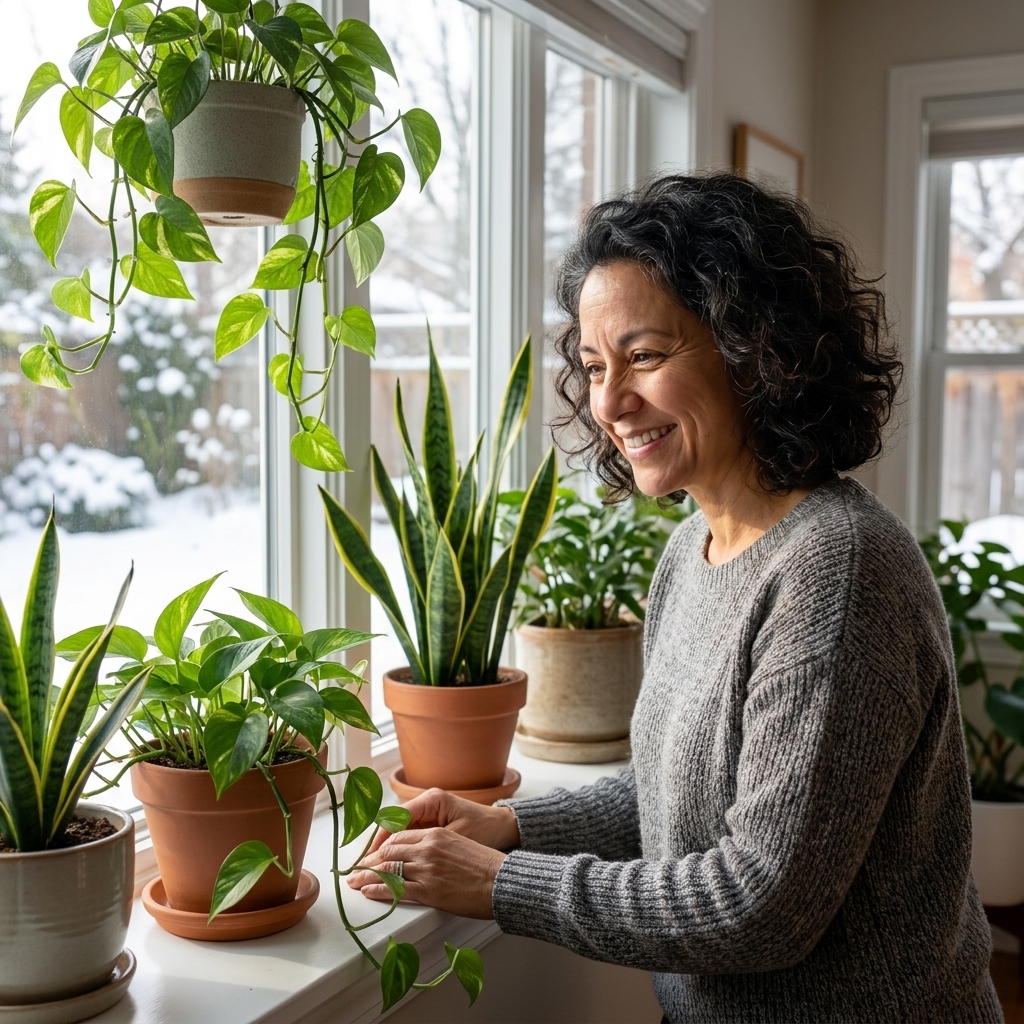
Relocate to bright, indirect light right away. If you love the current spot, add a sheer curtain, move the plant back from the glass, or place it just to the side of the window where sunbeams do not land on leaves.
2) Check moisture, but do not panic-water
Sunburn can happen even when the soil is perfect. Stick a finger 1 to 2 inches into the mix. Water only if it is actually dry at that depth for that plant. Overwatering a stressed plant is an easy way to stack problems.
3) Skip fertilizer for now
Fertilizing does not heal burn. It can push tender new growth before the plant is ready, or stress roots if they are already struggling. Wait until you see healthy new growth, then resume a gentle routine.
4) Prune strategically
- Leaves that are mostly green: keep them. Even with cosmetic damage, they still photosynthesize and fuel recovery.
- Leaves that are more than 50 percent crispy: I usually remove them to reduce stress and improve appearance.
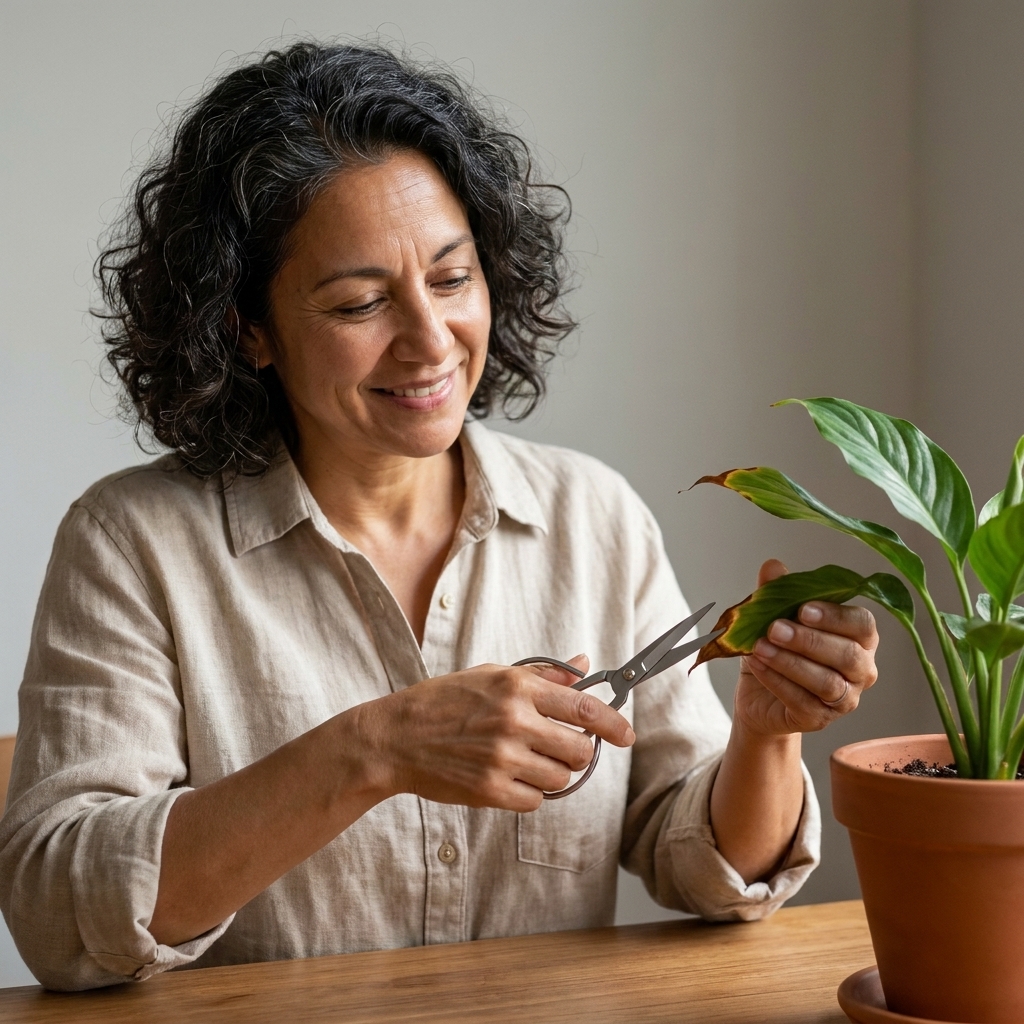
- Brown, dead patches: they will not turn green again. You can trim just the dead tissue with clean scissors if it bothers you.
If a scorched area turns soft, weepy, or starts to look moldy, go ahead and remove that leaf. Damaged tissue can be an easy entry point for pathogens.
Always use clean snips. If you are trimming edges, follow the leaf’s natural shape so it looks tidy.
Relocate plants safely
If you want your plant to live in brighter light long-term, the goal is acclimation, not shock. Leaves need time to adjust their internal “sun protection” and thickness.
A simple 7 to 14 day plan
- Days 1 to 3: Place the plant in bright, indirect light. No direct sun.
- Days 4 to 7: Introduce gentle direct sun for 30 to 60 minutes, preferably morning sun (east window) or filtered light through a sheer curtain.
- Week 2: Increase direct sun in small increments every couple of days, watching for fading or crisping.
If you see any new pale patches, pause and step back to the previous light level for a week.
Thin-leaved and variegated plants often need longer than 7 to 14 days. If your plant has a history of crisping when you blink at it wrong, stretch the plan to 3 to 4 weeks and go slower.
Distance matters
A move from 6 feet away to 1 foot from a sunny window is huge. Start farther back, then inch closer. As a general starting point, many houseplants do well about 2 to 4 feet back from a bright south or west window, but your exact “sweet spot” depends on your latitude, season, and the window itself. Watch the leaves and adjust.
Use training wheels
- Sheer curtain: my favorite fix for west windows.
- Blinds angled up: softens the beam.
- Frosted window film: great for plants that hate direct sun but love bright light.
- Rotate weekly: prevents one-sided scorch and lopsided growth.
Moving plants outdoors
Outdoor light is intense, even on a shaded porch. If you summer your houseplants outside:
- Start in full shade for 3 to 5 days (north side of the house, under a table, or deep porch shade).
- Move to bright shade for a week (dappled light under a tree is ideal).
- Only then consider morning sun, and keep an eye on wind and drying soil.
Plants that burn easily
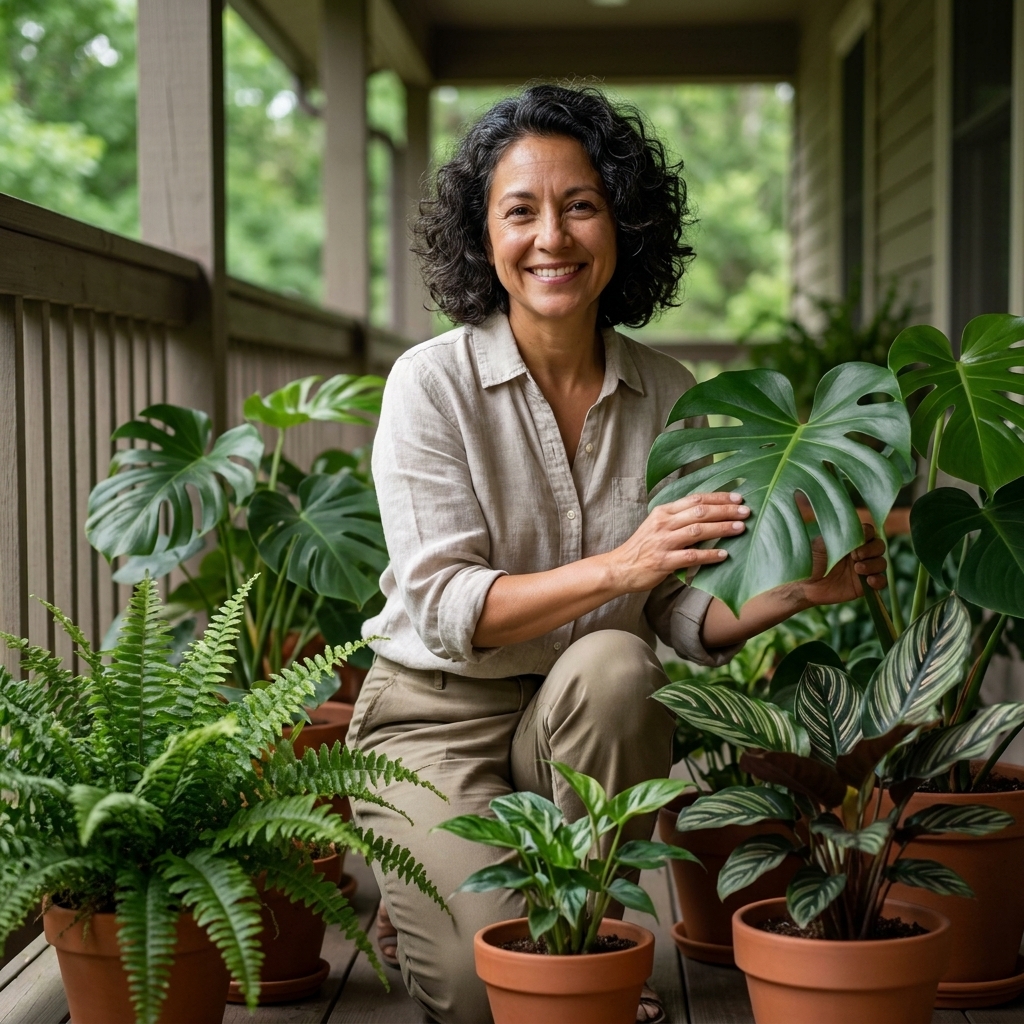
Not every houseplant has the same “solar tolerance.” Here is a general guide, with the reminder that acclimation still matters.
More likely to sunburn
- Calatheas and marantas (prayer plants)
- Peace lily
- Many philodendrons and pothos (especially varieties grown in low light)
- Ferns
- Chinese evergreen (Aglaonema)
- Orchids and African violets (they like bright light but scorch in direct sun)
Often like brighter light
- Succulents and cacti (still can burn if moved suddenly)
- Jade plant
- Aloe
- Many citrus and fruiting indoor trees
- Croton and hibiscus (often want very bright light)
Variegated plants are a special case. They often want brighter light to keep their patterning, but the lighter sections can scorch faster. Slow and steady wins here.
Will burned leaves recover?
Sunburned tissue does not turn green again. Think of it like a scar. The win is stopping new damage and encouraging healthy new leaves.
If your plant is otherwise healthy, you will usually see fresh growth in a few weeks during active growing season. The timeline depends on the plant and the time of year. In winter, many houseplants slow way down, so recovery can look like “nothing happens” for a while. That is normal.
When to worry
- Damage is spreading fast across many leaves, even after you changed the light.
- Spots look wet or greasy, or you see fuzzy growth or a bad smell.
- Stems are soft, or the plant is collapsing.
- You see pests (or their telltale speckling, webbing, or black dots).
- No improvement in 3 to 6 weeks during the growing season (or by the next growth cycle if it is winter).
Preventing sunburn
- Acclimate to brighter spots over 1 to 2 weeks (or longer for sensitive plants).
- Watch seasonal light changes, especially in spring when sun intensity ramps up.
- Avoid leaves touching window glass, which can heat up and scorch tissue.
- Rotate plants so one side is not taking all the sun.
- Match plant to window direction: east is gentle, south is bright, west is intense afternoon sun, north is lower light.
FAQ
Should I cut off all scorched leaves?
No. If a leaf is mostly green, keep it until the plant has replaced it with new growth. Remove leaves that are mostly crispy, fully brown, or starting to decay.
Do grow lights cause sunburn?
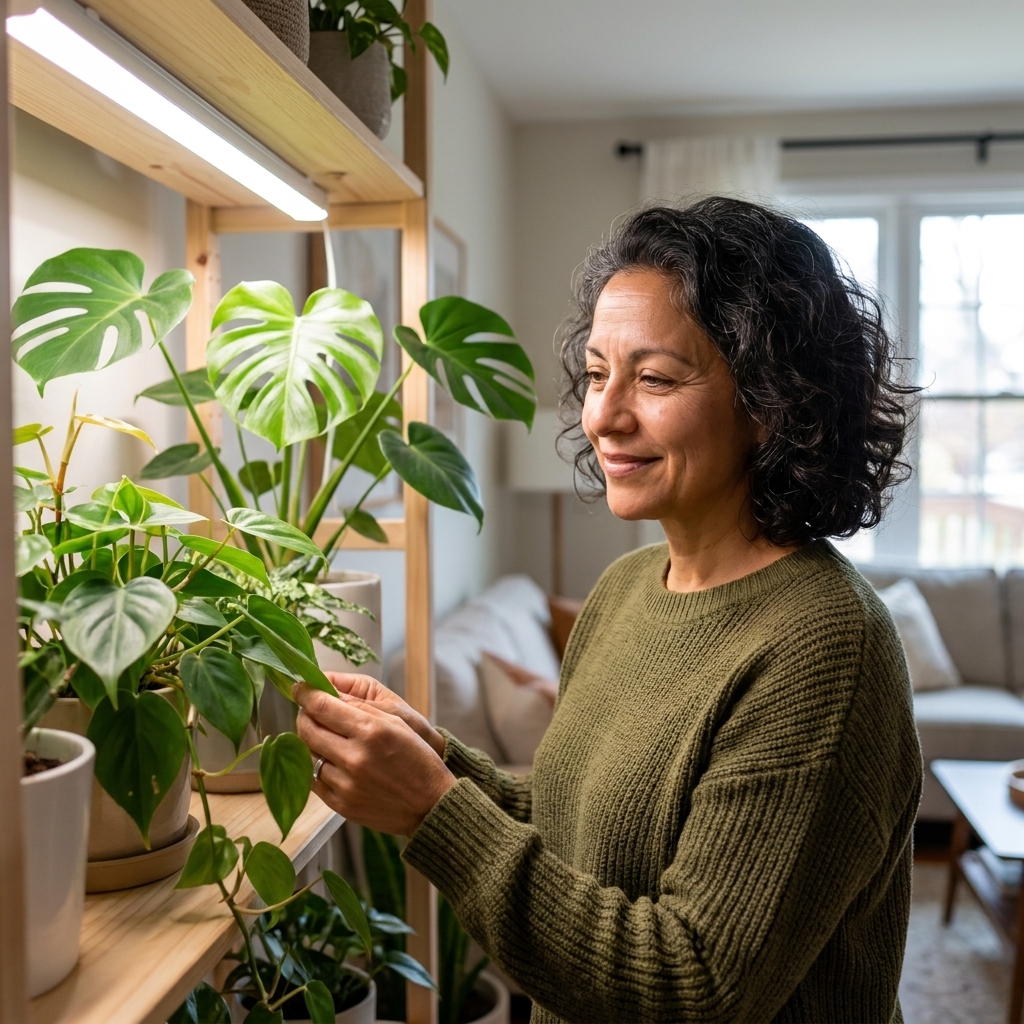
They can, especially strong LEDs placed too close. If you see bleaching directly under the light, raise the fixture or reduce intensity. Use the manufacturer’s distance guidance when you can, and treat any distance range as a starting point. Many medium-strength lights work best somewhere around 12 to 18 inches above the canopy, but high-output fixtures can need significantly more space.
Can I mist a sunburned plant to help it recover?
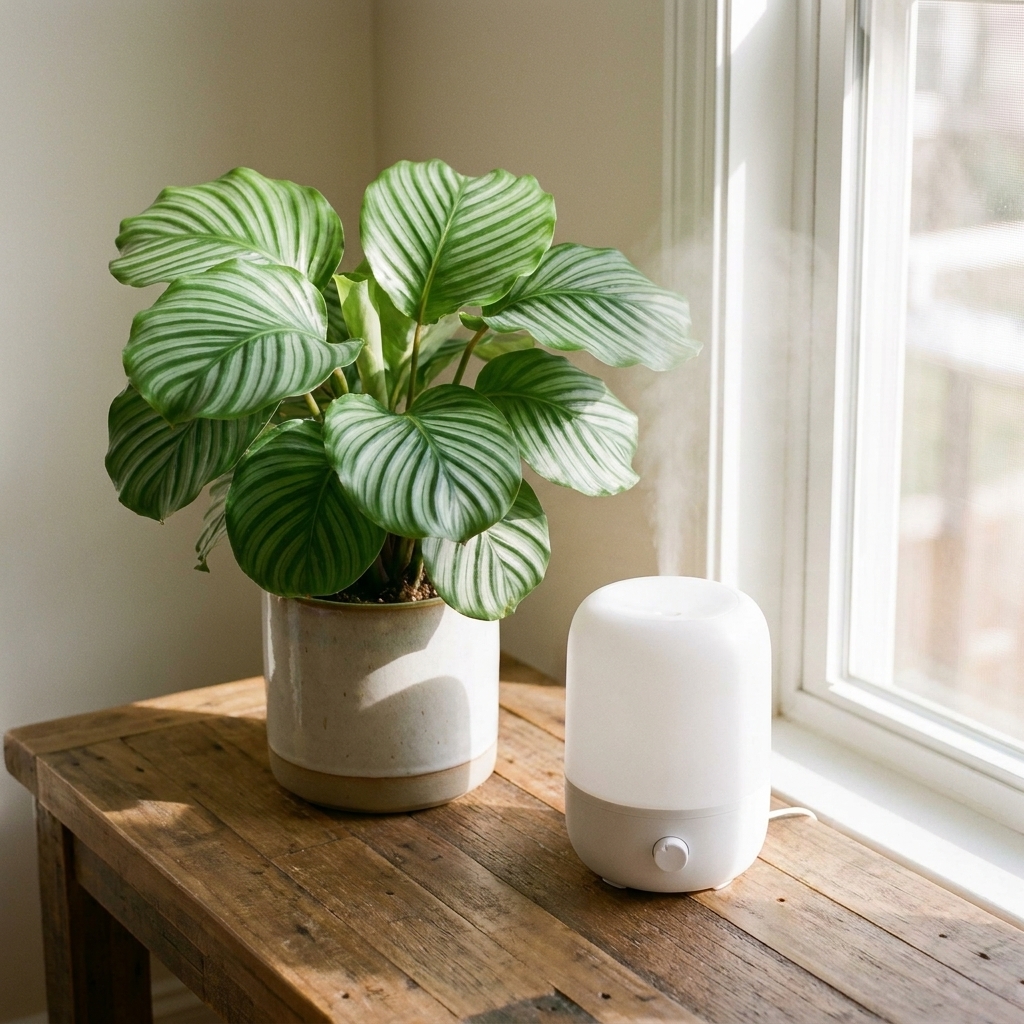
Misting does not heal burn. For humidity-loving plants, a humidifier or pebble tray (with the pot sitting above the waterline) is more consistent. If you do mist, do it in the morning and make sure there is airflow so leaves dry quickly.
Why did my plant burn even though it was “in bright light” before?
“Bright” is not the same as “direct.” Bright indirect light can be perfect, while even 30 minutes of direct afternoon sun can scorch a plant that is not conditioned for it, especially through a warm window.
A gentle pep talk
If you are staring at a crispy leaf and feeling guilty, you are in good company. Most of us learn light the hard way, one toasted leaf at a time. Make the move to safer light, ease your plant into any brighter spot, and watch for fresh growth. Your plant is not holding a grudge, and you are not a bad plant parent. You are just getting your hands in the learning soil.