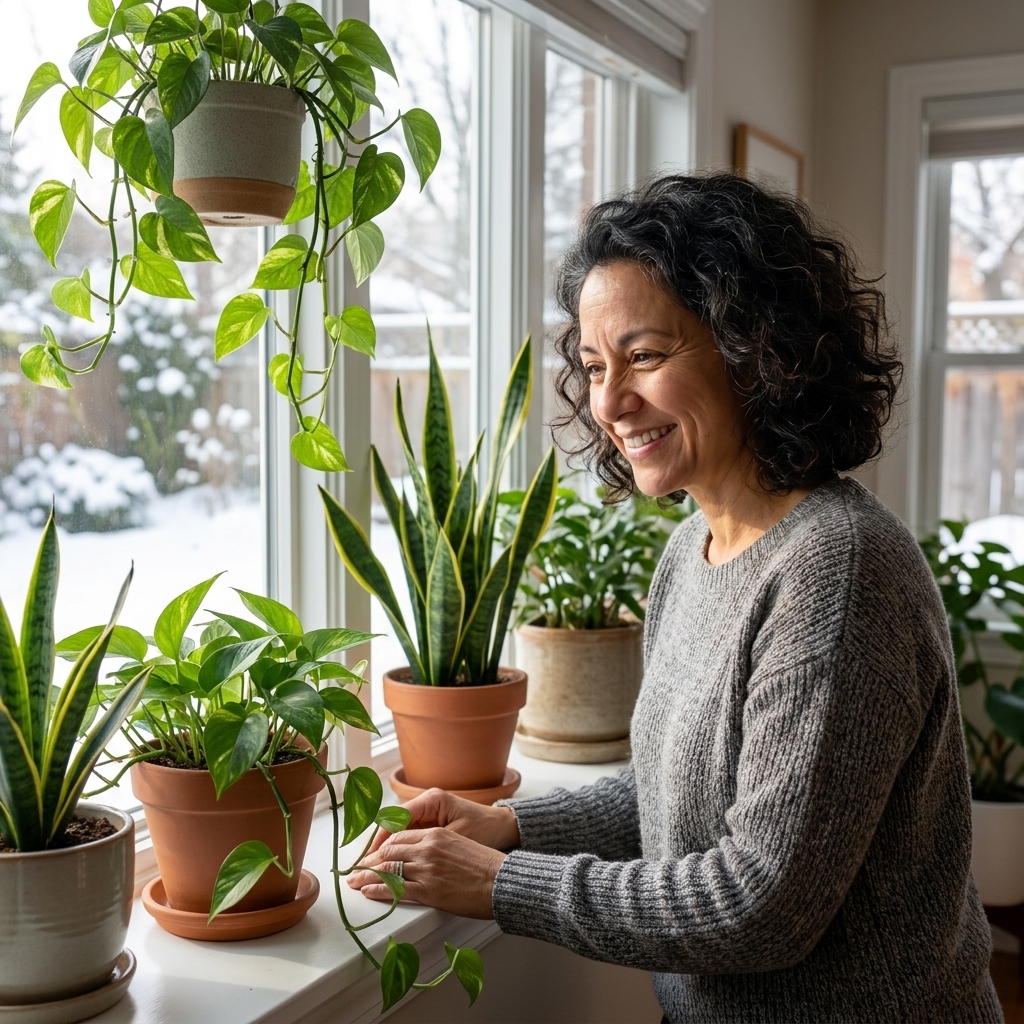
Winter can be tough on houseplants. Learn how to adjust watering, boost humidity, and maximize low winter light so your indoor plants stay happy until spring.
Gardening insights
Fiddle Leaf Fig Care 101
Stop leaf drop and get steady growth from your fiddle leaf fig with simple, reliable routines for light, watering, pests, humidity, and draft protection.

Elena Rosales
Elena Rosales is a certified Master Gardener and lifelong plant enthusiast who believes anyone can cultivate a green thumb. After transforming her tiny urban balcony into a thriving plant oasis, she moved to a half-acre homestead to grow her own food and flowers. Today, she shares practical, hands-on gardening advice to help the Hortello community bring more green into their lives.
Published September 21, 2026
Updated September 21, 2026
Fiddle leaf figs (Ficus lyrata) have a reputation for being dramatic, but most of the “fussiness” comes down to one thing: they hate sudden change. If your plant is dropping leaves, it is most often reacting to stress from light shifts, watering swings, drafts, or a root issue that built quietly for a while and then showed up all at once.
Let’s turn your fiddle leaf fig into the kind of plant that just… grows. Not overnight. Not perfectly. But steadily, leaf by leaf.
First, a quick leaf drop check
Not every fallen leaf means you failed. Here is how I sort “normal” from “needs attention” in about 30 seconds.
Normal-ish
- One or two older bottom leaves yellow and drop as the plant puts energy into newer growth.
- A single leaf falls after you moved the plant to a new spot.
- Minor leaning toward the light, especially in winter.
Needs attention
- Several leaves dropping in a week, especially from the middle or top.
- Brown spots with yellow halos that spread.
- Soft, bending trunk or a pot that stays wet for many days.
- Lots of tiny leaf scars along the stem with no new growth coming in.
Light: the number one lever
If I could only give one piece of fiddle leaf fig advice, it would be this: bright, consistent light prevents more problems than any fertilizer ever will.
What “bright” means
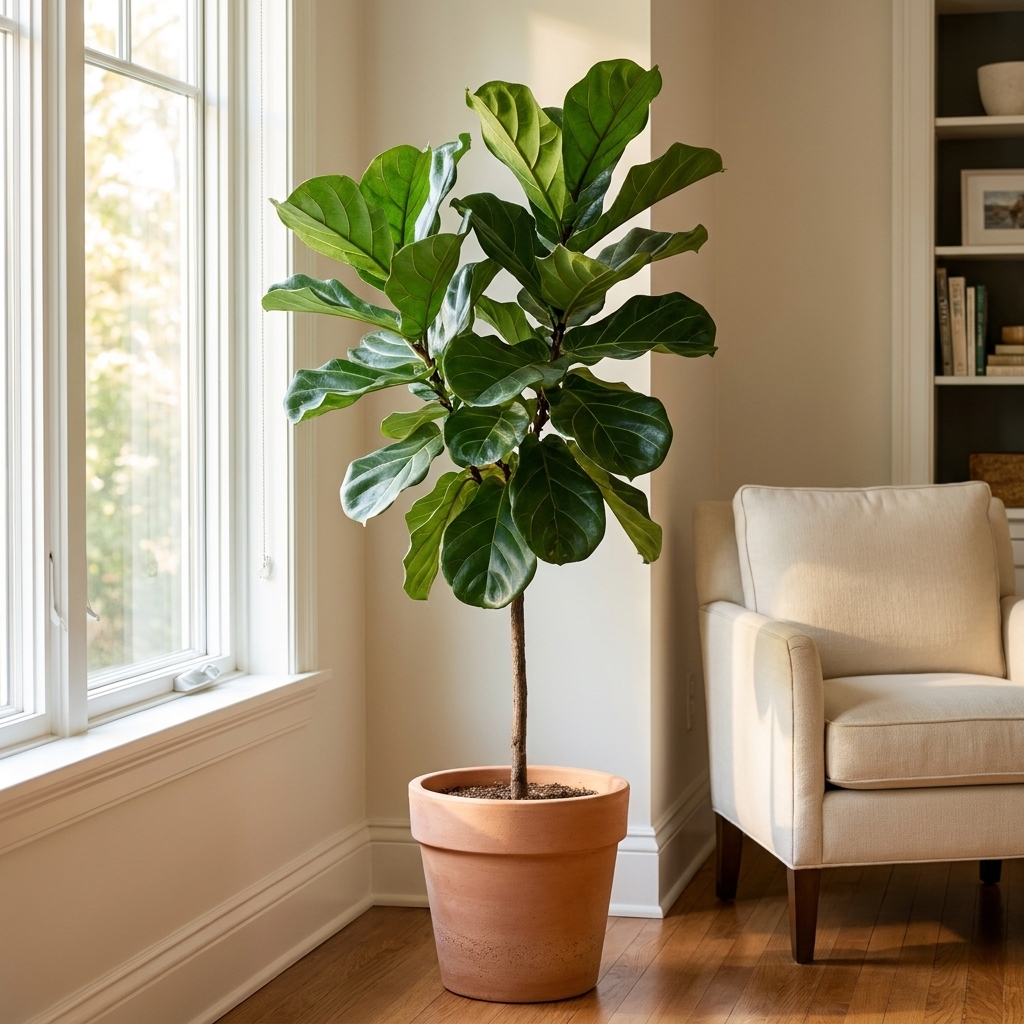
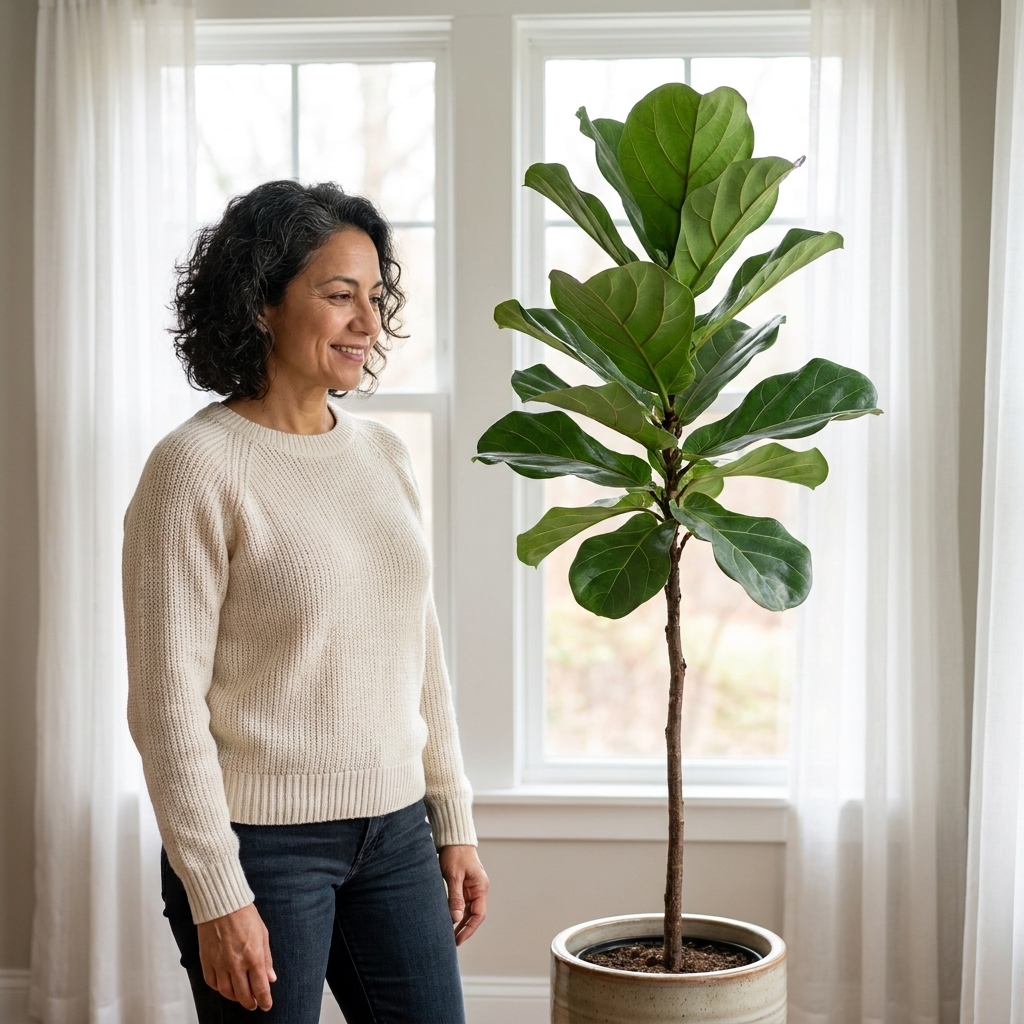
A fiddle leaf fig does best within a few feet of your brightest window. Morning sun is usually gentle enough. Strong afternoon sun can be too much unless the plant is acclimated.
- Best: Bright indirect light for most of the day, with a little direct morning sun.
- Okay: Direct sun filtered through a sheer curtain.
- Trouble zone: Several feet back in a dim room, even if it “feels bright” to humans.
Signs it needs more light
- New leaves are small or spaced far apart on the stem (leggy growth).
- The plant drops lower leaves and does not replace them.
- Soil stays wet for a long time after watering.
My practical move: Place it near the window, then rotate the pot a quarter-turn every 1 to 2 weeks so it grows evenly instead of doing the classic fiddle leaf “lunge” toward the glass.
Watering without the drama
Most leaf drop comes from watering issues, but the fix is not “water less” or “water more.” The fix is water thoroughly, then wait for the right dryness.
The simplest watering test
Stick your finger or a wooden skewer into the pot.
- Small pots (6 to 8 inches): Water when the top 1 inch is dry.
- Medium to large pots (10 to 14 inches): Water when the top 2 to 3 inches are dry.
- Always wait if it feels cool or damp below the surface.
When you do water, water slowly until it runs out the drainage holes, then empty the saucer. Fiddle leaf figs hate sitting in leftover water.
Why “little sips” cause leaf drop
Small, frequent watering often wets only the top layer. Lower roots stay dry, upper roots stay stressed, and salts build up. The plant reacts by dropping leaves or developing brown edges.
Seasonal expectations
- Spring and summer: You may water weekly or even every 5 days in bright light.
- Fall and winter: Often every 10 to 21 days, depending on your home.
Rule of thumb: Your calendar is not the boss. Your soil is.
Soil and pots
If your fiddle leaf fig drops leaves and the pot stays damp forever, the real issue is often airflow in the root zone. These plants want moisture, but they also want oxygen around the roots.
What to look for
- No drainage hole: This is a fast path to root rot. Use a nursery pot inside a decorative cachepot if you love the look.
- Heavy, compacted soil: Water lingers, roots suffocate, leaves drop.
- Water runs down the sides and out fast: This can be a rootbound plant, but it can also be dry, hydrophobic peat that repels water. Try bottom watering once to rehydrate the mix, then consider repotting into a chunkier blend.
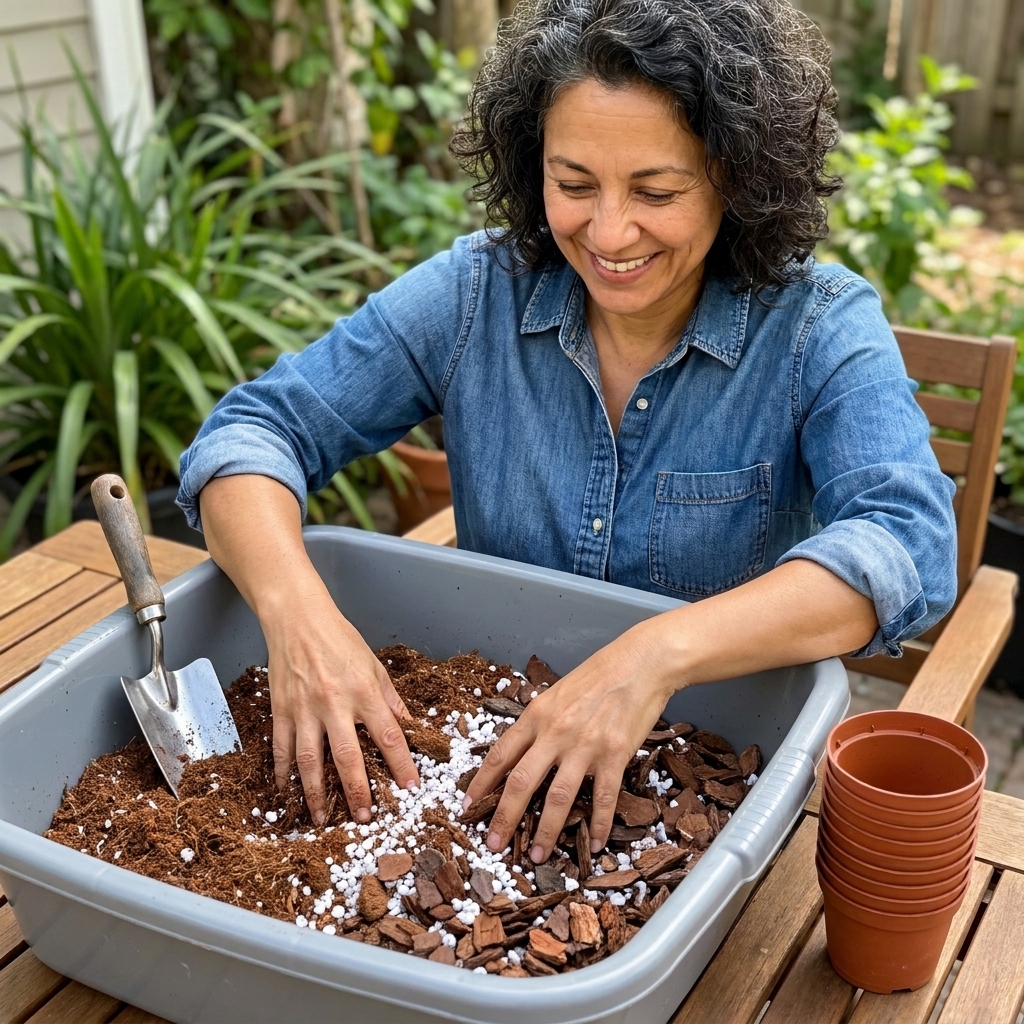
A reliable soil mix
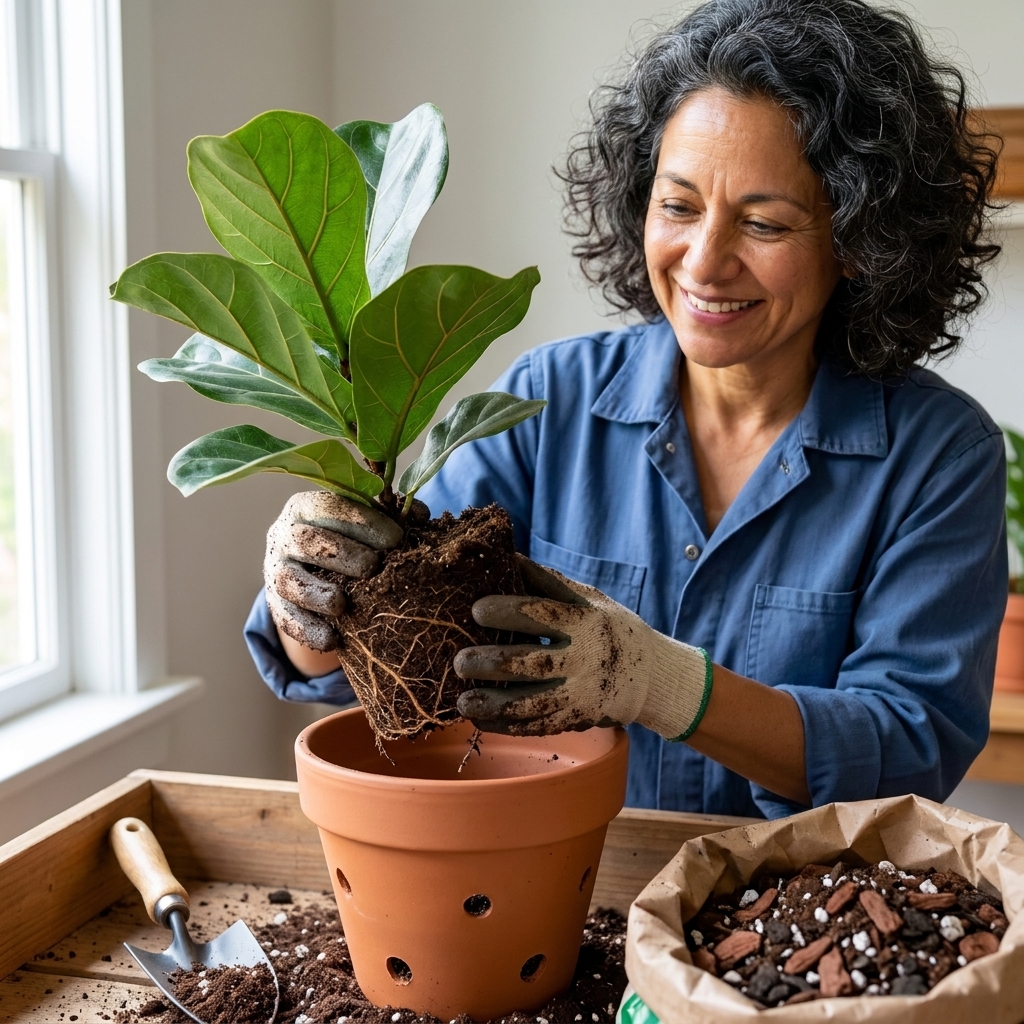
If you are repotting, aim for a chunky, fast-draining mix that still holds some moisture. A simple approach is:
- High-quality indoor potting mix
- Pine bark fines or orchid bark
- Perlite or pumice
Repotting basics
- Go up only a little: Choose a pot 1 to 2 inches wider than the current one to avoid overpotting and slow-drying soil.
- Best timing: Spring is easiest on the plant.
- When to do it sooner: If it smells sour, the pot stays wet for ages, or leaves are dropping fast.
Quick root check: Healthy roots are firm and white to tan. Rotten roots are brown or black, mushy, and may smell funky.
Simple safety note: If you are trimming rot, sterilize pruners, discard the old soil, and do not reuse a contaminated mix.
Drafts and temperature
Fiddle leaf figs can handle a normal home, but they do not like sudden blasts of cold or hot air. This is where the “it was fine and then it wasn’t” stories usually begin.
Common draft sources
- Exterior doors that open frequently
- Single-pane windows in winter
- Heating vents or baseboards
- Strong air conditioning flow
Make it more stable
- Move the plant 1 to 3 feet away from the draft source.
- Redirect vents so air does not blow directly on leaves.
- Keep it out of the “doorway wind tunnel.”
Temperature target: Aim for typical indoor temps and try to avoid prolonged dips below 60°F / 16°C.
If you see leaf drop shortly after a cold snap or after turning on the heat, drafts are a very likely culprit.
Humidity
Fiddle leaf figs appreciate moderate humidity, but you do not need a greenhouse. Aim for around 40 to 60 percent if you can, and do not panic if your home runs lower. Many do fine at typical household humidity when light and watering are dialed in.
Signs the air is too dry
- Crispy brown edges
- New leaves that unfurl with damage
- Spider mites showing up repeatedly
Easy upgrades
- Group plants together to create a small humid pocket.
- Use a humidifier nearby in winter.
- Skip constant misting as your main strategy. It is short-lived and can encourage spotting if leaves stay wet.
Pests and leaf spot
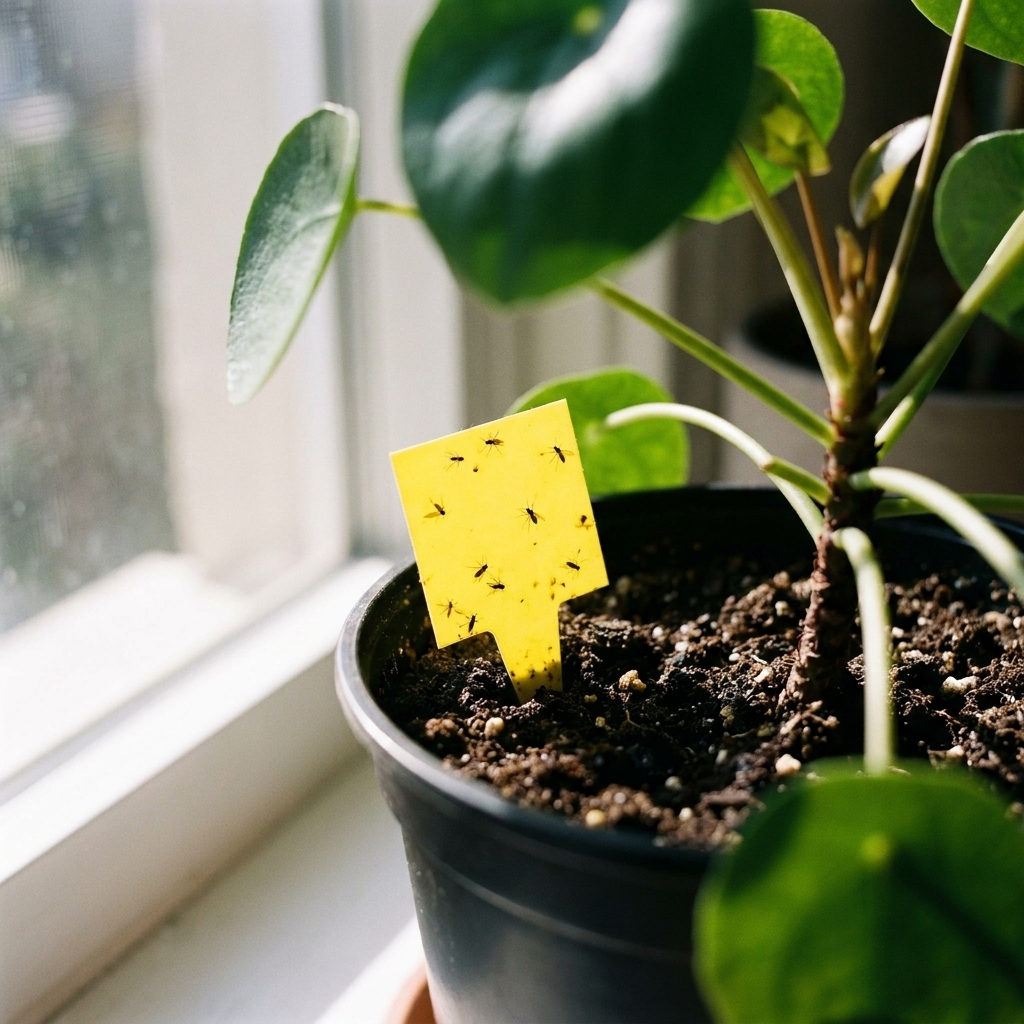
If your care routine is solid but the plant still looks “off,” take two minutes and do a pest check. This is one of those small habits that saves you weeks of confusion.
Quick pest check
- Spider mites: Fine webbing, dusty-looking stippling, leaf edges that look tired. They love dry air.
- Scale: Small tan or brown bumps along stems and leaf veins.
- Thrips: Silvery streaks, tiny black specks, or distorted new leaves.
What to do: Isolate the plant, rinse the leaves (especially undersides), then treat with insecticidal soap or horticultural oil, repeating weekly for a few rounds. Consistency matters more than aggression.
Brown spots with yellow halos
This can be inconsistent watering or root stress, but it can also be bacterial or fungal leaf spot, especially if spots look water-soaked, turn black, show faint rings, or spread quickly.
- Try: Remove the worst leaves, keep foliage dry, improve airflow, and avoid splashing water onto leaves.
- If it spreads fast: Isolate the plant and consider a copper-based fungicide labeled for houseplants, following the product directions.
Encourage growth
Once your plant stops reacting to stress, growth becomes much more predictable. Here are the levers that matter most.
1) Keep light consistent
Consistent bright light is what powers new leaves. If your plant only gets “good light” sometimes, growth will be stop-and-start.
2) Feed lightly in the growing season
In spring and summer, you can fertilize with a balanced houseplant fertilizer at a diluted rate every 4 to 6 weeks. More is not better. Overfertilizing can burn roots and cause leaf edge browning.
3) Wipe the leaves
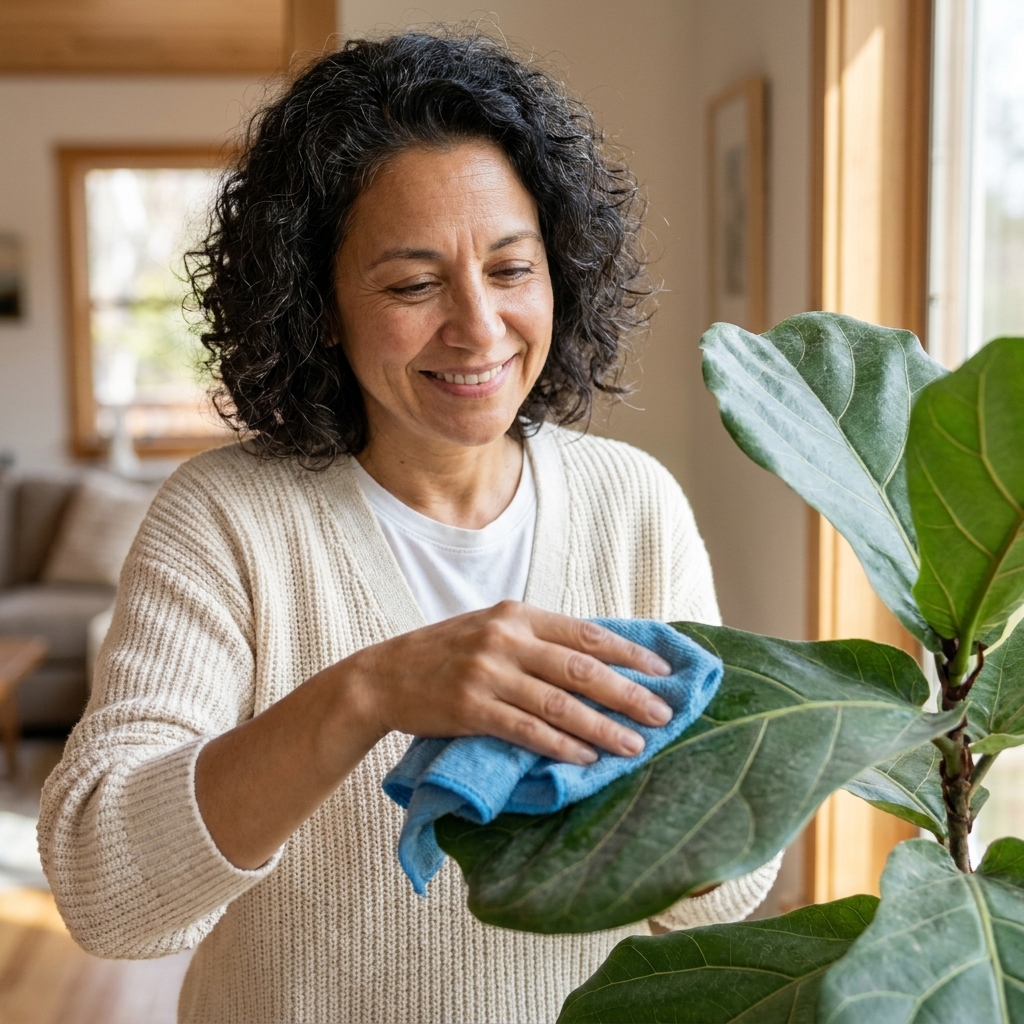
Dust blocks light. A quick wipe with a damp cloth every couple of weeks helps the plant photosynthesize more efficiently.
Match the symptom to the cause
Yellow leaves that drop
- Most likely: Overwatering, low light, or soil staying wet too long.
- Try: Increase light, let the top layer dry appropriately for your pot size, confirm drainage.
Brown spots with a yellow ring
- Most likely: Inconsistent watering, early root stress, or leaf spot.
- Try: Adopt a thorough-watering routine, keep leaves dry, and check roots if the problem spreads.
Crispy brown edges
- Most likely: Underwatering, low humidity, or fertilizer buildup.
- Try: Water deeply when you water, consider a humidifier, flush the pot with water every couple of months to wash out salts.
Leaves dropping after moving the plant
- Most likely: Change shock (including transport or repotting).
- Try: Pick the best spot and stop relocating it. New growth usually resumes once it settles.
Sticky leaves or tiny specks
- Most likely: Pests like scale, mealybugs, or thrips.
- Try: Isolate, rinse, and treat consistently with insecticidal soap or horticultural oil.
My weekly routine
This is the simple routine I wish someone had handed me when I bought my first fiddle leaf fig in an apartment and spent the next month panicking over every speck.
- Once a week: Check soil moisture at the right depth for your pot size.
- If dry: Water thoroughly, then drain the saucer.
- Every 1 to 2 weeks: Rotate the pot a quarter-turn.
- Every couple of weeks: Wipe leaves and do a fast pest check (undersides too).
- Monthly in spring and summer: Light fertilizing if the plant is actively growing.
FAQ
Should I cut off dropped-leaf scars or bare stems?
No need. Leaf scars are normal. If the plant is tall and bare at the bottom, focus on improving light and steady care. Once it is healthy, you can consider pruning to encourage branching, but do it in spring and only if you are comfortable with slower, more controlled shaping.
Can I put my fiddle leaf fig outside?
In warm months, yes, but only if you acclimate it gradually. Start in bright shade, then slowly increase light over 1 to 2 weeks. Bring it in before nights get cool, and protect it from wind.
How long until I see new growth?
In good light during the growing season, you may see a new leaf every few weeks. In winter, growth can pause. What you want first is stability: no ongoing leaf drop, leaves staying firm, and soil drying at a predictable pace.
One last pep talk
If your fiddle leaf fig has dropped a handful of leaves, you are not doomed. These plants are resilient once their basic needs are met. Give it bright, steady light, water thoroughly but only when it is actually ready, and keep it out of the drafty danger zones. Then do the hardest gardening task of all: leave it alone long enough to recover.