From radishes to baby greens, these speedy crops deliver homegrown harvests fast. Includes practical planting and container tips for short seasons and impati...
Gardening insights
Carrots, Potatoes, and Radishes in Containers
Grow crisp carrots, hearty potatoes, and snappy radishes in pots and grow bags with the right container depth, soil mix, watering checks, variety picks, and harvest cues for small spaces.

Elena Rosales
Elena Rosales is a certified Master Gardener and lifelong plant enthusiast who believes anyone can cultivate a green thumb. After transforming her tiny urban balcony into a thriving plant oasis, she moved to a half-acre homestead to grow her own food and flowers. Today, she shares practical, hands-on gardening advice to help the Hortello community bring more green into their lives.
Published September 21, 2026
Updated September 21, 2026
When I lived in the city, my “garden” was a balcony that got more wind than sun. I still wanted real harvests, not just a lonely basil plant. The good news is that carrots, potatoes, and radishes are all very container-friendly once you match the pot to the root and get the soil right. Think of it like choosing the right shoes: the plant will do the hard work, but it needs a good fit.
Below, I will walk you through the containers, soil, and care routines that consistently work, plus the small tweaks that make root veggies behave in pots and grow bags.
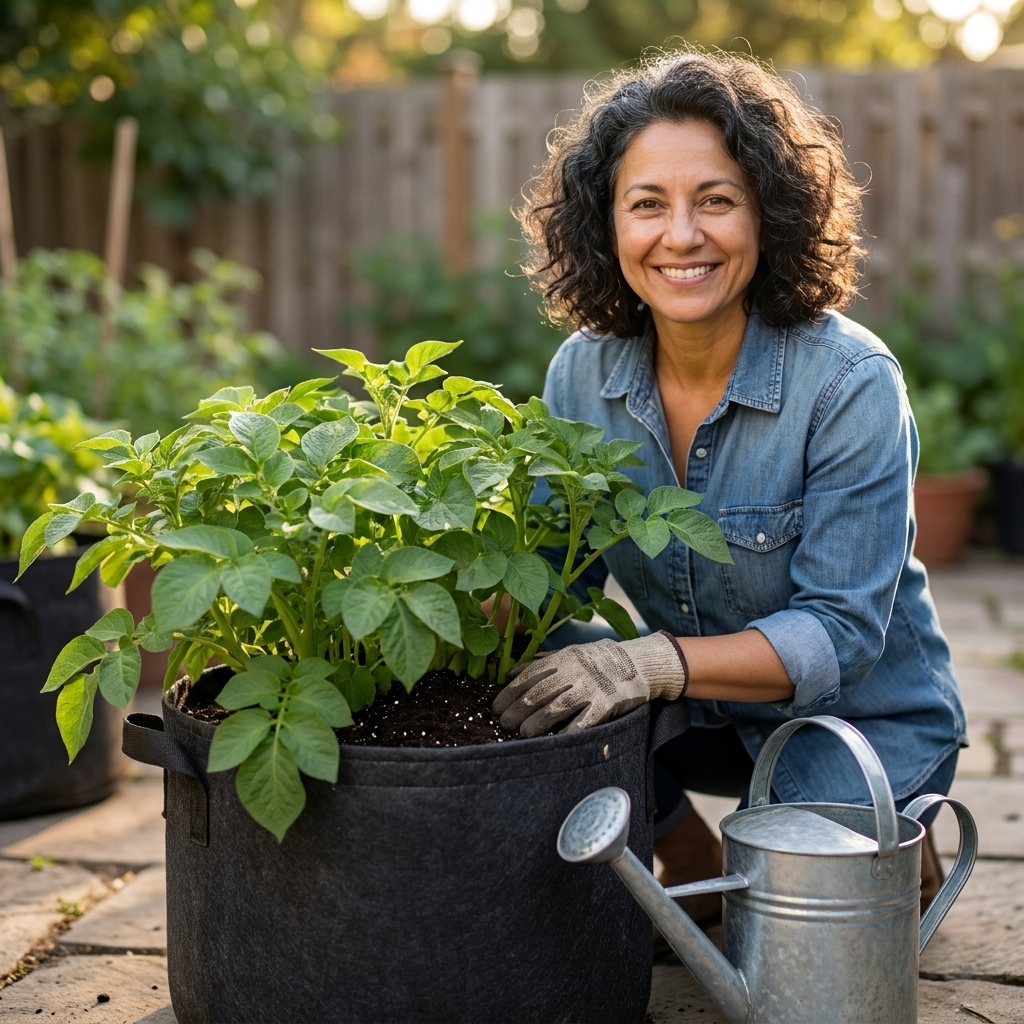
Quick setup: what containers need to do
Containers change three big things compared to in-ground gardening: drainage is faster, soil warms up quicker, and roots have a hard boundary. Use those differences to your advantage.
Container rules that keep roots happy
- Depth matters more than width for carrots. Short pots force carrots to fork or stay stubby.
- Volume matters most for potatoes. More soil volume means steadier moisture and better yields.
- Drainage is non-negotiable for all three. If a pot cannot drain freely, roots rot and growth stalls.
- Lightweight soil beats garden soil. Garden soil compacts in pots like wet cement.
- Do not let drain holes get blocked. Elevate pots slightly on “pot feet,” bricks, or a slatted stand so water can actually exit.
How much sun?
- Carrots: 6+ hours is ideal. 4 to 5 hours can work, but expect smaller roots and sometimes less sweetness.
- Potatoes: 6 to 8 hours for strong plants and good tuber set.
- Radishes: 4 to 6 hours is plenty, especially in warm weather.
If your patio is blazing hot, a little afternoon shade can actually improve radish and carrot quality by slowing bolting.
The best soil mix for root crops in pots
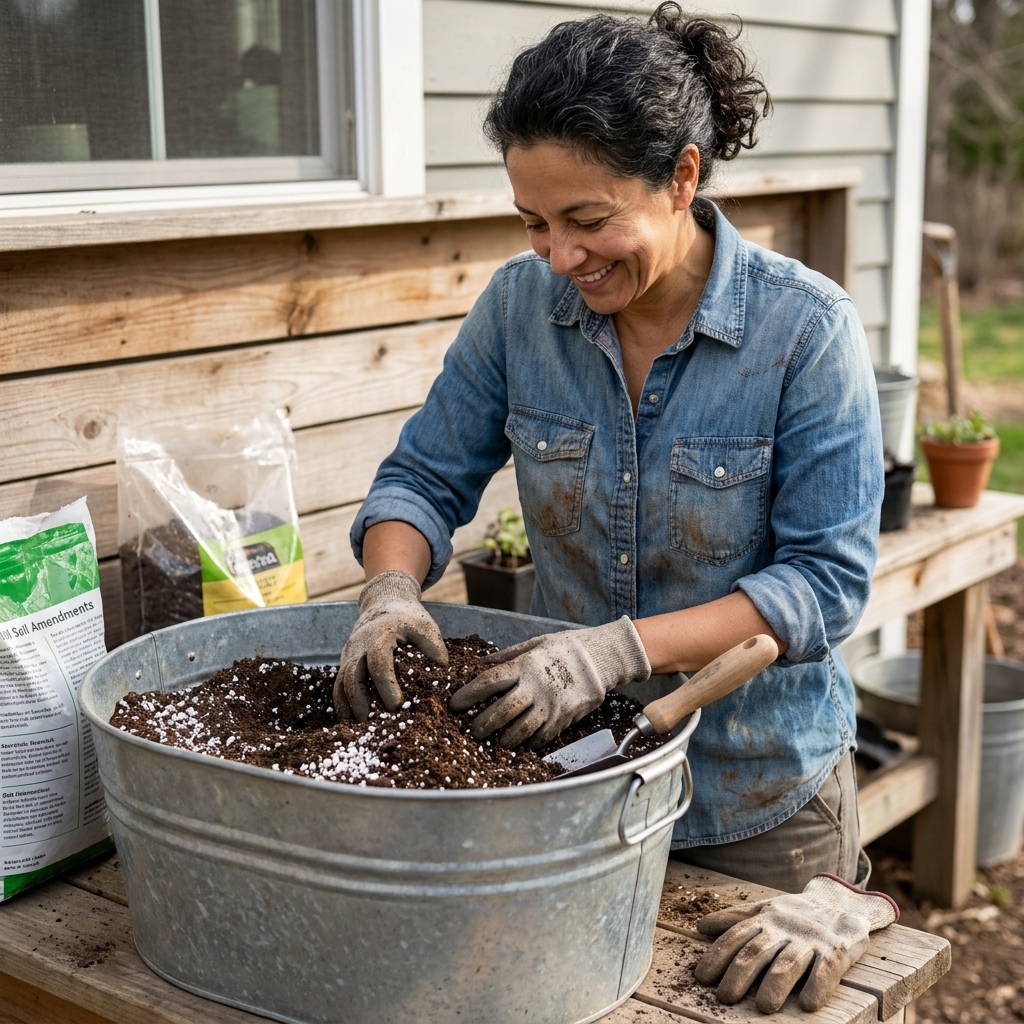
For containers, I aim for a mix that stays fluffy, drains well, and still holds enough moisture that I am not watering three times a day in July.
My go-to container mix
- 60% high-quality potting mix (peat-free if you prefer, but make sure it is not heavy)
- 20 to 30% finished compost (screened if it is chunky; use closer to 20% if your compost is dense or your pots stay wet)
- 10 to 20% perlite or pumice for extra air and drainage (go higher if you went heavier on compost)
Optional but helpful: a small handful of worm castings per container, and a slow-release organic fertilizer mixed in at label rates.
A note on stones and “drainage layers”
Skip the gravel at the bottom. It does not improve drainage in a meaningful way and it steals valuable root room. A pot with holes plus a breathable soil mix is what you want.
Growing carrots in containers
Carrots are the container crop that humbles people. They are not difficult, but they are picky about two things: consistent moisture and non-compacted soil. When those are right, they are almost boringly successful.
Container size for carrots
- Depth: 10 to 12 inches minimum for short or medium varieties, 14 to 18 inches for long types.
- Width: A 12 to 18 inch wide pot (or a window-box style planter) is great for a dense sowing.
- Best containers: Deep nursery pots, tall plastic planters, or fabric pots.
Best carrot varieties for pots
In containers, I reach for varieties bred to bulk up in less-than-perfect conditions.
- Short and sweet: ‘Paris Market’, ‘Romeo’ (round), ‘Oxheart’ types
- Reliable minis: ‘Little Finger’, ‘Adelaide’
- Container-friendly classics: ‘Nantes’ types in a deeper pot
How to plant carrot seeds
- Fill the container with pre-moistened mix to within 1 inch of the rim.
- Sow thinly on the surface, then cover with 1/4 inch of fine mix or compost.
- Water gently using a rose watering can or a soft hose setting.
- Keep the top 1 inch damp until germination, usually 7 to 21 days.
Carrot germination is slow, and the surface dries fast in pots. I sometimes lay a piece of burlap or a board loosely on top and remove it the moment sprouts appear. It is a simple trick that saves a lot of frustration.
Thinning carrots without heartbreak
Yes, you have to thin. Overcrowded carrots stay skinny. Snip extras at soil level instead of pulling them, which can disturb nearby seedlings.
- Final spacing: 1.5 to 2 inches apart for most types, 3 inches for larger carrots.
Water and feeding for carrots
- Water: Aim for steady moisture. A good quick check is the finger test: if the mix is dry 1 to 2 inches down, water deeply. In cool weather that might be every few days; in hot wind it might be daily.
- Fertilizer: Go easy on nitrogen. Too much makes lush tops and disappointing roots. A balanced organic fertilizer at half strength once or twice mid-season is plenty.
When to harvest carrots in pots
Harvest “baby” carrots anytime once they color up. For full size, check the crown at the soil line. If it is the width you want, gently loosen the soil and pull. If you want the sweetest carrots, harvest after a cool spell.
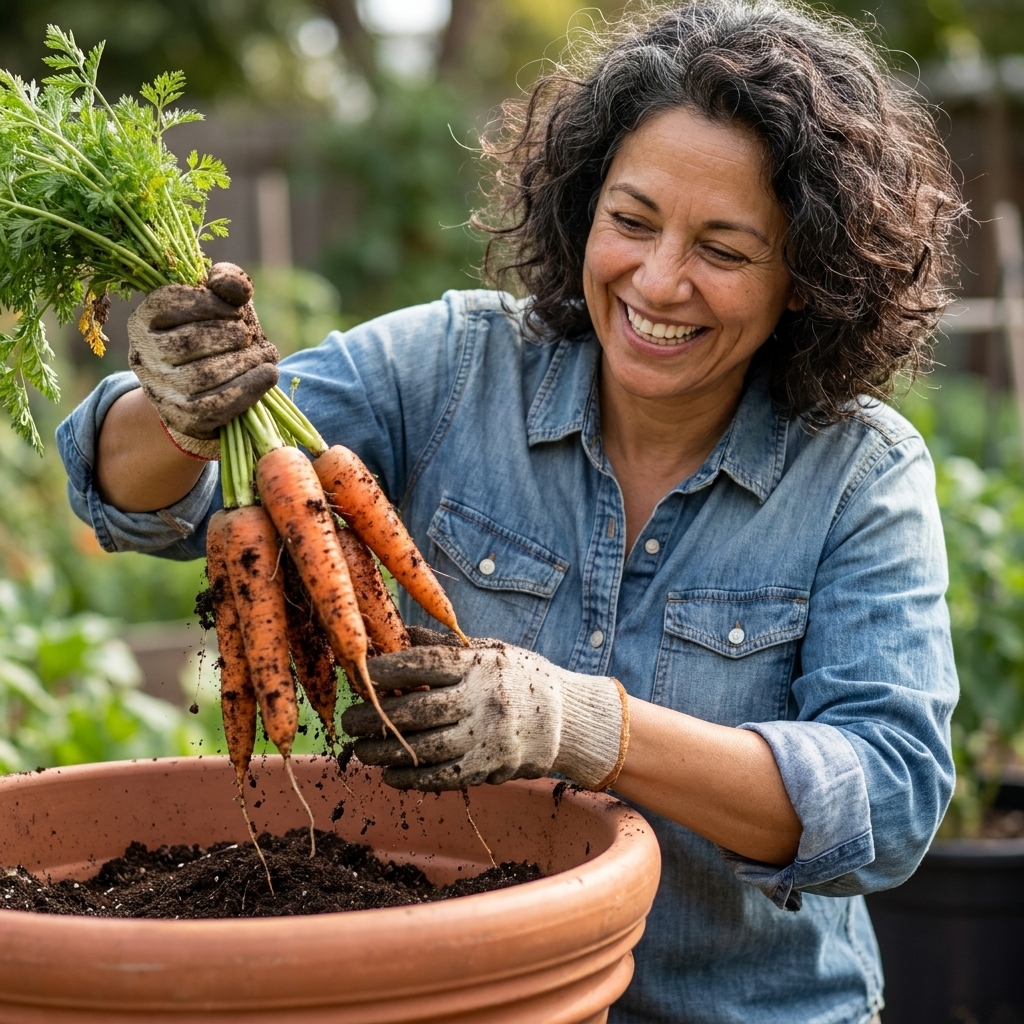
Growing potatoes in containers or grow bags
Potatoes in containers feel like magic because the harvest is a treasure hunt. They are also one of the best “high-yield per square foot” crops you can grow on a patio, as long as you give them enough volume and do not let them dry out.
Choose the right seed potatoes
Start with certified seed potatoes (not grocery store potatoes, which can be treated to prevent sprouting and may carry disease).
- Great for containers: ‘Yukon Gold’, ‘Red Norland’, ‘Fingerling’ types, many early and mid-season varieties
- Small-space tip: Early potatoes often do better in containers because they finish before heat stress ramps up.
Prep: chit and cut (optional, but useful)
- Chit (pre-sprout): Set seed potatoes in a bright, cool spot for 1 to 2 weeks to encourage short, sturdy sprouts. This can speed up growth, but it is not required.
- Cutting larger seed potatoes: If a potato is large, you can cut it into pieces with 1 to 2 eyes each. Let the cut surfaces dry and callus for 1 to 2 days before planting to reduce rot.
Container size for potatoes
- Minimum: 10 gallons per container (or grow bag) for a worthwhile harvest.
- Sweet spot: 15 to 20 gallons for steadier moisture and bigger yields.
- Planting rate: 2 to 3 seed potatoes in a 15 to 20 gallon bag, spaced apart.
Planting potatoes in a pot (step by step)
- Start with 4 to 6 inches of moist mix in the bottom.
- Place seed potatoes with eyes facing up.
- Cover with 3 to 4 inches of mix.
- As stems grow 6 to 8 inches, “hill” by adding more mix around the stems, leaving the top few inches of foliage exposed.
- Repeat until the container is nearly full.
Hilling keeps developing potatoes covered so they do not turn green from sun exposure. It can also increase the zone where the plant forms tubers, but in containers the biggest yield drivers are usually total volume, steady moisture, and good light.
Watering potatoes in containers
Potatoes are thirsty, especially once they are actively growing and starting to set tubers.
- Keep soil evenly moist like a wrung-out sponge.
- Use a simple check: if the mix is dry 2 inches down, water slowly until it drains from the bottom.
- Avoid soggy conditions that invite rot.
- Mulch the top with straw or shredded leaves to slow evaporation.
Feeding potatoes
Mix in a slow-release organic fertilizer at planting. Once the plants are established and you have done a couple of hilling rounds, you can top-dress with compost or a low-nitrogen fertilizer. Too much nitrogen equals jungle foliage and fewer tubers.
When to harvest container potatoes
- New potatoes: Timing is variety-dependent. Some are ready a couple weeks after flowering, but some flower lightly or not at all. The most reliable method is to gently dig at the side and check tuber size, then “steal” a few and tuck the soil back in.
- Full harvest: When foliage yellows and dies back.
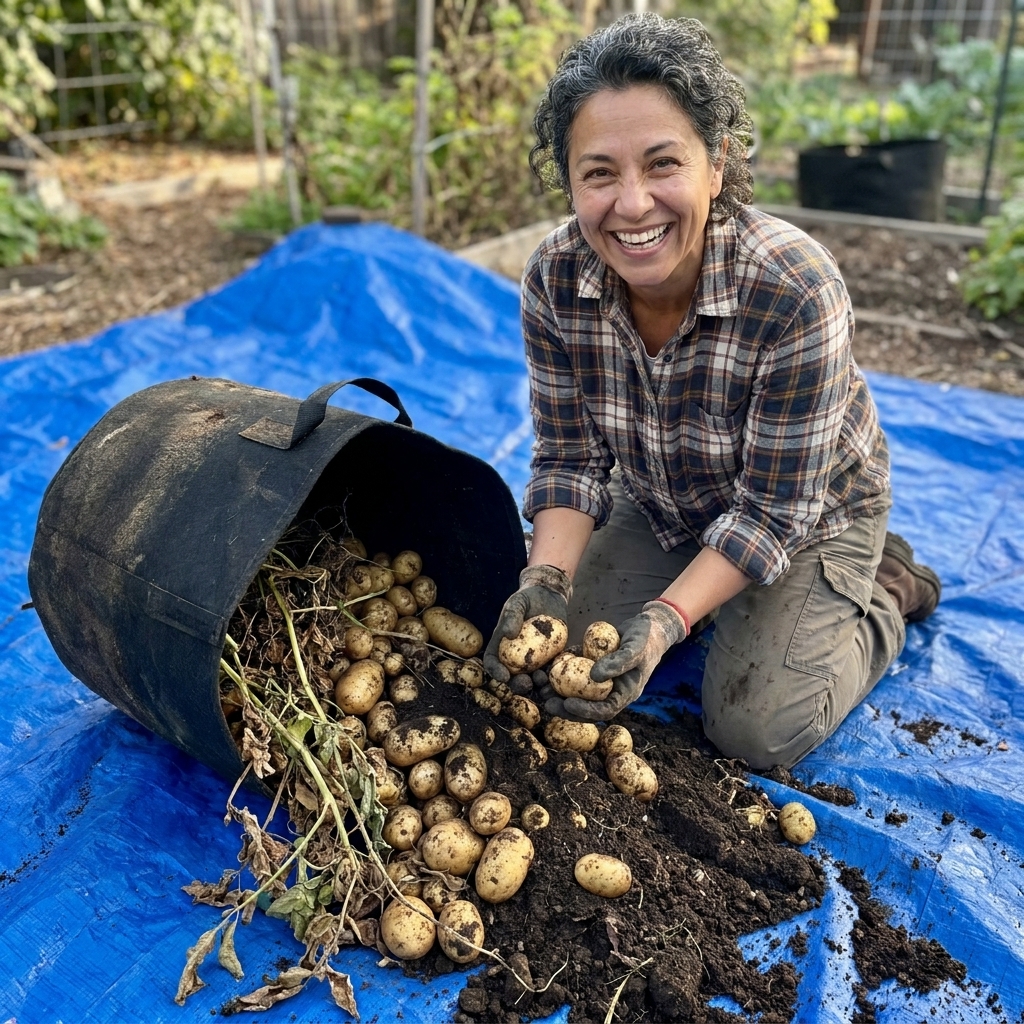
On harvest day, I like to dump the bag onto a tarp and rummage around. It is messy, satisfying, and much easier on your back than digging a bed.
Safety note: If any tubers are green (or the skins are green), do not eat them. Green potatoes can contain higher levels of solanine.
Growing radishes in containers
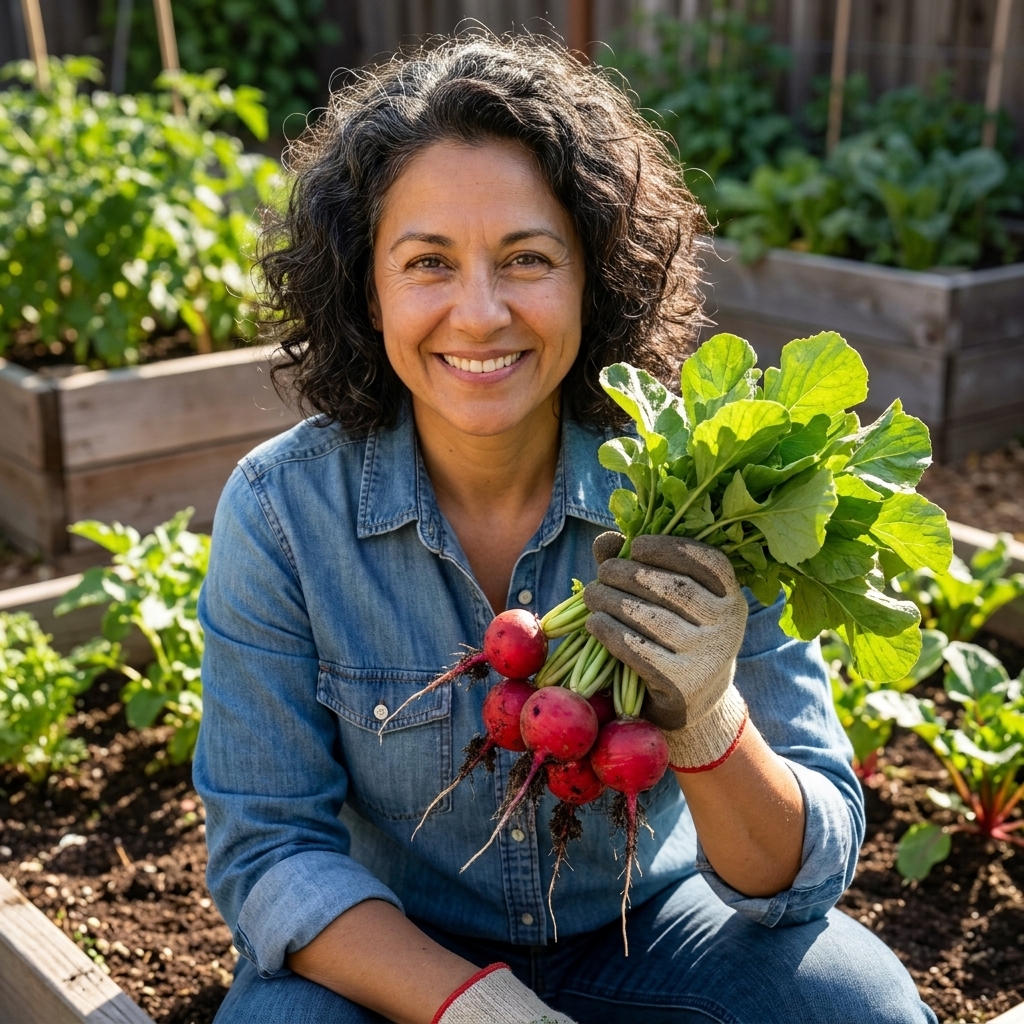
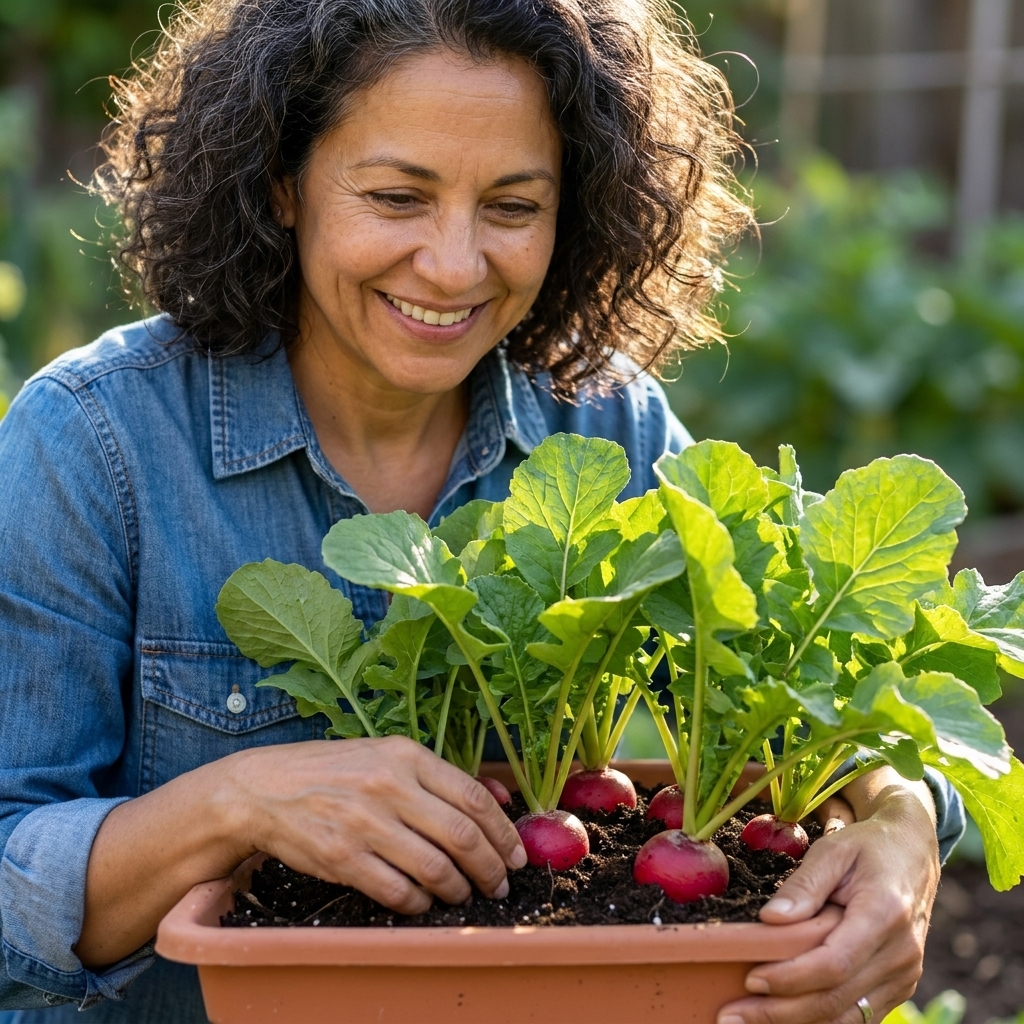
Radishes are the instant-gratification crop that keeps me optimistic when other vegetables are taking their sweet time. They are also perfect for containers because they are shallow-rooted and fast.
Container size for radishes
- Depth: 6 to 8 inches is enough for most round radishes, 10 to 12 inches for daikon or longer types.
- Width: Any wide pot, bowl planter, or window box works as long as it drains.
Best radish varieties for pots
- Classic and quick: ‘Cherry Belle’, ‘French Breakfast’
- Somewhat more heat-tolerant options: ‘White Icicle’ and some Asian types can handle warmth a bit better than round reds, but they can still turn pithy if stressed.
- For a longer season: Try a mix and sow every 1 to 2 weeks
How to sow radishes for steady harvests
Radishes do best direct-sown.
- Sow seeds 1/2 inch deep.
- Space about 1 inch apart, then thin to 2 inches for larger roots.
- Water consistently to prevent pithy or overly spicy roots.
Preventing pithy, too-hot radishes
- Do not let the pot dry out. Drought stress makes radishes woody and sharp.
- Harvest on time. Radishes left too long get hollow or tough.
- Give some shade in heat. Morning sun and afternoon shade can improve quality.
Smart spacing: grow more in the same pots
One of my favorite container tricks is to treat each pot like a tiny raised bed and use time to your advantage.
Easy combinations that work
- Carrots + radishes: Sow radishes as a “marker crop.” They sprout fast, show you your rows, and are harvested before carrots need the space.
- Potatoes + quick greens: In the early weeks before potato foliage fills in, you can tuck a few lettuce seedlings near the edge. Harvest before hilling gets serious.
Avoid planting heavy feeders together in the same container unless it is very large. In small pots, competition is real.
Timing and weather
Cool-season basics
- Carrots and radishes prefer cool weather. Aim for early spring and fall if summers are hot where you live.
- Warm patios speed things up. Containers heat faster than beds, which can push radishes to get spicy and carrots to taste less sweet.
- Succession sowing helps. For radishes, planting a small batch every 1 to 2 weeks usually beats trying to time one perfect sowing.
Heat tips for balconies
- Use afternoon shade when needed. A spot with morning sun and later shade can be a radish lifesaver.
- Water earlier. Deep morning watering is more efficient than chasing wilt at noon.
Pests and disease (container edition)
You can absolutely get pests in pots, but containers make a few prevention habits easier.
Carrots
- Carrot rust fly (region-dependent): If it is common where you live, consider a fine mesh cover over the container and avoid thinning by pulling (snip instead).
Potatoes
- Aphids: Blast off with water, or use insecticidal soap if they persist.
- Blight prevention basics: Give plants space for airflow, water at soil level (not over the leaves), and remove badly spotted foliage promptly.
Common container problems (and fixes)
Carrots are short, forked, or twisted
- Cause: Soil compaction, rocks or chunks, inconsistent watering, or transplanting seedlings.
- Fix: Use a lighter mix, screen compost, sow direct, and keep moisture steady.
Potato leaves look great but yields are small
- Cause: Too much nitrogen, not enough sun, container too small, or uneven watering.
- Fix: Use a larger bag, switch to a lower-nitrogen fertilizer, and ensure 6+ hours of sun. Then focus on moisture consistency.
Radishes are all leaves and no bulbs
- Cause: Heat stress, crowding, or too much nitrogen.
- Fix: Thin more aggressively, sow in cooler windows, and avoid high-nitrogen feeds.
Soil dries out constantly
- Cause: Small container, windy exposure, or a very porous mix.
- Fix: Upsize the container, add mulch, cluster pots to reduce wind, elevate containers so they drain well, and water deeply in the morning.
I learned the “windy exposure” lesson the hard way on my old balcony. My radishes were basically growing in a hair dryer. Grouping containers together helped more than I expected.
Harvest and storage tips
Carrots
- Twist tops off after harvest so they do not pull moisture from the root.
- Store in the fridge in a bag or container with a slightly damp towel.
Potatoes
- For long storage, cure unwashed potatoes in a dark, ventilated spot for about 1 to 2 weeks.
- Store cool and dark. Do not refrigerate.
- Discard green tubers.
Radishes
- Remove greens and store roots in the fridge.
- Radishes are best within a week, though some types last longer.
FAQ
Do I need special “root vegetable soil” for containers?
No. A good potting mix with compost and extra aeration (perlite or pumice) is perfect. The goal is fluffy, rock-free, and consistently moist.
Can I grow carrots in a 5-gallon bucket?
Yes, if it is deep enough and has plenty of drainage holes. Choose shorter carrot varieties and do not overcrowd them.
How many potatoes can I grow in one grow bag?
In a 15 to 20 gallon bag, 2 to 3 seed potatoes is a good range. More than that often leads to smaller tubers.
Why are my radishes too spicy?
Heat and inconsistent watering are the big culprits. Keep moisture steady, give a little shade in hot spells, and harvest promptly.
A simple container plan to start this weekend
If you want a no-overthinking setup, here is my beginner-friendly trio:
- One 12 to 16 inch deep pot: short carrots, thinned properly
- One 15 to 20 gallon grow bag: 2 to 3 seed potatoes
- One window box or shallow pot: radishes every 1 to 2 weeks for a rolling harvest
Start small, pay attention to moisture, and let the plants teach you. And if you do end up with your own version of my Great Zucchini Invasion of 2019, just know you are officially a gardener now.